1. When do you know it is time to move on to the next level of grit? Are there any indicators?
-I ask this because I can work on the diamond side of my DC4 indefinitely without ever knowing when I should move on to the ceramic side. The same goes for all levels up till 0.25 micron.
2. IS there a difference between pushing and pulling during sharpening? What do you do?
-I ask this because for the longest time I believed that only pulling throughout the entire sharpening process was the best approach. However, there was a burr on the edge that was so big it glinted when placed under light. I tried and I tried but I couldn't get that sucker. Eventually, I decided to try pushing. All it took was a few passes and now that thorn in my side is gone. Logic tells me that pulling is the way to go, but this recent development has left me wondering.
3. Is there a way to maintain an angle? OR something to use as a guide? Or even know the right angle for your knife?
-(Used Pulling method ie. on leather) I ask this because I am right handed and have the desired angle on the side that is going from left to right/top to bottom, but when it comes to the flip side, right to left/bottom to up I really screw things up. I know this because on my practice knife the side that contacts during L>R strokes has a distinctly larger edge than the side that contacts during R>L strokes.
Answers,Advice, you know the drill, learnme pls. Thanx
Oh and 1 more...
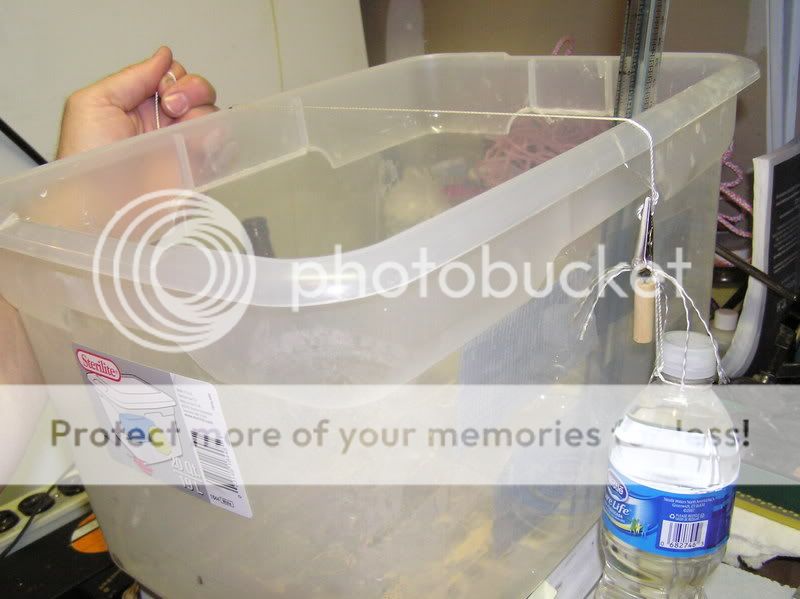
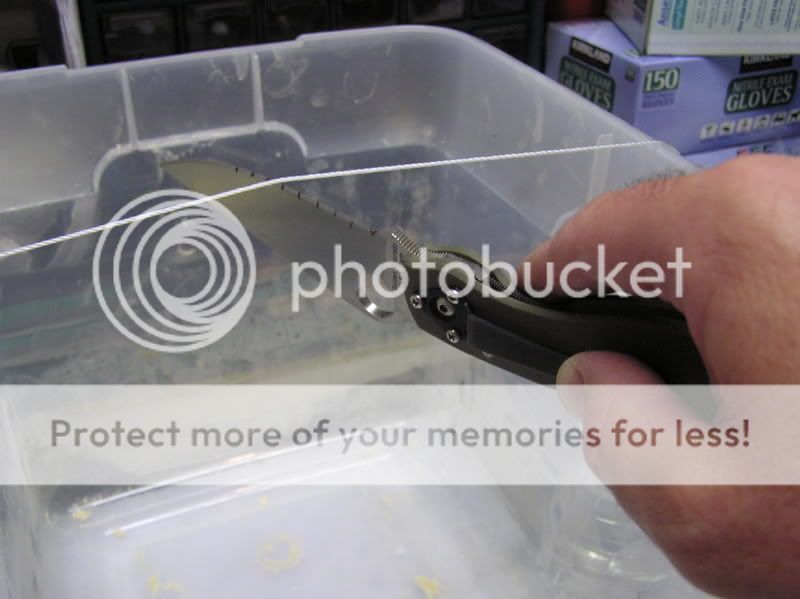
What is thread testing?
-I ask this because I can work on the diamond side of my DC4 indefinitely without ever knowing when I should move on to the ceramic side. The same goes for all levels up till 0.25 micron.
2. IS there a difference between pushing and pulling during sharpening? What do you do?
-I ask this because for the longest time I believed that only pulling throughout the entire sharpening process was the best approach. However, there was a burr on the edge that was so big it glinted when placed under light. I tried and I tried but I couldn't get that sucker. Eventually, I decided to try pushing. All it took was a few passes and now that thorn in my side is gone. Logic tells me that pulling is the way to go, but this recent development has left me wondering.
3. Is there a way to maintain an angle? OR something to use as a guide? Or even know the right angle for your knife?
-(Used Pulling method ie. on leather) I ask this because I am right handed and have the desired angle on the side that is going from left to right/top to bottom, but when it comes to the flip side, right to left/bottom to up I really screw things up. I know this because on my practice knife the side that contacts during L>R strokes has a distinctly larger edge than the side that contacts during R>L strokes.
Answers,Advice, you know the drill, learnme pls. Thanx
Oh and 1 more...
What is thread testing?
Last edited: