45 days among the Yanano (Warning: some pictures)

Joined
Apr 8, 2006
Messages
130
Hey. First I want to say thanks for the amount of information that goes around the Wilderness & Survival Skills forum. I´ve been lurking around here since the day I registered, it is my favorite section of bladeforums. There are things I have learned from you that I would probably not learn anywhere else, and I really appreciate it.

Last August, I managed to get myself on an expedition to the Koama Phoyaye tribe, of the Yanano people, in the high Amazon jungle. Pop: 122. I had been trying to visit native Indian tribes in the Amazon for quite some time, but this year I got lucky. You see, the access to most Amazonian tribes is controlled by state-sponsored South American organizations (like the Brazilian Funai). These organizations have an isolationist policy, and nowadays access is very restricted. There is an estimate that there are about 40 non-contacted tribes in the Amazon nowadays, and the powers that be want to keep it that way. The effectiveness of such policy is debatable, but the fact is that it is pretty damn hard for the regular Joe to visit these places. Even the tribes that have had contact with Western culture for decades, like the Yanano.

But there are regular expeditions comprised of doctors and anthropologists. A close friend of mine is one of these anthropologists. He had been trying to fit me into one of these expeditions, without success. I have no qualifications, and it was rare even for him (with his MSc and all) to go. These expeditions are financed by NGOs, and the positions are very limited. In this Yanano expedition, there were positions for 2 doctors, 2 anthropologists and a "helper", with no special qualifications required. It is common practice for this "helper" position to be filled by another doctor or social scientist, but the designated "helper" anthropologist bailed out due to personal problems, on a short notice. Very short notice. This friend of mine called me: "Hey Valle, how about you going to the Amazon tomorrow night? It is totally funded. You will be staying there for 45 days, supporting the personnel with whatever they need". I was in.

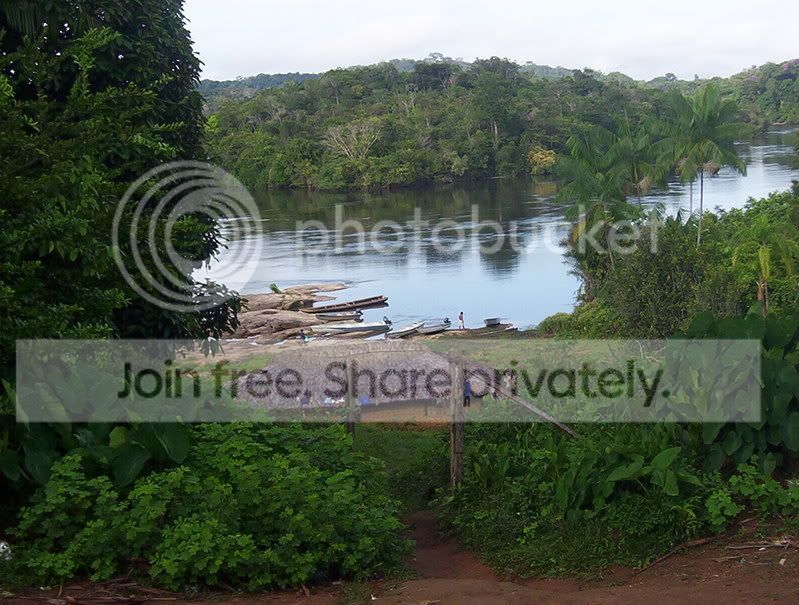
To cut the story short, running a great risk of losing my job (they were not very supportive), off I went to the Amazon. We took an airplane from the Brazilian city of São Paulo to the city of São Gabriel, in the frontier of Brazil and Colombia. From there, two guides led us by boat down the Uaupé river for 16 hours, stopping at an unmarked section at the margin. After two days of gruesome walk through a "trail" (it was not really a trail), we arrived at Koama Phoyaye.

It would be home for the next 45 days.
000_4107.jpg


000_3994.jpg


000_4004.jpg


000_4241.jpg


dois.jpg


000_4054.jpg


000_4242.jpg


000_4226.jpg


000_4230.jpg


The purpose of this thread is just to share some of the pictures we took. I could write a book if I was to tell you everything that went through during our stay. It is hard for me to convey it all through some pictures, after all, to some of you the Yanano may look like your regular, rural, poor people. Let me tell you, they only appear so. To me, seeing how these people live was nothing short of mind-blowing. I assembled a pack with my favorite gear for this journey, and I soon realized I was expected to leave it all there, for them, as gifts. I confess I didn´t like this idea at first, but my egoistic thoughts gradually faded away as each day passed, with me living and sleeping amongst them, eating their food. There is this contradiction: they want the white man´s goods and technology, but they abhor becoming like white men. It was hard for me to understand how this works, but by the end I think I got a glimpse of how this can be. Most did not speak my language. It was only one of many beautiful, strange things I could not fully understand.

I came back with an empty rucksack, my clothes, my boots, and a different, dare I say better, view of the world. I can tell you it was a great experience. Perhaps the greatest of them all.
 
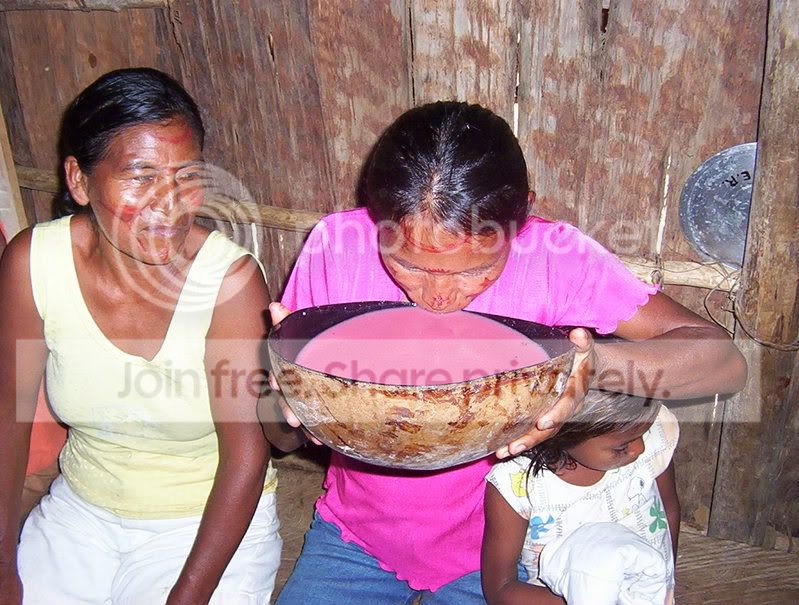
Dare I ask what the purple, um, stuff was in the bowl? :D

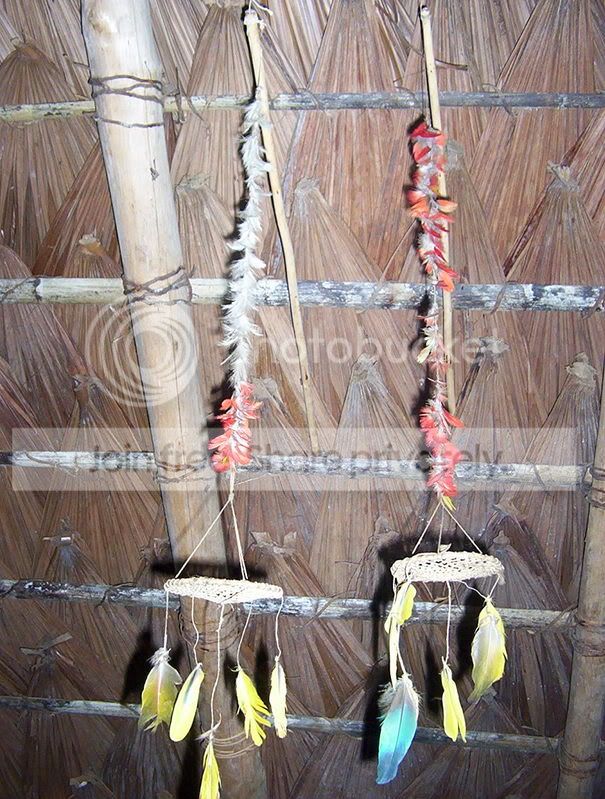
I see lots of modern clothing, but little gear. Do they use mostly modern tools they got as "gifts", like your gear? Or do they stick with what they've always used? Or a little of both?

I'm with you, it's hard to wrap my head around the idea of having the white man's stuff, without taking on the white man's attitudes. For starters, there's a big difference between pride in things you make yourself, and stuff you simply acquire by buying or trading; craftsmanship vs. consumerism, if you will.
 
Great pics . Is that you in the blue shorts ? L:O:L

Do you happen to have any pics of bows , arrows or even stories about hunting?
 
Thanks alot for sharing.

I'm always facinated by the way native people craft the things they need. The simplicity of their lifestyle makes me envious a little bit but I know I couldn't hack it living that way, I'm too spoiled by now.

I wish I could have gone with you, that must have been quite an adventure.
 
Wonderful pictures, the one of the little girl peeking through the wall is one of those shots that should be on the cover of a magazine.
 
Awesome story. Thanks for sharing.
"Hey Valle, how about you going to the Amazon tomorrow night? It is totally funded. You will be staying there for 45 days, supporting the personnel with whatever they need". I was in.
How come I never get calls like that:confused:
 
Awesome story. Thanks for sharing.

How come I never get calls like that:confused:

Dear OwenM after due consideration you have been selected to live among the northern innuit for an in depth study of the sexual habits of the male polar bear.
There are only two prerequisites . That you not be allergic to pheremones and are willing to buy a large white fur coat .
 
The pink stuff is a fermented alcoholic goo they make. Its ingredients include spit and roots. It tastes horribly but it does make you drunk.


I see lots of modern clothing, but little gear. Do they use mostly modern tools they got as "gifts", like your gear? Or do they stick with what they've always used? Or a little of both?
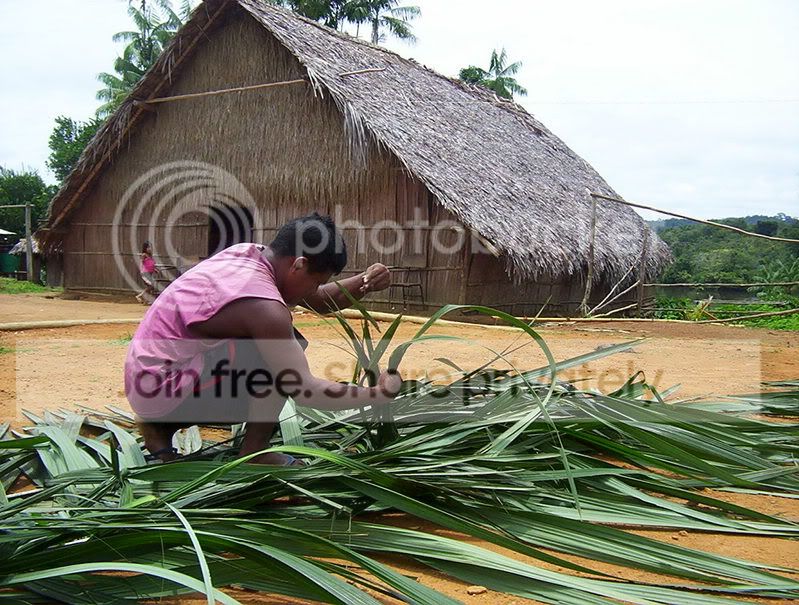
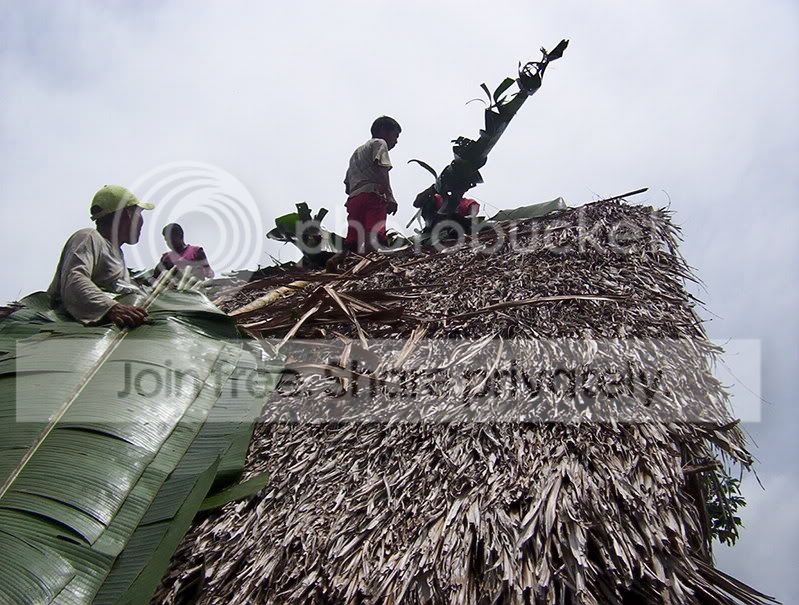
Their food acquisition methods are all modern. Fishing, agriculture. The shelter building, like you can see in the pictures, is traditional. Most things in their lifestyle is a mix of both. Some of their boats are motorized.

The village is located by a river. About 80 miles through this river there is a Colombian army outpost, it is something of a meeting point for traders. About twice a month, a convoy goes there and trades dry fish for supplies. Mainly diesel, clothes, salt, tobacco and paper, I was told. We had to get to the village the rough way because we would not be allowed to land on the Colombian outpost. From what I´ve heard about the Colombian army, I´d rather walk.

I'm with you, it's hard to wrap my head around the idea of having the white man's stuff, without taking on the white man's attitudes. For starters, there's a big difference between pride in things you make yourself, and stuff you simply acquire by buying or trading; craftsmanship vs. consumerism, if you will.
Yeah, this is something I do not fully understand and did not understand at all when I got there. What I meant by my gear was my socks, my camping pots, my hammock, etc. The most expensive and precious thing I was carrying was a Griptilian. Things such as price go right over their heads. The key thing to them is availability. Once I lend them the Grip to clean some fish. They were impressed and commended me on its sharpness. I told them how much I had paid for it, and they just stared me blankly. Then I told them I could buy twenty machetes for the price of it, and they were flabbergasted. I don’t´ think they believed me, though.

I kept my stuff with me until the last day, and they never asked me for anything, I think they were too proud for that. It was one of the doctors, a crazy Englishman named Thomas, that told me on our way there that it was considered good form to leave everything we could to them. Dr. Thomas even brought, as gifts to them, boxes of bic lighters and the cheap Chinese digital watches everybody is wearing. The watches were an instant hit, even though I found out later most of them were not very knowledgeable about the whole hours and minutes thing. It did make great jewelry though.

They provided me with everything I needed and more. I was never denied anything. Food was adequate, and we got the same share as each one of them. Sometimes more, when there was some special dish they wanted us to taste. They had great fun watching our faces at these occasions. Everybody slept in hammocks. I brought one of those compact net hammocks you can find in camping stores. After about a week, a young lady named Iwibirei asked me in bad Spanish if it was uncomfortable. I said “yeah, it is”. By night there was a thick fabric hammock set for me. She had washed it in the afternoon.

By the end of trip, I didn´t care to give them my used socks, whistle, camping pots and spoon, my uncomfortable net hammock, my 1085 knife and even my Griptilian. It seemed only fair. I approached Iwibirei´s husband and unceremoniously offered him the stuff. All of the sudden he called a couple of relatives that were inside the house. More people came. It instantly became a formal occasion. He pointed at me and said things I did not understand. Good things, I hope. I gave him the stuff. I could see true gratitude in the man´s face and eyes. So yeah, my Griptilian is now in the hands of a Yanano tribesman. I hope it serves him well.

When we got there, it was quite a let down. There were written plaques over some of the huge cabins. I could not understand the language, but it was there. Tramontina machetes. A guy in a Mickey Mouse t-shirt, greeting us in Spanish. Aluminum school chairs. Paraguayan rubber sandals everywhere. I was let down, this was not why I had come. I thought great, next thing I know I will be inside one of these big huts, watching Star Trek and having beers with these guys. But I was the most inexperienced member of the group, so I kept my mouth shut.

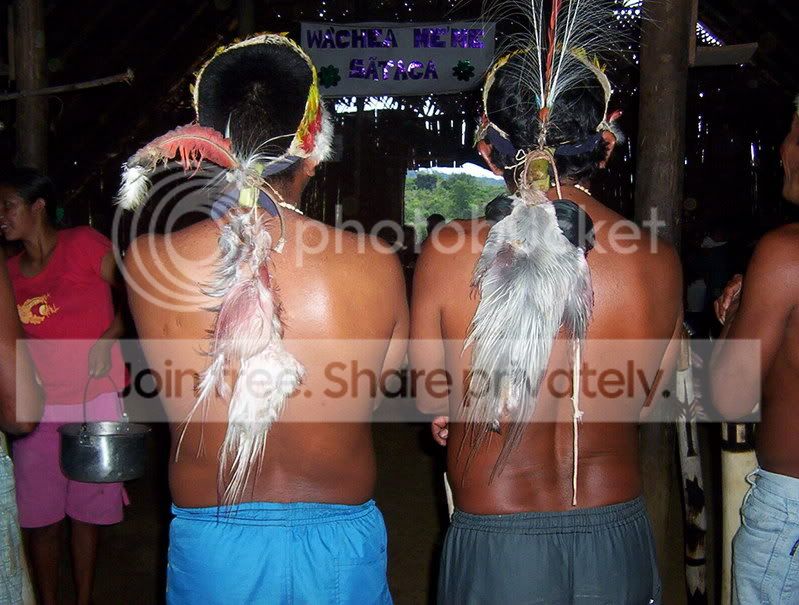
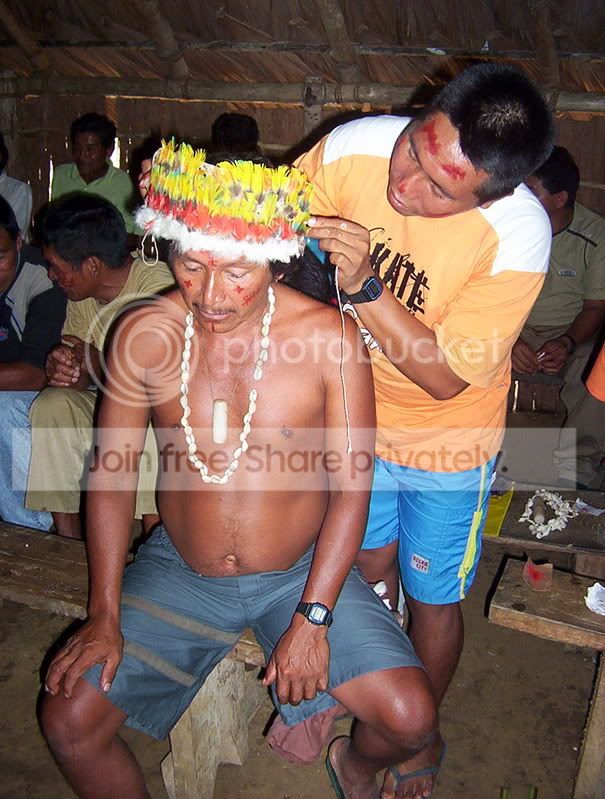
I am not a very social person, and for the first few days I was mostly alone. There was this guy, Kawoa, the one in the bright blue shorts in the pictures, he was quite a talkative individual. He spoke Spanish. My Spanish is awful, but I managed to communicate with him. He told me he had lived in a Colombian city, where he had a beautiful girlfriend and played soccer every Sunday and stuff. These talks pretty much shattered my expectations of seeing any deep cultural differences between us. This guy seemed just like me. Fortunately, my initial impressions proved to be wrong.

A few days into the trip, when people were not so shy around us anymore, I saw Kawoa having sex with a young woman in the river, in front of me and six old ladies that were washing their clothes. He even talked to the ladies during the sex. The girl just laughed. No shame at all. I saw Kawoa discussing the share of the fish between his mates, in the strangest way. It was theatrical. They sat around in a circle, and screamed, beat on their chests, jumped up and down, and even spit on each other. After the debate was over, they stood around casually, as if they hadn´t just spat on each faces. Later on, an old relative of Kawoa died. They cremated the body by the river, collected the ashes and made tea with it. At night, Kawoa and other family members somberly drank this tea by the fire. Vestiges of cannibalistic practices. This guy was no white man.

About the clothes, knives and motor boats, I think at some point in the past the Yanana figured the white man´s “gear” was superior. Part of their traditions was forgotten for the sake of superior technology.

Many of the younger ones know how to read. There is an old lady that spent 10 years in Brazil, came back and taught the alphabet around. This old lady is still active, and there is a school of sorts functioning in one of the big cabins. Some (but not all) mothers teach their children. Every writing I saw was crude, but there is a certain effort being made. Understandably, they don´t rate literacy as highly as we do.

At the first few days, Dr. Thomas sensed I was disappointed with the amount of familiar stuff I was seeing. He said something about Martians. He said that even if I wore superior Martian clothing, I would still be a human. Crazy man, the doc. He just smiled knowingly, he knew the real stuff would gradually sink into my head, and he was right.
 
Dear OwenM after due consideration you have been selected to live among the northern innuit for an in depth study of the sexual habits of the male polar bear.
There are only two prerequisites . That you not be allergic to pheremones and are willing to buy a large white fur coat.
Guess I should be careful what I wish for!
That last part was really good:D
 
Thanks everybody for the nice words.

Great pics . Is that you in the blue shorts ? L:O:L
No, that´s Kawoa. Incidentally, I happen to be quite whitey myself.

Do you happen to have any pics of bows , arrows or even stories about hunting?
I did not see a single bow during my stay there. They are not hunters, they are fishemen. Yanano means “people of the water”. There was a rusty rifle at a wall in the bigger cabin, but it was only decoration. My buddy told me this kind of static tribes do not usually hunt. They stay on one place for too long, and any animal reserves in the outskirts have been depleted a long time ago.

There was a day when the children found a sloth in one of the trees, and killed it with stones. They were so happy it was contagious. There are photos of the sloth barbecue, but these are the only photos I have right now. My friend is still at the Brazil-Colombia frontier, and he sent me this ones by the internet just yesterday. I´ll post the other ones when I get them.

I wish I could have gone with you, that must have been quite an adventure.
Yeah, it was. Another good thing is that I got to know the people at the indigenist NGOs. It took me years to get into a trip like this one, but I think there will be others coming my way, from now on. People said they were surprisingly satisfied with my behavior and services, and now I have something to show in my resume.

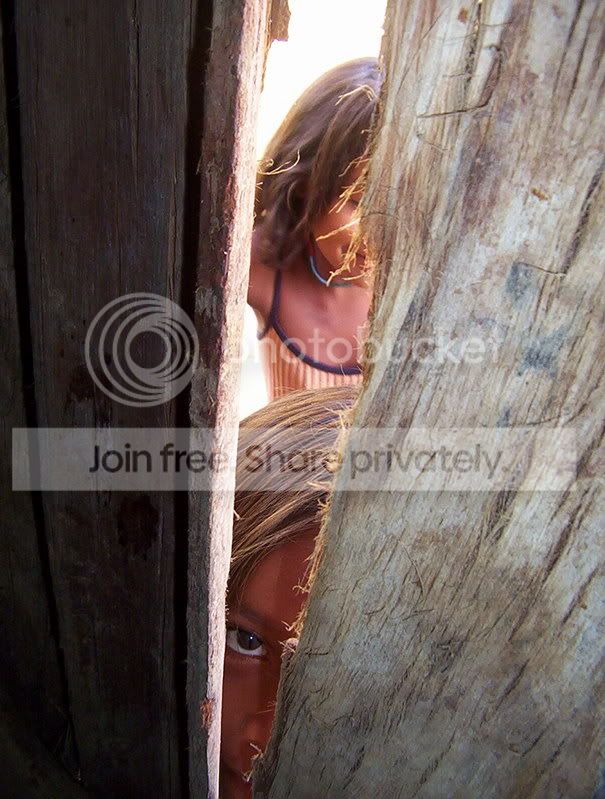
Wonderful pictures, the one of the little girl peeking through the wall is one of those shots that should be on the cover of a magazine.
Thanks Last Confederate.
 
Great post, and great thread. It sounds like the adventure of a lifetime. Well done.
 
Great post. More pics. I've been telling myself that I'm going to get up to the Amazon at some point but... 9 years total in Brazil and I haven't gotten to that point yet. I think it would cost me as much to get there from here (Belo Horizonte) as it would the States.

Intresting that they spoke Spanish. Did anyone there speak Portuguese? I'll bet they got their money's worth out of a Tramontina Machete.

Funai is tough. Getting access is not easy. Mac
 
The pink stuff is a fermented alcoholic goo they make. Its ingredients include spit and roots. It tastes horribly but it does make you drunk.

Yeah, I saw that on tv once: women chew the roots and sit them back in the pot.

Well, still better than Homer's "Dristan and Holy water"

Nice pics :)
 
That martian allusion makes perfect sense. We would utilize martian technology if we could, but we wouldn't adopt their cultural and social practices.
 
Great post. More pics. I've been telling myself that I'm going to get up to the Amazon at some point but... 9 years total in Brazil and I haven't gotten to that point yet. I think it would cost me as much to get there from here (Belo Horizonte) as it would the States.
I fired you an email.

Intresting that they spoke Spanish. Did anyone there speak Portuguese?
A minority spoke good Portuguese, but only when talking to us. Portu-spanish was more common. They talked to each other in their own language.
 
Thanks for sharing your experiences with the Yanano - truly a great post!

I think without exception people living a primitive lifestyle have readily adopted modern goods and technology. It seems to be very basic human nature to adopt superior technology even at the cost of reduced self-reliance.

No doubt the same aspect of human nature makes us drool over some new blade steel promising to be a superior cutting tool. We all know 1095 carbon steel makes a perfectly adequate knife that can be easily maintained in the field - but that doesn't stop us from wanting a knife made from Talonite or some other advanced metallurgical steel. It just seems to be human nature to want better 'tech'.

Thanks again for posting - I love thinking about a Griptilian being used to clean fish right now somewhere deep in the Amazon and the satisfying appreciation of high technology the person using that tool must be experiencing. Perhaps over time they'll come to understand that it is indeed worth twenty machetes!
 
...I love thinking about a Griptilian being used to clean fish right now somewhere deep in the Amazon and the satisfying appreciation of high technology the person using that tool must be experiencing...

Hope Valle left 'em something to sharpen it with :)
 
Back
Top