9-11 and tacticle knives

Joined
Jul 12, 2006
Messages
224
What do you think 9-11 did for the sale of tacticle knives in the U.S.,
And is that a psychological explainable phenomenon?

 
First off, what are your views?
 
I think it did very little because they have very little to do with each other.

Most "real knife buyers" know that knives are tools which can be used as a weapon just as a hammer or screw driver can.

What do you think 9-11 did for hammer sales?

I do not doubt that the sale of junk knives rose or declined. But I wouldn't call Stainless China plasto-crap a "tactical knife" as much as it is a "fantasy knife".

So yes, I think fantasy knife sales did this, or that. But I don't really care.
 
I'm not sure either. I have some convoluted theories that would take way to long to explain here, so I'll just say this:
I'm thankful that I have retained the capacity to think independently, and to resist the government's attempts to instill fear and blind, unquestioning obedience into the minds of the american people. I still possess my ability to be rational, and to see that I don't need the government to place its restrictions upon me in order to stay safe.
That being said, it logically follows that I should say "taking away my right to carry a very useful tool does NOT make me, or anyone else, safer."

Whatever affects this may have on marketing, sales figures, company profits, net gain, gross revenue, or the bank accounts of knife manufacturers... well... I just can't say.
 
K.V. Collucci said:
First off, what are your views?

I think it did. Many American citizens are afraid of an unknown and
invisible enemy. How many people have a 'bug out bag' in their home
or even in their car (failing to prepare is prepairing to fail).
Before 9/11, I think, there was a different state of mind among the U.S.
People. I'm just someone from the outside looking in.

Cor.
 
puukkoman said:
I'm not sure either. I have some convoluted theories that would take way to long to explain here, so I'll just say this:
I'm thankful that I have retained the capacity to think independently, and to resist the government's attempts to instill fear and blind, unquestioning obedience into the minds of the american people. I still possess my ability to be rational, and to see that I don't need the government to place its restrictions upon me in order to stay safe.
That being said, it logically follows that I should say "taking away my right to carry a very useful tool does NOT make me, or anyone else, safer."

Whatever affects this may have on marketing, sales figures, company profits, net gain, gross revenue, or the bank accounts of knife manufacturers... well... I just can't say.

Thanks Puukkoman, That's clear.
 
Cornelis Böhms said:
What do you think 9-11 did for the sale of tacticle knives in the U.S.,
And is that a psychological explainable phenomenon?

I don't think it had any net effect at all on sales of "tactical" knives. People who are inclined to carry them still do, and people who aren't inclined to carry them still don't.

I'd say ultimately puukkoman has the right of it. People today (younger people) aren't raised with a sense of individuality. Individuality is no longer a prized character trait in our society. I can walk up to anyone under the age of 22 and, if I'm authoritative enough, pretty much get instant capitulation to even the strangest request. Doesn't that scare anyone else?

Psychologically speaking, people are wired to deal with things in generally the same way. They work from the imperative out. Meaning that people generally concern themselves with what is most important to their daily lives, and then consider other events/possibilities in accordance to the priority they put on those things. Most people aren't concerned about hijacked planes unless they're about to get on one. Most people aren't concerned about terrorist attacks because they don't happen here that often. SO, terrorism/preparedness slips down the list of things that matter to most people. If you're not concerned about your safety on a regular basis, those things that might violate your safety will become something that is only a moment of concern when you're close to a trigger source (i.e. about to get on a plane).

Think about the huge blackout that happened a few years ago. Nearly 1/3 of the country completely shut down. Most people didn't even have a small pocket flashlight. Those kinds of situations will only get worse in the future given our dependence upon technology.

Sorry for the long post :o .
 
Cornelius, the Bug out bag was around long before 9/11. If anything, preparedness and the stubborn individualist attitude is on the decline even here, though europe is well ahead of us in that respect.

I recall bug out bags and "get up and go" plans, articles, magazines being much more talked about in the 80's. Sales of "self reliance" gear peaked during the Clinton administration, as did militias etc. FWIW. Joe
 
People today (younger people) aren't raised with a sense of individuality. Individuality is no longer a prized character trait in our society. I can walk up to anyone under the age of 22 and, if I'm authoritative enough, pretty much get instant capitulation to even the strangest request. Doesn't that scare anyone else?

Have you any data to indicate this is any different than it was in, say, the 50s? If anything, I think contemporary people tend to be more skeptical and cynical than in the past. Often I hear more often how everyone is too individualistic, unwilling to conform to the will of church, state, ect.

Regarding sales of "tactical" knives post 9/11, is there any data to back up any particular assertion, that sales were affected positively or negatively? Even if there was a rise or dip, how much was the effect of the overall economy, as such things are often non essential items? It really doesn't matter too much what we think happened to sales, when we don't know what actually happened to sales.
 
What we talk about on these forums has nothing to do with the mindset of the average person in this country. If you want a real rise in security and tactical thinking, go back to Y2K, when an entire cottage industry grew up supplying people with books and gear to ride out the long hard winter after our civilization was supposed to crumble when the computer net went down. And even that didn't really effect most people's behavior, just raised their awareness of a possible threat.
 
My data for my assertions about our children being raised in an atmosphere of capitulation comes from the NEA, NOW, and a few other societal impact groups which have set "teamwork" and collective learning as high priorities for people entering the teaching profession. I hear teaching majors here talking about it all the time.

As far as people being too individualistic, that has nothing to do with thier willingness to comply with the request of an authoritative source. Yes, people are cynical, and jaded. They still are raised with a herd mentality. Those "individuals" simply want to be "different" like everyone else. It has no impact whatever on their willingness to do something. Yes, they'll think what you want them to do is stupid, but they'll still do it.

Look back at the 1950's compliance studies where someone is placed in a room and told to "shock" someone in another room for wrong answers on an "exercise." People didn't like "shocking" the other person, but 30% of people still administered fatal voltages when told to. In an era where kids can honestly read "The Lottery" (a disturbing book about a town where every few years they draw numbers out of a hat and stone that has that number) and conclude that its not evil because it represents their "culture," just how many young people would be willing to administer a fatal shock if the experiment were to be repeated?
 
Without good references, it sounds more like conjecture and anecdote to me from folks who have an axe to grind.

The study you referenced may be the infamous Milgram Experiment. The compliant percentage was significantly higher. That was done in the early 60s. The similarly notorious Stanford Obedience Experiment was in '71.

I don't think people have changed all that much, and when they do, it's somewhat fleeting. For example, people may have been most unwilling to follow authority figures after something like Nixon's resignation (along with the mess of the Vietnam war at the time). On the other hand, people may be most willing to follow authority figures in the aftermath of a national tragedy such as 9/11, willing to look the other way when the government takes liberties.
 
To be clear, the problems of Victorinox and Wenger don't have to do with the rise of sales in tactical knives, but the decline of sales of knives in general- just so that nobody misunderstands those events to indicate a change in the types of knives being bought.
 
NeedleRemorse said:
To be clear, the problems of Victorinox and Wenger don't have to do with the rise of sales in tactical knives, but the decline of sales of knives in general- just so that nobody misunderstands those events to indicate a change in the types of knives being bought.

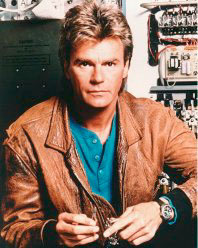
Also of note is that Swiss Army Knife Sales peaked in the late 80's. During the same time period, for yet unknown reasons sales of leather jackets also jumped and the popularity of the mullet haircut grew significantly. :)

MacGyver.jpg
 
The article also seems to imply that a significant portion of their retailers, airport shops, were suddenly closed down as a result of 9/11. Thus a huge hit, even if consumer tastes in knives never changed. Vic/Wenger never even faced competition from tactical knives through these channels.

I'd guess over the years, Vic/Wenger have also faced increasingly stiff competition from multitool manufacturers like Leatherman, Gerber, etc.
 
stevekt said:
Also of note is that Swiss Army Knife Sales peaked in the late 80's. During the same time period, for yet unknown reasons sales of leather jackets also jumped and the popularity of the mullet haircut grew significantly. :)

Actually that's very true! :p :D
 
Richard Dean Anderson and MacGyver I suspect helped the SAK sales.

Of course, I suspect there was humour in there statistics.

Knife sales in general have been dropping. Too many state and federal policies, combined with the constant "teachings" from these same groups, has indoctrinated people to think of knives as weapons only and that "good" citizens need not such things.

9/11 didn't help any.
 
Back
Top