9 Inch Grinder Disks

Joined
Aug 5, 2014
Messages
213
Hi all, I'm in the process of having some 9" grinder disks lathed and have a question about tolerance between the motor shaft and the disk hub. The motor shaft is listed (in mm) as 19j6. From my basic understanding, j6 refers to the tolerance of the shaft size in micrometers...I found a reference showing that for j6 tolerance, with a 19mm motor shaft it would be +9 and -4 micrometers which means the shaft is between 18.996 and 19.009 mm (damn that's precise).

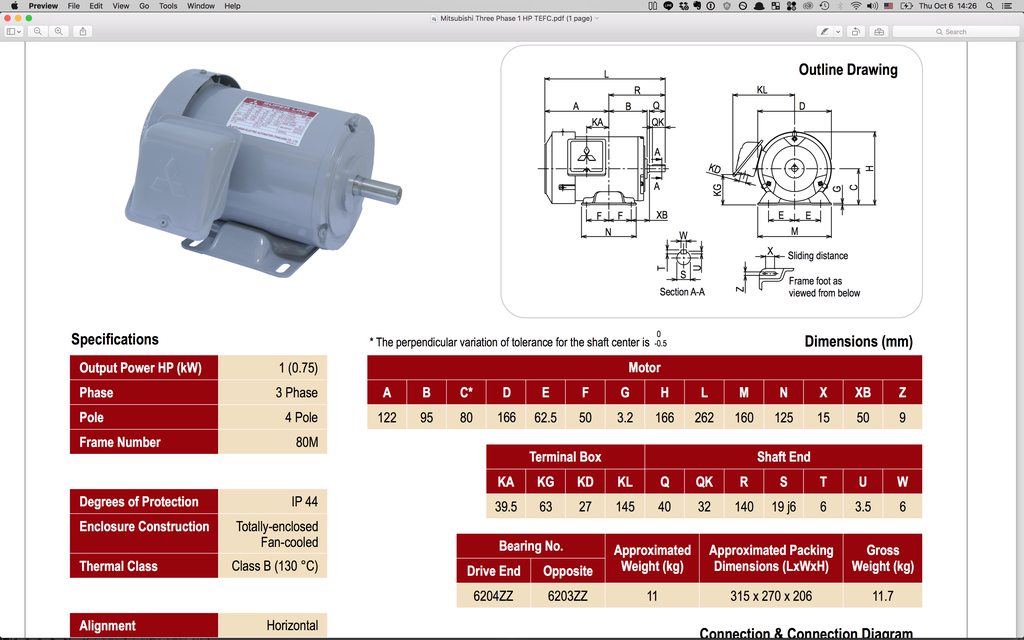
Essentially, I'd like to know how much larger I need to make inner part of the hub (shaft mount?) so that it couples well with the shaft, but has the very least amount of runout. If the motor shaft range, then, is between 18.996 to 19.009mm, what would be the most ideal size to turn the inside diameter of the hub? If it's helpful, I posted a pic with some additional stats about the motor I'm planning on using - a 1hp 3 phase motor to be used with the same VFD that I got for my grinder.

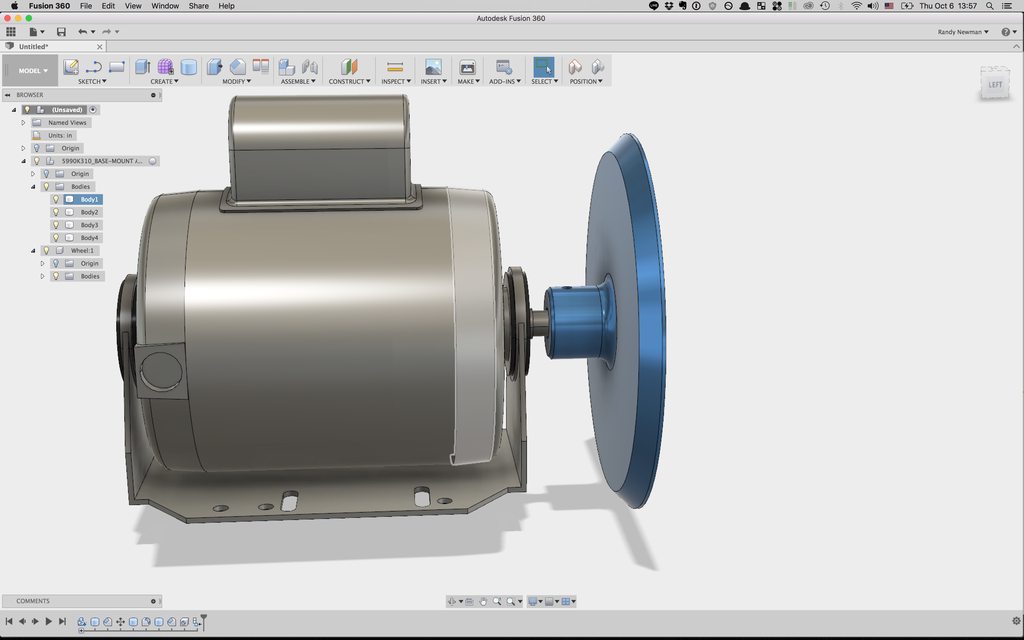
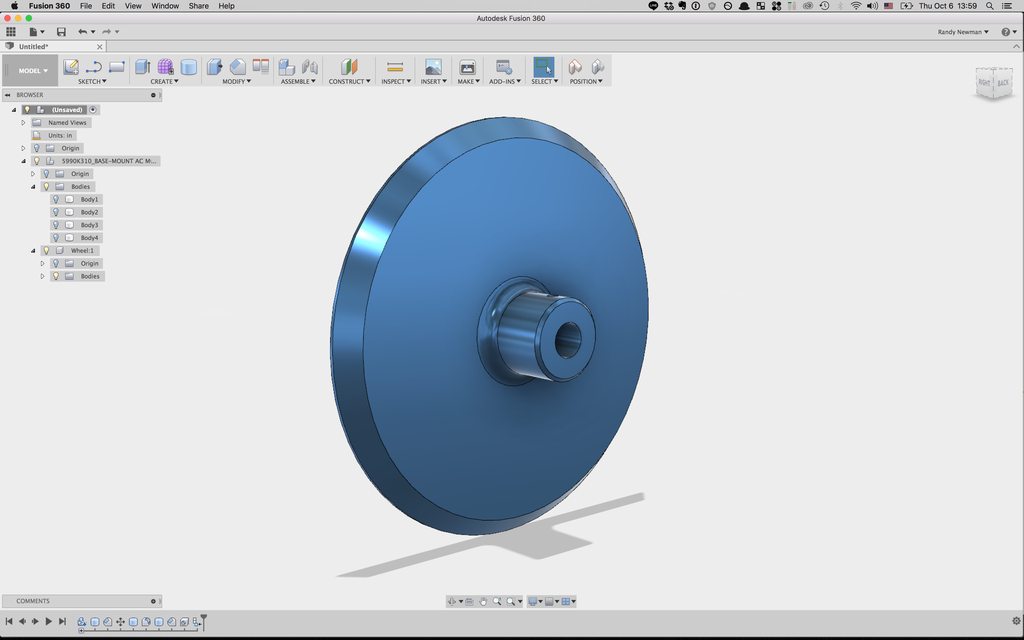
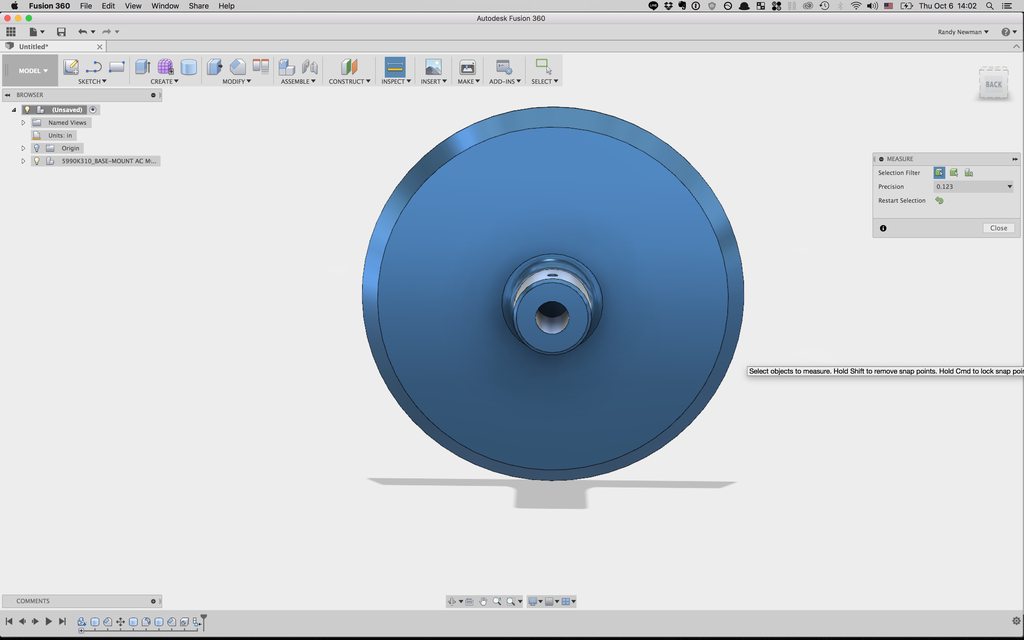
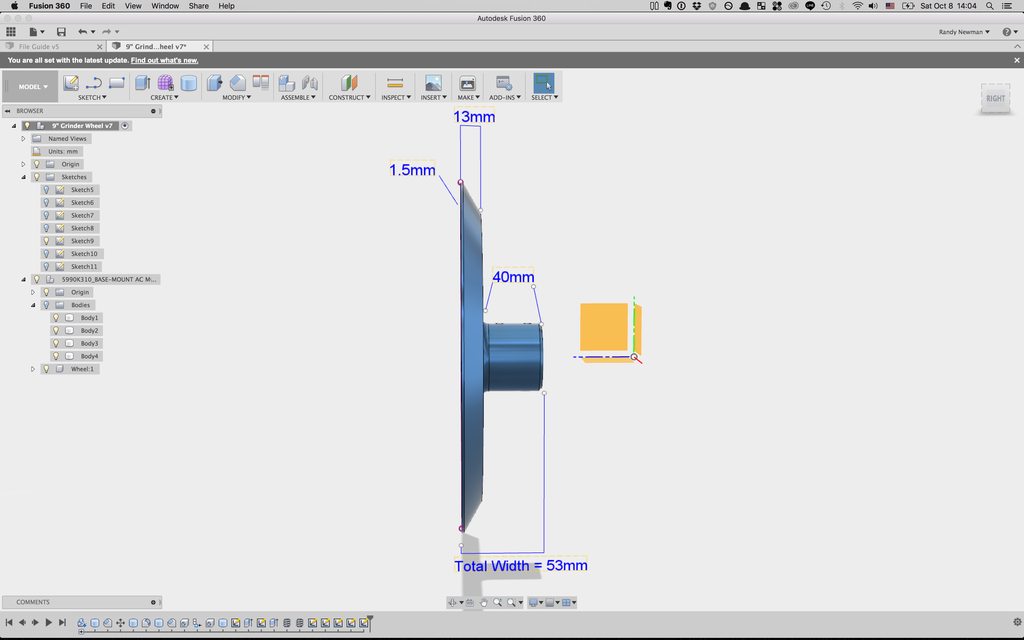
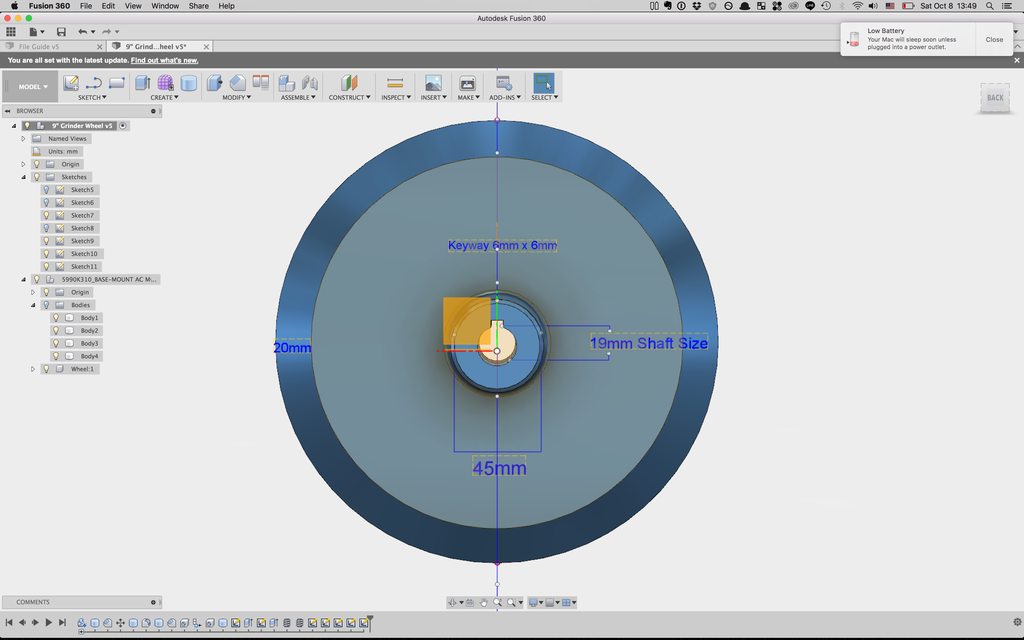
Last, a couple shots of what I'm planning...1/2" steel with bevel, flat disk, most likely from 4140 steel.

Thank you for any help with that guys :)
2ZyWRJhh.png


m78bhEch.png


yMarAR2h.png


BfP09JKh.png
 
Last edited:
Some things to consider. Even if the shaft is a snug fit to the bore, if there is any taper to that bore (typical for drilled and reamed hole to have a little bell mouth) that can still translate into a wobbly disk. Also, you could have a geometrically perfect hole, but if it wasn't cut in the same setup as the disk face it probably won't be perfectly perpendicular to that face. So it could be perfectly inaccurate. So, there are issues relating to that bore that have nothing to do with the actual exact diameter.

I recommend the hole be single point bored to insure it has no taper. The face and bore need to be cut in the same setup, without moving the part to prevent introducing runout there. If it's 4130 you're probably considering heat treat (not much point to it if you don't) so you might want to rough the disk soft and finish it after heat treat to remove any HT distortion. And lastly, you could have a disk with no runout at low speed, but gets wobbly due to vibration if it isn't balanced.

I recommend two set screws on the key to spread out the mounting pressure. It might reduce runout some, and is a bit more insurance that 7 pound disk spinning 3,000 RPM doesn't come off and ruin your day. :thumbup:
 
"between 18.996 and 19.009 mm (damn that's precise). "
Nick that's .013
It is actually quite sloppy. very sloppy.

do you already have the motor? you may want to mic the shaft and then decide what diameter you want to bore to?

and what Nathan said about the machining all in one setup, this assumes that your turret or tool holder is square to the spindle bore :-)

btw, I bought a 9" steel disc on ebay for about $42, there aren't many but I found one.
I also have one of these - http://www.shopsmith.com/ownersite/partscat/productoptionspartscat.htm?item=555143&qty=1

you could turn that 12" into 9" if you wanted to, I like it as 12" myself
 
"between 18.996 and 19.009 mm (damn that's precise). "
Nick that's .013
It is actually quite sloppy. very sloppy.

do you already have the motor? you may want to mic the shaft and then decide what diameter you want to bore to?

and what Nathan said about the machining all in one setup, this assumes that your turret or tool holder is square to the spindle bore :-)

btw, I bought a 9" steel disc on ebay for about $42, there aren't many but I found one.
I also have one of these - http://www.shopsmith.com/ownersite/partscat/productoptionspartscat.htm?item=555143&qty=1

you could turn that 12" into 9" if you wanted to, I like it as 12" myself

.013mm is .0005" which is a pretty tight spread, IMO. Plus or minus a few tenths is beyond the precision capability of many shops to even measure accurately. Around here anyways.

The accuracy of the orientation of the tooling doesn't usually play a big role here. The cuts are done in X and Z, the squareness of which is determined by the accuracy of the machine tool itself. If a cut were done with live tooling or from a tail stock you could run into that issue, but that wouldn't apply to most turning centers.
 
.013mm is .0005" which is a pretty tight spread, IMO. Plus or minus a few tenths is beyond the precision capability of many shops to even measure accurately. Around here anyways.

The accuracy of the orientation of the tooling doesn't usually play a big role here. The cuts are done in X and Z, the squareness of which is determined by the accuracy of the machine tool itself. If a cut were done with live tooling or from a tail stock you could run into that issue, but that wouldn't apply to most turning centers.

I read .013"... :-(
my bad...
of course half a thousand is indeed a tight spread.

Our shop is lucky to have a cmm that's pretty accurate. -

https://instagram.com/p/BK8KkSQAbUw/
 
Last edited:
Some things to consider. Even if the shaft is a snug fit to the bore, if there is any taper to that bore (typical for drilled and reamed hole to have a little bell mouth) that can still translate into a wobbly disk. Also, you could have a geometrically perfect hole, but if it wasn't cut in the same setup as the disk face it probably won't be perfectly perpendicular to that face. So it could be perfectly inaccurate. So, there are issues relating to that bore that have nothing to do with the actual exact diameter.

I recommend the hole be single point bored to insure it has no taper. The face and bore need to be cut in the same setup, without moving the part to prevent introducing runout there. If it's 4130 you're probably considering heat treat (not much point to it if you don't) so you might want to rough the disk soft and finish it after heat treat to remove any HT distortion. And lastly, you could have a disk with no runout at low speed, but gets wobbly due to vibration if it isn't balanced.

I recommend two set screws on the key to spread out the mounting pressure. It might reduce runout some, and is a bit more insurance that 7 pound disk spinning 3,000 RPM doesn't come off and ruin your day. :thumbup:

I've done this way and have zero run out /10 inch disk/ . First we made shaft of the same dimension/diameter as that in the motor .Then we bore the hole on disk hub / lathe of course / that shaft enter easy by hand inside .Then we mount disc on that new shaft ......shaft on lathe and do rest of the work in one turn .............
 
Hi Nathan I was hoping you'd see this considering the run you did on the grinding disks previously looked really nice. Honestly if I'd had the opportunity to get one while they were around I would have jumped on that, I was sad to have missed out on those! Thanks for helping out [emoji106][emoji1]

Ok, I got it regarding cutting the face and bore in the same setup, which now answers a previous question I had as to why other disks are cut with the bore going all the way through to the face of the disk.

And also good call with the double set screws for the key. Just realized my design doesn't have the key slot cut in yet [emoji854]

I am intending to HT the disks, though honestly I'm wondering if it's overkill? I tend to overbuild things, and I tend to like having overbuilt tools, so I'm all for the extra work of it doesn't add TOO much extra complication to the process. Considering some vendors have aluminum disks, using mild steel already seems to be a big jump.

In the case of going the hardened route - would it be better to pre-harden the material and cut in one operation instead of the back-and-forth of the softened machining and post-HT? Or is that just beyond reasonable haha...my experience with machining anything hardened is that it's a total PITA, but then again I'm also not a machine shop with high-level machinery.

Thanks for the replies guys
 
Oh, one last quick question...if I bore the hole at 19mm as Stacy suggested, what about that extra .009mm tolerance in shaft size?
 
Oh, one last quick question...if I bore the hole at 19mm as Stacy suggested, what about that extra .009mm tolerance in shaft size?

Make short shaft in the same dimension like you have on motor .Bore the hole in disk and bore hole for screw for the key .Put disk on shaft you make , tighten the key screw and do the rest of work on lathe .I guarantee you will have a zero run out .
 
It's my guess that they're bored all the way through to the surface of the disc so it will aid in removing the disc if it gets stuck on the shaft.
 
It's my guess that they're bored all the way through to the surface of the disc so it will aid in removing the disc if it gets stuck on the shaft.

It's just easier to machine in a single setup if you bore in from the face of the disc, and the hole in the center doesn't affect the use of the disc since you can't really grind there anyway.
 
Natlek, interesting method there. So what you're saying is do the finally machining of the the disk while it's mounted on the actual replica of the shaft. Seems like it will be best to have the actual motor in hand to get the best results as opposed to the spec in their PDF, I'll have to go pick one up in the next few days here.

Main thing is that, As i'm making multiple of these I want them to work with any of the Mitsubishi 19mm shaft motors they're put on as it's a common shaft size. So I'm thinking as a standard, I should mill the bore to the maximum of the tolerance, 19.009mm, if that's even possible as Nathan mentioned most shops can't even to go that degree of precision. Again this may be overkill but I just want to make it as good as possible.

Still interested in the overall advantage of hardening the disks in which case I'd use 4140. Essentially how much benefit in performance vs how much extra effort it will take to make. Being a knifemaker, I can't help but want to do a hardening treatment on them haha. Seems like I'm just missing out if I don't [emoji23][emoji848]

Thanks again for the input guys.
 
The advantage of hardening the steel is less issues when trimming the sandpaper to the disk or scraping off dry adhesive. It's more durable. But, that said, plain steel is harder than aluminum, so it's just a matter of determining what is "good enough" for you.

4130 at HRC 44 machines pretty well. Any modern shop with modern tooling can process that without any problem. It's well below the threshold of "hard milling" and would not be difficult to mill, though it can be tricky to drill. Many people actually prefer to mill steel in that hardness rage over soft gummy materials such as austenitic stainless steel.
 
Ok that makes sense. Seems like it's worth going for the hardened version then, which I like :)) I'll move forward with that.

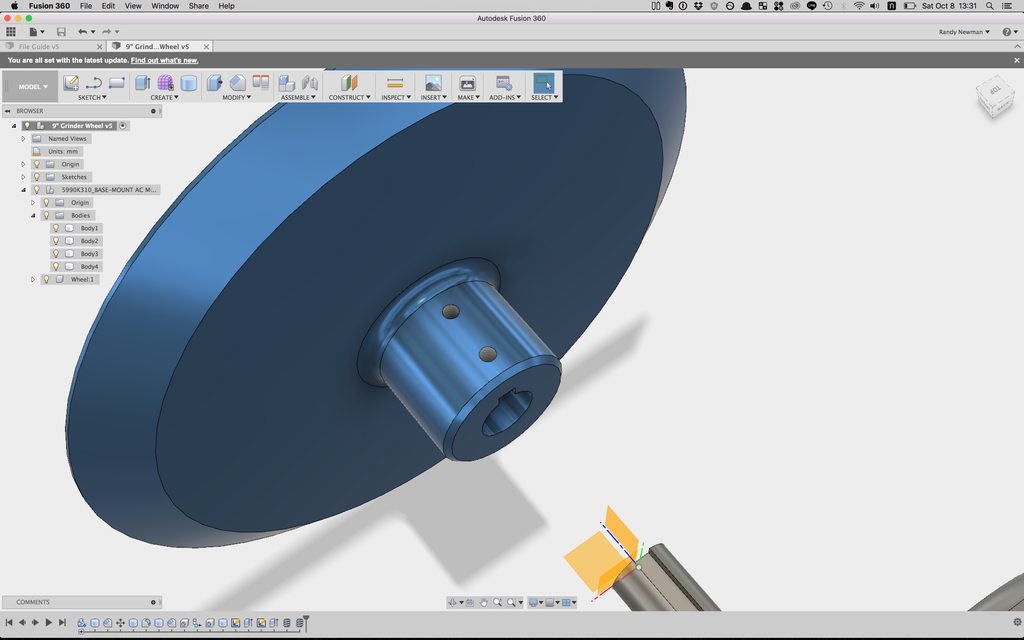
I've changed the design to have two set screws, though seeing as the inner set screw is quite close to the back side of the disk, I'm hoping it doesn't pose issues for drilling/tapping. If so I can either opt to make the back of the hub longer, or, bring the set screw in closer to the other.

Here are a couple images of the design changes (apologies for the metric measurements, though I do love me that metric system haha):

w6D7Pc1h.png


JJ5AQfIh.png


daiWAd9h.png
 
Looks good.

I had a problem with chatter when facing the large face while clamped on the spud. Might not be a problem with 41xx but who knows.
 
Back
Top