A test on Silica Gel drying...

Joined
Dec 25, 2004
Messages
1,363
I found a pound of silica gel my mom uses to dry flowers. It is non toxic blue indicator type of silica (I guess it has cobalt oxides in it).

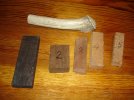
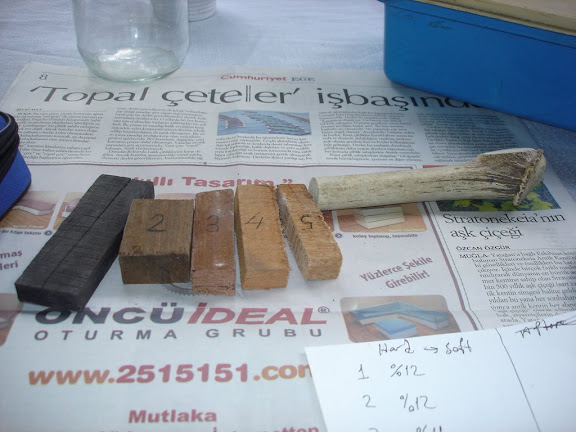
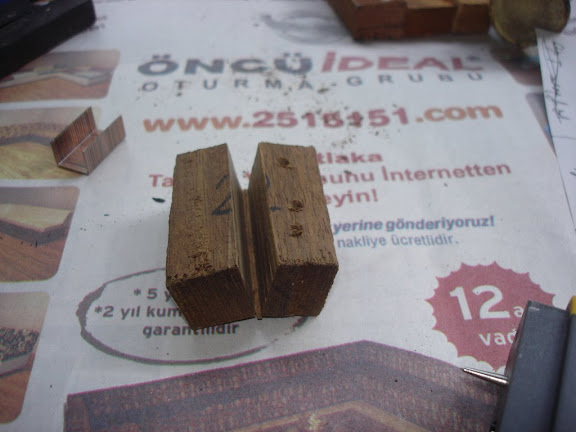
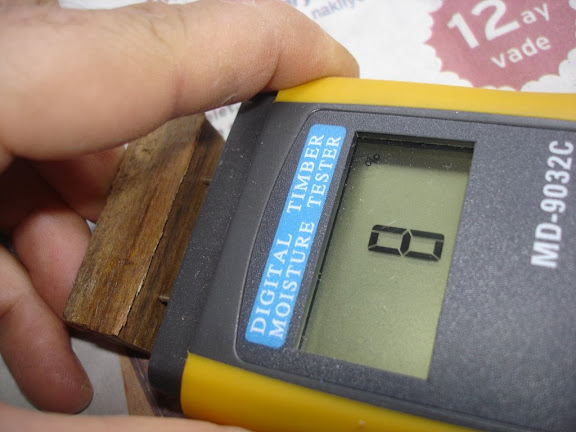
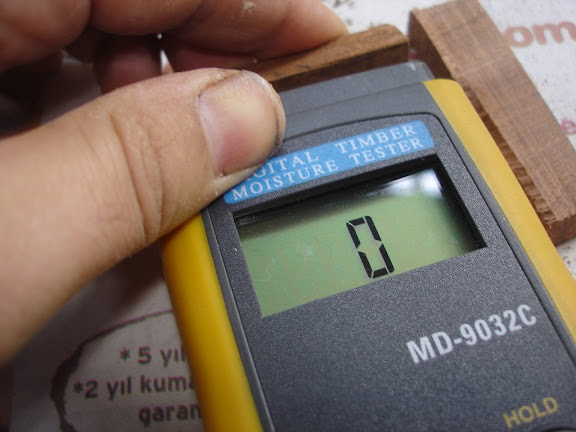
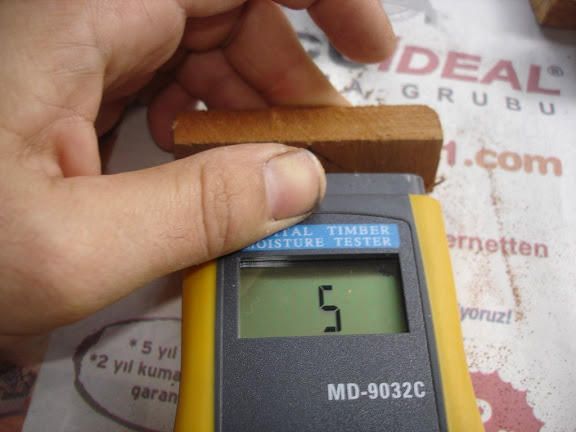
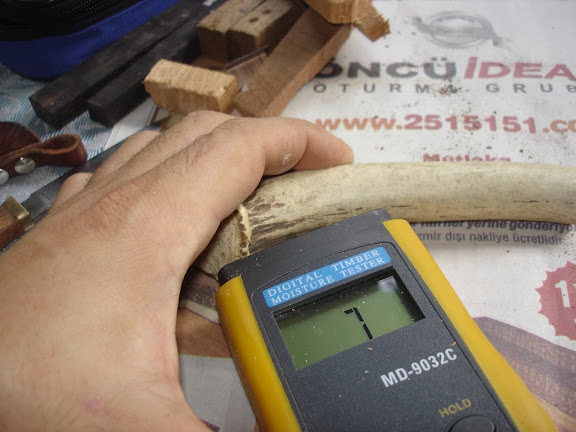
To test the effect of it I selected 5 different undried woods. These found in a carpenter scraps pile. First is the ebony (or maybe African Blackwood), then another hard wood, it goes softer and softer to the 5th sample - the softest (I dont know their wood types), tested with a hygrometer I bought for 80$ recently. I also added an antler piece to test...

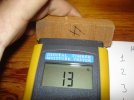
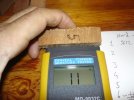
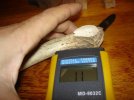
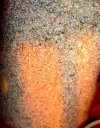
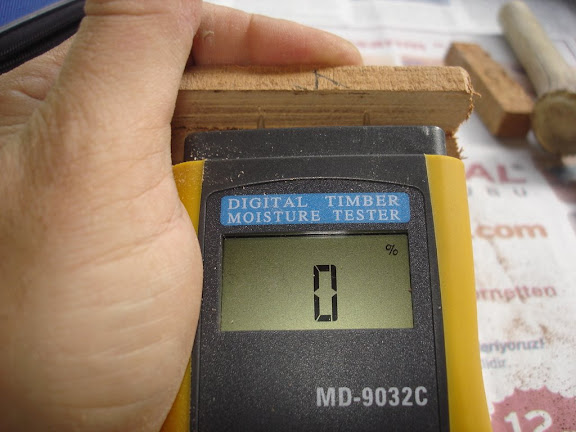
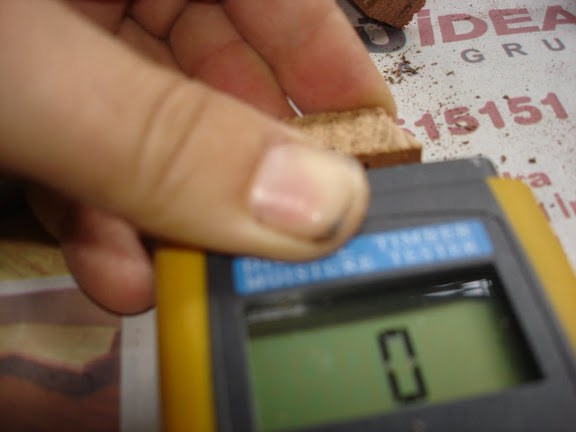
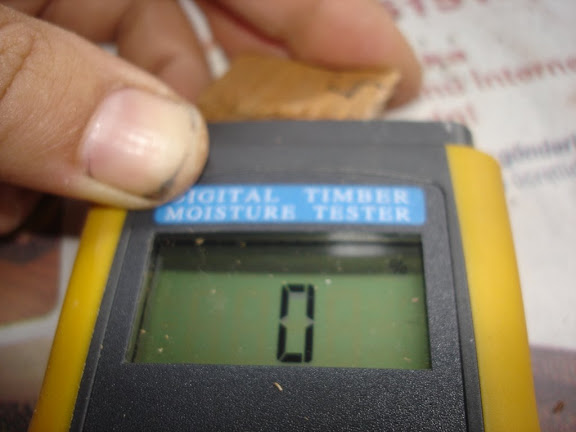
Pics are surface readings:
attachment.php

attachment.php

attachment.php

attachment.php

attachment.php
 

Attachments

  • DSC02008.JPG
    DSC02008.JPG
    80.5 KB · Views: 242
  • DSC02009.JPG
    DSC02009.JPG
    55.3 KB · Views: 235
  • DSC02011.JPG
    DSC02011.JPG
    60.5 KB · Views: 228
  • DSC02012.JPG
    DSC02012.JPG
    59.8 KB · Views: 227
  • DSC02013.JPG
    DSC02013.JPG
    58.8 KB · Views: 234
Last edited:
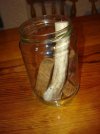
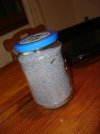
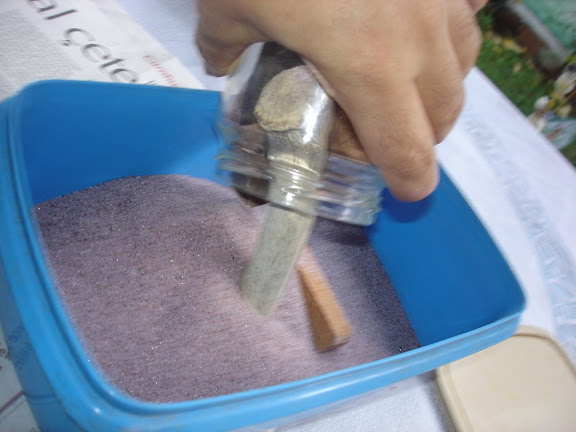
Then I put the samples in a jar and covered under silica gel.

Lets hope we can gain some experience here :rolleyes::D

I'll check&update the daily readings and also I'll bake the silica everyday to keep it dry...

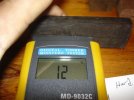
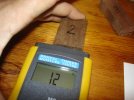
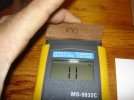
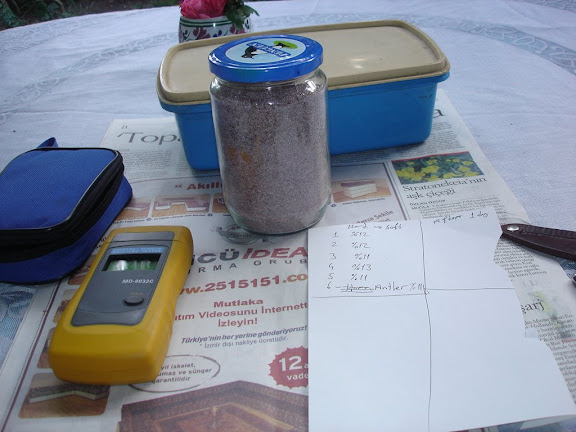
Here is the initial readings:
#1 - Ebony : 12%
#2 - Another hardwood - a little bit softer than sample 1 but more oily wood - 12 %
#3 - Medium hard - softer than #2 - 11%
#4 - Soft wood - 13%
#5 - Very soft, light wood - 11%
#6 - Antler - 11% (I'm afraid to test moisture of antler with this gadget is nonsense but here we go :))

I guess if samples were known wood types it would be much more beneficial but all the handle material I have is dried...
Other than that I would appreciate the recommendations and comments on this test...
attachment.php


attachment.php


attachment.php


attachment.php
 

Attachments

  • DSC02014.JPG
    DSC02014.JPG
    62.5 KB · Views: 216
  • DSC02015.JPG
    DSC02015.JPG
    55.4 KB · Views: 215
  • DSC02016.jpg
    DSC02016.jpg
    34.1 KB · Views: 221
  • DSC02019.jpg
    DSC02019.jpg
    40 KB · Views: 225
Last edited:
" bake the silica every day" , yes very important.
Browning Arms , back in the late '60s and early 70s had a shortage of wood for gun stocks. They got the idea to remove the moisture with salt to hasten the process. Some salt however diffused into the wood and guns made with those stocks rusted where the metal touched !!
What size pieces ? They should all be the same.If the moisture content is not the same throughout the piece it will warp as you cut it.
 
" bake the silica every day" , yes very important.
Browning Arms , back in the late '60s and early 70s had a shortage of wood for gun stocks. They got the idea to remove the moisture with salt to hasten the process. Some salt however diffused into the wood and guns made with those stocks rusted where the metal touched !!
What size pieces ? They should all be the same.If the moisture content is not the same throughout the piece it will warp as you cut it.


Oh I missed that.. I will cut them tomorrow to the same dimensions. Thanks mete, it is a very good point...
 
A quick update:
After 1 hour silica quickly sucks the moisture from wood pieces. The color change is matching the pieces :
I had to shake the jar because the silica particles around the pieces were almost filled up with moisture (turned to pink in color)...
 

Attachments

  • DSC02020.JPG
    DSC02020.JPG
    74.7 KB · Views: 73
I decided to finish the test now. After 18 Hours lets see if they are dried good?

DSC02021.JPG


DSC02022.JPG


Here is our samples, sit for 18 hours in silica gel:
DSC02023.JPG


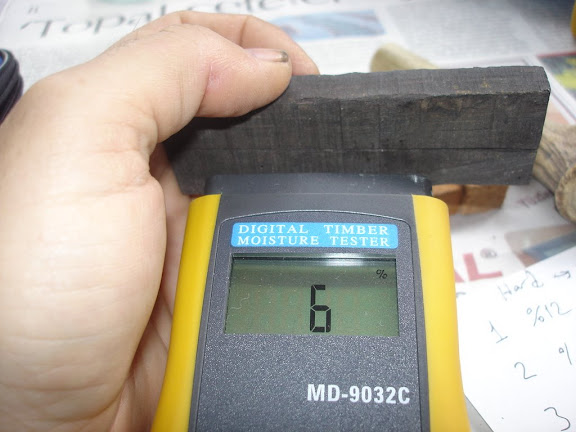
First lets measure the surface of the sample #1- ebony , Remember the surface measurement was 12%;
DSC02024.JPG

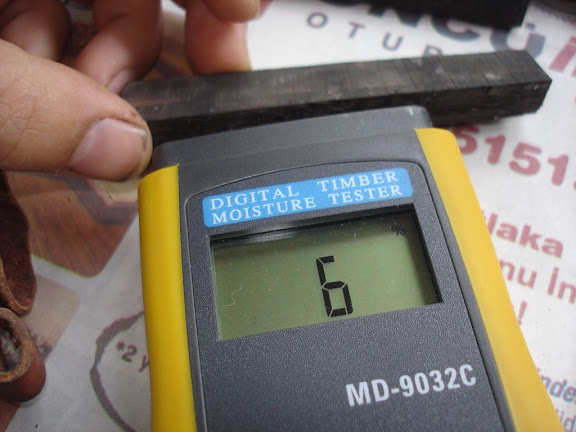
Now it is 6%. I measure from everywhere on the scale and I post the maximum reading...
There was a crack on the ebony originally, I broke that scale length-wise and did some test at the core:
DSC02025.JPG

Wow it has dried to the core... Ok that was ebony, not so oily and scale was thin (about : 0.3")...

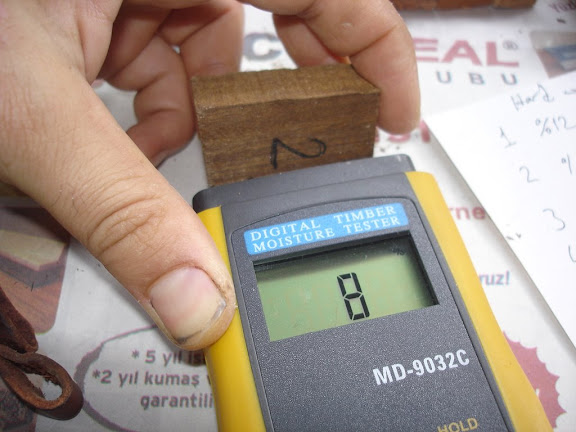
Lets look to sample #2. This is oily and hard wood, I'll ask what is it to the carpenter but the structure is similar to rosewood... The initial surface reading was %12 as ebony:
DSC02028.JPG

It is now dry enough to use, but since it is thick (1/2") and oily I suspect the core wasn't dried enough. Lets cut it then :D :
DSC02031.JPG


And the core test:
DSC02032.JPG

Dried all the way.
I have to add no cracks have seen after this quick drying process. I have observed this materials even drying to the core on my moms flower drying process. These delicate flowers or leafs doesnt even bend. They come out exactly as they placed in the gel... Maybe this is the same thing we are observing for the wood scales...
 
Lets continue to the sample #3, initially it was 11%:
http://lh5.ggpht.com/_VE2vabU9iTc/SR7BfsCkrPI/AAAAAAAAA9A/Zq0khxjWUHg/s576/DSC02033.JPG

Softer wood dried better normally:
And I couldnt manage to read any moisture at the core of that .3" thick soft wood...
DSC02034.JPG


The #4 was 13% before going in the silica. Now it is:
DSC02035.JPG

And the core :
DSC02037.JPG

No reading available....

#5 was very soft - light wood initially 11%. I wasnt able to read any moisture in it after drying:
DSC02039.JPG

Core:
DSC02040.JPG


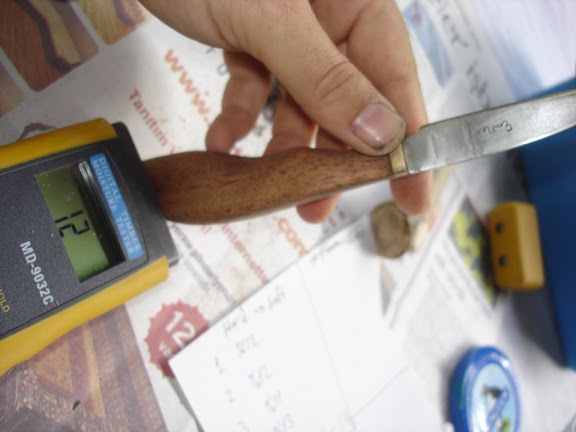
I was afraid the tester was broke, I tested my shop knife handle :D
DSC02041.JPG


Ok, it is working as I didnt dry that wood at all...

Lets look to antler (initially 11%):
DSC02042.JPG


In conclusion:
Silica gel is very quick and possibly a reliable way to dry our scales. I'll repeat the test for known woods and they will be scales and bowie blocks. I'm waiting for my 3 pound silica order to arrive, a pound costs only 5$ :thumbup:

Hope you enjoyed my unreliable test :p I enjoyed a lot...
 
One question. Do you know what the reading would be on say a piece of Ebony that has been left to dry for a few years by the conventional method?For example some luthiers of top notch classical guitars air dry hardwoods for 10, 20 years often employing timber over 30 years old bought from another deceased luthier's state. It would be interesting to know what the reading on a piece of an Ebony fingerboard, that has been drying for 30 years would be.
I think you are onto something here. Very interesting.
Thank you!
 
One question. Do you know what the reading would be on say a piece of Ebony that has been left to dry for a few years by the conventional method?For example some luthiers of top notch classical guitars air dry hardwoods for 10, 20 years often employing timber over 30 years old bought from another deceased luthier's state. It would be interesting to know what the reading on a piece of an Ebony fingerboard, that has been drying for 30 years would be.
I think you are onto something here. Very interesting.
Thank you!

It wont be drier than the humidity of atmosphere allows you. At my climate (Mediterranean) the most dried piece of wood I was able to test was %8 - an indoor 50 year old chest. I suspect the benefits of extra slow drying of raw materials, like blocks and scales if they wont crack on a fast drying method it is fine for me as they will be flattened, sawed, ground. If you are able to dry it all through without cracking the piece that is the ultimate goal before sending it to stabilizing. But for a precious musical instruments wood has to be perfect, even a tiny micro crack etc. would change the sound. So the pieces are let to dry slowly and equalize to the climate...
 
Excellent post Emre! Thank you for taking the time to do this.

Eric

No problem Eric, I have all the time to test these things these days as I'm out of supplies and waiting for them...

For further test note:
I have exposed these a couple of hours to open, humid air, their test readings were increased significantly, the complete dry pieces sucked the humidity from air like crazy as I was expecting. Now I placed them to the silica box again.

After they are completely dried, I will submerge them in a sucrose solution for a couple of days or week. And let them dry, then I'll completely dry them in the silica again. Then I'll check if the wood sucks humidity from air that quick... I know sucrose treatment done for wood dimensional stability for a century. I have a technique to dry them quick, so I need something to fill the gaps to stabilize. Maybe I'll succeed. There are quite big chunks of eucalyptus and olive wood around. That way maybe I'll avoid to wait them to be dried for years....
 
Last edited:
I will try a modified technique of normal sugar treatment. The sugar treatment is well known on waterlogged wood artifacts' preservation. I have studied restoration techniques in archeology department but never had a chance to apply. The technique is very similar to PEG treatment. This treatment mostly applied to underwater finds. They are filled with water, you submerge a diluted PEG or sugar solution and very slowly you increase the percentage of the solution. Slowly the piece is filled with very high concentrations of that material. Then you just slowly dry the piece. The leftover sugar or PEG inside wood avoids the dimensional deformation.

Nowadays the sugar method greatly replaced the PEG method.

This method also used on conservation of fresh wood.
Here is a link describing the waterlogged artifact preservation methods:
http://nautarch.tamu.edu/class/anth605/File6.htm
And here is a quote from there:
Once the wood is cleaned, the following procedure is recommended:

1. Prepare a solution with a sufficiently low sucrose (1-5 percent) concentration to prevent the dehydration of well-preserved wood or regions of sound wood within an otherwise deteriorated piece. This necessitates the thorough examination of the wood to be treated in order to determine its state of preservation before treatment begins. With highly degraded wood, it is possible to start with a higher concentration of sucrose; however, if in doubt, start with a 1 percent weight/volume solution. Commence a program of weighing a representative sample of wood in treatment to determine when the wood has reached equilibrium with its solution. Once saturation with a given x percent solution is achieved, increase the sugar concentration by 1-10 percent.

2. Select an antimicrobial agent, such as Dowicide A, and add it to the first mixture of sucrose and water when it is initially prepared. This allows for the complete penetration and protection of the wood by the antimicrobial agent.

3. The incremental percentages of increase can be higher and more closely spaced if the wood is highly degraded. It is best to start with a low percentage increase, e.g., 1-5 percent, until a concentration of 50 percent is reached. Then the solution can be increased in 10-percent increments. Again, if in doubt, the same incremental increases used at the start of the treatment can be used throughout the treatment. The treatment continues until sucrose concentration reaches 70 percent, and the wood has equalized at this concentration.

4. If necessary, select an additive that will discourage insect and rodent attacks on the treated wood. There are many pesticides that will work, and selection depends on local availability. For thorough protection of wood, add the insecticide to the initial solution. If the wood is kept in a museum environment, problems with insects and rodents should be minimal and probably would be controlled by alternative means.

5. When the wood has reached an equilibrium with the highest solution desired, air dry it slowly under conditions of controlled high humidity. Humidity can be lowered slowly as the wood dries. Submitting the wood too quickly to conditions of low humidity will damage it. Slow, controlled drying and adjustment to the prevailing atmospheric conditions, as is the case in all the wood treatments described here, will maximize the success of the overall treatment.

6. Store the wood under conditions of less than 70 percent humidity if possible. The wood should not be subjected to humidity over 80 percent because of the possibility of condensation forming on the wood; this could leach out the sugar.


If sugar is selected as the treating medium, refined white sugar (pure sucrose) should be used. The brown- colored, coarse-grained unrefined sugar (Type A sugar) should be avoided, as it is much more hygroscopic than the white. Each time the relative humidity rises, the surfaces of wood treated in unrefined sugar will become wet. This hygroscopicity is analogous to that encountered when using the medium molecular weight PEGs. The Type A sugar-treated wood, however, remains dimensionally stable.

This quote summarizes the normal treatment of underwater finds.

And here is a link of an experiment on fresh wood preservation:
http://www.bzu.edu.pk/jrscience/vol12no1/2.pdf


I'll try to implement a modified version. There are complete dry woods I have. I'll place them in a high solution of sucrose. Then I'll let them suck the solution for weeks. They are in a glass jar, once they have enough penetration they hopefully sunk down. Then I'll slow dry them, once they are about %15 they will go into silica. After one or two days they are completely dried. But now instead of air gaps in the wood it is filled with sugar. And sugar filled wood is very stable...

I'll post a report on the test: They are now in sugar solution, some pieces are sunk down in a couple of hours. Once they are completely dry they get the solution fast inside...
 
I found a pound of silica gel my mom uses to dry flowers. It is non toxic blue indicator type of silica (I guess it has cobalt oxides in it).
(snip)

Emre, where did your mother obtain the silica gel from? I love using wood that I harvest from my yard (so far cypres and oak) and would love to try it on some magnolia, pecan, or pear even.

Thanks,
Jim L.
 
If you don't want the wood to rapid dry in one day, but a bit slower, maybe wrapping it in cloth of some sort would slow the drying a bit?
That way you wouldn't get a direct path for the moisture to be drawn directly into the silica gel at the surface of the wood.
 
I found a pound of silica gel my mom uses to dry flowers. It is non toxic blue indicator type of silica (I guess it has cobalt oxides in it).
(snip)

Emre, where did your mother obtain the silica gel from? I love using wood that I harvest from my yard (so far cypres and oak) and would love to try it on some magnolia, pecan, or pear even.

Thanks,
Jim L.

Hi jim, I bought 3 pounds recently from a chemical supply store. You can find it from flower drying supply stores as well. Here is an example: http://http://www.save-on-crafts.com/driedflowpre.html.
You should notice if you dry it from green it may crack. Maybe it is possible, I'll test it ....
 
If you don't want the wood to rapid dry in one day, but a bit slower, maybe wrapping it in cloth of some sort would slow the drying a bit?
That way you wouldn't get a direct path for the moisture to be drawn directly into the silica gel at the surface of the wood.

Howie it is an excellent advice. I'll use your method for fresher woods. Thanks... :thumbup:
 
Very cool experiment! A few years ago a guy at work gave me a section of the trunk of a lignum vitae tree. I put it in my basement to let it dry and it cracked like crazy. I've always wondered how I could have saved that wood. Ah well. I guess it dried out too quickly.

Moisture content is a major factor in some handle materials. In Iowa the relative humidity ranges from 90% in summer to 30% in winter, and some materials swell and shrink right along with it. I've quit using some things like buffalo horn for that reason - just not stable enough. Never had too much trouble with wood though that I know of.

Any know whether buffalo horn can be stabilized? I really like it aside from its sensitivity to humidity.

Emre the sugar stabilization sounds interesting. Let us know how that turns out too. I just hope it doesn't make for sticky knife handles! :D
 
Very cool experiment! A few years ago a guy at work gave me a section of the trunk of a lignum vitae tree. I put it in my basement to let it dry and it cracked like crazy. I've always wondered how I could have saved that wood. Ah well. I guess it dried out too quickly.

Moisture content is a major factor in some handle materials. In Iowa the relative humidity ranges from 90% in summer to 30% in winter, and some materials swell and shrink right along with it. I've quit using some things like buffalo horn for that reason - just not stable enough. Never had too much trouble with wood though that I know of.

Any know whether buffalo horn can be stabilized? I really like it aside from its sensitivity to humidity.

Emre the sugar stabilization sounds interesting. Let us know how that turns out too. I just hope it doesn't make for sticky knife handles! :D

Hi Dave, I had the same problem about olive wood. This experiment was intended to see if I can use a quick but even drying. I'll try olive scales and blocks today if they crack during silica drying. I suspect the cracking is not directly related to speed of drying but instead uneven drying. I'll put this hypothesis to test today. If this is the case we can use this method to eliminate cracking problems of these woods.

Buffalo horns are so dense that I'm not sure if it can impregnated with a substance. There are some sites mentioning superglue impregnated buffalo horns under positive pressure though....

I took out the samples from the sugar solution today, just rubbed with a cloth to dry the surface and put them directly to silica. Lets see if they come out ok. I have a sample that is not sugar treated and one is. I'll compare their speed of gaining moisture from air. I assume if the sugar treated gains moisture from air slower than the other one I'll conclude this test somewhat successful. Then I'll test the effect on more decent pieces like scales and blocks. I'll note the initial measure and weight of the samples then compare the scales of control group and sugar treated ones. I plan to put them after treatment to a steam box. Then I'll note the dimensional changes between control group and treated ones. If they all go ok we will have some "sweet" :D stabilized wood. BTW I checked the samples, they taste sweet :) but they are not sticky, I don't know why...
 
Back
Top