

- Joined
- Dec 8, 2006
- Messages
- 1
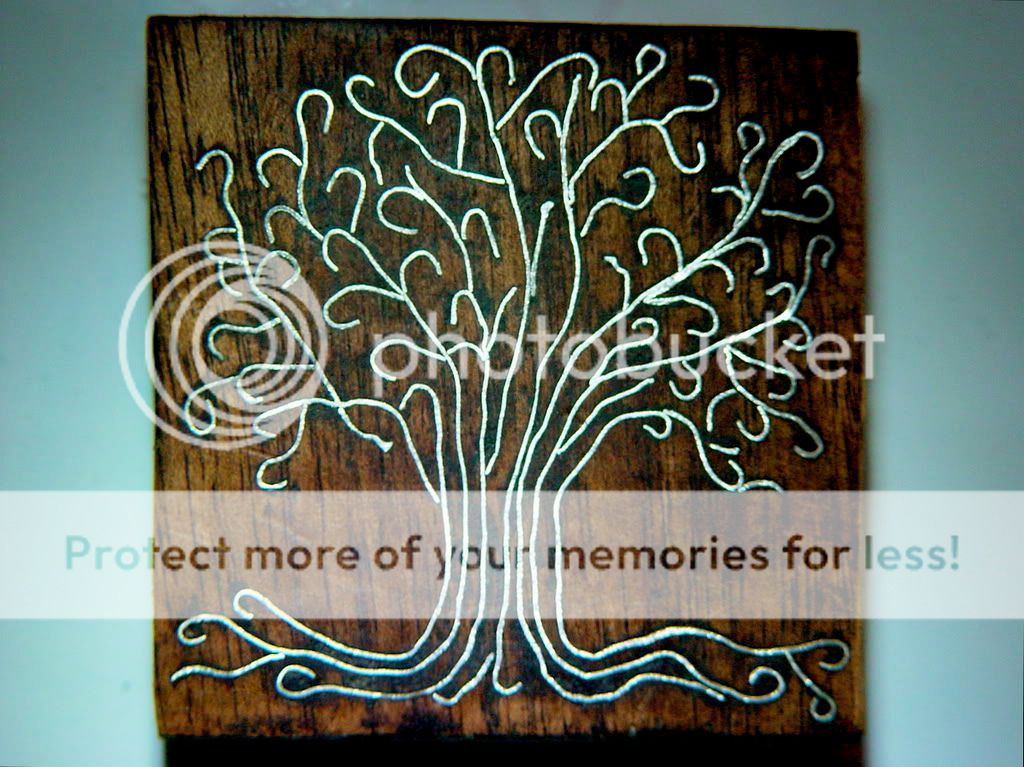
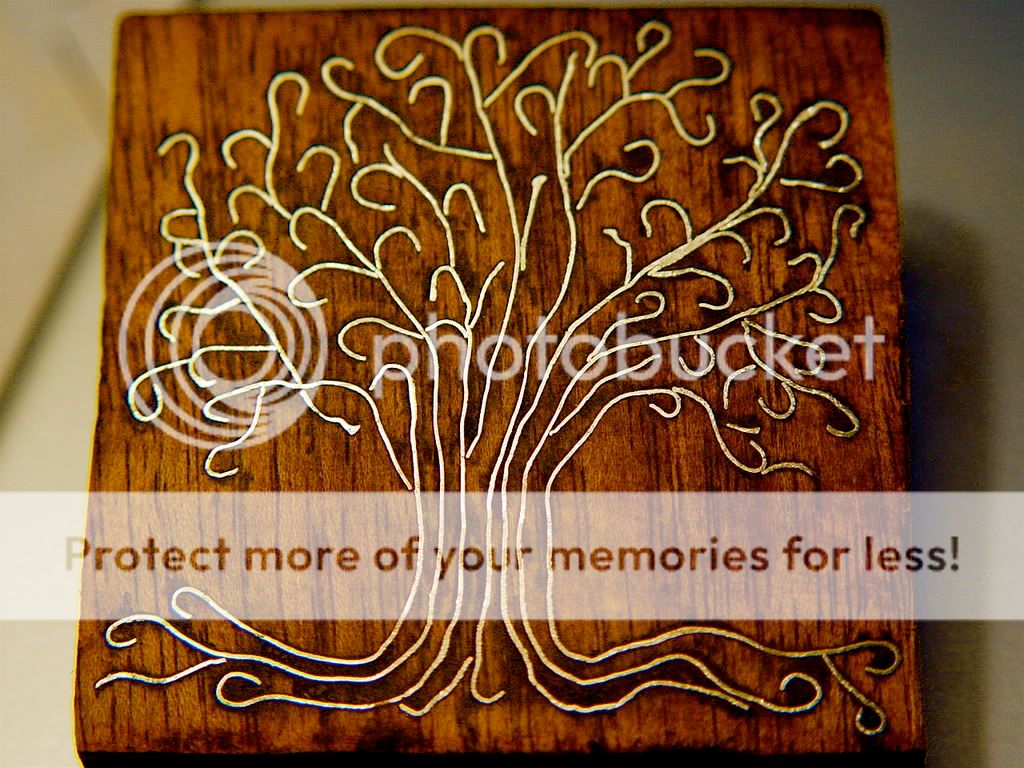
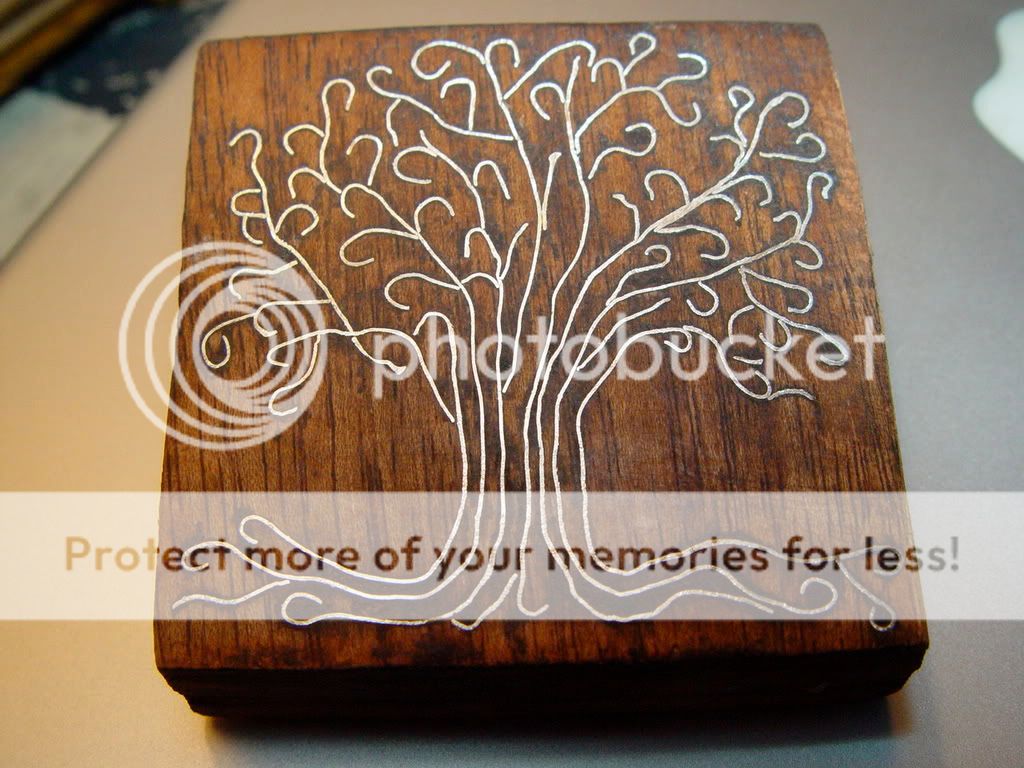
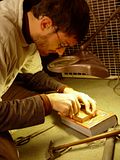
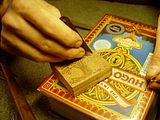
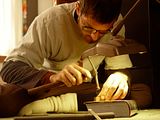
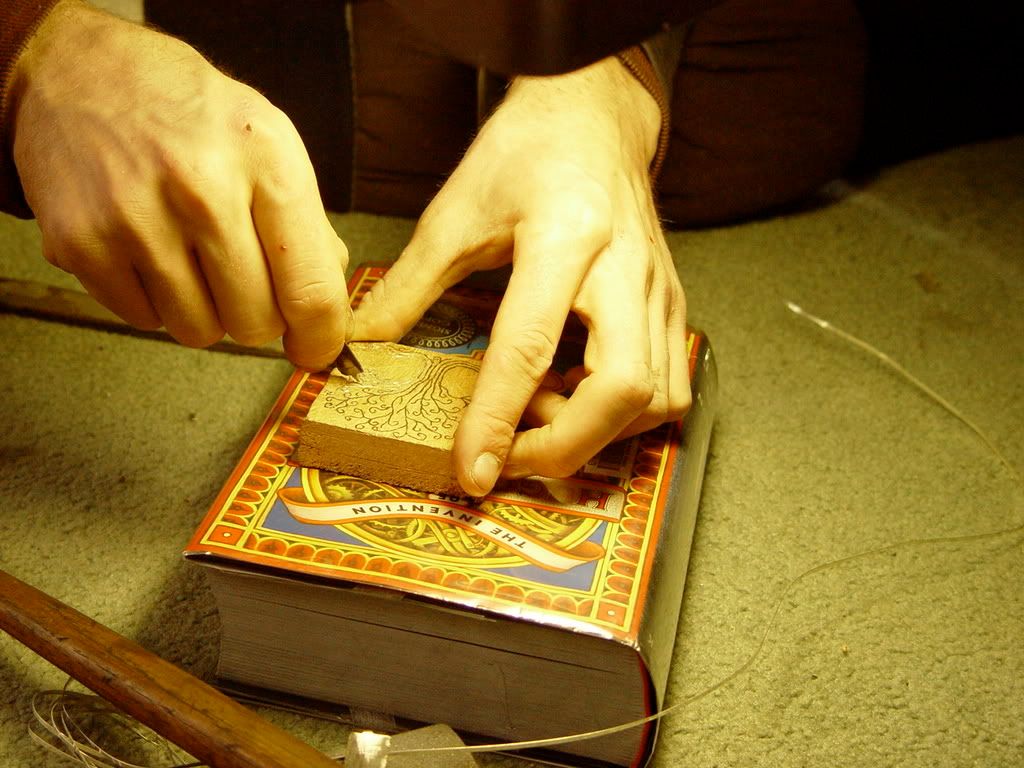
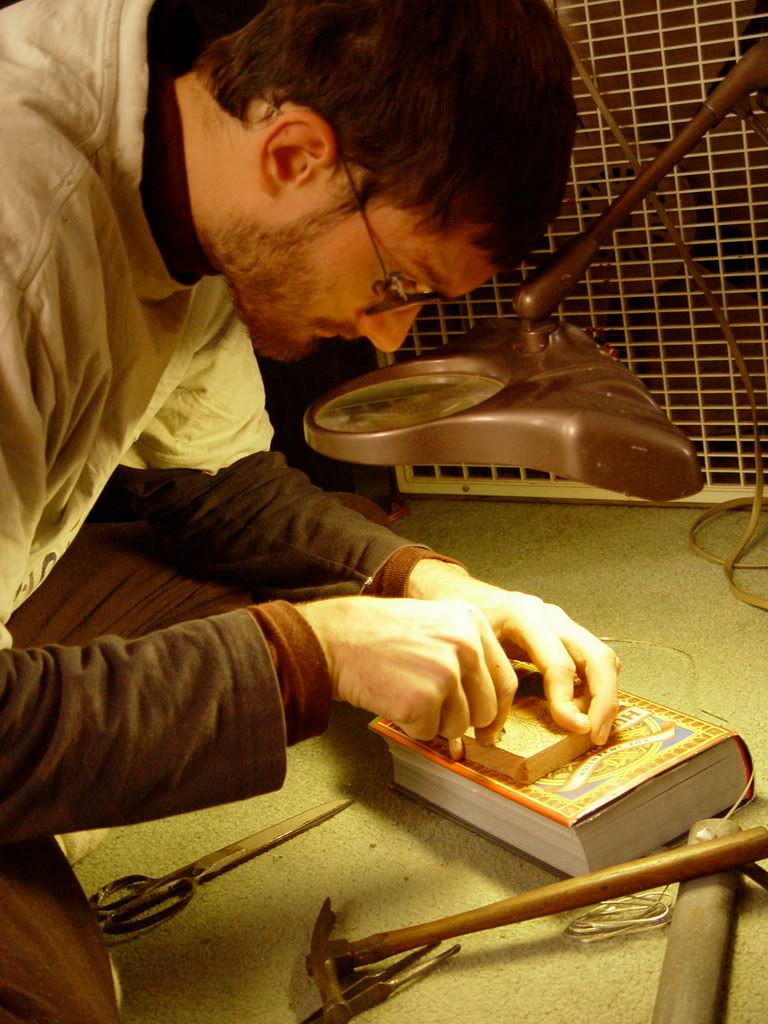
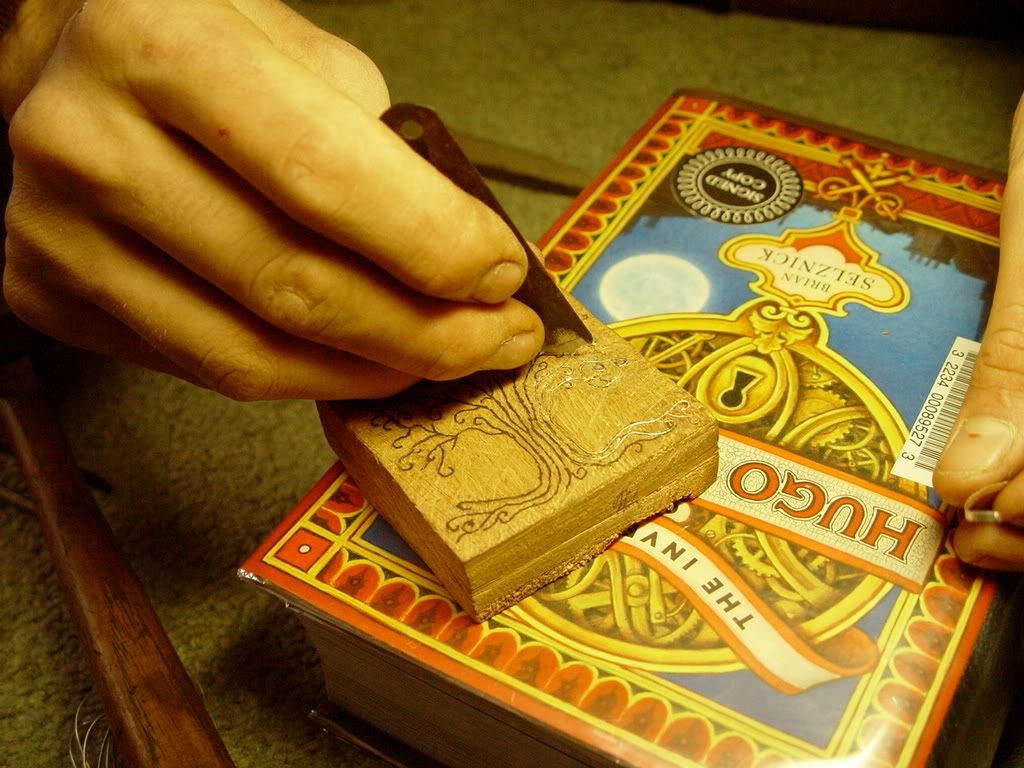
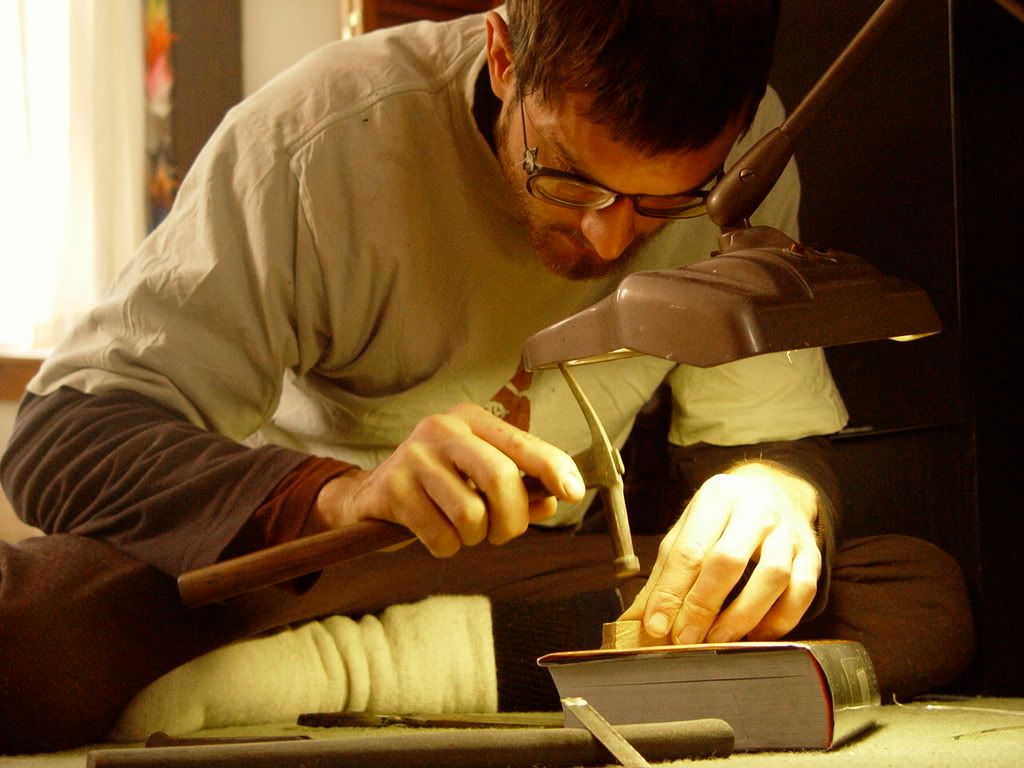
This is a little "practice run" I did this past week, took about 11 hrs., starting with a raw piece of mahogany and an old hacksaw blade for a "notcher." I used .010" sterling wire, dead soft. What fun!
Here's how I did it, after reading the few tutorials online like Tracy Mickley's: http://www.mickleyknives.com/html/page_22.html
First I drew it out on paper, made up my mind about the final image, then drew it freehand on the wood with a ballpoint pen, using the paper as a reference. I made a hacksaw blade tool about 1.3 mm wide and notched it in little by little. I used a simple pair of scissors to cut the wire, and a small-faced hammer to pound it in. Then of course I sanded it all down and stained the wood.
This is the first post I've made on bladeforums, although I have followed you guys' threads for a few months now. I'm a 22 year old knifemaker, originally from Massachusetts, now living full-time on a small farm near Pondicherry, South India. I first started taking bladesmithing classes a few years ago from a knifemaker in MA, and have been making knives as much as I can ever since. I'm based out of a small farm where we grow everything we eat, including rice, yams, and papayas, among many other things. It takes a half hour to get to an internet source here, so I don't get on the internet too often. This past year I've been building up my blacksmithing workshop, which is a simple thatched-roof structure with a dirt floor where I do all my work.
I have really appreciated the input of all you bladesmiths that take the time to share techniques and give feedback, and I look forward to talking knives here on bladeforums in the future!
-Lowell Harrison-Schmidt
Here's how I did it, after reading the few tutorials online like Tracy Mickley's: http://www.mickleyknives.com/html/page_22.html
First I drew it out on paper, made up my mind about the final image, then drew it freehand on the wood with a ballpoint pen, using the paper as a reference. I made a hacksaw blade tool about 1.3 mm wide and notched it in little by little. I used a simple pair of scissors to cut the wire, and a small-faced hammer to pound it in. Then of course I sanded it all down and stained the wood.
This is the first post I've made on bladeforums, although I have followed you guys' threads for a few months now. I'm a 22 year old knifemaker, originally from Massachusetts, now living full-time on a small farm near Pondicherry, South India. I first started taking bladesmithing classes a few years ago from a knifemaker in MA, and have been making knives as much as I can ever since. I'm based out of a small farm where we grow everything we eat, including rice, yams, and papayas, among many other things. It takes a half hour to get to an internet source here, so I don't get on the internet too often. This past year I've been building up my blacksmithing workshop, which is a simple thatched-roof structure with a dirt floor where I do all my work.
I have really appreciated the input of all you bladesmiths that take the time to share techniques and give feedback, and I look forward to talking knives here on bladeforums in the future!
-Lowell Harrison-Schmidt


