About canister Damascus with paper towel in the Forged in Fire

Joined
Dec 13, 2025
Messages
5
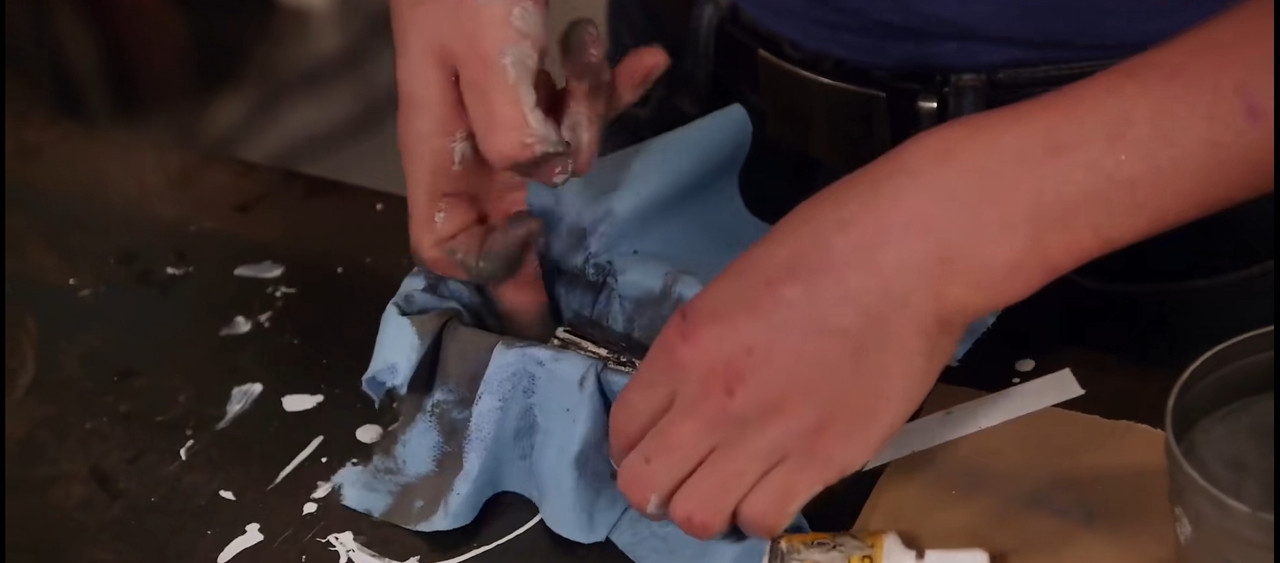
Hey guys! First time here, and I’m a total die-hard fan of Forged in Fire. Recently, some knife-making techniques from the show’s contestants have been widely discussed and studied in China—especially the trick Ashe Cravenock used paper towels to demold the canister Damascus in Season 5, Episode 25.
Screenshot-2025-12-14-09-31-11-526-tv-danmaku-bili-edit.jpg
A Chinese bladesmith even made a video trying to recreate this technique without using white-out, and it seemed to go super smoothly. Here’s the video link:「only use paper towel」 (Sorry, I’m not sure if external links are allowed here—just let me know if it’s against the rules!)
5820217656702872.png
14581117656703302.png
18997617656703562.png
20902217656704112.png

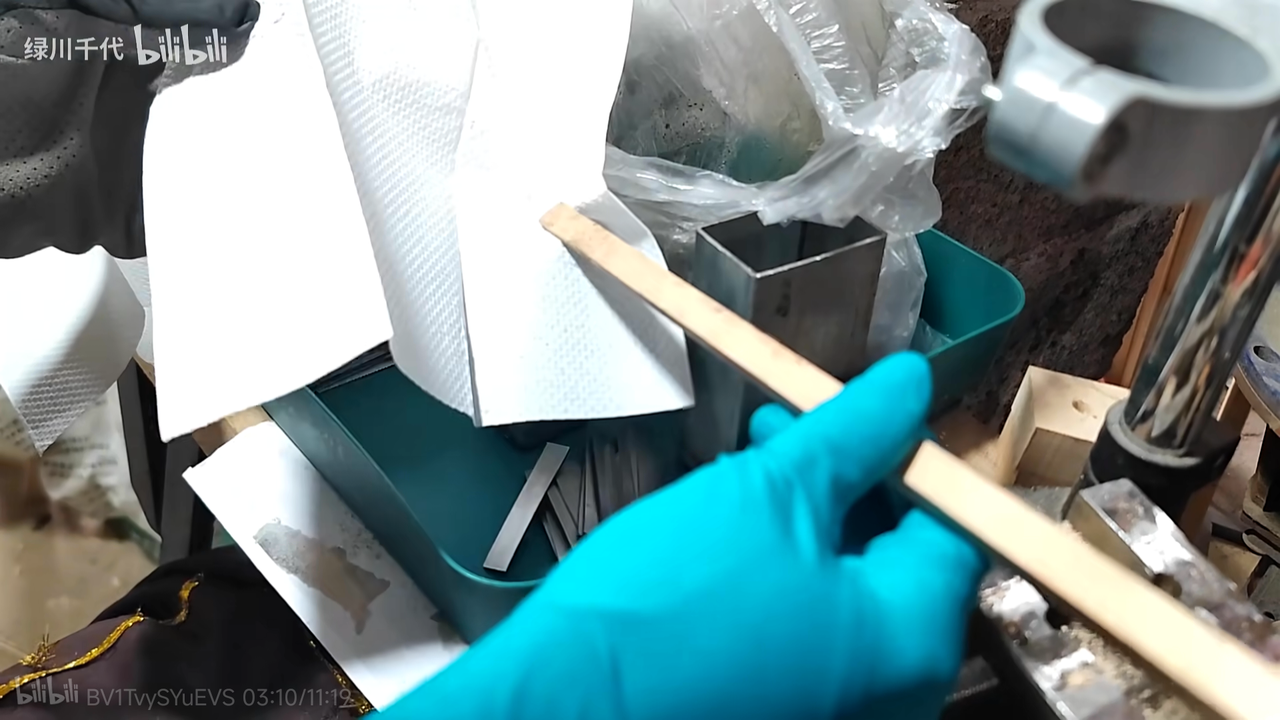
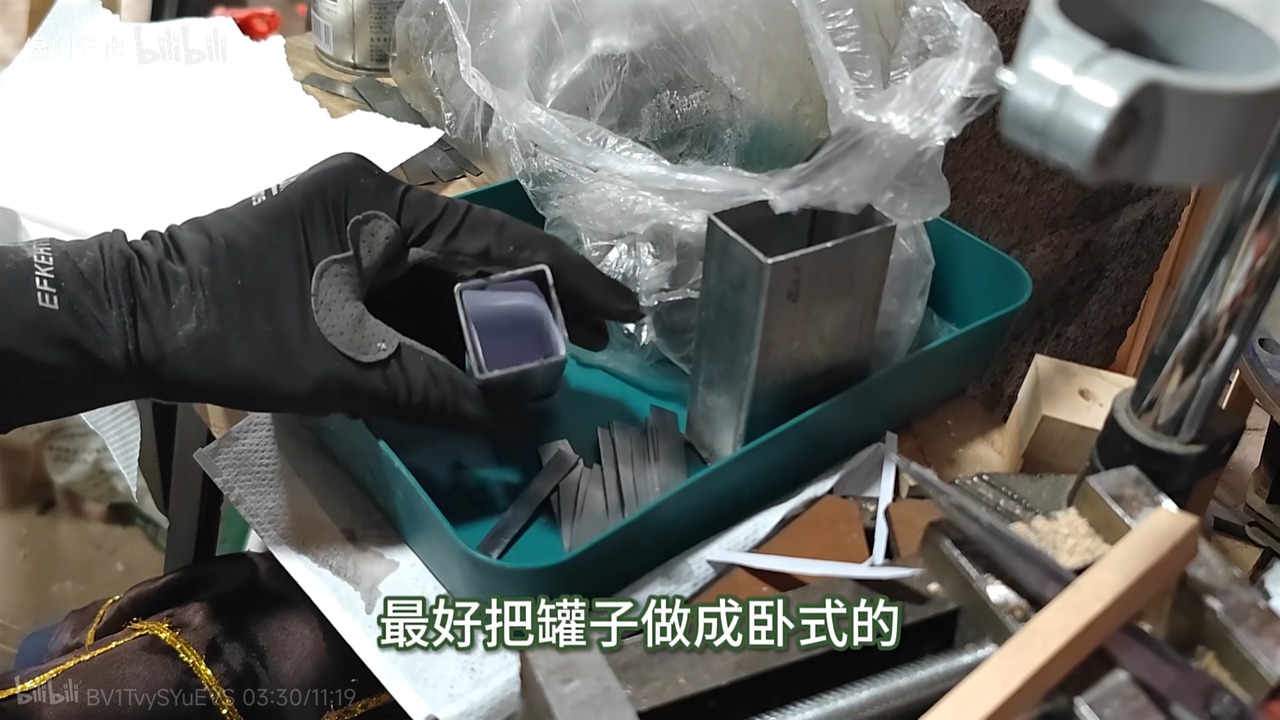
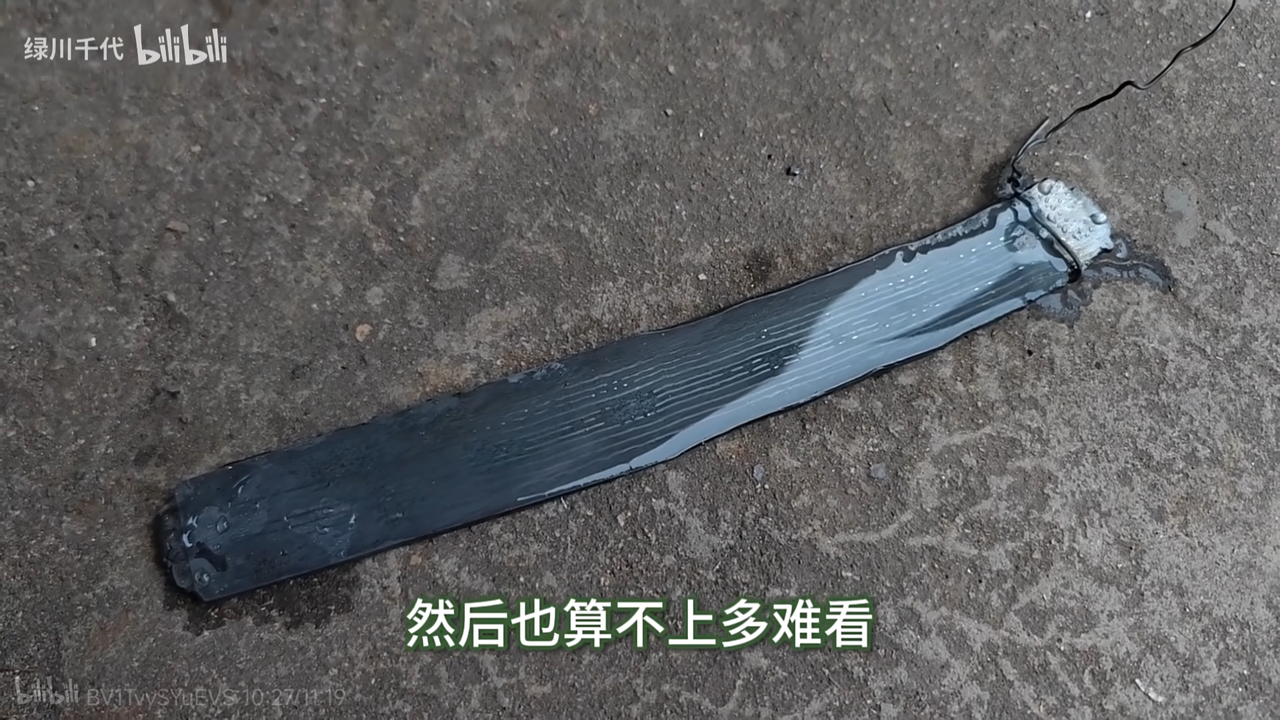
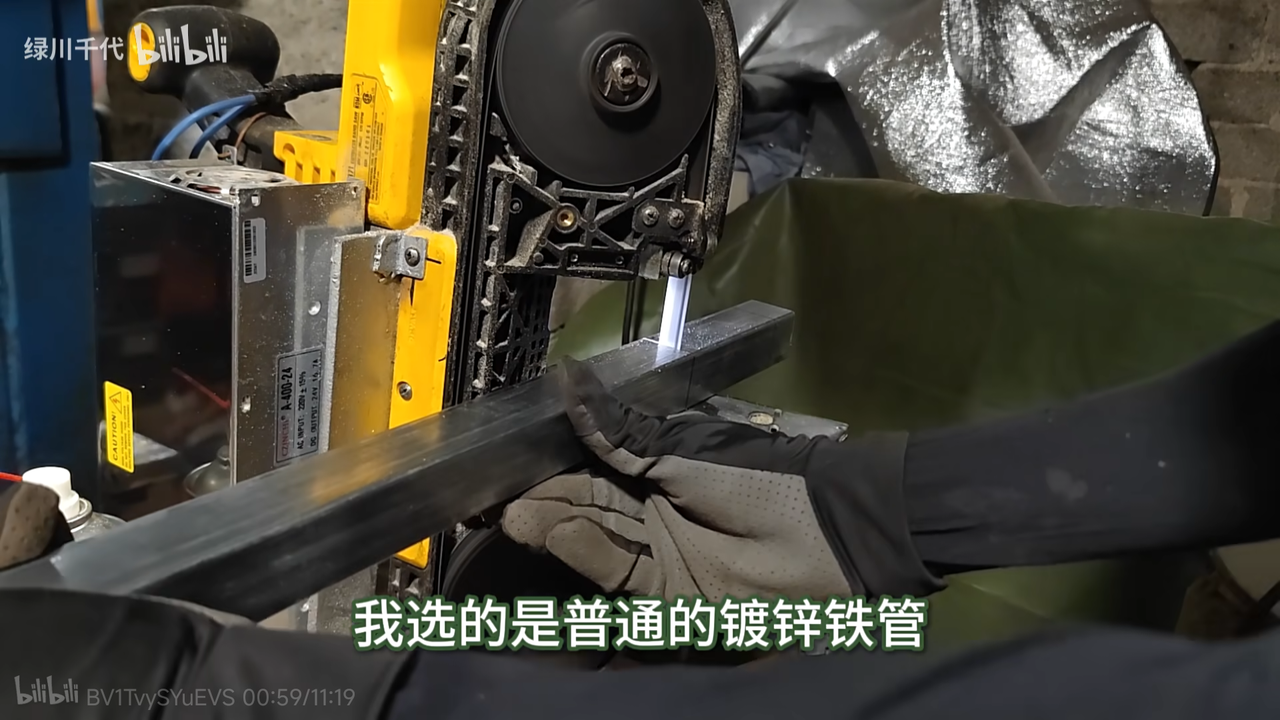
You can see he first used a galvanized iron pipe as the can, stuffed a paper towel inside, then filled the rest of the space with two types of steel (O1 and SKS51) plus steel powder. After all the heat treatment steps, the can and the steel billet separated really easily, and the billet had no flaws at all.
50096417656704392.png
62655417656707892.png

But I can’t find any similar videos of making canister Damascus with paper towels on YouTube, and there’s barely any discussion about it on Reddit or bladesmith forums either. I asked that Chinese bladesmith why, and he said it might be because other bladesmiths are unwilling to try new things. But I totally disagree with that—this explanation just doesn’t convince me.

I know the more popular methods for canister Damascus nowadays are grinding off the can body, or if you have to take the billet out, using white-out, Kilz, or foil liners to separate the can from the billet. But what I’m wondering is: why is there so little discussion about the paper towel method in the community? (It seems way cheaper and time-saving, especially for contestants on Forged in Fire.) What’s the risk of failure with this method? (That bladesmith told me he’s succeeded every single time he tried it.) And if it does fail, what kind of impact will it have on the steel billet?
Hope you guys can share your thoughts! (sorry if my English isn’t great and I said something wrong—please don’t blame me.)
 
Last edited:
Welcome WYjett. Fill out your profile so we know where you are and a bit about you.

Links to sites that sell things are not allowed. Information links and videos are fine. There is a special thread at the top of the Shop Talk page for posting videos of things other people that yourself made. This video is about a technique, so it is OK here. You may want to post it in the YouTube and Video Link Thread as well so it will stick around for posterity.

From a little metallurgy and chemistry knowledge, I'm going to GUESS that the galvanized tube may have had as much to do with his success as the paper towel did. The zinc coating would change to zinc oxide as it melted off the inner wall of the canister. That alone could create a barrier to the billet welding to the canister similar to the titanium dioxide in white-out. The paper towel forms a layer of ash, eats any free oxygen, and provides extra carbon to the contacting steel surfaces. Since the zing starts to melt at roughly the same temperature as the paper towel burning (800F/420C) the ash created should make a good anti-weld barrier.

The zinc from the outside of the canister will just burn off quickly in the forge and be gone. Good ventilation should be in any shop running a forge and that will take care of the zinc oxide in the dragon's breath. It is not good to breathe, which qualifies as toxic, but is not poisonous. Just have fresh air coming in the forge shop.
You will constantly read online that burning galvanized metal fumes are deadly poisonous, but that is an old wives tale .. just like poinsettia plants being deadly toxic.


In the jewelry business many years ago we used wet asbestos paper to line casting flasks and crucibles to keep things from sticking. Heck, sometimes we mixed powdered asbestos and water and put it on like putty. Those were the days! They since have replaced asbestos with rock mineral compounds.
Flask liner paper works wonderful. Dip it in water, press it in place, and let it dry from the heat of the oven or torch ... and it makes a perfect barrier to prevent the metal bonding.
If anyone want to try this paper, places like Rio Grande sell Non-Asbestos Flask Liner Paper in 3" wide rolls and 4x4" sheets. In a damascus canister, it would be best to use dry strips, or dry it with a torch or hair dryer before putting in the powder and/or metal.
 
Hey guys! First time here, and I’m a total die-hard fan of Forged in Fire. Recently, some knife-making techniques from the show’s contestants have been widely discussed and studied in China—especially the trick Ashe Cravenock used paper towels to demold the canister Damascus in Season 5, Episode 25.
Screenshot-2025-12-14-09-31-11-526-tv-danmaku-bili-edit.jpg
A Chinese bladesmith even made a video trying to recreate this technique without using white-out, and it seemed to go super smoothly. Here’s the video link:「only use paper towel」 (Sorry, I’m not sure if external links are allowed here—just let me know if it’s against the rules!)
5820217656702872.png
14581117656703302.png
18997617656703562.png
20902217656704112.png

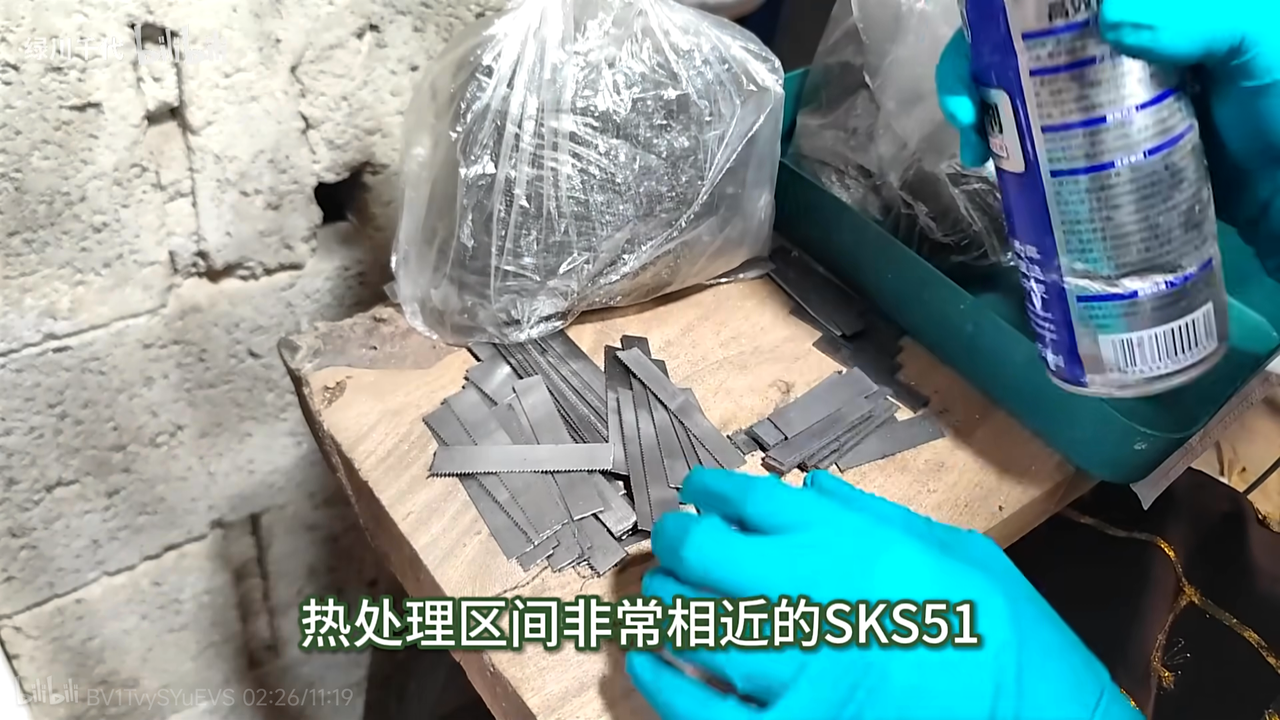
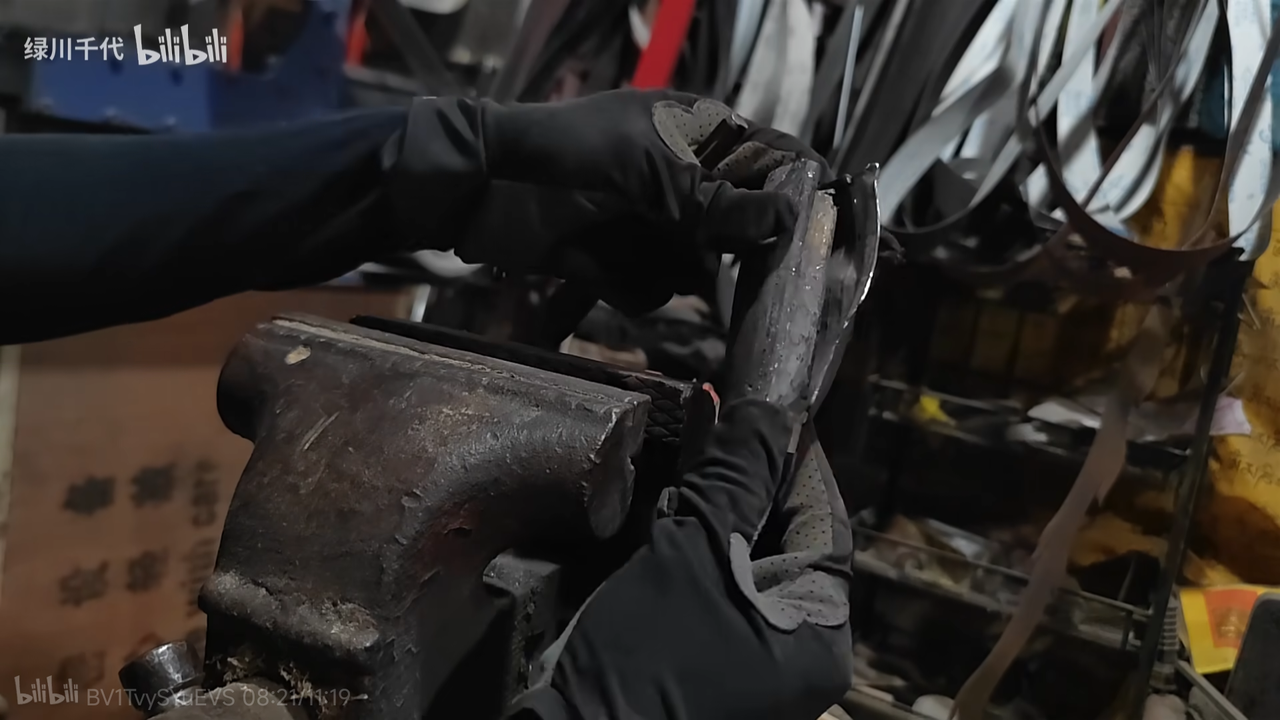
You can see he first used a galvanized iron pipe as the can, stuffed a paper towel inside, then filled the rest of the space with two types of steel (O1 and SKS51) plus steel powder. After all the heat treatment steps, the can and the steel billet separated really easily, and the billet had no flaws at all.
50096417656704392.png
62655417656707892.png

But I can’t find any similar videos of making canister Damascus with paper towels on YouTube, and there’s barely any discussion about it on Reddit or bladesmith forums either. I asked that Chinese bladesmith why, and he said it might be because other bladesmiths are unwilling to try new things. But I totally disagree with that—this explanation just doesn’t convince me.

I know the more popular methods for canister Damascus nowadays are grinding off the can body, or if you have to take the billet out, using white-out, Kilz, or foil liners to separate the can from the billet. But what I’m wondering is: why is there so little discussion about the paper towel method in the community? (It seems way cheaper and time-saving, especially for contestants on Forged in Fire.) What’s the risk of failure with this method? (That bladesmith told me he’s succeeded every single time he tried it.) And if it does fail, what kind of impact will it have on the steel billet?
Hope you guys can share your thoughts! (sorry if my English isn’t great and I said something wrong—please don’t blame me.)
That metal tube is NOT galvanized. It is cold rolled material, do not use galvanized tubing or pipe for a canister.

As for the paper towel in the box, you actually don’t need anything, just forge weld the can to the rest of the billet. Most of it will oxidize and flake away and what remains is just another layer.

I watched a well known smith compete on F in F and fail because he was so worried about the can. He would have been fine if he would have left it on.

Hoss
 
I agree with Hoss. I think removing the box is something that some "expert" did and others buy into it. By the time the cannister is forged and drawn out plus fire scale loss what is left will be paper thin. By the time you grind out the blade the can will be gone.
I used to watch "Forged in the Fire" on a regular basis but have gotten tired of it. I don't like how they try to set the smiths up for failure. I also don't like how they abuse the knives the smiths forge. I don't know about recent shows but they used to require the smith to remove the can. The show liked to show the knifemaker struggling to get the can off when it really is not necessary.
 
The zinc coating would change to zinc oxide as it melted off the inner wall of the canister. That alone could create a barrier to the billet welding to the canister similar to the titanium dioxide in white-out. The paper towel forms a layer of ash, eats any free oxygen, and provides extra carbon to the contacting steel surfaces.
Thank you so much, Mr. Apelt. While I was researching, I’ve been seeing that you’ve been answering questions about canister Damascus for a long time, and I’m very happy to receive your reply.

I also guessed before that the galvanized iron pipe played a key role in this bladesmith’s experiment, and it seems part of my guess was correct. But if he don’t use such a special container as a galvanized iron pipe, but only use a mild steel box like the one provided in Forged in Fire and easily available paper towels, can he still achieve the same effect? Can the carbon layer formed solely by paper be enough to separate the two parts? And is this operation 100% risk-free for the steel billet?
 
That metal tube is NOT galvanized. It is cold rolled material, do not use galvanized tubing or pipe for a canister.

As for the paper towel in the box, you actually don’t need anything, just forge weld the can to the rest of the billet. Most of it will oxidize and flake away and what remains is just another layer.

I watched a well known smith compete on F in F and fail because he was so worried about the can. He would have been fine if he would have left it on.

Hoss
Thank you very much for your reply, Mr. Hoss. Actually, it was this bladesmith who said that pipe was a galvanized iron pipe, so I took this as the premise.

I understand that forging welding the can to the rest of the billet is a better method; I’m just curious that so many contestants in so many seasons of the Forged in Fire have never used paper towels, and the situation still hasn’t changed even after Ashe succeeded using paper towels in Season 5.does this mean using paper towels carries additional risks, just as J Neilson said on the FiF: “You're gonna leave ash and cinder in there, that's not gonna burn out, and that could give you an occlusion on the front end of your billet.” Is this possible to happen,or is it just that some bladesmiths haven't studied this method?
 
I don't know about recent shows but they used to require the smith to remove the can.
Thank you very much for your reply, Mr. Lewis. Now, Forged in Fire no longer requires bladesmiths to remove the box necessarily, and even J Neilson now says, “I don’t know why contestants use white-out—we don’t require them to remove the box at all.”🤣
 
Just to be clear, I was answering the OP's question about why it may have worked for the Chinese bladesmith.

I do not recommend it at all. Grinding the canister off is the most efficient method.
Over the years every "trick" has been tried - white out, house paint, stainless foil shims, etc.

Packing the canister full and welding the whole thing solid is what works best. By the time it has been fully welded and drawn out a bit the canister skin is very thin. It comes off fast with a 36 grit belt, leaving nothing but clean damascus.
 
WYJett, I find it interesting that J. Neilson now says, " I don't know why contestants use white-out-- we don't require them to remove the box at all."
Well, he is one of the ones that started using white-out in the first place. His web-site and videos used to show him using white-out. I am glad he now realizes that was a mistake.
I have seen Forged in the Fire shows in the past where contestants were made to remove the can, and shows where if a smith did not remove the can the judges felt that was a reason for disqualification.
 
Oh I really hope someone will conduct an experiment on making canister Damascus with paper towels out of curiosity and let me know the result, otherwise I might be stuck in this puzzle forever🥺.
 
Oh I really hope someone will conduct an experiment on making canister Damascus with paper towels out of curiosity and let me know the result, otherwise I might be stuck in this puzzle forever🥺.
It’s a dumb idea. Even if it works there’s no reason to do it.

Never put foreign material in the canister. Pattern welded damascus is not made from paper towels.

Hoss
 
Back
Top