Air Futz One update plus questions

Joined
Jan 6, 2011
Messages
118
Hey dudes. I'm here to show you some updates on the baddest of the bad, the coolest of the cool, the show stoppin, bottle poppin, undefeated and undisputed champion of the world the Air Futz One. Pretty lengthy intro for a first knife that hasn't been completed yet but I like to have fun with this :D.

So here are some pictures for your viewing pleasure, questions to follow.
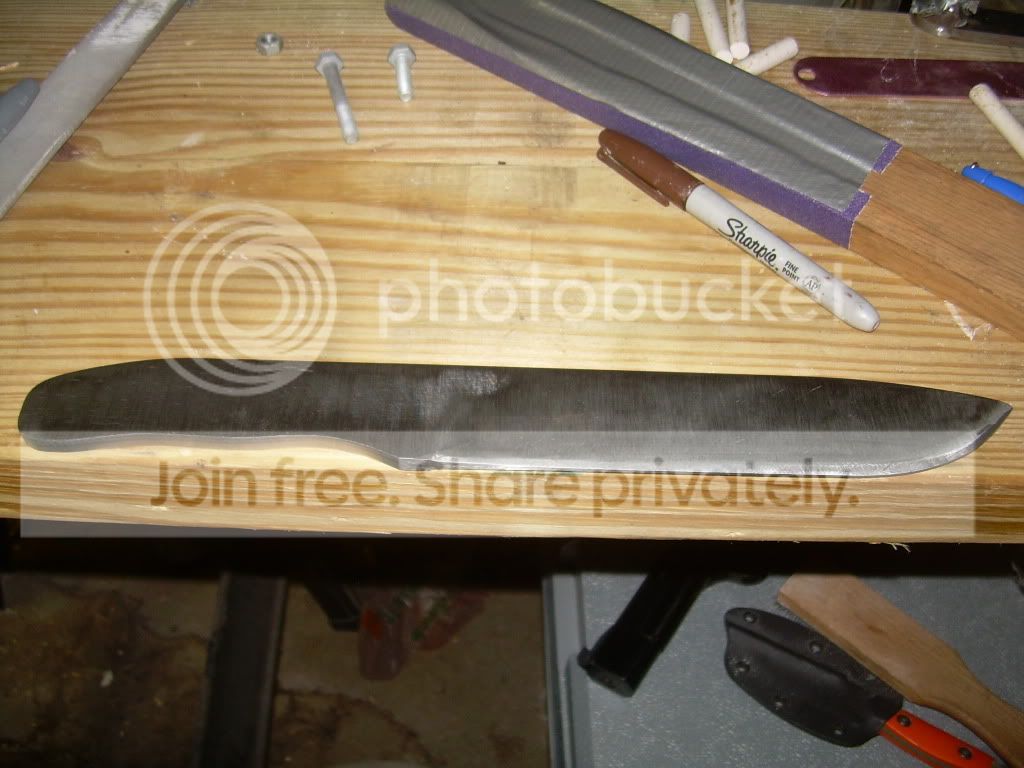
DSCN4322.jpg


DSCN4323.jpg


DSCN4326.jpg


DSCN4328.jpg


DSCN4334.jpg


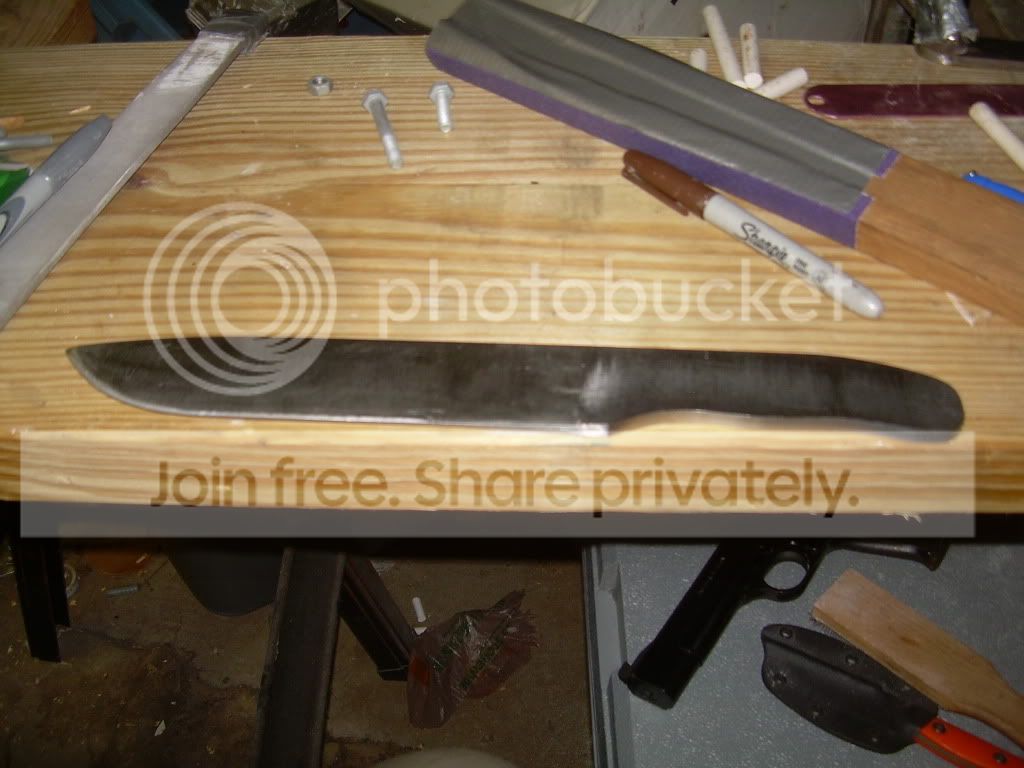
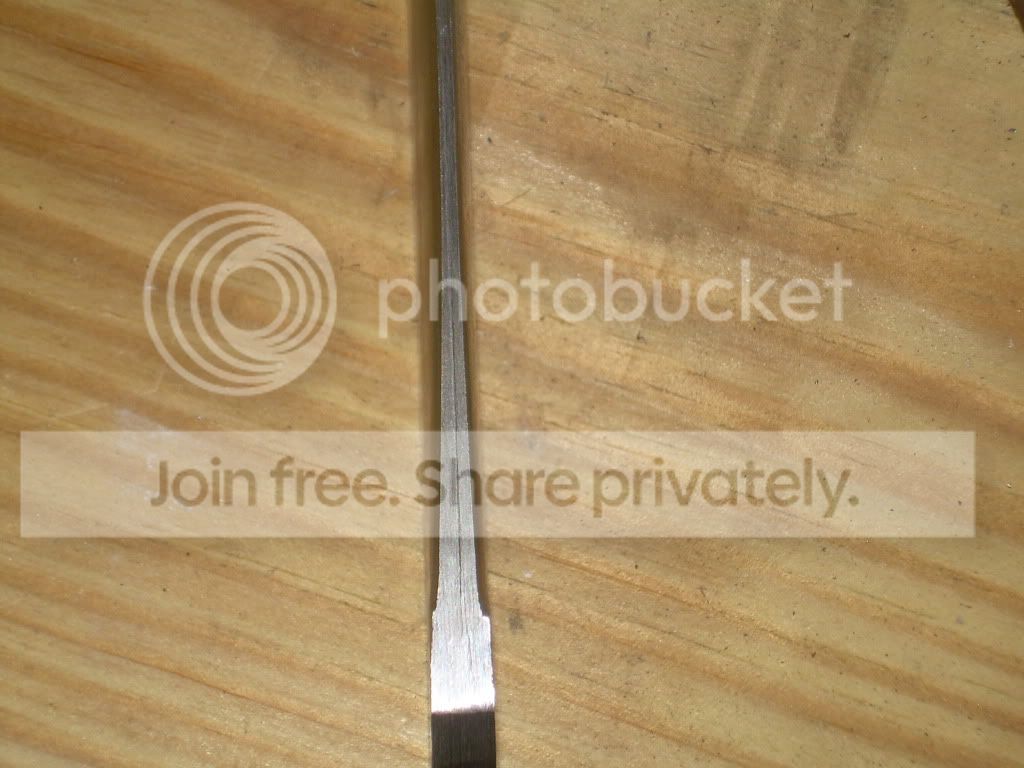
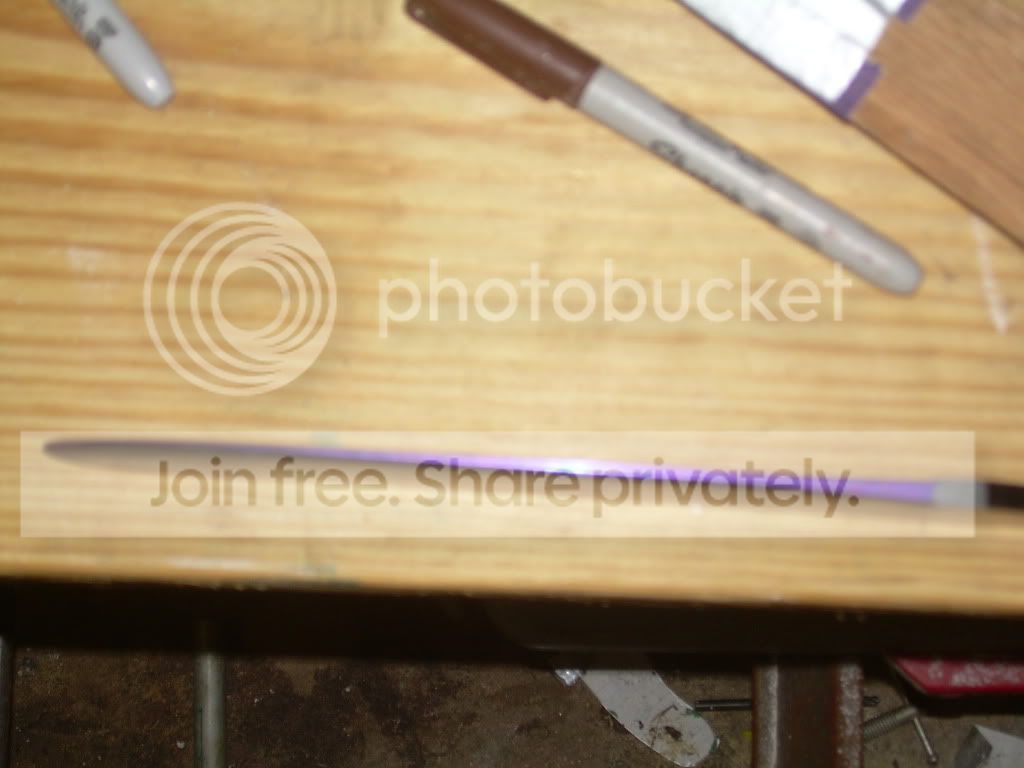
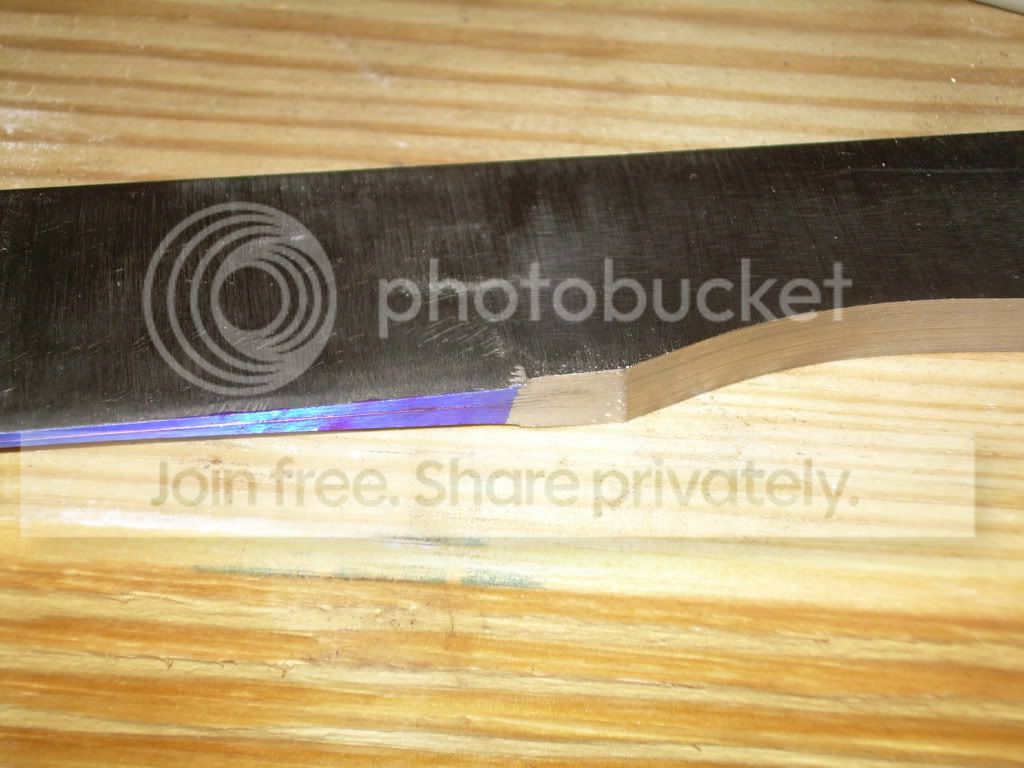
As you can see from the pictures, I'm almost finished with stage one of sanding (80 grit). As you can also see, I've got two problems. One, the edge region is uneven. It's nice and thin near the middle and wider at the tip and the plunge. It's also a little bit less than symmetrical (or a lot) in some areas. Any ideas on how to fix this? My other problem is a nasty gouge right by the plunge. I figure the way to solve that is pretty simple, add a choil, but the question is do I want to do this before or after the heat treat?

Thanks for answering, commenting, reading, and putting up with me in general.
 
Any filing will need to be done prior to heat treatment unless you want to spend some quality time with your diamond files.

--nathan
 
Quote: "I've got two problems.

One, the edge region is uneven. It's nice and thin near the middle and wider at the tip and the plunge. It's also a little bit less than symmetrical (or a lot) in some areas. Any ideas on how to fix this?

My other problem is a nasty gouge right by the plunge. I figure the way to solve that is pretty simple, add a choil,

but the question is do I want to do this before or after the heat treat?"


Futz:
Is it 1/4" steel? Are you using a file to make the bevel? It looks to me like you still have a lot MORE filing to do. As the bevel works its way up the side of the blade you have to take off more steel then you did before and the process slows waaaayyy down.

The uneven thickness means you have to remove more steel until you have an even amount removed from both sides.

I'm not sure I see the nasty gouge you mentioned. However if you took a round file and used that to make and define your "plunge cut" It may get rid of the gouge. It would also show you how much more steel you need to remove from that portion of the blade, helping to solve your first problem.

What kind of steel is it and how will it be heat treated?

Do as much as possible before heat treatment, especially if you're doing this with hand tools. Drill all your holes and remove any scratches that you plan to remove. I think I saw a sanding block you were using with a purple colored sand paper on it?? That's going to be your "friend" for a while.

For what it's worth,... I made a "manual belt sander" that uses the 2"X42" belts for my Craftsman grinder. It's a 2" wide board, and around 20.5" long with the ends rounded. It's just short enough to be able to slip a sanding belt on it. The belt can be moved to give yourself a fresh piece of belt to work with. Here's a picture.
BeltSandingBoardL656.jpg


I use it mostly after I'm done grinding the blade and "fixed" problems (errors) with a file. I've not used it with anything higher than 120 grit. With an 80 grit belt it MIGHT work like a giant file for making the bevel.

You're coming along fine, you just need to keep at it and correct the problems you pointed out.

- Paul Meske
 
What I ended up doing is adding a little bit of a finger choil and then giving my better judgement the finger and using my harbor freight 1 x 30. I say my better judgement just because I can get a little carried away with power tools. But anyway, I think it turned out alright. It's just the smallest bit uneven, but would it be ok if I just sorted this out with sharpening after heat treatment? Barring any unforeseen circumstances I should be sending it to texas knifemaker's supply for heat treat tomorrow. A little bit more sanding and drilling the holes for the pins is all I have left to do. I may go and do that before bed tonight.
 
I don't think you are ready to send it off for HT yet... Based on the photos, you really need to get that plunge down, Crisp and even on both sides. You should be around a dimes thickness along the entire cutting edge. I can't even see a plunge line in the photos? you don't want to have to remove steel after HT by hand.

Keep it up.
 
I have removed a lot of material since, but yeah still my plunge line isn't super crisp. I'll work on that tomorrow. I tend to get impatient with things, if I don't send it out right away it's not the end of the world. Better to wait and make sure I've got everything down. More pics tomorrow.
 
Back
Top