
- Joined
- Apr 19, 2012
- Messages
- 42
Hello All,
I'm relatively new to the site, so I apologize if I have not posted this in the proper forum. I have done a search on this subject which did not fully answer my questions.
I'm looking into possibly making a set of aluminum handles for my Benchmade 710. I've had a plethora of experience throughout high school with CNC equipment (mills, lathes, plasma cutters, routers, laser cutters) as well as the CAD and CAM software involved and will have access to similar equipment in the machine shop at my University as an Engineering student.
For those out there who have made their own handle scales with a CNC milling machine:
Did you measure/draw up your own CAD for the scales?
What are the concerns regarding tolerances for the area immediately surrounding the axis locking mechanism?
Is there anywhere I could acquire a CAD drawing of the scales for the BM 710?
For those who have experience with aluminum scales:
What is the typical process for texturing the surface?
What would alloy would you recommend for such a project? (Durability, ease of machining etc)
I'd like to anodize the scales a "toxic green" color. Are there any concerns or tips with anodizing aluminum that I should be aware of?
Thank you for your time,
-B
I'm relatively new to the site, so I apologize if I have not posted this in the proper forum. I have done a search on this subject which did not fully answer my questions.
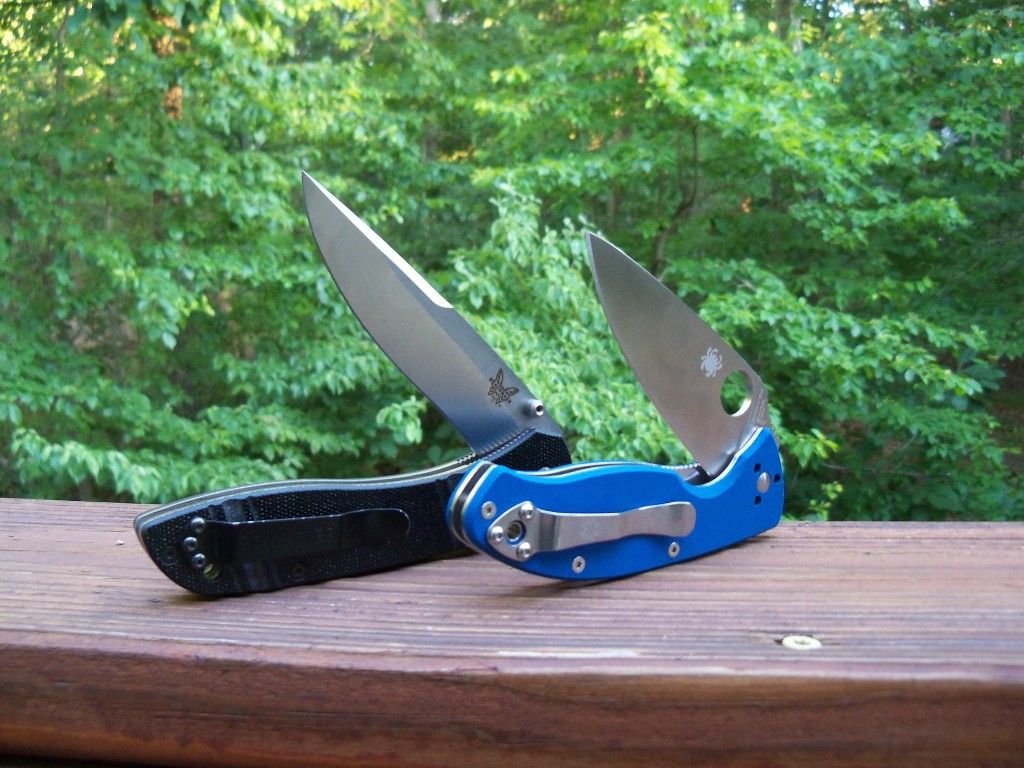
I'm looking into possibly making a set of aluminum handles for my Benchmade 710. I've had a plethora of experience throughout high school with CNC equipment (mills, lathes, plasma cutters, routers, laser cutters) as well as the CAD and CAM software involved and will have access to similar equipment in the machine shop at my University as an Engineering student.
For those out there who have made their own handle scales with a CNC milling machine:
Did you measure/draw up your own CAD for the scales?
What are the concerns regarding tolerances for the area immediately surrounding the axis locking mechanism?
Is there anywhere I could acquire a CAD drawing of the scales for the BM 710?
For those who have experience with aluminum scales:
What is the typical process for texturing the surface?
What would alloy would you recommend for such a project? (Durability, ease of machining etc)
I'd like to anodize the scales a "toxic green" color. Are there any concerns or tips with anodizing aluminum that I should be aware of?
Thank you for your time,
-B
