Amazon Bloodwood?

Joined
Feb 2, 2012
Messages
1,792
I saw this used for handle material in a Bark River knife (the Gunny specifically). Though are there any inherent problems with this stuff far as cracking etc? It looks really nice though.

 
Some years back I used African Bloodwood on a few knives. The streaks give it a striking look. I've not heard any complaints. It's oily like ironwood. DM
 
Some years back I used African Bloodwood on a few knives. The streaks give it a striking look. I've not heard any complaints. It's oily like ironwood. DM
Yea. It looked like the stuff had a bit of shine to it. I couldn't tell if that was from the finish or the wood itself thought. Sounds like a combination of both in this case.
 
Not sure about the African version, but the amazon bloodwood from south America is some fascinating stuff. It smells like a flower garden when first cut, although it's incredibly toxic. Splinters aren't fun either. Very oily, but also splits easily. Really, one of my last choices for a knife handle.
 
I'd venture to say the shine was natural. I used a plain cotton wheel for final polish and no rouge. The wood looked like I used a clear coat. DM
 
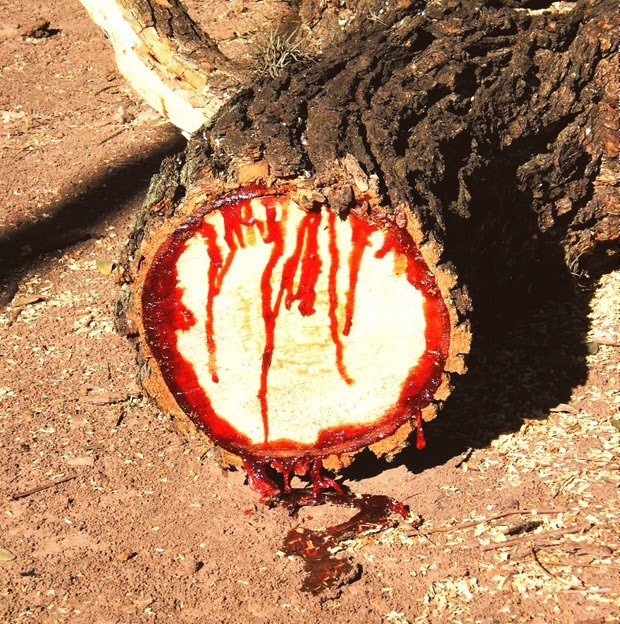
FYI - the African variety is commonly called bloodwood because of its dark red sap.
bloodwood-tree1.jpg
 
I've had a couple pistol grips custom made from Bloodwood. Yes, the dust is irritating. Take precautions which anyone should be doing anyways. It's not going to show it's reddish color much until it ages and is used. It almost matures like a patina. There are grades naturally. It's worth getting better stuff as it can be really beautiful. Not as tough as ironwood but denser and tougher than oak and walnut. It's one of my favorites in the better grades.

joe
 
I would think that would wood age nicely after the knife had been on the road a while....the oil from your hands and handling it over time would probably have a great effect on it if you just left it natural and didn't oil it or anything. If I got one I'd probably hand rub it a lot as I watched TV or something...
 
I saw this used for handle material in a Bark River knife (the Gunny specifically). Though are there any inherent problems with this stuff far as cracking etc? It looks really nice though.

really it depends on how it is processed. Im not sure how porous bloodwood is but in most cases when using exotic woods for knife handles I would always want a wood that has been stabilized if it is going to be exposed to the elements. Whether or not Bark River uses stabilized wood I dont know. Basically the process infuses the wood with a resin and plasticizes it. This retains the natural beauty of the wood yet means its much less susceptible to the elements.
 
stabilizing can do a lot to help strengthen burls, punky woods, porous woods. However it does alter the way they respond to stains and surface finishes. There are also different stabilizing processes out there, not all stabilizing is equal. On oily hardwoods like cocobolo and rosewood it is not needed. Amazon bloodwood is pretty dense, not sure how much penetration there would be if one would try to stabilize it. It also takes a smooth finish with buffing similar to ironwood. If you live in an area with very dry air or big temperature swings, expansion-contraction/ cracking could be something you might worry about.
 
stabilizing can do a lot to help strengthen burls, punky woods, porous woods. However it does alter the way they respond to stains and surface finishes. There are also different stabilizing processes out there, not all stabilizing is equal. On oily hardwoods like cocobolo and rosewood it is not needed. Amazon bloodwood is pretty dense, not sure how much penetration there would be if one would try to stabilize it. It also takes a smooth finish with buffing similar to ironwood. If you live in an area with very dry air or big temperature swings, expansion-contraction/ cracking could be something you might worry about.

I have heard guys stabilizing ebony which as you might know is a very very dense wood. Usually vacuum is needed much like impregnating carbon fiber to get the resin to absorb. Of course the resin prevents nearly any stain from actually taking. This is why many people will tint the resin if color of the wood is desired. You dont always get the most even distribution of color but it does create a cool effect.
 
I have a 20 year old knife with this handle material it has held up well,not as hard as other hard wood, has dents in the handle.I use tung oil on the handle every once in a while.It is a hidden tang knife.Tried to post a pic but couldn't
 
heres an old carbon steel tramontina bowie and a dunlap cattleman slipjoint that i rehandled years ago, the bloodwood i used from texas knifemakers.
like the final product but the stuff is incredibly waxy and i couldnt get it to take stain etc. my one and only rehandle project :)
Gene

bowie2LR.jpg
 
heres an old carbon steel tramontina bowie and a dunlap cattleman slipjoint that i rehandled years ago, the bloodwood i used from texas knifemakers.
like the final product but the stuff is incredibly waxy and i couldnt get it to take stain etc. my one and only rehandle project :)
Gene

Freakin' gorgeous. :thumbup:

Wish you'd shown the sheath.
 
I have heard guys stabilizing ebony which as you might know is a very very dense wood. Usually vacuum is needed much like impregnating carbon fiber to get the resin to absorb. Of course the resin prevents nearly any stain from actually taking. This is why many people will tint the resin if color of the wood is desired. You dont always get the most even distribution of color but it does create a cool effect.

"Dymondwood" ? :chuncky: What is that stuff anyway?

I agree, some of the effects of treated wood can be cool....but I like to find a good wood as raw as I can and then age it with my hands; if it's varnished I'll strip and sand it if possible. It's a lengthy process but honestly, on gunstocks, knives, things like that, a hand-rubbed finish with just the oils in your hands over time creates some of the prettiest wood I've ever seen.

The positive when it's on a folder---it's very little wood surface and you're going to fondle it a lot initially anyway. You can accomplish the finish over a little time with that alone....

Actually I think what attracted me to knives in the first place as a kid is the fact that it's the only place steel, leather and wood come together. I think. The Harley world comes close I guess.

I sure understand why people would want a treated care-free wood handle though.
 
"Dymondwood" ? :chuncky: What is that stuff anyway?

I agree, some of the effects of treated wood can be cool....but I like to find a good wood as raw as I can and then age it with my hands; if it's varnished I'll strip and sand it if possible. It's a lengthy process but honestly, on gunstocks, knives, things like that, a hand-rubbed finish with just the oils in your hands over time creates some of the prettiest wood I've ever seen.


The positive when it's on a folder---it's very little wood surface and you're going to fondle it a lot initially anyway. You can accomplish the finish over a little time with that alone....

Actually I think what attracted me to knives in the first place as a kid is the fact that it's the only place steel, leather and wood come together. I think. The Harley world comes close I guess.

I sure understand why people would want a treated care-free wood handle though.

Yeah for sheer beauty i agree. But many times pele want something that is equally durable as it is beautiful inwhich stabilization really helps.
 
Back
Top