
- Joined
- Oct 9, 2003
- Messages
- 5,594

The BladeForums.com 2024 Traditional Knife is available! Price is $250 ea (shipped within CONUS).
Order here: https://www.bladeforums.com/help/2024-traditional/

 When do we get Vibranium and Adamantium, though?


I think it is interesting to know of a new crystal structure. I wonder if we can reproduce it. If it was larger, would it be clear? Is it stronger than glass and less brittle? Can we make blades from it?

It demonstrates quite clearly that we do NOT know everything.
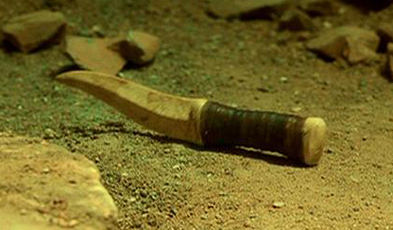
! I applaud science and its practitioners, but SOME create hypotheses and call them law, until they are eventually proven nothing more than an educated opinion. We should study and embrace nature in all its forms, but we tend to get too big for our britches and complacent in our wondrous knowledge. I believe nature will continue to demonstrate our lack of understanding just as hurricane proof piers continue to be torn from the shore. That doesnt mean to not embrace the study, just keep an open mind and be humble about our tiny existence in an endless universe. The goal of science should not be about building walls of absolutes, but the tearing down of any previously built walls! Take care and God bless.Nobody has ever made a correct crysknife. It's perfectly described in the book. I just don't get it.
Nobody has ever made a correct crysknife. It's perfectly described in the book. I just don't get it.

