Codger_64
Moderator
- Joined
- Oct 8, 2004
- Messages
- 62,324
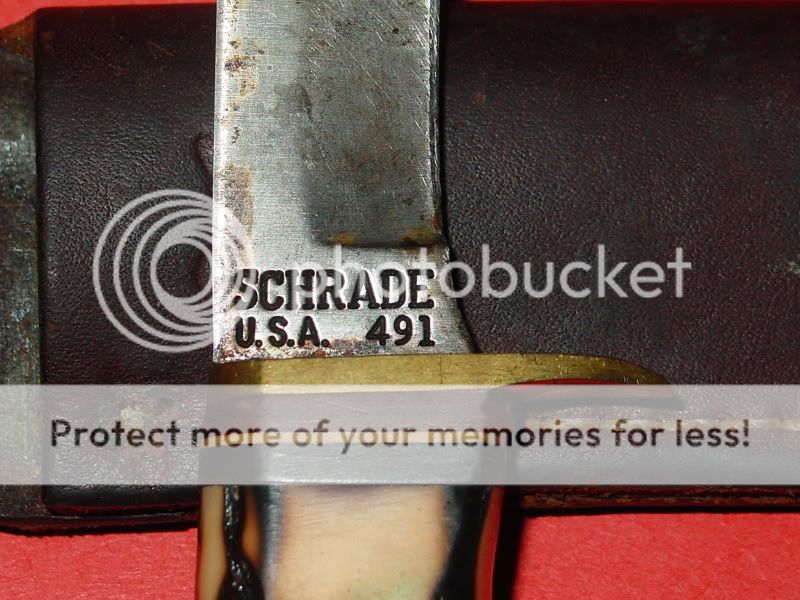
In mid-year of 1973, Albert and Henry Baer, owners of Schrade-Walden Cutlery initiated quite a few changes in their company, and in its product lineup. Most immediately recognizable was their dropping the name Schrade Walden (The companys factory had moved from Walden to Ellenville in 1958), and using the name Schrade Cutlery Corporation. Naturally, the tang stamps of their knives changed too, but rather than reverting to the abbreviated Schrade Cut Co used by the company prior to their acquiring it in 1946, they chose to simplify and modernize the stamp to Schrade. That was, afterall, what generations of knife users called their product.
Attendent with the name change was a modernizing of their product lineup. Although a 1973 catalog had already been issued early in the year with their pattern lineup under the Schrade Walden name, a new updated catalog was released using their new logos, and several new knife patterns. Some of these were revamped older patterns, and some were altogether new for 1973 ½.
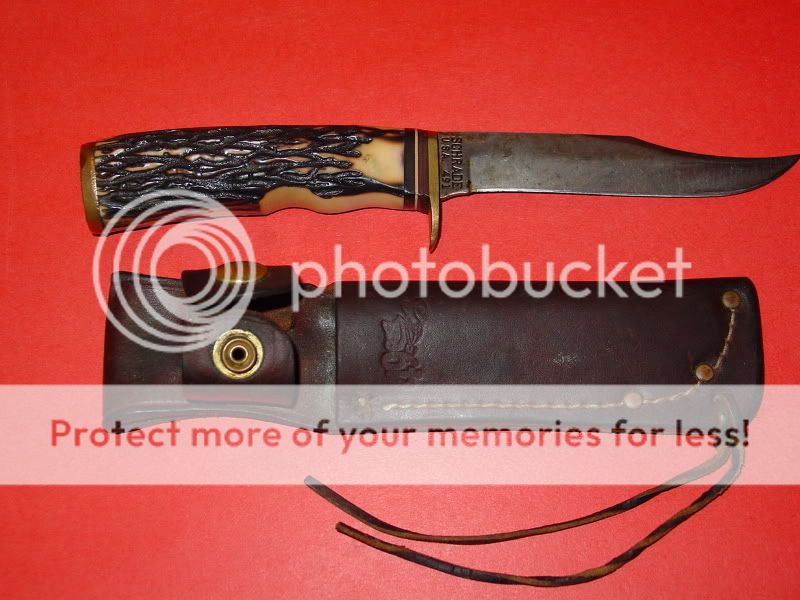
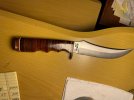
One of the modernized patterns introduced was the Benchmade 49er series of knives. Utilizing basic blade blanks from their rigid knife patterns, some dating from the 30s and before, a new theme series of knives was designed. Christened the Benchmade 49er Series, eight knives of two handle designs on four blade patterns were introduced with a twofold advertising promotion pretext.
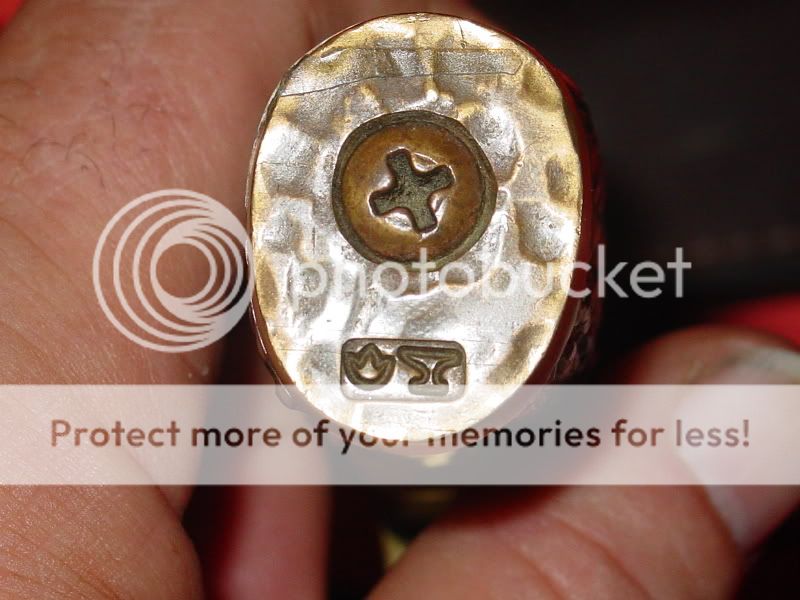
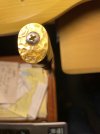
First was the fact that the knives commemorated the 1849 gold rush in California which led to a westward expansion of our nation, and bore several design elements and embelishments to make that connection. These embellishments included polished brass (gold-like) flat pommel as opposed to the aluminum birdshead of their ancestor patterns, or the mushroom pommels, both of which had been used for so long throughout the industry. They were cast with a special hammered gold nugget texture, adding both design interest and a tie-in to the gold rush. These knives were issued during the few years prior to the American Bicentennial, and were a part of what would become a very strong patriotic theme of commemoratives which Schrade continued to the end in 2004.
Second was the notion of their being benchmade, that is individually hand fitted and cutlered, a high degree of finish by an individual cutler, rather than the product of a rushed assembly line. To this end, each knife received a cutlers mark, the anvil, applied with a special marking hammer after final inspection and approval, an old tradition going back to early cutlers in Europe. The Baer brothers had always emphasized that their knives were made the old fashioned way, handcrafted by experienced cutlers whose occupation was a family heritage, some having learned their craft from their grandfathers who came from the great cutleries of Europe in the late 1800's to early 1900's and applied their craft at Schrade. Another unique stamp was added to the cutler mark, this one a symbol indicating the year of manufacture. I do not yet have the key to decode these second marks, but it will some day surface. The first year mark was, according to the introductory literature, a three pointed, rounded bottom mark similar to a federal shield, designating 1973.
As with nearly all commemoratives produced by Schrade from the early seventies forward, the Benchmade 49er series came with special boxes, and also special sheaths.
The rectangular folded belt sheaths were of sewn and riveted top grain cowhide, used brass closure snaps and rivets, and were embossed with the fancy 49er logo.
The box graphics had a gray woodgrain design, the yellow Schrade Cutlery sign logo, the words BENCHMADE COLLECTION in bold white lettering, and the fancy 49er logo in yellow. This carried forward the Schrade tradition of proclaiming that their hunting knives were individually hand made, as the earlier boxes of the predecessor patterns had similar text proclaiming HAND-CRAFTED HUNTING KNIFE.
As stated earlier, there were four patterns in the series with two handle material choices. While it did bot appear as a part of the pattern number on the tangstamps, alpha designations added to the model number, long used by Schrade, identified the handle materials. L was for the leather washer handled knives, and S referred to the Staglon stagged Delrin handled knives. These designations appeared on the end flaps of the boxes and in the catalogs.
The eight patterns were as follows:
491L and 491S - 4 ½" modified Bowie clip, overall length 8 ½", predecessor pattern #141 Tall Tale
497L and 497S - 4 ½" sabre ground clip, overall length 8 3/4", predecessor pattern # 147 Hunters Companion.
498L and 498S - 5" sabre ground skinning clip, overall length 9 1/4", predecessor pattern #148 Huntsman
499L and 499S - 4 ½" sabre ground skinning clip, overall length 8 3/4", predecessor pattern # 137 Campers Favorite
The Benchmade 49ers introduced in mid 1973 were last listed in the catalogs in 1979, so for at least some of the patterns, there was a seven year production run. While all patterns in the series were introduced at the same time, the 491L&S, and the 499L&S disappeared from the series listings in 1976, so they were produced for only three years, making them more uncommon today. The 497L&S were listed one more year, being absent in 1977 for a four year production span. Only the 498L&S were listed in 1977, 1978, and 1979, making it the longest produced at seven years.
As an interesting side note, the first Uncle Henry series fixed blade, the 153UH Golden Spike, was introduced also in 1973 with the same hidden tang, staglon handle and similar construction details, and it was so successful that this Uncle Henry flagship pattern lasted for thirty six years, last produced in 2004 when the company was forced to close.
As usual with the rants I post here, I invite corrections and additional insights from other collectors, Maybe a repost of the cutler's anvil mark hammer LT posted it the past, and some other non-archived pictures pertaining to the series.
Codger
I remember those who have gone before us, giving if not their whole lives and futures, at least a very important part of their lives, their health and their innocence so that we have the freedom to persue our lives and interests unfettered and without fear of opressors. Thank you men and women of America for your enduring gifts. And thank you young people who stand in harm's way today for the same purpose.
Attendent with the name change was a modernizing of their product lineup. Although a 1973 catalog had already been issued early in the year with their pattern lineup under the Schrade Walden name, a new updated catalog was released using their new logos, and several new knife patterns. Some of these were revamped older patterns, and some were altogether new for 1973 ½.
One of the modernized patterns introduced was the Benchmade 49er series of knives. Utilizing basic blade blanks from their rigid knife patterns, some dating from the 30s and before, a new theme series of knives was designed. Christened the Benchmade 49er Series, eight knives of two handle designs on four blade patterns were introduced with a twofold advertising promotion pretext.
First was the fact that the knives commemorated the 1849 gold rush in California which led to a westward expansion of our nation, and bore several design elements and embelishments to make that connection. These embellishments included polished brass (gold-like) flat pommel as opposed to the aluminum birdshead of their ancestor patterns, or the mushroom pommels, both of which had been used for so long throughout the industry. They were cast with a special hammered gold nugget texture, adding both design interest and a tie-in to the gold rush. These knives were issued during the few years prior to the American Bicentennial, and were a part of what would become a very strong patriotic theme of commemoratives which Schrade continued to the end in 2004.
Second was the notion of their being benchmade, that is individually hand fitted and cutlered, a high degree of finish by an individual cutler, rather than the product of a rushed assembly line. To this end, each knife received a cutlers mark, the anvil, applied with a special marking hammer after final inspection and approval, an old tradition going back to early cutlers in Europe. The Baer brothers had always emphasized that their knives were made the old fashioned way, handcrafted by experienced cutlers whose occupation was a family heritage, some having learned their craft from their grandfathers who came from the great cutleries of Europe in the late 1800's to early 1900's and applied their craft at Schrade. Another unique stamp was added to the cutler mark, this one a symbol indicating the year of manufacture. I do not yet have the key to decode these second marks, but it will some day surface. The first year mark was, according to the introductory literature, a three pointed, rounded bottom mark similar to a federal shield, designating 1973.
As with nearly all commemoratives produced by Schrade from the early seventies forward, the Benchmade 49er series came with special boxes, and also special sheaths.
The rectangular folded belt sheaths were of sewn and riveted top grain cowhide, used brass closure snaps and rivets, and were embossed with the fancy 49er logo.
The box graphics had a gray woodgrain design, the yellow Schrade Cutlery sign logo, the words BENCHMADE COLLECTION in bold white lettering, and the fancy 49er logo in yellow. This carried forward the Schrade tradition of proclaiming that their hunting knives were individually hand made, as the earlier boxes of the predecessor patterns had similar text proclaiming HAND-CRAFTED HUNTING KNIFE.
As stated earlier, there were four patterns in the series with two handle material choices. While it did bot appear as a part of the pattern number on the tangstamps, alpha designations added to the model number, long used by Schrade, identified the handle materials. L was for the leather washer handled knives, and S referred to the Staglon stagged Delrin handled knives. These designations appeared on the end flaps of the boxes and in the catalogs.
The eight patterns were as follows:
491L and 491S - 4 ½" modified Bowie clip, overall length 8 ½", predecessor pattern #141 Tall Tale
497L and 497S - 4 ½" sabre ground clip, overall length 8 3/4", predecessor pattern # 147 Hunters Companion.
498L and 498S - 5" sabre ground skinning clip, overall length 9 1/4", predecessor pattern #148 Huntsman
499L and 499S - 4 ½" sabre ground skinning clip, overall length 8 3/4", predecessor pattern # 137 Campers Favorite
The Benchmade 49ers introduced in mid 1973 were last listed in the catalogs in 1979, so for at least some of the patterns, there was a seven year production run. While all patterns in the series were introduced at the same time, the 491L&S, and the 499L&S disappeared from the series listings in 1976, so they were produced for only three years, making them more uncommon today. The 497L&S were listed one more year, being absent in 1977 for a four year production span. Only the 498L&S were listed in 1977, 1978, and 1979, making it the longest produced at seven years.
As an interesting side note, the first Uncle Henry series fixed blade, the 153UH Golden Spike, was introduced also in 1973 with the same hidden tang, staglon handle and similar construction details, and it was so successful that this Uncle Henry flagship pattern lasted for thirty six years, last produced in 2004 when the company was forced to close.
As usual with the rants I post here, I invite corrections and additional insights from other collectors, Maybe a repost of the cutler's anvil mark hammer LT posted it the past, and some other non-archived pictures pertaining to the series.
Codger
I remember those who have gone before us, giving if not their whole lives and futures, at least a very important part of their lives, their health and their innocence so that we have the freedom to persue our lives and interests unfettered and without fear of opressors. Thank you men and women of America for your enduring gifts. And thank you young people who stand in harm's way today for the same purpose.