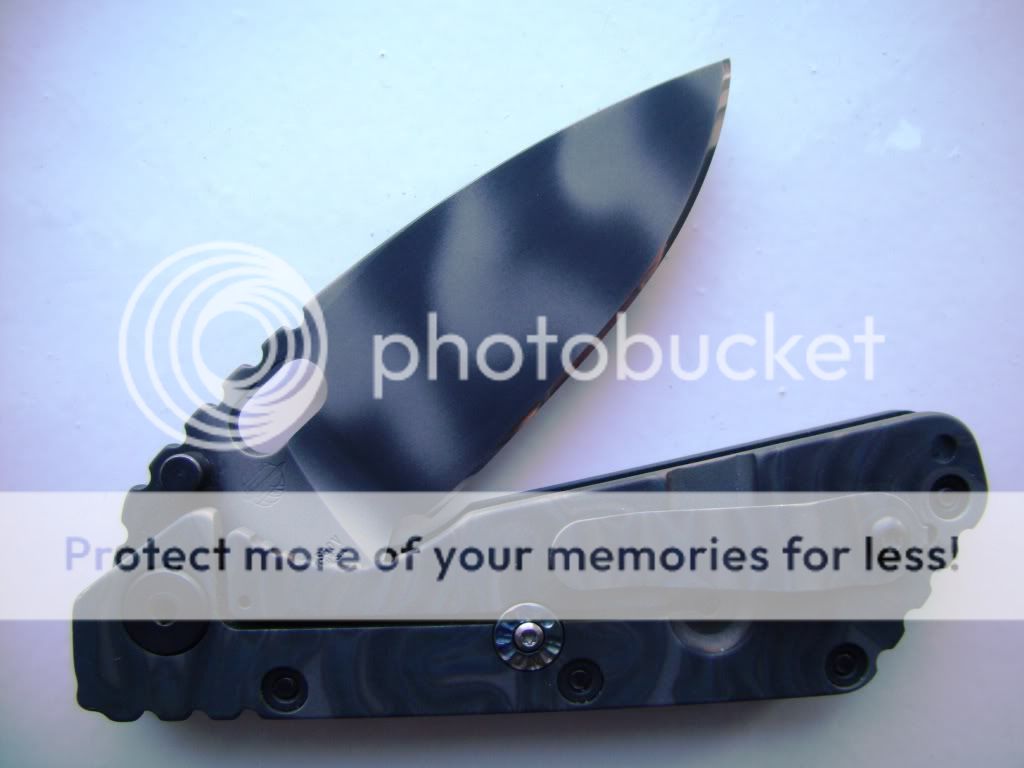
Best sharpener/method for sebenza and sng

Joined
Oct 24, 2009
Messages
243
i have a smith sharpening system but i suck at sharpening and im never happy with my results. especially along the belly of the blade it seems like the curve cause the angle to change and i get a somewhat sharp straight edge and a dull belly. any suggestions?
 
Sounds more like your technique rather than the sharpener you are using. you have to turn the blade following the edge in order to get a consistent edge no mater what sharpener you are using. keep practicing you will get it.
 
Try drawing a line with a marker on the bevel. WHen you make a pass with the stone, you should see the entire marked area being scratched away. If not, then you need to modify the clamp position on the tang, change angle, or both. I have a Lansky and blades with a tapered tang (thinned out towards the tip compared to the tang) are a pain to sharpen. Marker trick works for me more often than not.
 
Its your technique and a little upgrade in sharpening tools wouldn't hurt either. The movement you are probably missing is the lifting of the handle. As you sharpen you must lift the handle as you get to the belly to properly follow the curve. You can also aid in the following of the curve by placing a finger from your guide hand in the middle of the belly and adding slight pressure, this will keep the blade more stable through the belly.

Simple movements and proper points of pressure are all that is needed to keep a consistent angle.

Don't use the old teaching of "just like your slicing a layer of the stone off" because it implies bad technique. Do not turn the blade at the belly either as this will compromise the angle already being made by te lifting of the handle, its also improper for most blades.
 
Sounds more like your technique rather than the sharpener you are using. you have to turn the blade following the edge in order to get a consistent edge no mater what sharpener you are using. keep practicing you will get it.

This is about as close to universal advice as you can get, regardless of method or system.

It all comes down to being fully aware of what's occurring at the edge itself. You need to make sure you can fully see what's happening on the edge as you sharpen. Use a magnifier (at least 5X - 10X or more) and good, bright light to inspect the full length of the cutting edge. If you don't see a clean, precise 'V' edge along the full length of the blade, you need to do what's necessary to make sure the edge stays in firm contact with the stone at all points along the edge. Usually, this means rotating or pivoting the blade slightly upward as you draw the blade edge from heel to tip across the stone. You need to feel the edge 'cutting into' the stone, as if you are slicing a thin piece of it away.

Make sure you're forming a burr with the coarsest grit, before progressing to the next finer grit. This is the thin, often ragged 'wire edge' of steel that will form at the edge when it's been properly thinned, to a point where the burr will 'fold over' to the opposite side, away from the stone. You can usually feel it with your fingernail. Once you can feel or see the burr along the full length of the edge, it's time to move to the next finer grit. Use the same technique, slicing into the stone with the entire length of the cutting edge. At a minimum, the burr should at least 'flop over' to the other side of the edge. If so, turn the blade over and do the other side. As you progress through the grits, the burr will move back & forth from one side of the blade to the other side, and should eventually diminish or be removed entirely. As always, frequently inspect the edge under magnification and bright light as you go, to make sure you continue to see the clean, precise 'V' edge along the full length of the blade.

Above all, be patient. Take your time. Don't rush. If you're getting a little bit tired/fatigued, take a break. Use that time to visualize what a perfect, sharp 'V' edge looks like, and think about what you can do to make it so.
 
Hardware:
I'm a big fan of sharpening jigs. They nearly assure that you are sharpening at a consistent, repeatable angle. You focus your sharpening energy at a constant angle (i.e. the time/energy you spend scrubbing off steel particles).

You can then see/feel exactly what you are doing on the edge of the knife w/ a jig. By that, I mean the first time you reprofile the original blade with stones, you have a lot of work to do if you, say, pick a 15 degree angle on your jig, and you can see your progress as you go, without a magnifying glass.

I'm also a big fan of diamond sharpening "stones". Diamond is the only way to go with modern hard carbide-rich steels.

Quick & Dirty
Once you learn how to get a burr on both sides, progressing from coarse to finer stones, then you can work off the burr, working back and forth, on a leather strop.

More detail:
I don't need a magnifying glass... I can feel the burr with my finger, or fingernail, and make sure I keep scrubbing away at the steel until I've created a burr on the full length of the blade. Then I switch sides with the same stone. Repeat for medium and down to fine stone if that's what you want (you can shave with the edge from a coarse stone, it's like micro-serrations).

I then use a piece of stropping leather glued to a 2-1/2" X 6" piece of pine (a piece of 1x3) strop soaked with oil and impregnated with a super fine green rouge, but even the back side of a cereal box will work as a strop. You are capitalizing on the "work hardening" of the small metal burr... like bending a wire back and forth until it snaps. The strop is key to getting a shaving-sharp edge, no matter whether you stop with a coarse toothy stoned edge, or work down to a polished fine edge with fine diamond stones.

A Book or two should help immensely... You can read book reviews by others and purchase all three on Amazon:

The Razor Edge Book of Sharpening [Paperback], John Juranitch

Leonard Lee's The Complete Guide to Sharpening

Sharpening Made Easy: A Primer on Sharpening Knives and Other Edged Tools [Paperback] Steve Bottorf (this one available new from the author through Amazon)
 
Last edited:
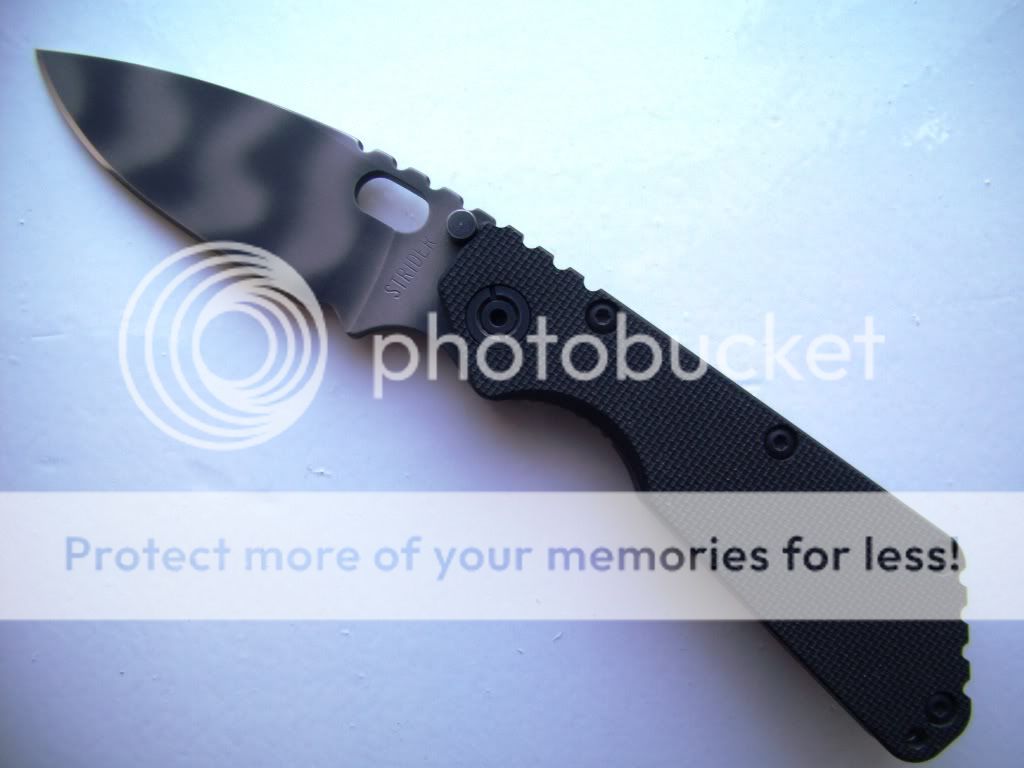
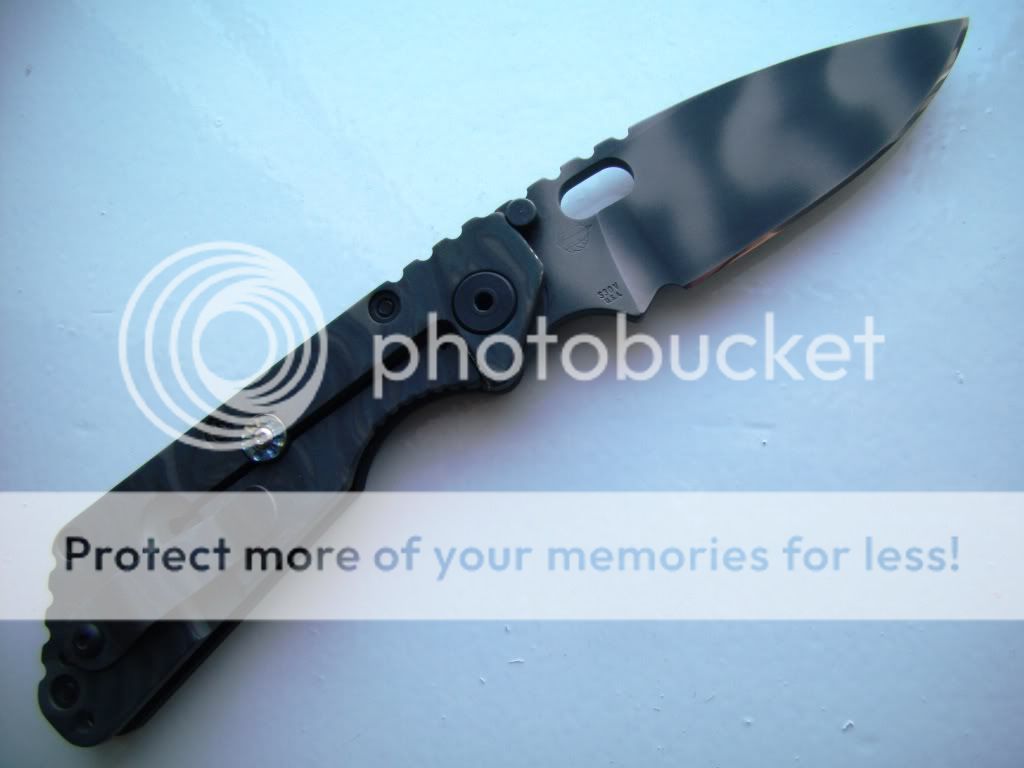
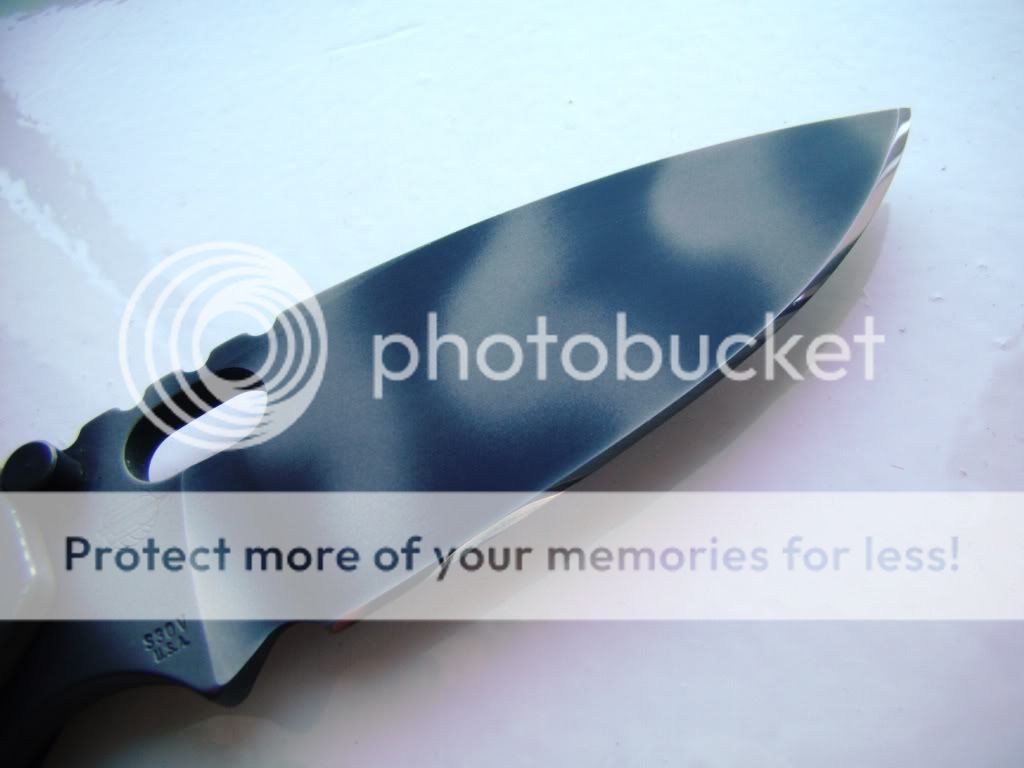
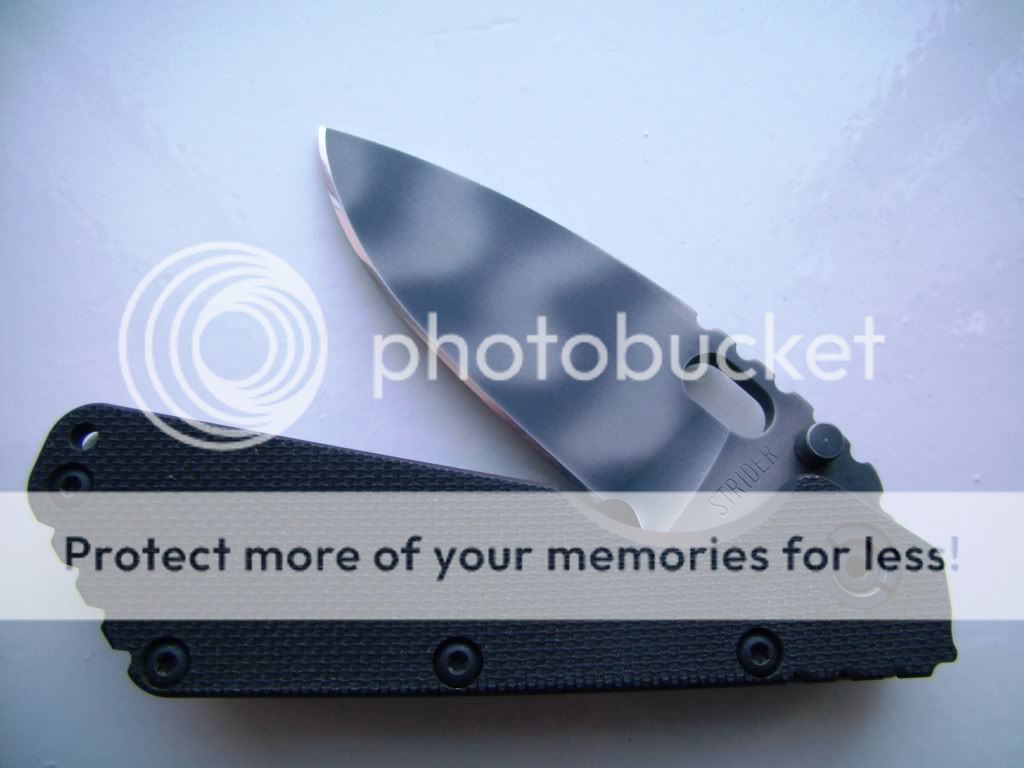
My lego SMF, done on a Wicked Edge sharpener to an edge of 40 degrees inclusive; thin enough, yet also strong.
First the standard diamond stones in gritsize 100,200,400, 600, then some wet & dry paper taped to the stones in gritsize 800, 1000, 1200, 1500, and 2000.
Finally some polishing compound on thin cardboard also taped to a pair of diamond stones.
The edge not only whittles hair, it can also cut a standing cigarette paper in half with a single slice.
And it looks good too, :D

SMF001.jpg

SMF003.jpg


SMF002.jpg

SMF005.jpg


SMF008.jpg

SMF009.jpg


SMF011.jpg

SMF010.jpg
 
For the Sebenza at least I know chris Reeve recomends maintaining the edge on a spyderco sharpmaker. However if you have a seriously dull blade you'll need the diamond hones for it.
 
Greetings Smitty 1505:

Exactly which Smith's Sharpening System do you have ? Is it the "Standard Precision System", the "Three Stone Sharpening System" the "Three In One Sharpening System" ?

One is a rotating flat mounted bench stone system, one is a guided rod/clamp bases system and one is a combination diamond bench stone with fixed angled ceramic rod system.

Although all the advice give is universally applicable, some techniques are more easily tailored to one system than another. OldDude1
 
My lego SMF, done on a Wicked Edge sharpener to an edge of 40 degrees inclusive; thin enough, yet also strong.
First the standard diamond stones in gritsize 100,200,400, 600, then some wet & dry paper taped to the stones in gritsize 800, 1000, 1200, 1500, and 2000.
Finally some polishing compound on thin cardboard also taped to a pair of diamond stones.
The edge not only whittles hair, it can also cut a standing cigarette paper in half with a single slice.
And it looks good too, :D
SMF011.jpg


My God, it's full of stars...
 
On my Striders, I find that most of the time, so long as I keep up regularly, my Spyderco Sharpmaker does just fine keeping my edge in good shape. But I'm not one who pines for an extremely fine polished edge as pictured above. Though I enjoy the therapeutic nature of such work at times, often I feel that on my Striders, I'm just gonna beat the hell out of them soon anyway, so I get them shaving sharp and that does it for me.
 
Back
Top