Bevel pic

Joined
Mar 2, 2017
Messages
316
k4r37sn.jpg


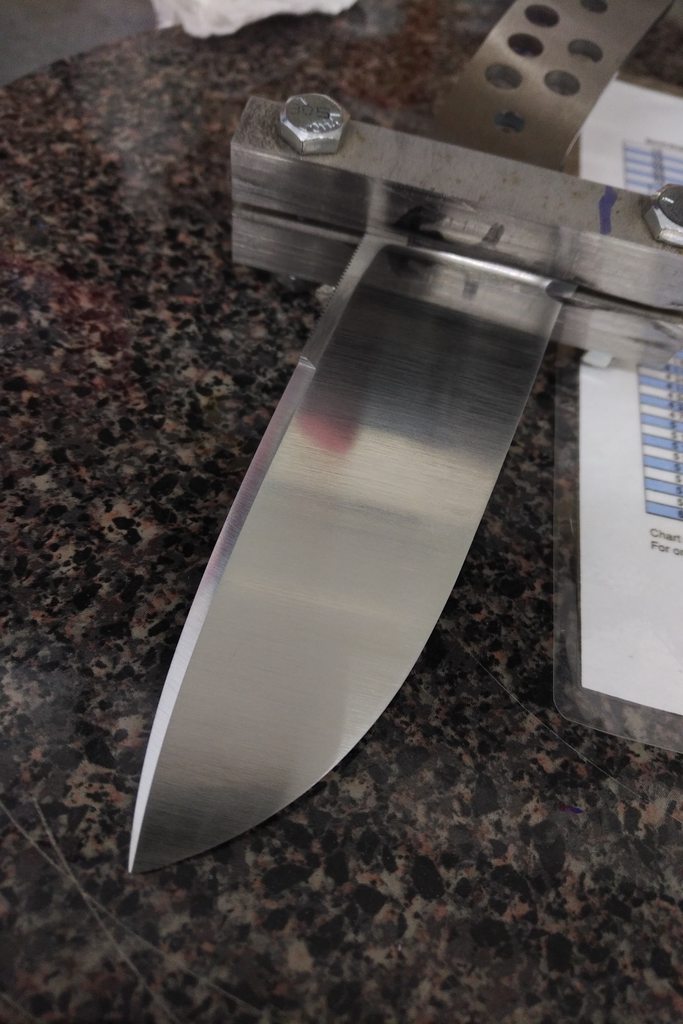
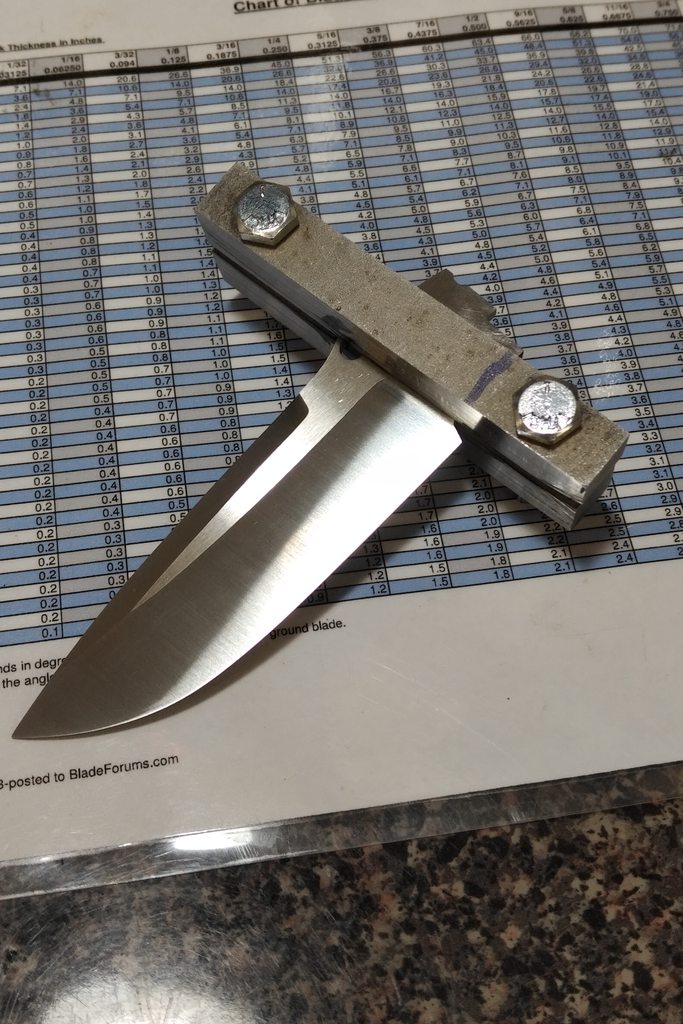
What causes my bevel to bow like this. This is with the knife sitting on a jig and going smooth.

 
Are you referring to where the bevel stops and restarts again in the first pic?

Your steel might be cupped. Can you put it on a surface plate or granite slab?
Or mark it with a sharpie and draw file a section to see wear it rubs.
 
Jigs cause that. You are removing the human control elament from the equation. In the world of machining a grinder is not very precise. So that's why learning the feal and how to move the grind line with pressure is important.
 
Are you referring to where the bevel stops and restarts again in the first pic?

Your steel might be cupped. Can you put it on a surface plate or granite slab?
Or mark it with a sharpie and draw file a section to see wear it rubs.
I didn't even see that. I was looking at the dip in the grind line. No idea how that first situation could happen, especially with a jig.
 
Moving back and forth, you could be spending more time at the end turn around points.
 
I think the OP is referring to the actual bevel being a tad higher in places than other places. With a jig that is slid along a tool rest this is usually caused by putting more pressure at the places where the bevel is highest. In the first pic that would be at the ends, while the 2nd pic shows a tad higher in center of bevel. This could also be putting a tad more pressure as the center is pulled off edge of belt.

Ken H>
 
I agree with Ken, but looking at both sides, it looks almost like the center is lower on one side and higher on the other. So I would make sure the stock isn't bowed.
 
In addition to what's been said, if there's a slight difference in stock thickness you'll get undulating grind lines as well.
 
Thank you guys. I wasn't sure if pressure would raise and lower the grind line. Probably what it is.
 
Jigs cause that. You are removing the human control elament from the equation. In the world of machining a grinder is not very precise. So that's why learning the feal and how to move the grind line with pressure is important.
Jigs do not cause that. I grind with a jig and my grinds are not too bad.

K20HS8Hh.jpg


AunIST0h.jpg
 
Last edited:
I think to JT's point, with some jigs it's hard to gauge the different amount of pressure on different areas of the blade.
When I freehand, I can feel the blade and how it is making contact with the belt. I can see the spark pattern too and make sure I'm getting the pressure in the right places. With a work rest and a jig, that might not be as easy to do.

I don't mean to imply anything negative about jigs, especially guys like LoRez who know how to use their work rest and jig to get good results.
 
Being a physical therapist by trade and that I pay close attention to my posture and body, and have a good kinesthetic sense, I check my grinds after each pass, and can correct unevenness with increasing pressure on the low points or decreasing on the high points on subsequent passes. And I can almost always tell when I screw up before I look at the grind by feeling when I lose concentration and use uneven pressure.
While there are other possible reasons, IMO the main reason is not keeping even pressure throughout the pass.
(but check the straightness of the stock first....)
~billyO
 
Back
Top