BM LFTi beater

Joined
May 6, 2010
Messages
1,410
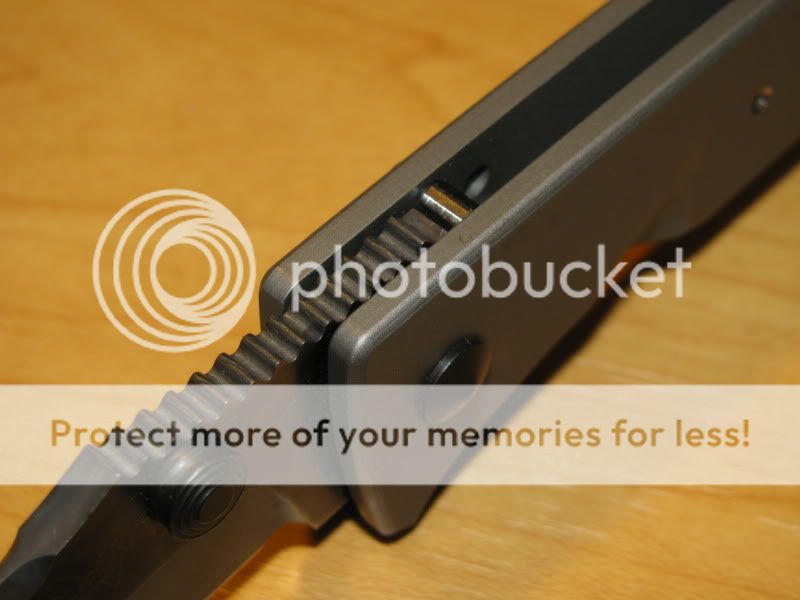
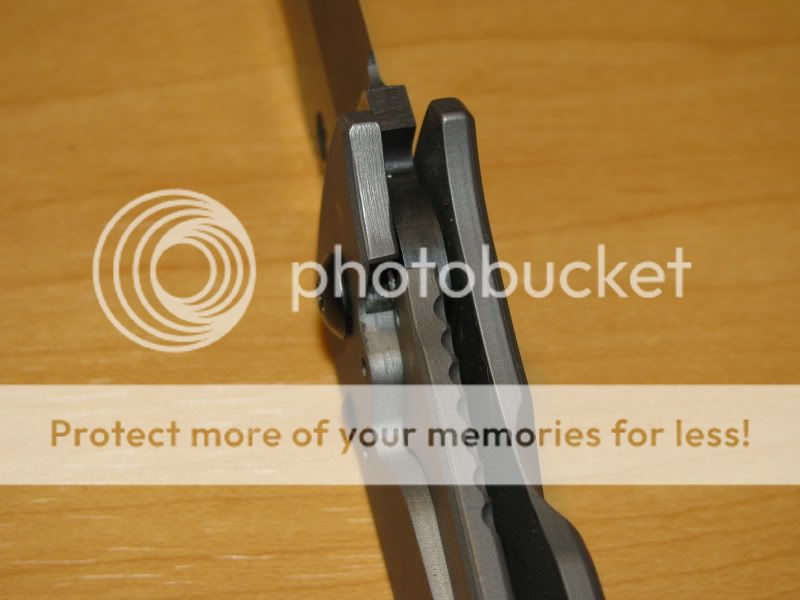
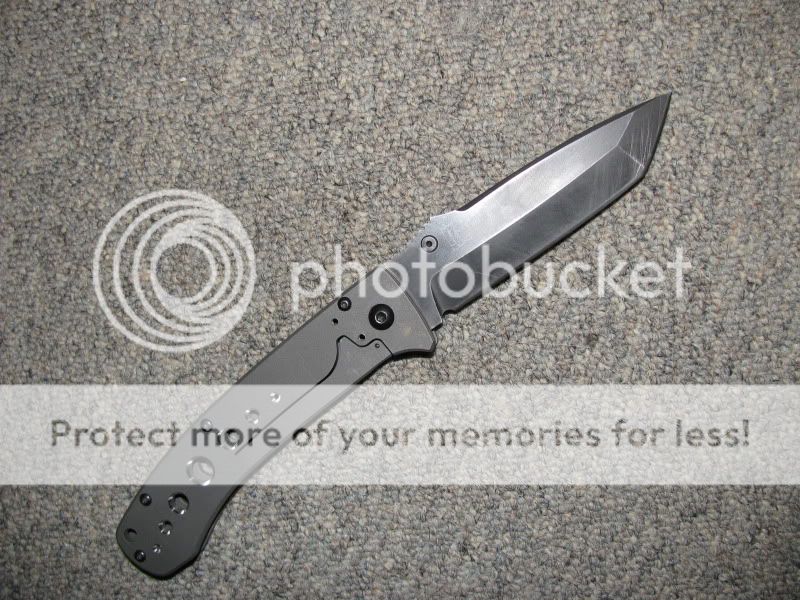
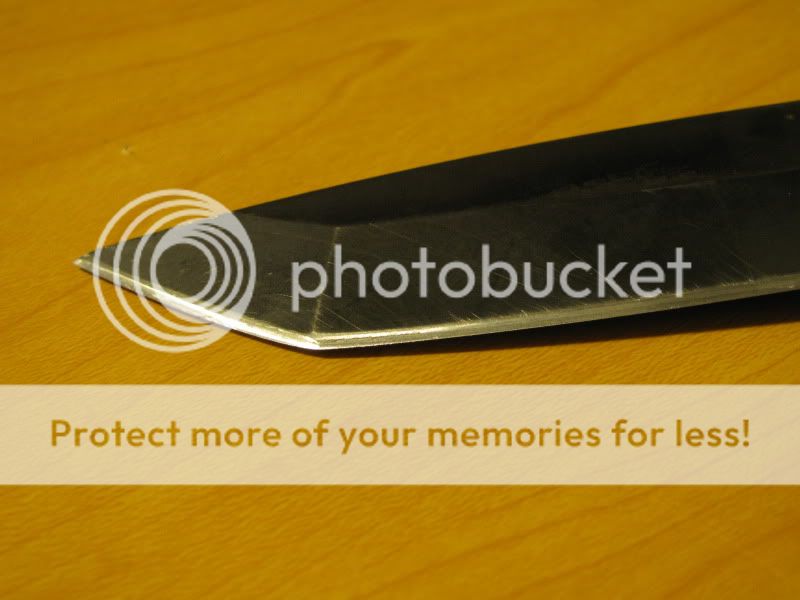
HT to 63.5rc by Phil Wilson. Blade stop pin (Junk) turned to knock the high points down to a manageable height so I can get more than 15% lock up. The blade stop pin spun every time I flicked the knife open so I epoxied it in place. Plenty of lock up, and my 4th time sharpening a knife. It's not pretty, but I won't be afraid to beat on it. :cool:.

IMG_3702.jpg

IMG_3703.jpg

IMG_3704.jpg

IMG_3708.jpg

IMG_3707.jpg
 
Nie knife! What was the original hardness? I had one and it seemed soft compared to Spyderco's M4. One thing that really helped my LFTi cut much better was to have a Krein regrind it, which removed the tanto and got the edge down to about .012" at the top of the bevel, compared to .050" from the factory. That made it cut great, but it took forever to finally get the blade close to centered and the lock engaging properly (usually it would get centered but not engage the lock, or get good engagement and be touching the slab, it took tons of tinkering to get it right). I ended up selling it because I just didn't like the softer than Spyderco M4, as it was good but not up to the steel's potential. At the time I hadn't thought about sending it to Phil to have him work his magic on it. Which reminds me, I have a 1 of 50 Benchmade M4 Rift that I was talking to Phil Wilson about having it re-hardened a while back, and I really need to send it to him to get it bumped up to 63-64 RC. It will be interesting to see how hard my Rift is and compare it to my Spydercos in M4 after it is brought up to their hardness level.

Mike

Mike
 
nice,
the same without regrind for me. i have plenty of slicers, a robust blade with just a thin edge can be handy sometimes.

i really love mine, the soft steel is the only drawback once you've set it right it's butter smoothand very sturdy, like minimal friction if you hold the lockbar, and no play at all locked. that's probably my smoothest production folder. at least smoothest feeling, blade weight may play a big role here.
 
I went to town on the edge with my DMT diafolds and my Smith's kitchen knife sharpener. I had to remove the thumbstud to get the angle down. The edge is still thick, I'd say mid way between slicer and utility.
IMG_3701.jpg
 
Mike and others. Nice to hear from you again Mike and glad your re-treat is working out for you Turbo T.
At this point I am declining to do any more re-treats. It takes to much time away from my own heat treating and knife work. The steels that I have been doing take precise control and that means sometimes multiple tempers to kind of sneak up on the exact hardness value requested. The other aspect is the risk I am taking if something goes wrong. On some makes and blades it would be very difficult to replace a blade if need be. Thanks to all who have used my services in the past... Mike fire me an PM when you get a chance.. Phil
 
I sent you an e mail, Phil. It's good to see you posting here. Sad to hear you aren't doing the re-heat treats anymore, but I definately understand why you stopped doing them. Your knives come first and foremost, and there seems to be a lot of work and risk on your side pushing previously worked on steel to it's limits. A liability waiver almost seems a requirement if you were to re-treat blades, especially the limited editions. Personally, I would be OK with the risk of having my CPM M4 Benchmade Rift brought from probably 59 RC or so up to 63-65 RC, as I am used to CPM M4 at that hardness from Spyderco. If the Rift snapped at the higher hardness after a re-treat oh well, I have 4 other knives in CPM M4 that work fine at a higher hardness. I'm a knife user, not a collector, so I'm guessing that I would be in the small minority of users that wouldn't be upset if their very limited edition broke, but I just figure that's the risk you take to push the envelope of performance. If you don't want it to ever get damaged put it in the drawer or just use it as is with the lower hardness. I'm all for pushing the limits of performance in steels, and when you push the limit sometimes you pass that limit and risk a snapped blade.

I guess that leaves a person in the position to get on the waiting list for a Phil Wilson custom to get the ultimate in performance out of a steel. I think you have probably done more testing and experimenting with the super steels that a person can be confident that if they get a Phil Wilson knife they are going to get a knife that will give you the ultimate in performance possible for the steel in that knife. Which means I really need to get on your wait list, Phil!

Mike

 
The blade stop pin spun every time I flicked the knife open so I epoxied it in place.

Nice knife, but I'm pretty sure that was designed that way, so every time the blade would lock up on a different part of the stop pin, so it would spread the wear out, rather than just having a single flatspot.
 
no, the stop pin on this one is not round, it's hexagonal and each side result in a different lockup, that's a very clever way to deal with lockbar wear, when it works as engineered.

i struggled with mine quite a lot, and had to loctite the screw that holds the stop pin in place.
 
glad your re-treat is working out for you Turbo T.

Thanks so much for your work! The blade is very stout now!

but I'm pretty sure that was designed that way, so every time the blade would lock up on a different part of the stop pin, so it would spread the wear out, rather than just having a single flatspot

You are right, it is. If you take the lock bar grip off and play with it you can watch the knife, as it closes, realigns the stop pin so that when it's opened again, the blade hits a high side. My problems were that the stop pin, once the blade is fully closed, is free to spin and the high points on the octagon were so high that the blade barely locked into place. I also had the pin rotate while the blade was locked in causing it to rattle and lose contact with the lock bar. It was very frustrating.
 
hum no.

you didn't notice the flats on the stop pins aren't all equal? that's why there is a spot on one side. it's meant to compensate for wear, when your lockup begins to drift toward the non locking side, you just have to change the side that touches the tang for one that will be "closer", that way the blade will "drop" a fraction of degree toward the edge and the lockup will change.

it worked that way on mine at least, i had different lockup on each side of the stop pin. the first time i reassembled the knife, i set it on the side that matched 50-60% lockup with no sticking. on mine the stop pin didn't rotate when the screw was properly tightened. the issue was that the screw didn't stay tight long hence the loctite.
 
hum no.

you didn't notice the flats on the stop pins aren't all equal?

Yes, I did. It's easier to see when I looked at the stop pin after the machine shop turned it. Obviously somesides had more metal removed than others. None of my high points yielded anywhere near 50% lock up. The most I got was *guestimating* 15-20%. All of the flats caused the blade to travel too far, leaving significant front to back play.
 
Strange, on my 790 Subrosa (also a ti-framelock with hexagon stop pin), it's firmly in place, but it seems that if i manually rotate it just a tiny bit, the lockup remains identical.
 
If you're rotating it while the knife is closed, as the blade opens, that rounded front part of the bottom of the blade is probably aligning the pin so the lock-up is good.
 
Back
Top