i want to thank you all for the helpful tips. the knife may or may not be of quality, i really wouldnt know, but i think its absolutely beautiful. How would you guys suggest i test how good the quality is? I will try the sun bleaching, although finding a spot to do it will be difficult because i live in a condo in a city lol. id like to run this knife through some hurdles before i decided to keep it with my pack.
Do you have a balcony or even a window you can open? Given that it has a lanyard and bail, you could conceivably hang it outside your door or window for a time. Just mark your calendar or you're likely to forget it!
The first thing I would do to run it through its paces is to set some tasks to it. Carving, whittling, and stripping branches. Don't know where you live, but start with evergreens. If you're into bushcraft, make a small fire using little bits of wood you've prepped with the knife. When you get home, clean it, dry it, and hang it back outside. Get ready for Christmas (or recover from Chanukah) by breaking down some cardboard boxes. They'll play hell with the edge, and watch out for metal staples, but it will give you an idea of how the blade performs in cutting and in sharpening. If you aren't good at sharpening, this will give you a chance to practice. Read up here and watch YouTube vids on sharpening principles and techniques.
And if the smell starts to abate, bring the knife in for kitchen chores. Hope you're not a vegetarian, because a good task to run that knife through is to quarter a couple of chickens and then spatchcock a couple more. A five inch blade is a good size for those two chores. Go after a couple heads of cauliflower and broccoli, too (they are particularly good tossed in a little olive oil and salt and then roasted under 375° for about 20 minutes or lightly browned and go great with the chicken you just prepared).
Another thing people neglect is to practice chores that seem to be too light for the knife. But these can give you an idea of how a heavy knife really feels in the hand. For instance, some knives are real beasts for their size while others are really handy at even larger dimensions. Go after some tomatoes. Open some envelopes. Cut some tags off new clothes. Slice bread. See what works and what doesn't.
Then, once you know how the knife handles with these chores and isn't going to snap off at the handle, you can start going he-man on it with fun things like light batonning (stay away from cured hardwoods and watch out for knots--you know there's a whole cadre of folks here who think batonning is evil, so read their posts to get the pros and cons of it because it's a great way to destroy a blade that isn't up to the task), cutting soda bottles, and so on. Just remember it's not an axe, no matter how well it might do choppy-violent-conan-the-barbarian-type tasks. Personally, I get a lot of joy out of putting a cabbage up on a fence post and practicing knife-fighting skills on it. Cabbage is cheap and it flies all over the place when the leaves begin to come apart. As long as the knives can handle the swing and you don't hit the post you'll be fine. A rake cleans up the mess nicely. If you're in the woods, you can leave it for the skunks, raccoons, rabbits, opossums, and porcupines.
Don't ever throw this knife. I have a gut feeling it would break.
Then, after a month or two of this, you have yourself the makings of a first-rate knife review. Post your thoughts and your experiences, sprinkle in a few choice photos, including ones of friends holding their noses at the stinky horn scales, and your post see will a ton of traffic.
Have at it, D'Artagnan!
Zieg

 [/URL][/IMG]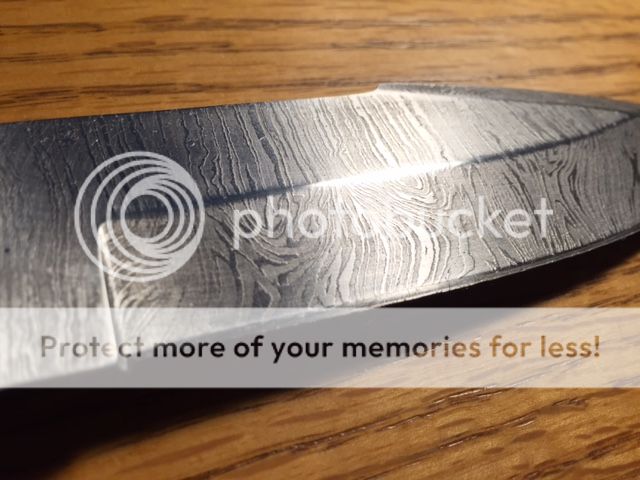
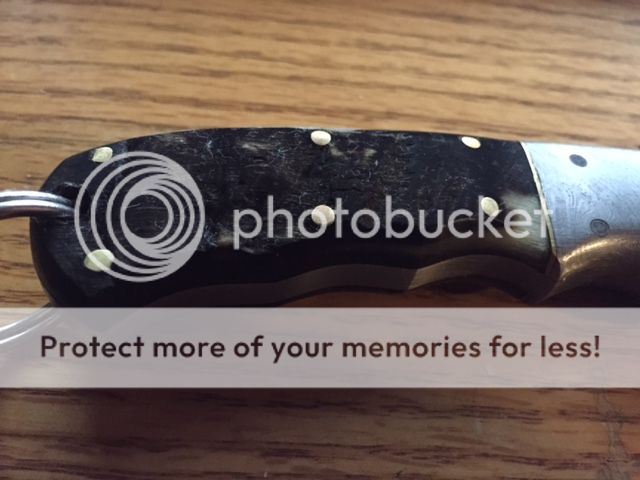
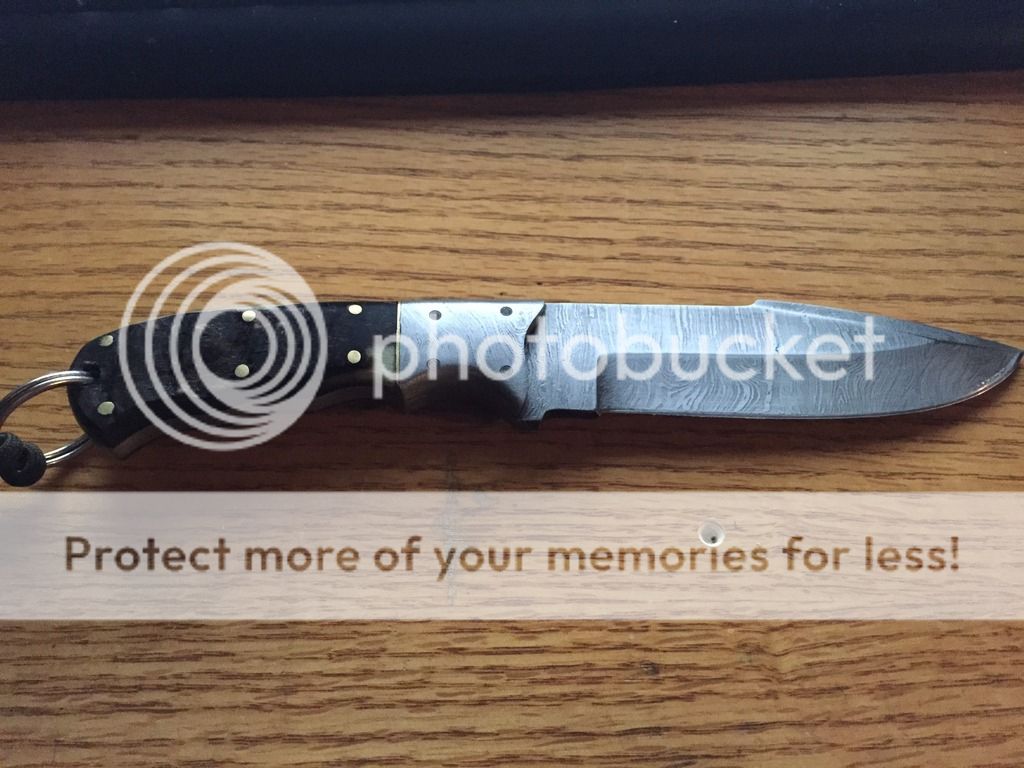


 As for getting rid of the smell I have no idea. The safest albeit longest way I could think of would probably be sun bleaching, but that would only work if the bacteria causing the smell is located on the exposed surface.


 Really, check it out on the evilbay.