
-
The BladeForums.com 2024 Traditional Knife is available! Price is $250 ea (shipped within CONUS).
Order here: https://www.bladeforums.com/help/2024-traditional/
You are using an out of date browser. It may not display this or other websites correctly.
You should upgrade or use an alternative browser.
You should upgrade or use an alternative browser.
Can anyone explain to me a sidelock?
- Thread starter Sinkolen
- Start date

- Joined
- Jun 8, 2005
- Messages
- 4,761
Side lock is usually another word for liner lock (belonging to the family cross lock). Liner lock is a much more popular term. Ka Bar is one of few companies that seems to use side lock terminology.
In any case, it's pretty simple conceptually. Basically, a liner lock knife has scales (made of plastic/frn, g10, wood, etc) outside of the metal liners -- it's convenient to think of the metal liners inside the scales as the frame of the knife (so far, this is true of non liner locks as well, in many instances). However, in the unique case of the liner lock, a small length of the metal liner is cut out and bends across the space inbetween the sides of the "frame."

Here's a picture from a leatherman charge, with the actual liner lock highlighted. It's a little unorthodox (since it's a multitool), but conceptually similar to other liner locks.
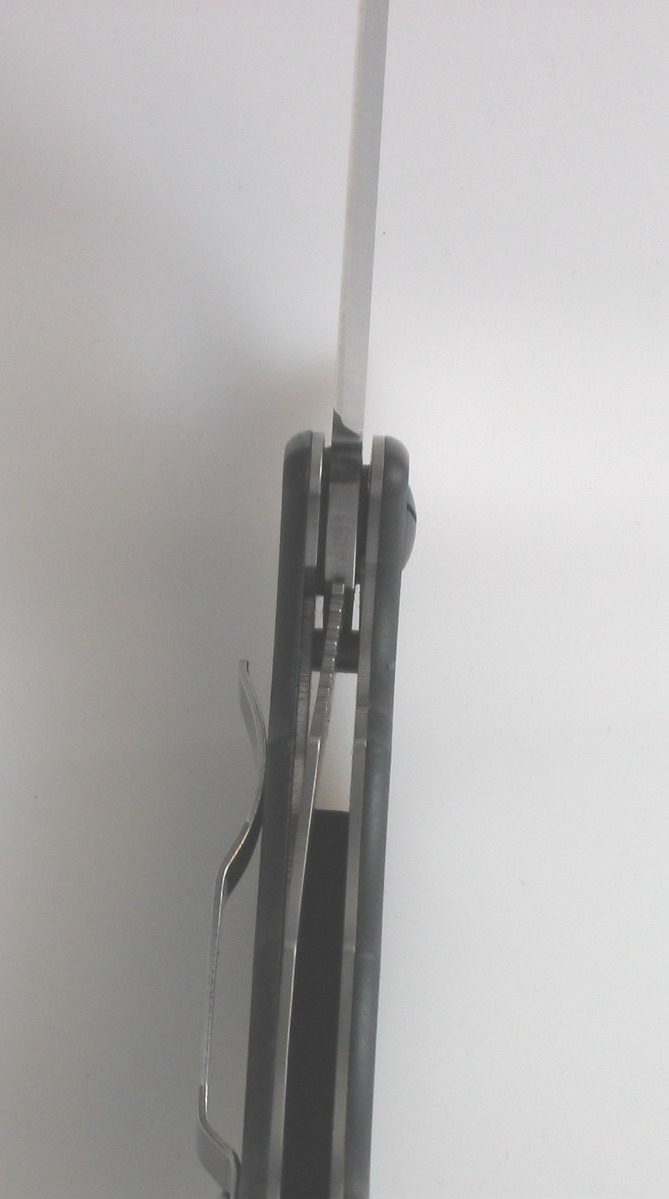
Here's a better photo of an Emerson knife with a liner lock.
As you can see, a piece of the liner is bending across the gap, where the blade normally closes. When the blade IS closed, that liner is pushed to the side, making room for the blade. It stays on the side all the way until the blade is fully open, where it's released and bends across the gap again.
The top of the lockbar engages the tang of the blade at an angle perpendicular to the length of the lockbar. Because the liner is now in the way, and the force of trying to close the blade travels perpendicular to the liner, it is unable to close.
To disengage the lock, simply push it across the gap back into the side again...while doing that, you'll move the blade down a bit so it occupies the space between the gap and keeps the liner out of the way, and close it.
In any case, it's pretty simple conceptually. Basically, a liner lock knife has scales (made of plastic/frn, g10, wood, etc) outside of the metal liners -- it's convenient to think of the metal liners inside the scales as the frame of the knife (so far, this is true of non liner locks as well, in many instances). However, in the unique case of the liner lock, a small length of the metal liner is cut out and bends across the space inbetween the sides of the "frame."
Here's a picture from a leatherman charge, with the actual liner lock highlighted. It's a little unorthodox (since it's a multitool), but conceptually similar to other liner locks.
Here's a better photo of an Emerson knife with a liner lock.
As you can see, a piece of the liner is bending across the gap, where the blade normally closes. When the blade IS closed, that liner is pushed to the side, making room for the blade. It stays on the side all the way until the blade is fully open, where it's released and bends across the gap again.
The top of the lockbar engages the tang of the blade at an angle perpendicular to the length of the lockbar. Because the liner is now in the way, and the force of trying to close the blade travels perpendicular to the liner, it is unable to close.
To disengage the lock, simply push it across the gap back into the side again...while doing that, you'll move the blade down a bit so it occupies the space between the gap and keeps the liner out of the way, and close it.

Kohai999
Second Degree Cutter
- Joined
- Jul 15, 2003
- Messages
- 12,554
Artfully Martial said:Side lock is usually another word for liner lock (belonging to the family cross lock). Liner lock is a much more popular term. Ka Bar is one of few companies that seems to use side lock terminology.
There is also the W.D. Pease side lock which is a sort of variation of a front/mid lockbar knife, but very slick, and unique to W.D.:

Best Regards,
STeven Garsson
- Joined
- Jun 8, 2005
- Messages
- 4,761
Shows how much I know.
In my vocabulary I don't equate sidelock and linerlock. To me a sidelock is a mechanism similar to my Vic Rucksack where pushing or sliding a button on the side of the scales releases a lock mechanism inside. In the case of my Rucksack it slides the metal lockbar "back" from blade indent allowing the blade to close.