I can give you a couple tips that you can do at your own risk, but keep in mind that
doing any of this will void your warranty so once you take the knife apart, it's all in your hands.
My 20CP Para 2 came out of box perfect (in fact I've owned 3 Para 2's now and all of them did) but within a month developed side to side play (they all did). By side to side play, I don't mean the blade wiggled when using it, I mean If you held the knife at the pivot and jiggled the blade, you would feel the play in the pivot. The 20CP had it the worst. I read that this was a common issue with this sprint for some reason, and since there was no way it could be replaced due to it being a sprint, I decided to look into fixing it myself.
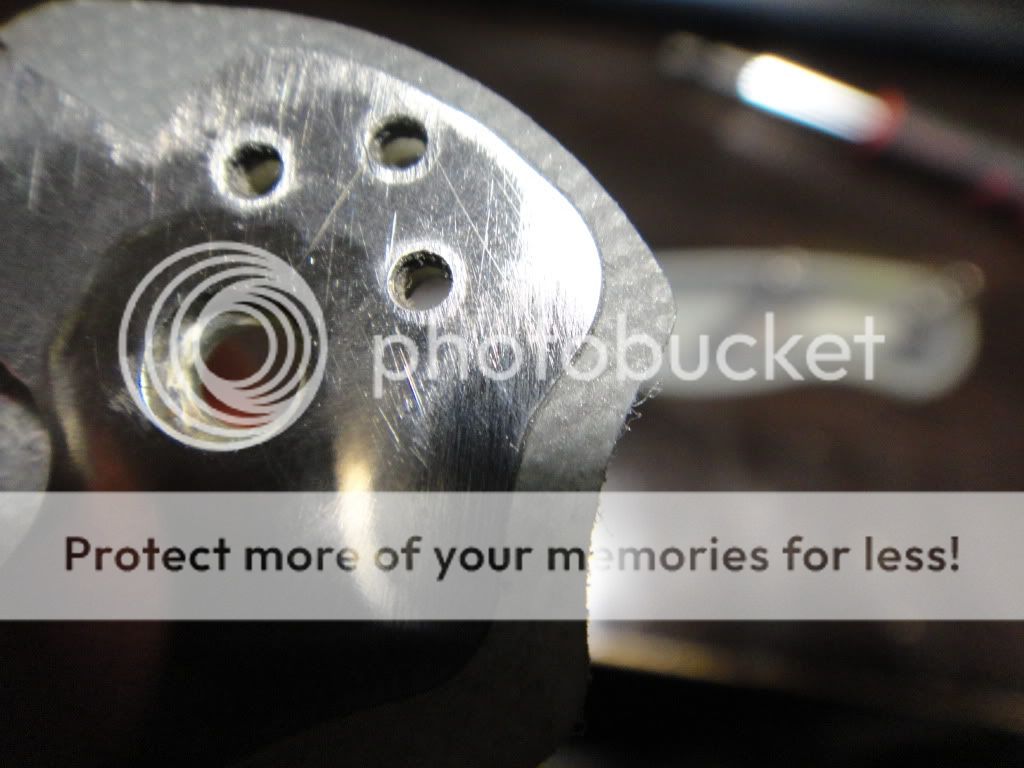
I've had two of the 3 that I've had apart, so I was familiar with the inner workings of the knife. A while back some people reported that the area that the liners were being drilled for the clip at the pivot end had a flair around the lip of the hole, which prevented the washers from laying flat. I only found this on one of my Para 2's, but if you're going to take the knife apart and try to fix it yourself, this is something to look at.
This pic shows where I took a 1000 grit stone and honed down the lips around the holes. The area that looks sanded around the clip holes is how much lip there was sticking up.
The second thing you can look into is the biggest culprit in my opinion. This is the one that fixed the blade play in my Para 2. I made a thread a while back on the Spyderco forum, so I'll just quote that:
Today I got a little nostalgic for my 20CP Para 2, because I've had a lot of knives since this one and haven't carried it for a while. I got it out and touched up the edge (soooo sharp) and came back around to the one nagging issue with this knife that has plagued me since first buying it...side to side blade play. I read that all of this sprint supposedly suffered from it, but out of the box this knife was solid as a rock. Like the other 2 versions of the Para 2 that I've owned however, this one developed a slight side to side wiggle after about a month of EDC. It wasn't so bad that you could feel it in use, it didn't actually "jiggle" but if you know what you're feeling for you could feel it in the pivot. Anyway, I decided to take things into my own hands and fix it today.
So, long story short (I didn't take pics...it was too tedious and too simple to bother with), I simply took the knife apart and *slowly* sanded down the ends of the STOP PIN. I did eventually take a tiny bit off the sides of the bushing as well, before it occurred to me that the problem is with the stop pin being too long and preventing the bushing from tightening down onto the blade firm enough to eliminate play. (Avoid sanding down the pivot pin until you try doing the stop pin first).
So, I took it apart, and used a 400 grit diamond stone to "file" the ends of the stop pin down...very small amounts at a time, and then put the knife back together to check progress, then repeat as necessary until I was able to eliminate side to side play. I got it to the point where I could apply enough pressure with the pivot screws that the blade wouldn't fall shut by gravity anymore, then I knew I had done enough. A drop of Locktite and adjusted the pivot so it was snug but had no play, and it was good to go. It flicks open like a laser and drops closed with gravity (passes my "drop closed and cut phonebook paper test, if you've ever seen that) and has no side to side play anymore.
So basically, in my knife it turned out that the pivot screw was completely bottomed out and couldn't be tightened down any further. One way to change this is to make the pivot slightly shorter so the screws can clamp down harder onto the blade. Another way is to do the same thing with the pivot pin, because both of them are so close together they both can have an effect on how tight the pivot is on the blade. (If the stop pin is slightly too long, it will hold the liners apart preventing the pivot screws from tightening down on the blade) When I say "slowly sand down the ends" I mean take the pin and rub a sharpening stone flat along the end of it a few times, then put the knife completely back together and check for play. If you remove too much you could really screw the knife up, so take it very slow and do it right. While you have the knife apart, look for any lips or irregularities that might prevent everything from laying perfectly flat against each other when the knife is together. I couldn't really say how much you need to remove, you're basically custom fitting the pivot to the thickness of the blade itself.
Hope that helps. PM me if you need anything.



