Carbon steel that is Stainless

Joined
Dec 16, 2007
Messages
152
Yes, no steel on this planet is stainless but we try to get there. More stainless you make, less steel the knife becomes. That's the dilemma all the knife maker trying to solve it. Carbon steel is the ultimate steel for making knife - we humans established that many many decades ago. But, rusting on carbon blade was a major issue. So, CPM people first produced a steel with the help of great knife maker and an innovator Chris Reeve to invent CPMS30V. Steel that holds an edge like a carbon steel, sharpens easily, and an almost stainless. But having 14% Chromium and 1.45% Carbon, this steel is considered brittle for larger blades for more than 6 inches. Heat Treatments was best achieved by Paul Bos.

After S30V, looks like CPM people started producing many other version of knife steels. And to my experience, they have succeeded when the made CPM3V. After using Fehrman Final Judgment in three different countries, I found 3V to be very strong, best edge holding capability, and behaves almost like a stainless steel even knowing the fact that it has only 7.5% Chromium.

Now my Hersey Ranger 2 folder and Crusader Forge Oblander 02 both shows minor rusting even made with S30V. But, Fehrman's 3V (stripped the coating and left the rough finish) did not rust at all even without of proper finish on the blade. After chopping woods for fireworks and some basic cutting I did not have to sharpen the edge for over 9 months - talk about holding an edge :eek:.

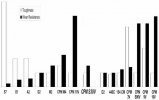
Any knife would rust with a rough finish when left exposed, but not this guy. So, if Paul Bos HT CPM3V similar to other CPM steels, this would be a great steel for knife makers for their knife. CPM3V A STAINLESS CARBON STEEL :D.cpmxyuo7.jpg
 
CPM 3V isn't anywhere close to a "carbon steel". It is an "alloy steel" because it has controlled amounts of elements other than carbon.

CPM 3V has a walloping load of Chromium (7.5%). Not enough to be "stainless", but enough to start affecting its corrosion resistance.

http://www.crucibleservice.com/PDFs/\DataSheets2010\ds3Vv1 2010.pdf
Carbon 0.8%
Chromium 7.5%
Vanadium 2.75%
Molybdenum 1.3%

As for the rust on your S30V, try buffing out the rust spots. The surface of a stainless steel can be contaminated during the manufacturing process, leaving blemishes in the protective oxide layer that can serve as opening spots for corrosion. Remove the contaminants and you're good to go.
 
Why isn't Nitrogen replacing Carbon in alloys?

Using nitrogen instead of carbon is a very new tech compared to carbon - a few years instead of centuries old. The process is very difficult/expensive, involving vacuums and stuff I don't understand. H1 also presents problems for production-level manufacturing. For example they can't be flat ground because the speeds/temps that occur will warp the blade, which is why all the Spyderco H1 knives are hollow-ground.

And of course H1 performance doesn't compare in toughness or edge retention to today's modern carbon steel alloys.

Perhaps in the future, after years of R&D nitrogen might approach and even replace carbon alloy steels. But we're not there yet, not even close, and we may never be.
 
One of the reasons nitrogen isn't replacing carbon is the age old reason that carbon was obtainable through heating steel in a coal forge. However, I don't know of any forge which adds moderate amounts of nitrogen into the steel by heating it: it might be possible, but unless that is the case mixing nitrogen with the other elements has to be done by smelting the ingredients together. This inherently presents difficulties, as molten metal quickly absorbs for example oxygen in a less controllable manner, and that way it's very hard to keep the mixture pure. Add to that the problems with manufacturing anithing out of a nitrogen steel like H1 as mentioned before, and you'll understand why nitrogen will not replace carbon on short notice, if ever.
I hope you can gather some info from this post, as I'm being quite chaotic now. Blame the time (0:34 around here)
 
Nitrogen has been added for a long time but as a surface hardening process. There is carburizing, carbonitriding, and nitriding. Special nitriding alloys have been made usually containing aluminum which forms Al nitride.
Off hand I don't know the details of adding nitrogen.
 
Mad Dog resorted to hard-chroming O1. An interesting idea, and hard chrome plating is not all that expensive in the grand scheme.

Yet, as a simple plating technique, I wonder how well it holds up under heavy use where the underlying steel flexes... e.g. batoning the spine. Still, the sharpened edge is exposed, so some kind of protectant is in order for maintenance.

Hard Chroming of 3V could be a general winner.

Any info on Mad Dog knife performance long term, and hard use, e.g. batoning, would be welcomed.
 
CPM-3V sounds impressive, but as a folder steel its use is questionable, if a little rare. It sounds like S30V in wear resistance, but tends to be heat treated harder leading to better edge retention, and doesn't have the problem of chipping because of the legendary toughness. But comparing to true carbon steel, I'm guessing it isn't tough enough seeing as how you don't see swords(specifically katanas) in that steel.
 
Thanks knarfeng for your comment. 7.5% Chromium does not qualify CPM3V a stainless steel, but surely from my experience it's behaving like a SS. It's also highly abrasion resistant steel. Also, it's a High Carbon steel as having more than 0.6% carbon. Holds an edge like a diamond. So, looking at it, it's Tool steel that is not supposed to be carbon and Stainless steel, but surprisingly it's behaving both characters. That's what surprises me the most.

I do try to give my blade a decent mirror finish to make them rust proof but mostly on carbon steel, not on S30V. My Benchmade Deja Voo never had that problem as it is already stone washed.

By the way, to my knowledge only INFI has a little nitrogen.:eek:

CPM 3V isn't anywhere close to a "carbon steel". It is an "alloy steel" because it has controlled amounts of elements other than carbon.

CPM 3V has a walloping load of Chromium (7.5%). Not enough to be "stainless", but enough to start affecting its corrosion resistance.

http://www.crucibleservice.com/PDFs/\DataSheets2010\ds3Vv1 2010.pdf
Carbon 0.8%
Chromium 7.5%
Vanadium 2.75%
Molybdenum 1.3%

As for the rust on your S30V, try buffing out the rust spots. The surface of a stainless steel can be contaminated during the manufacturing process, leaving blemishes in the protective oxide layer that can serve as opening spots for corrosion. Remove the contaminants and you're good to go.
 
i doubt the toughness is a factor in seeing swords made of 3v. the most prominent feature of this alloy is its toughness. however i understand it's a very expensive alloy prompting one formite to comment that 3v should make a great axe but would be too expensive to warrant widespread usage.swords actually are a totally different animal & comparing alloys for usage in swords is really the football of the katana experts.
dennis
 
Thank you for chiming in, Dennis. I think that helps to clarify much of the preceding commentary for me.
 
It's a pet pieve of mine to lump steels into the carbon vs. stainless categories. As a general comparison, this has been meaningless for the last 30 years. Other than one rusting much easier than the other, the properties can and do overlap a lot.

The knives that were S30V and showed rust didn't happen to have bead blasted finishes did they? You can rust bead blasted 304 stainless overnight in the right places, like apparently my pockets in summer.
 
The price of 3V is ridiculous compared to the low alloy steels usually found in swords. So it isn't surprising that you don't find many three foot long pieces of it with handles and scabbards. But it is tougher than L6 and several times more wear resistant.
 
Any idea how 3V expensive are they compared to other CPM series. I always wandered why not many knife maker use this steel :confused:

The price of 3V is ridiculous compared to the low alloy steels usually found in swords. So it isn't surprising that you don't find many three foot long pieces of it with handles and scabbards. But it is tougher than L6 and several times more wear resistant.
 
The price of 3V is ridiculous compared to the low alloy steels usually found in swords. So it isn't surprising that you don't find many three foot long pieces of it with handles and scabbards. But it is tougher than L6 and several times more wear resistant.

Most Swords are 5160 or something like it, a few are L6, but they are very expensive.

Swords have to be springy or they will snap way too easy.
 
The L6 ones are very pricey, especially the bainitic ones. Of course, they are bainite to increase toughness, which regular quench & temper 3V already leads in.

Price is a little tricky, since round bar can be bought and forged down, and the price for the stock is cheaper than bar, but there is labor involved. Plus, while I can find prices for different alloys at a few sites, they don't have all 3 (5160, L6, 3V) at the same ones I'm checking. But for example, a .274" x 1.8" x 36" bar of 3V is $126 at one supplier. At another, a .25" x 2" bar of 5160 is $108... for twenty-two feet. Even saying that prices vary among sellers, that's a pretty stark contrast. To buy the same amount of each, I'd still expect 2-3 times difference in price at minimum. 3V is still in the same ballpark as most of the other PM steels.
 
Last edited:
Back
Top