

Dadpool
Gold Member
- Joined
- May 18, 2015
- Messages
- 6,141
I'm new to collecting traditional knives, so maybe these two little flourishes are only new to me, but I thought they were nifty and wanted to share.
I always "explore" a new knife after it arrives, and in exploring this one I found Case's treatment of the "notch" for easy access to the spey blade fascinating. It's almost invisible side-on:
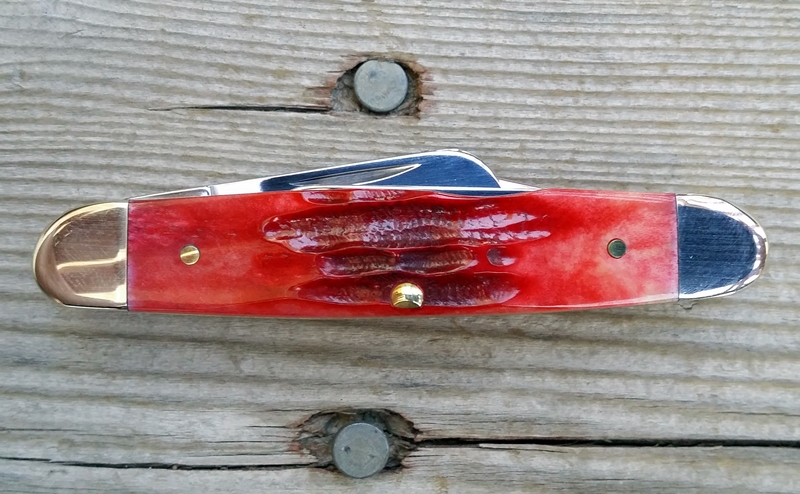
So much so, in fact, that when looking at different versions of this knife before settling on mine, I couldn't spot the notch on some of them! But edge-on, looking at the closed blades, you can see that there's a deep, inward-sloping cutout:
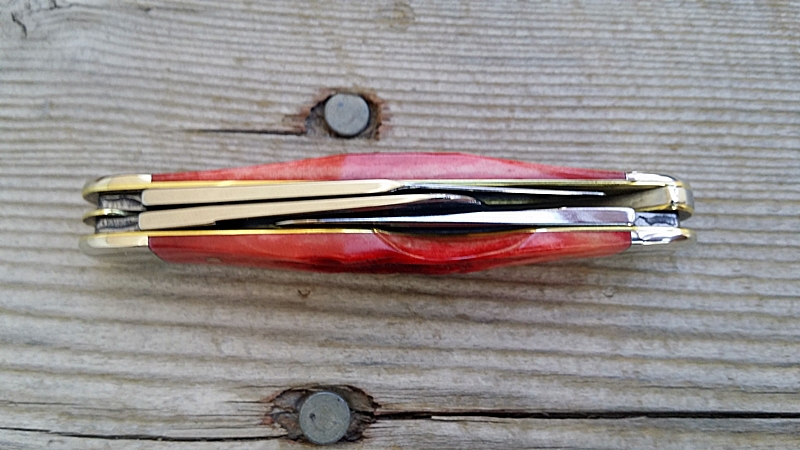
It's perfectly formed to allow the end of your thumb to slide in there and catch the nail nick, yet has almost no impact on the cover from a grip perspective (unlike, say, an easy-open notch might). Neat!
The other flourish is also visible in the second photo above -- take a look at the tangs of all three blades. See the little dark areas? None of my other knives have anything like that in that spot, and to me they look like little canyons.
Given that the jigging on this knife is Case's "deep canyon" variety, could these little curved marks be intentional, echoing the canyons in the bone covers? I don't know, but I'd like to think so.
I always "explore" a new knife after it arrives, and in exploring this one I found Case's treatment of the "notch" for easy access to the spey blade fascinating. It's almost invisible side-on:
So much so, in fact, that when looking at different versions of this knife before settling on mine, I couldn't spot the notch on some of them! But edge-on, looking at the closed blades, you can see that there's a deep, inward-sloping cutout:
It's perfectly formed to allow the end of your thumb to slide in there and catch the nail nick, yet has almost no impact on the cover from a grip perspective (unlike, say, an easy-open notch might). Neat!
The other flourish is also visible in the second photo above -- take a look at the tangs of all three blades. See the little dark areas? None of my other knives have anything like that in that spot, and to me they look like little canyons.
Given that the jigging on this knife is Case's "deep canyon" variety, could these little curved marks be intentional, echoing the canyons in the bone covers? I don't know, but I'd like to think so.


