
-
The BladeForums.com 2024 Traditional Knife is available! Price is $250 ea (shipped within CONUS).
Order here: https://www.bladeforums.com/help/2024-traditional/
You are using an out of date browser. It may not display this or other websites correctly.
You should upgrade or use an alternative browser.
You should upgrade or use an alternative browser.
Case zytel handles?
- Thread starter FarmKid
- Start date

- Joined
- Apr 12, 2009
- Messages
- 13,529
Anything I've ever seen that was made of so-called zytel seems to be very tough stuff. Very rigid and durable and, as you've noticed, very light in weight. I wouldn't worry about durability, unless you're doing things with your knife that also wouldn't be recommended for any other traditional folder, like putting extreme lateral stress on the pivot (prying).
In some respects, the zytel might actually hold up better than something like bone on top of a thin brass liner. Bone is very hard, but cracks easily. And brass liners can/will change shape over time (twisting or bending), which creates other issues like off-centered blades and blade rub. Zytel is extremely shock-resistant (never seen it crack or chip, even if dropped on concrete), and doesn't seem to change it's shape at all. Among so-called 'plastic-handled' knives, zytel seems to be some pretty good stuff.
In some respects, the zytel might actually hold up better than something like bone on top of a thin brass liner. Bone is very hard, but cracks easily. And brass liners can/will change shape over time (twisting or bending), which creates other issues like off-centered blades and blade rub. Zytel is extremely shock-resistant (never seen it crack or chip, even if dropped on concrete), and doesn't seem to change it's shape at all. Among so-called 'plastic-handled' knives, zytel seems to be some pretty good stuff.


glocktenman
Gold Member
- Joined
- Jul 20, 2008
- Messages
- 2,036
Ruger uses it to make their black (plastic-tupperware) pistol frames instead of using metal or a cast frame. I'd think it'd be very tough and would stand up well to oils and cleaners also.

jakemex
Gold Member
- Joined
- Oct 19, 2011
- Messages
- 1,286
I have in my hand a 38 year old Case Slimline Trapper with yellow delrin scales. Placed next to a newer one in the same yellow delrin. The only difference is that the older knife is a little more dull on the surface. Both have cracked at the spring pin. The older on has been in contact with many automotive cleaning products as well as gasoline etc. and there has been no wear other than the surface finish. I also have a Schrade penknife with black zytel scales and it too has been in contact with auto cleaning chemicals and it has no signs of wear nor dulling of the finish and no cracks near the spring pin as the Case delrin scales. My Case Chestnut bone full size trapper cracked at the spring pin and after a drop part of the bone chipped out near the bolster at the butt of the knife wherit had a hairline crack that I did not see when I purchased it. (I'm glad 5 minute clear epoxy exists!) I'd say that any of the synthetic scale materials would have a better probability of wear and chemical resistance compared to natural materials on conventional knives.

yablanowitz
Platinum Member
- Joined
- Apr 14, 2006
- Messages
- 10,037
I have a Remington Nylon 66 .22LR semi-auto rifle with a DuPont Zytel stock that still looks new after more than forty years. If Case is using DuPont Zytel brand FRN, that handle will likely outlast the blades by a wide margin.
- Joined
- Oct 9, 2011
- Messages
- 2,189
I used a Case caliber lockback (same handle mat'l) as my EDC for about a year and it held up great. Keep in mind that I'm not doing farm work with it, so that might be a consideration.
- Joined
- Jul 8, 2012
- Messages
- 3
Zytel is a trade name for Nylon. Nylon is very tough thermoplastic with good impact strength and dimensional stability. It can grow and shrink with changes in tempature but very little. Glass fiber is frequently added to Nylon resin to improve it's dimensional stability and flexural strength. Delrin is also a tough thermoplastic but Nylon is actually a little tougher overall. Nylon's only drawback is that it is hydroscopic. It can absorb water and swell. Again the addition of glass fiber into the resin limits this issue which isn't much of an issue for handles anyway. Overall you will find the thermoplastic handle materials to be much more durable than natural material such as horn or bone.
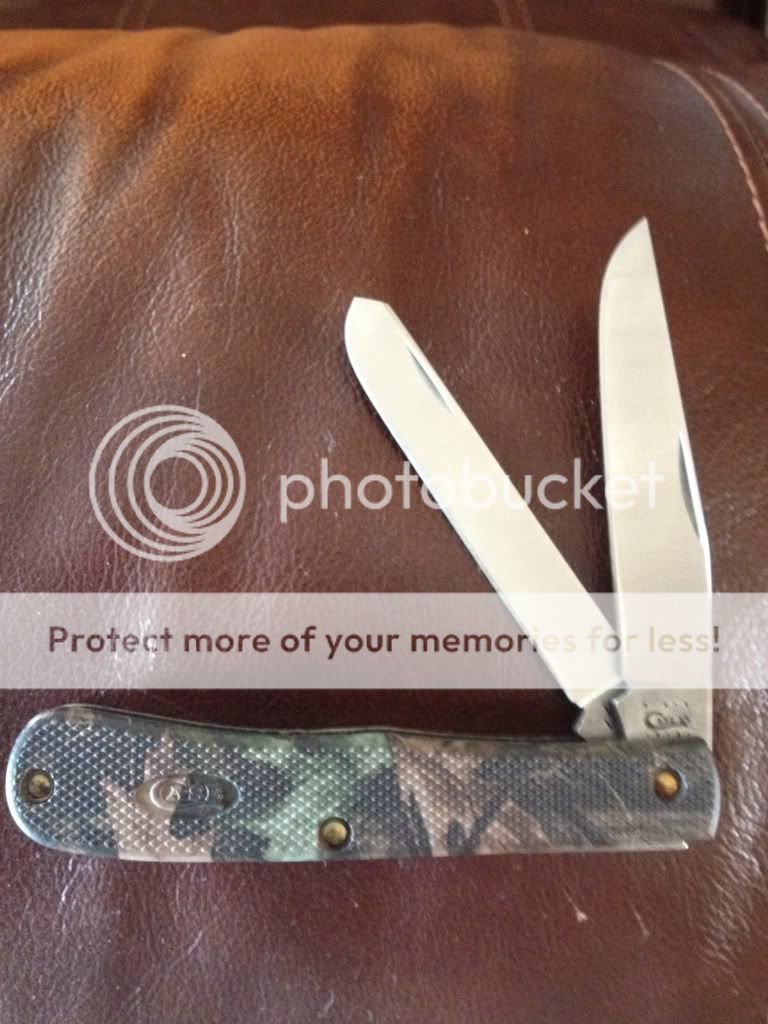
The reason I bought this knife was the weight and I got it for twenty four bucks. Dealing with chemicals, manure, sweat, blood, diesel, hydraulic oil, and whatever else mayb it would stand up better. My only problem is the pins pullin through the handles or separating from the liners. Off the subject this knife has the best snap of any cases I've bought in a few years.

- Joined
- Jul 30, 2006
- Messages
- 44,474
I have a Remington Nylon 66 .22LR semi-auto rifle with a DuPont Zytel stock that still looks new after more than forty years. If Case is using DuPont Zytel brand FRN, that handle will likely outlast the blades by a wide margin.
Beat me to it. My Remington Nylon 66 is still going strong after about 35 years of use.
If Case is advertising "Zytel", then they are using DuPont nylon based product. "Zytel" is trademarked by DuPont.
Nylon reinforced with chopped glass fiber. Beaucoup tough.
- Joined
- Apr 12, 2009
- Messages
- 13,529
I have a Remington Nylon 66 .22LR semi-auto rifle with a DuPont Zytel stock that still looks new after more than forty years. If Case is using DuPont Zytel brand FRN, that handle will likely outlast the blades by a wide margin.
Beat me to it. My Remington Nylon 66 is still going strong after about 35 years of use.
If Case is advertising "Zytel", then they are using DuPont nylon based product. "Zytel" is trademarked by DuPont.
Nylon reinforced with chopped glass fiber. Beaucoup tough.
And then there were three. My Dad gave me a Remington Nylon 66 .22LR, also at least ~ 35+ years ago; I was a teenager at the time. I still have it, and it never even occurred to me that it was 'zytel'. It's been stashed away so long, I'd completely forgotten about it. And yet, I still managed to learn something new about it today.

- Joined
- Oct 15, 2011
- Messages
- 190
I have a case small caliber lockback with the zytel handles. they hold up good but the blades will get A LOT of play after a good amount of use. mine has both up and down and side to side play after a few years of off and on use

I have an old Gerber LST is a linerless lockback. I think it is made of Zytel or a similar material. I think I got it in the mid 80's. the LST was my EDC for quite awhile and held an edge pretty well. I still have it.
Obsessed With Edges- I remember those Remington Nylon66 22LRs. My dad was looking at them, but opted for the Ruger 10/22 with a walnut stock.
Ric
Obsessed With Edges- I remember those Remington Nylon66 22LRs. My dad was looking at them, but opted for the Ruger 10/22 with a walnut stock.
Ric

StuntDouble
Gold Member
- Joined
- Apr 26, 2004
- Messages
- 2,458
I haven't handled Case's Zytel handled knives, but I've used others produced by Cold Steel and Spyderco, and they seem to hold up well. I prefer the solid Zytel handles without metal liners, it doesn't seem any less tough, and it's nice and light as well. Also, Zytel will polish with use over time. I had a Delica with handles that were getting pretty smooth because I carried it so much. I don't think you can go wrong with one of Case's offerings.
- Joined
- Jul 30, 2006
- Messages
- 44,474
As with other materials, Zytel is tough enough if the designer does a good job designing with it.
I probably have a dozen one-hander knives with linerless FRN handles (Zytel is FRN). Some I've had for a couple of decades. Some of them have been used extensively. All but one have performed flawlessly. The one that did not perform well was incorrectly designed such that the FRN was too thin. So it flexes. This is the fault of the designer, not the material.
I probably have a dozen one-hander knives with linerless FRN handles (Zytel is FRN). Some I've had for a couple of decades. Some of them have been used extensively. All but one have performed flawlessly. The one that did not perform well was incorrectly designed such that the FRN was too thin. So it flexes. This is the fault of the designer, not the material.