

- Joined
- Mar 17, 2009
- Messages
- 1,505
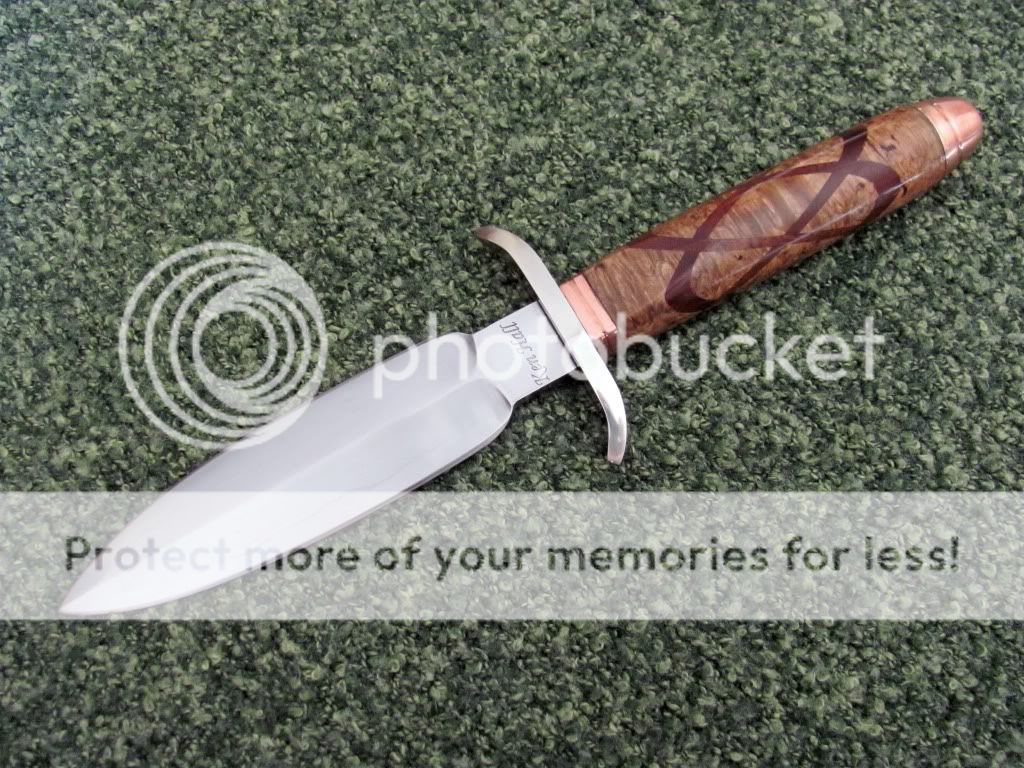
I will be demonstrating how I make the handle of the knife below at the Haywood Community College (HCC) Knife Club meeting on December 7th.
The HCC Knife Club meets the first Tuesday of each month at 7:00 pm in the Industrial Systems Building (Blacksmith/Welding Building). The meeting is open to anyone who would like to attend. HCC is located in Clyde, NC about 25 miles west of Asheville, NC and about 30 miles east of the Tennessee state line. This is the location that has been used for several ABS classes and the Great Smoky Mountain Hammer-In for the last three years. For direction to the school and Industrial Systems Building (3300) go to http://www.haywood.edu/directions.
Hope to see you there.
Ken Hall
The HCC Knife Club meets the first Tuesday of each month at 7:00 pm in the Industrial Systems Building (Blacksmith/Welding Building). The meeting is open to anyone who would like to attend. HCC is located in Clyde, NC about 25 miles west of Asheville, NC and about 30 miles east of the Tennessee state line. This is the location that has been used for several ABS classes and the Great Smoky Mountain Hammer-In for the last three years. For direction to the school and Industrial Systems Building (3300) go to http://www.haywood.edu/directions.
Hope to see you there.
Ken Hall


 .
.


