- Joined
- Aug 23, 2004
- Messages
- 382
(Hmmm, perhaps I should have titled this chapter Before there was Leatherman Micra?) Contrary to a common belief, Leatherman was not the first manufacturer of folding scissor multi tools. At least 40 years prior to the introduction of the Micra in 1996, people were carrying these little scissor tools around in their purses and pockets.
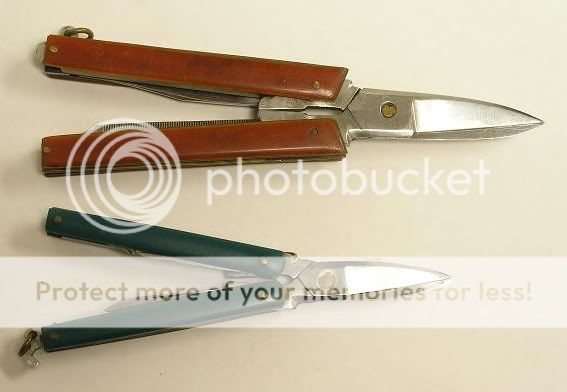
Equipped with a fold-out knife blade and a fingernail file, they were a clever combination of several useful functions.
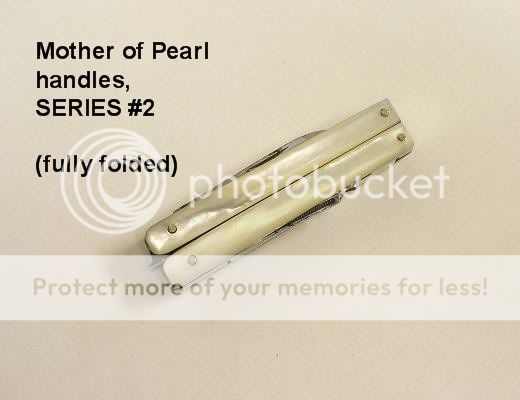
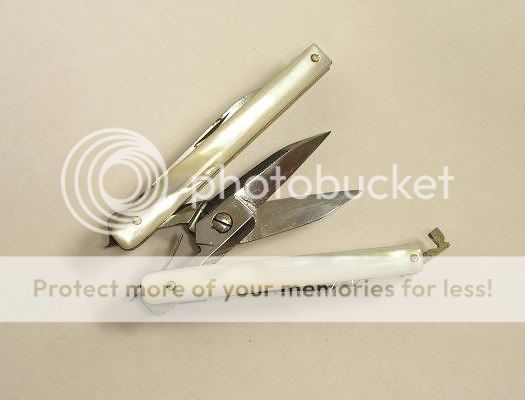

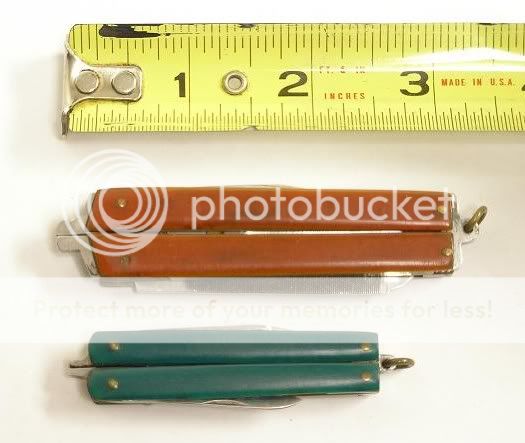
Note how similar the folding concept resembles the old ABCo tool discussed in Chapter 1, as well as the modern Leatherman multi tools of today. Generally measuring about 2-1/2 long when folded up, these handy tools could ride around in your pocket all day and hardly be noticed. They came equipped with a variety of different color plastic handle scales, as well as the rarer mother-of-pearl handles, ivory handles and super-scarce silver sterling handles. All were held in the CLOSED position by a clever brass or aluminum latch that tucked away nearly invisible when in use. Very cute!
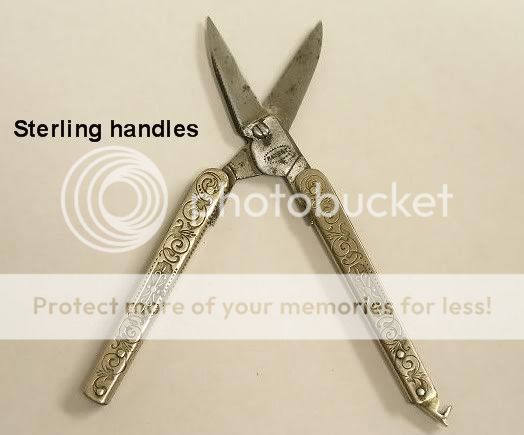
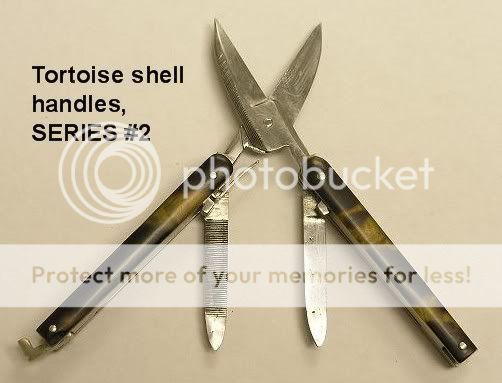
The ones in my collection all have a small pen knife blade, as well as a nail file blade. (More common are these same type scissors without any blades at all. Being a multi tool nut myself though, they dont hold as much interest for me.) Neither the blades themselves nor the pins they pivot on are very beefy, but they were certainly up to the more common fishing line cutting or finger nail manicuring chores of the day.
But who exactly made these little scissor tools? For the first few years I acquired them, none in my collection was stamped with any makers logo or country of origin. Several of the ones obtained via the internet were from sellers in England, so at first I thought this was where they were produced. But I now own two examples that say otherwise; one is stamped BONSA, GERMANY, and the other is stamped MADE IN GERMANY. Certain characteristics like the tiny closure latches and the shape of the scissor jaws themselves are all nearly identical. Were these tools manufactured in England as well? I suspect that they all came from the same factory in Germany, but unfortunately, I do not have enough evidence to say for certain.
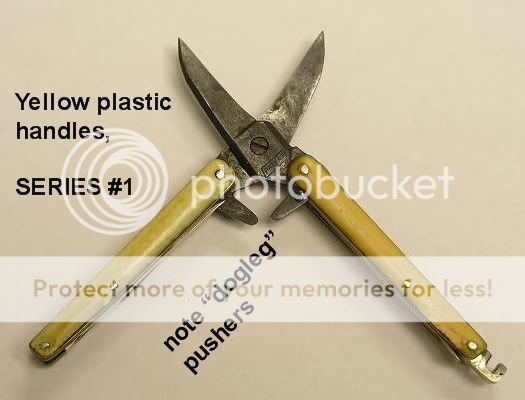
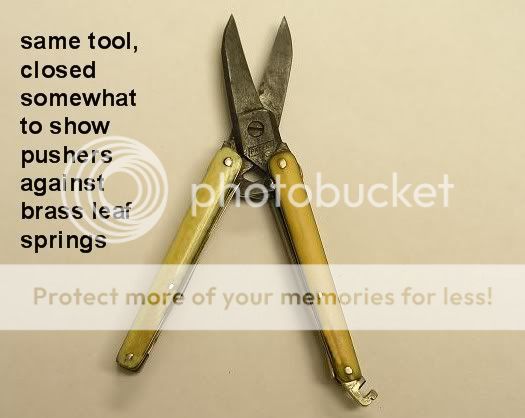
These little scissor tools underwent a series of design changes in order to improve their spring mechanism. The earliest versions (which Ill call SERIES #1) used integral dog-legs on the back side of the scissor blades to push against brass leaf springs. It was not a very good design, and the spring-action no doubt wore out rather quickly. Production on this version must not have lasted long, as this is the rarest variation to find today.
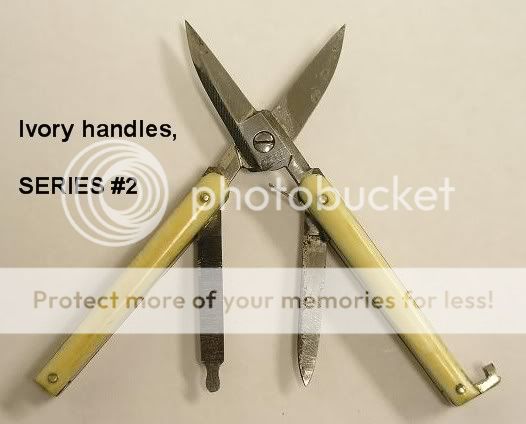
Next came an improved design (SERIES #2) which achieved the spring action of the scissors with two tiny leafs that extended up and pushed off one another. Each time the handles were pressed together and a cut was made, the tiny leafs pushed the scissor jaws back open to prepare for the next cut. It worked, at least at first, but didnt hold up very long. The leaf metal eventually fatigued, resulting in the many examples of this version seen today sporting one, or even both, leafs broken off.
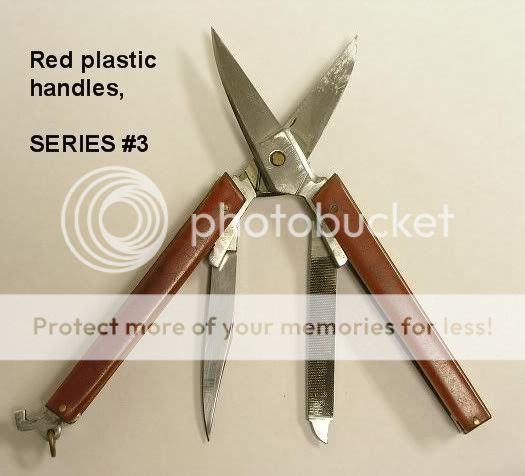
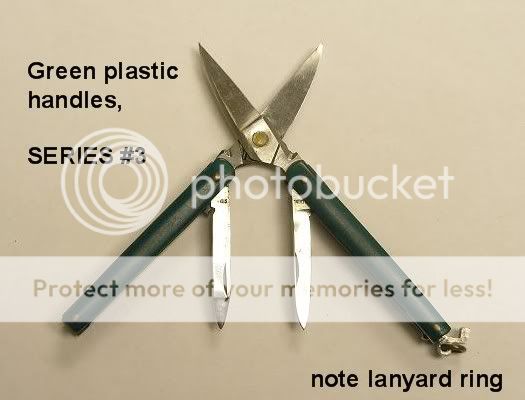
Finally came the best design (SERIES #3) which incorporated a clothespin-type spring, coiled and hidden between the scissor jaws. Stronger and longer lasting than its predecessors, I have yet to find one of this version that does not have good spring action and a good feel to its scissor action. Also note in the SERIES #3 photos that a small lanyard attachment ring was added, cast onto the closure latch. And finally, the tool with green plastic handles has the word STAINLESS stamped into both file and knife blades. Given the time period that stainless steel became commonly used in the knife making industry, this implies a late 1960s date of manufacture for SERIES #3.
Combining scissors, a knife, and a nail file into one petite package made just as much sense a half-century ago as it does today. Who wants to carry around a bunch of separate, single-purpose devices? Id rather have a multi tool in my pocket any day!
~Bob
Equipped with a fold-out knife blade and a fingernail file, they were a clever combination of several useful functions.
Note how similar the folding concept resembles the old ABCo tool discussed in Chapter 1, as well as the modern Leatherman multi tools of today. Generally measuring about 2-1/2 long when folded up, these handy tools could ride around in your pocket all day and hardly be noticed. They came equipped with a variety of different color plastic handle scales, as well as the rarer mother-of-pearl handles, ivory handles and super-scarce silver sterling handles. All were held in the CLOSED position by a clever brass or aluminum latch that tucked away nearly invisible when in use. Very cute!
The ones in my collection all have a small pen knife blade, as well as a nail file blade. (More common are these same type scissors without any blades at all. Being a multi tool nut myself though, they dont hold as much interest for me.) Neither the blades themselves nor the pins they pivot on are very beefy, but they were certainly up to the more common fishing line cutting or finger nail manicuring chores of the day.
But who exactly made these little scissor tools? For the first few years I acquired them, none in my collection was stamped with any makers logo or country of origin. Several of the ones obtained via the internet were from sellers in England, so at first I thought this was where they were produced. But I now own two examples that say otherwise; one is stamped BONSA, GERMANY, and the other is stamped MADE IN GERMANY. Certain characteristics like the tiny closure latches and the shape of the scissor jaws themselves are all nearly identical. Were these tools manufactured in England as well? I suspect that they all came from the same factory in Germany, but unfortunately, I do not have enough evidence to say for certain.
These little scissor tools underwent a series of design changes in order to improve their spring mechanism. The earliest versions (which Ill call SERIES #1) used integral dog-legs on the back side of the scissor blades to push against brass leaf springs. It was not a very good design, and the spring-action no doubt wore out rather quickly. Production on this version must not have lasted long, as this is the rarest variation to find today.
Next came an improved design (SERIES #2) which achieved the spring action of the scissors with two tiny leafs that extended up and pushed off one another. Each time the handles were pressed together and a cut was made, the tiny leafs pushed the scissor jaws back open to prepare for the next cut. It worked, at least at first, but didnt hold up very long. The leaf metal eventually fatigued, resulting in the many examples of this version seen today sporting one, or even both, leafs broken off.
Finally came the best design (SERIES #3) which incorporated a clothespin-type spring, coiled and hidden between the scissor jaws. Stronger and longer lasting than its predecessors, I have yet to find one of this version that does not have good spring action and a good feel to its scissor action. Also note in the SERIES #3 photos that a small lanyard attachment ring was added, cast onto the closure latch. And finally, the tool with green plastic handles has the word STAINLESS stamped into both file and knife blades. Given the time period that stainless steel became commonly used in the knife making industry, this implies a late 1960s date of manufacture for SERIES #3.
Combining scissors, a knife, and a nail file into one petite package made just as much sense a half-century ago as it does today. Who wants to carry around a bunch of separate, single-purpose devices? Id rather have a multi tool in my pocket any day!
~Bob