- Joined
- Sep 27, 2002
- Messages
- 3,411
Kenilworth Castle is a large medieval fortress/palace which has at various times been in both royal and private hands. In the Later 16th century it was held by Robert Dudley, Earl of Leicester, the favourite of Queen Elizabeth I. The Grateful Lord Leicester spent vast sums modernising the castle in order to make it a fit place to entertain his monarch.
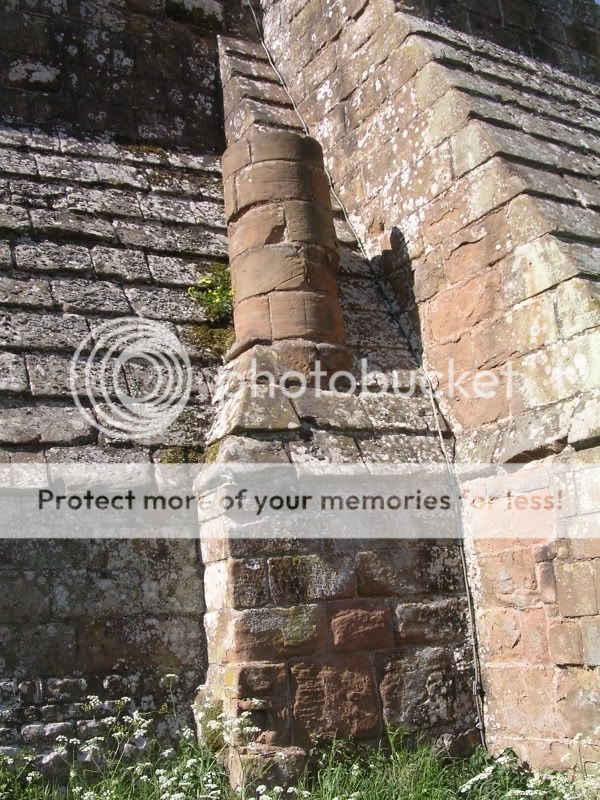
Dudley's buildings form a significant part of the appearance of the castle today but the final alterations took place a couple of generations later at the end of the civil war when the castle was made indefensible by having sections of it's walls, towers and gatehouses blown up with gunpowder and the defensive lake drained. This procedure was carried out at many castles and was known as "slighting"
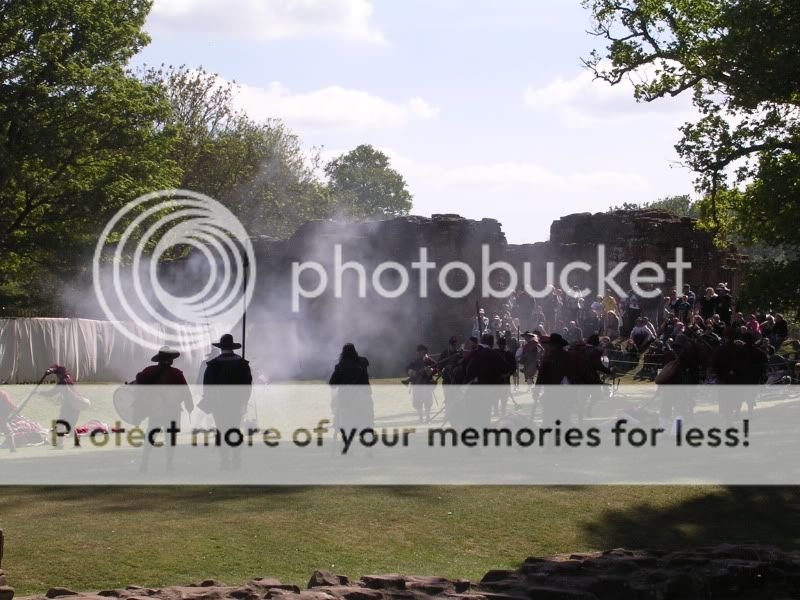
There was a reenactment event at the castle over the weekend featuring members of the Civil War Society's Marquess of Winchester Regiment.
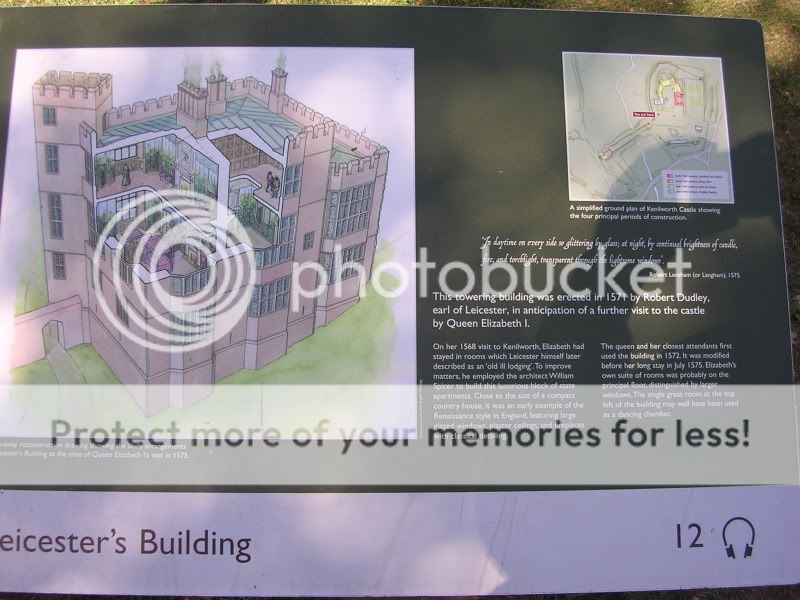
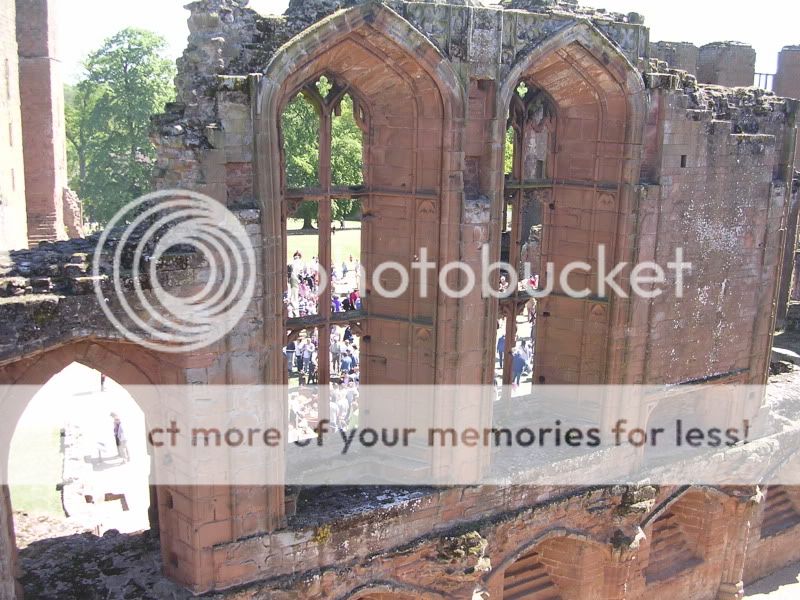
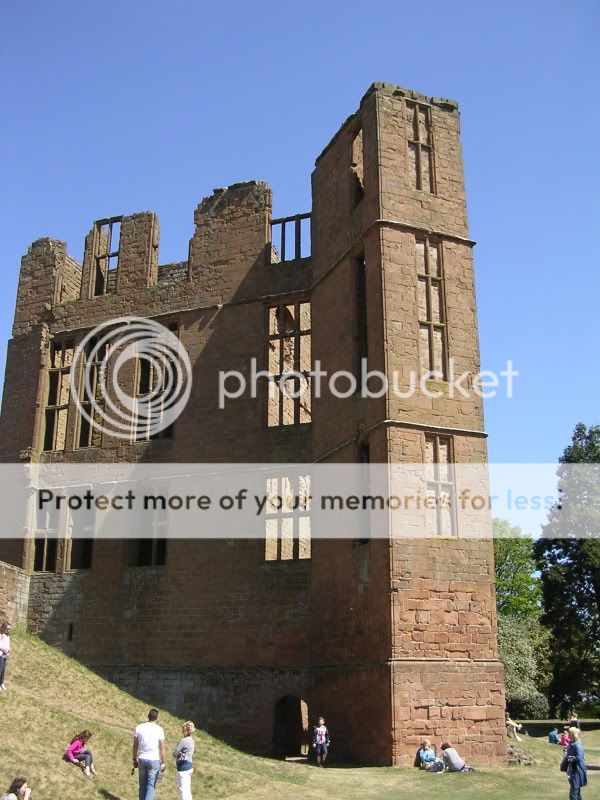
The original appearance of Lord Leicester's Building, constructed in 1571 to accommodate the Queen.

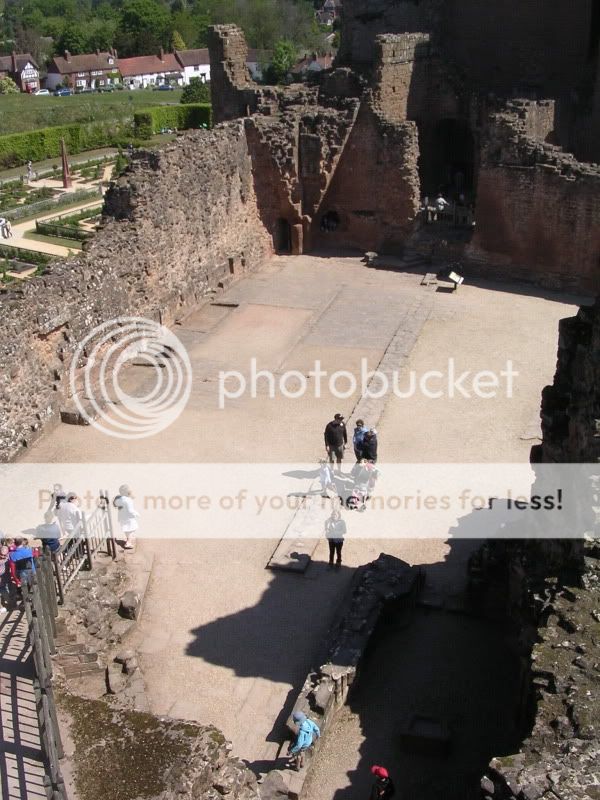
The inner courtyard of the castle and the encampment. The corner of Lord Leicester's building is on the left, to the right is the Norman keep - modernised with many large Elizabethan period windows by Robert Dudley - and beyond is the late medieval John of Gaunt's Great Hall. The grassy slope in the foreground covers thousands of tons of rubble which once formed the wall and gatehouse filling the gap.
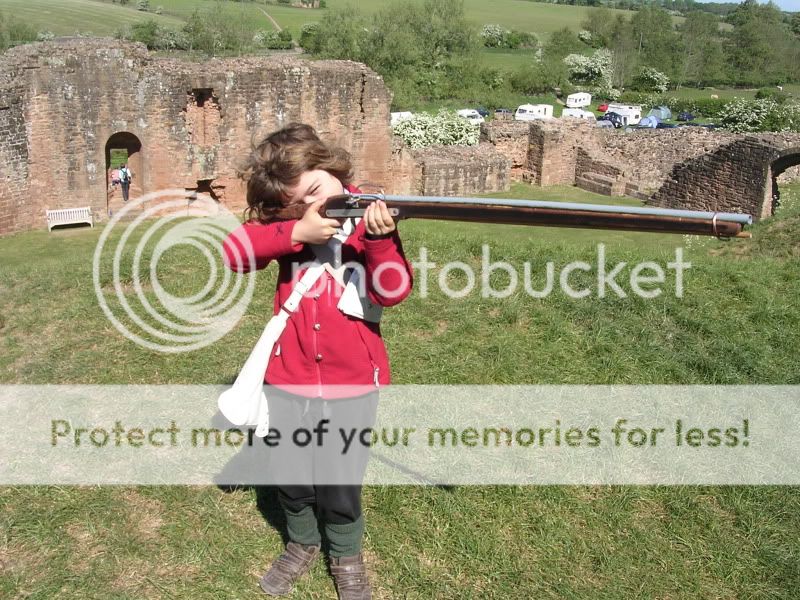
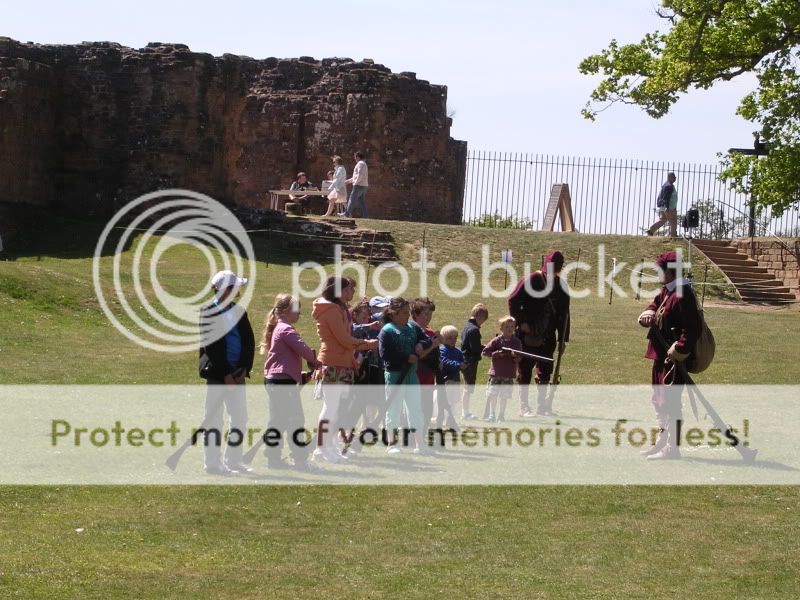
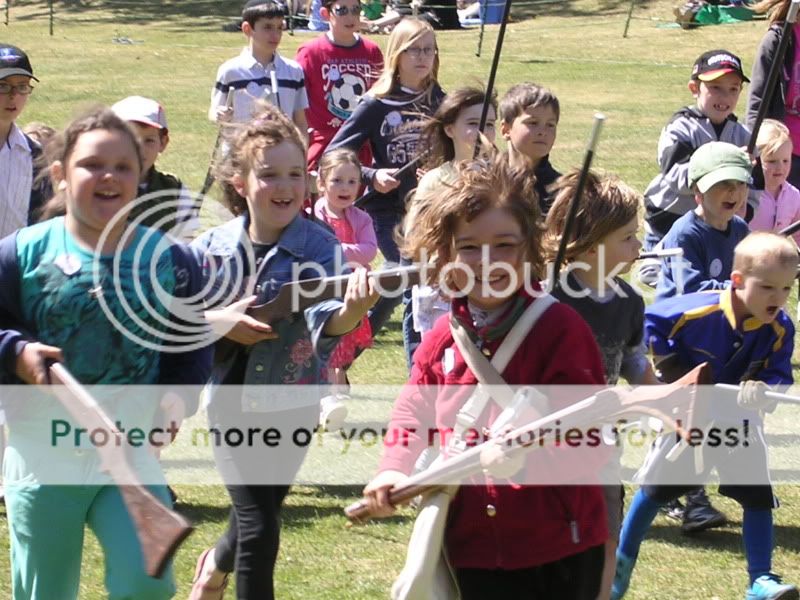
Outside John of Gaunt's Hall, a junior Musketeer!
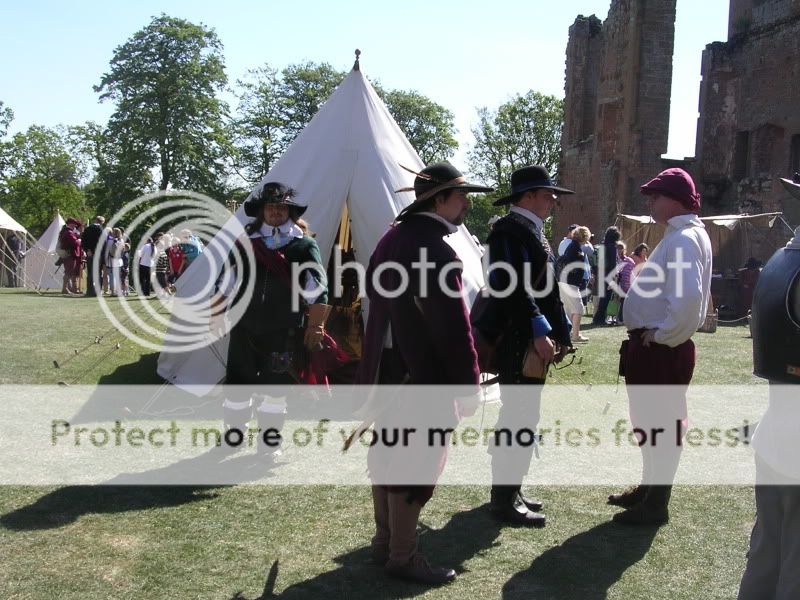
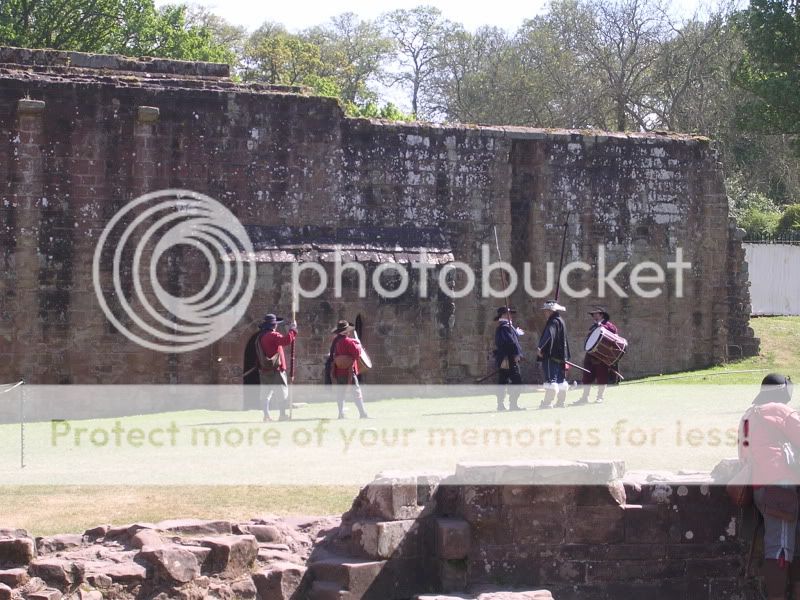
The Encampment.
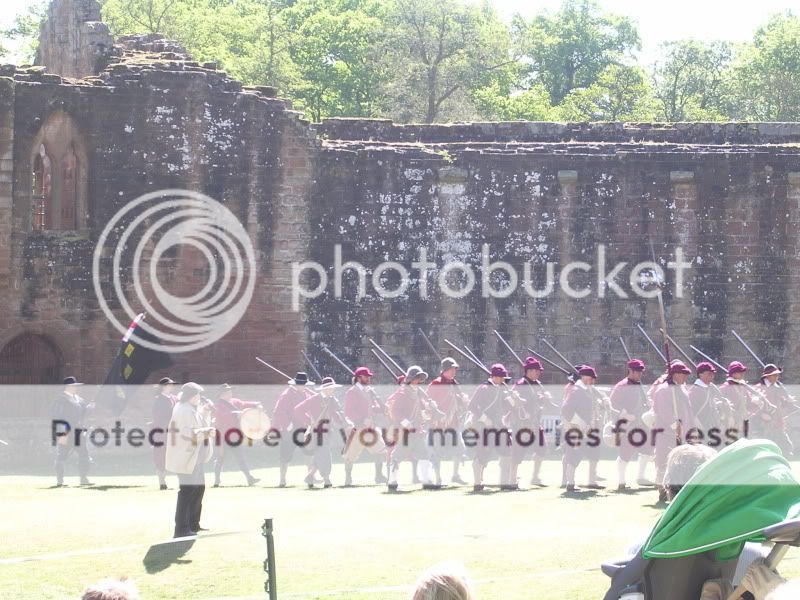
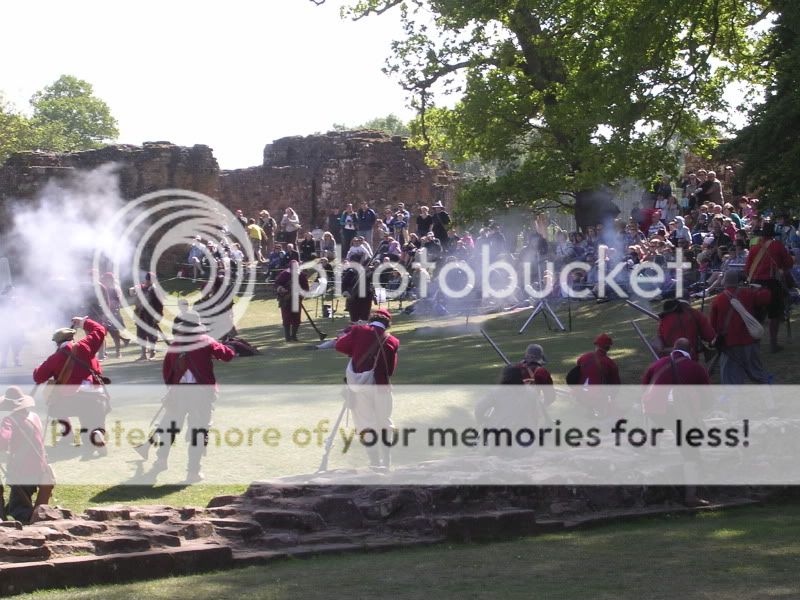
Musketeers on the march.
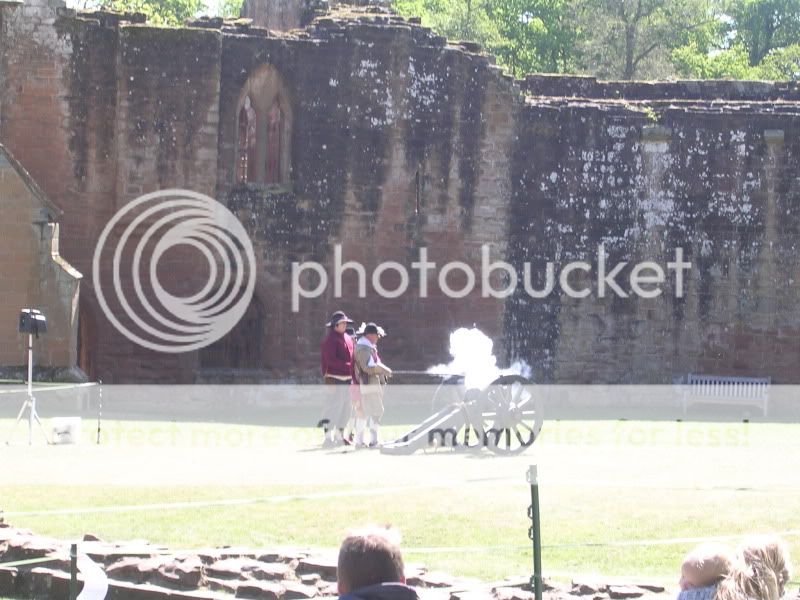
Artillery demonstration.
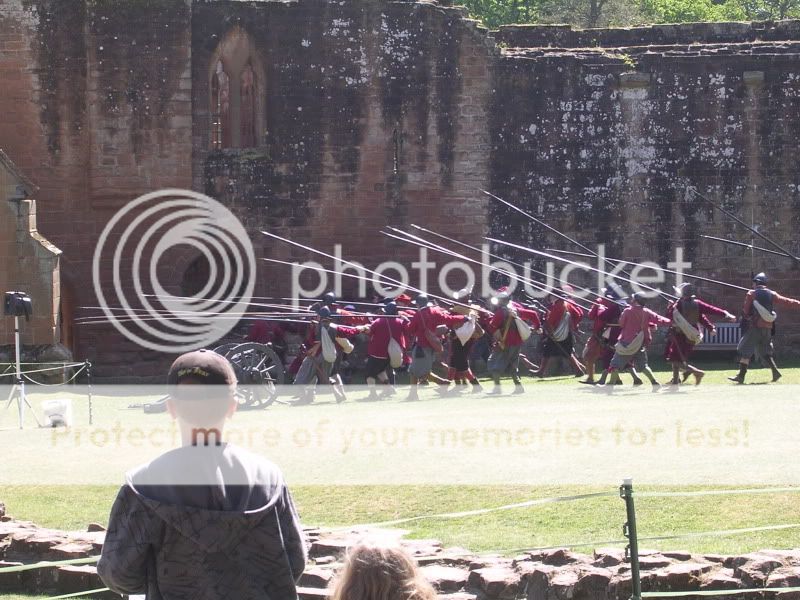
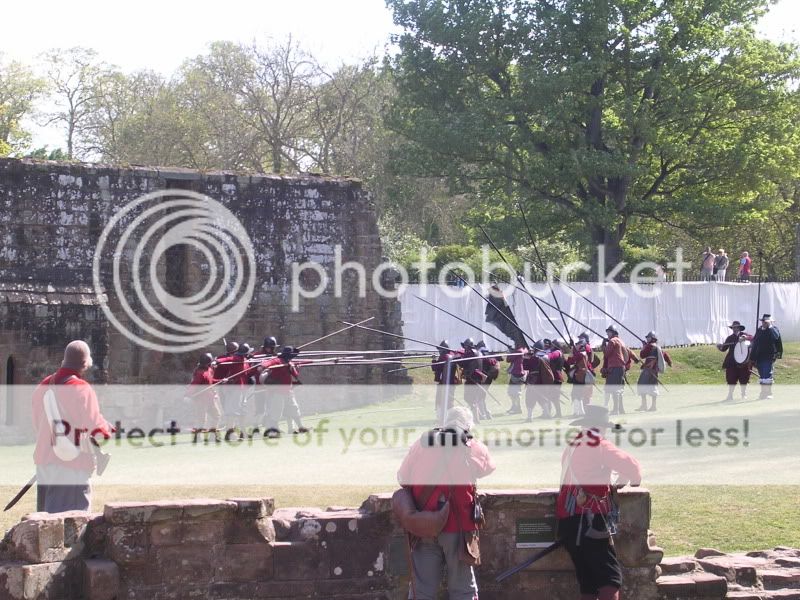
Pikemen advance. The 18' long civil war pike was very awkward to handle and took a great deal of training to use effectively. The musketeer on the other hand could be trained in only 3 weeks, required no armour and could move more quickly as a consequence. Perhaps inevitably, the musket came to dominate the battlefield in the later years of the war.

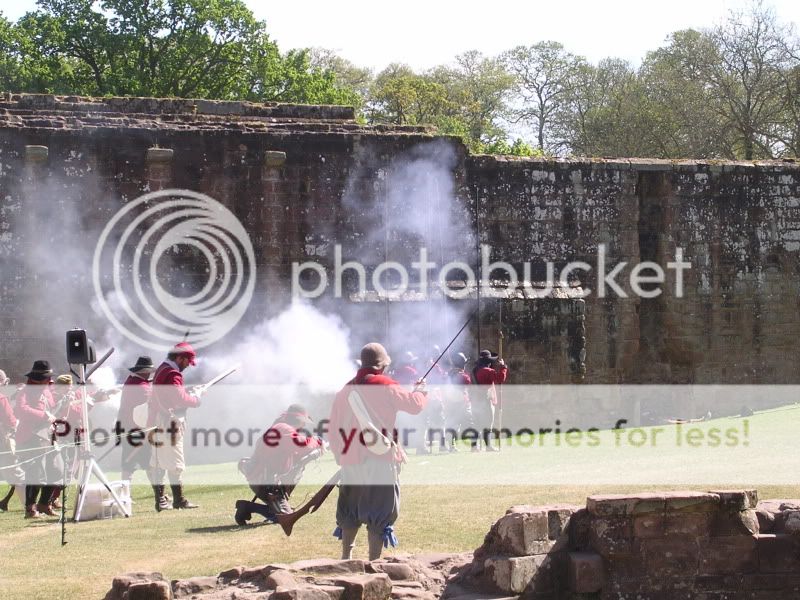
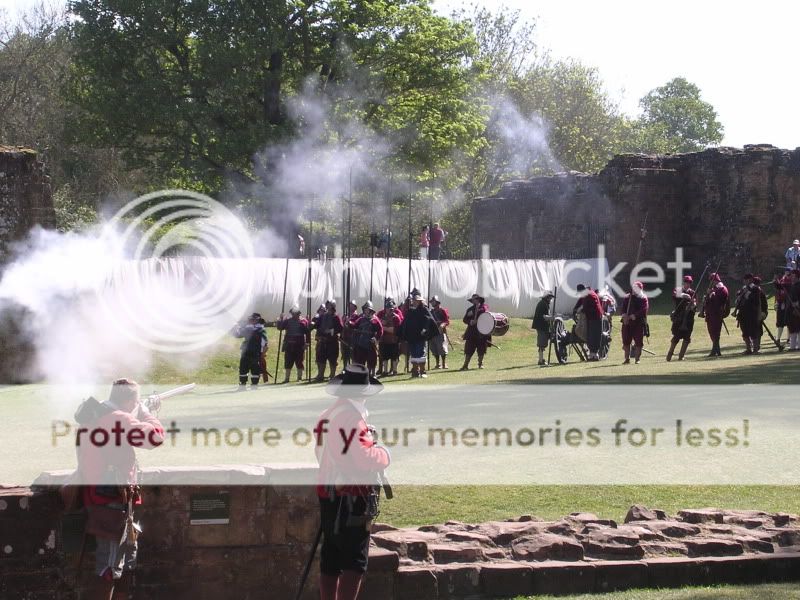
Firing a salute.
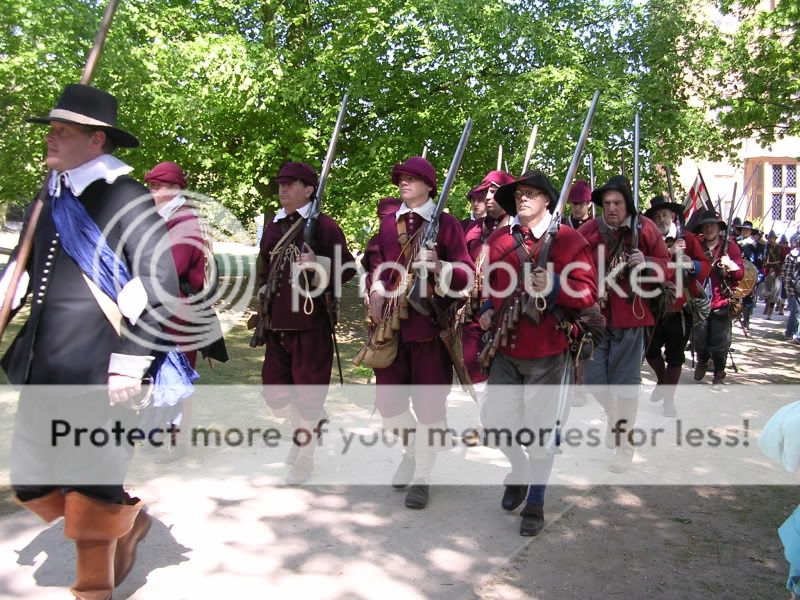
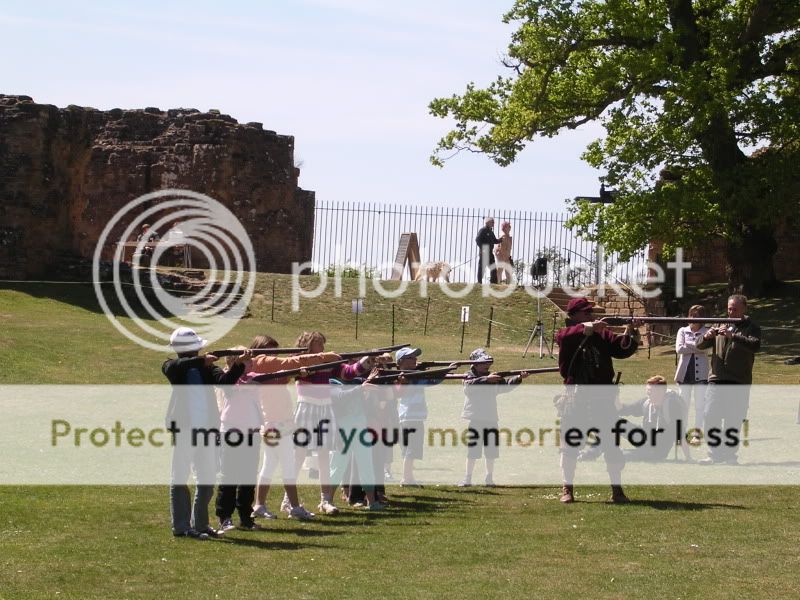
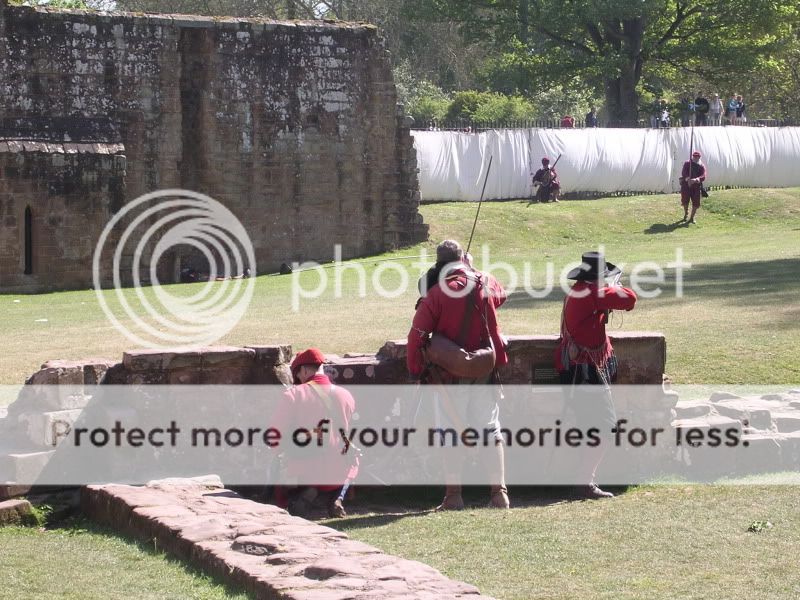
Musketeers. Although flintlocks were available, most muskets of this period were matchlock, a firing system which was more reliable except in adverse weather conditions. The disadvantage was the complex drill aimed at keeping the glowing match well away from the gunpowder slowed the rate of fire. The musket was quite a heavy weapon with an 8 bore barrel firing a 2oz bullet. The ready-use gunpowder charges were contained in turned wooden cartridges known as "Apostles" as usually about 12 were carried on the bandolier. Bullets were in a separate "ball bag"
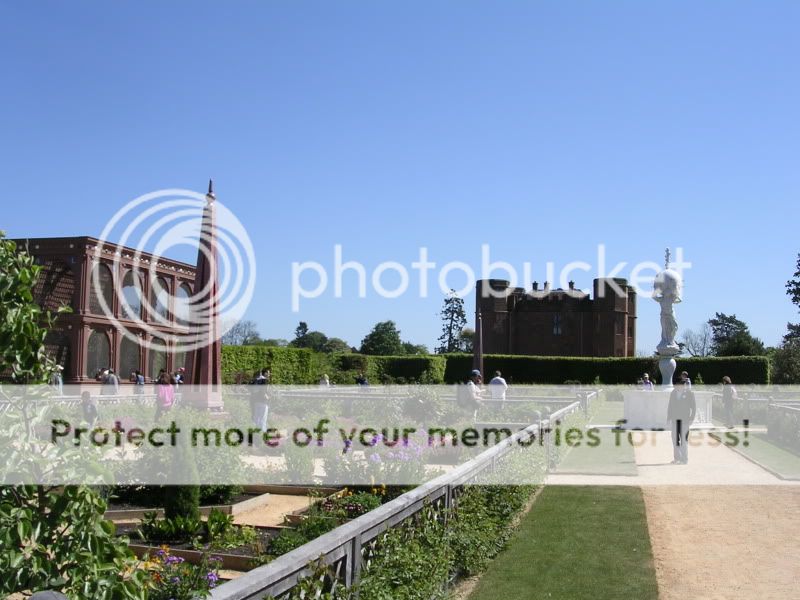
Part of the Elizabethan Pleasure Garden. This has recently been re-created by English Heritage from a contemporary written description. It was originally made by Robert Dudley. Beyond is Lord Leicester's Gatehouse, the entirely new entrance to the castle built by Dudley, The only entrance in the Middle Ages being the causeway across the lake.
Dudley's buildings form a significant part of the appearance of the castle today but the final alterations took place a couple of generations later at the end of the civil war when the castle was made indefensible by having sections of it's walls, towers and gatehouses blown up with gunpowder and the defensive lake drained. This procedure was carried out at many castles and was known as "slighting"
There was a reenactment event at the castle over the weekend featuring members of the Civil War Society's Marquess of Winchester Regiment.
The original appearance of Lord Leicester's Building, constructed in 1571 to accommodate the Queen.
The inner courtyard of the castle and the encampment. The corner of Lord Leicester's building is on the left, to the right is the Norman keep - modernised with many large Elizabethan period windows by Robert Dudley - and beyond is the late medieval John of Gaunt's Great Hall. The grassy slope in the foreground covers thousands of tons of rubble which once formed the wall and gatehouse filling the gap.
Outside John of Gaunt's Hall, a junior Musketeer!
The Encampment.
Musketeers on the march.
Artillery demonstration.
Pikemen advance. The 18' long civil war pike was very awkward to handle and took a great deal of training to use effectively. The musketeer on the other hand could be trained in only 3 weeks, required no armour and could move more quickly as a consequence. Perhaps inevitably, the musket came to dominate the battlefield in the later years of the war.
Firing a salute.
Musketeers. Although flintlocks were available, most muskets of this period were matchlock, a firing system which was more reliable except in adverse weather conditions. The disadvantage was the complex drill aimed at keeping the glowing match well away from the gunpowder slowed the rate of fire. The musket was quite a heavy weapon with an 8 bore barrel firing a 2oz bullet. The ready-use gunpowder charges were contained in turned wooden cartridges known as "Apostles" as usually about 12 were carried on the bandolier. Bullets were in a separate "ball bag"
Part of the Elizabethan Pleasure Garden. This has recently been re-created by English Heritage from a contemporary written description. It was originally made by Robert Dudley. Beyond is Lord Leicester's Gatehouse, the entirely new entrance to the castle built by Dudley, The only entrance in the Middle Ages being the causeway across the lake.
Last edited: