clay hardening: getting a pretty hammon NEED PICS

Joined
Jan 2, 2006
Messages
1,073
Hey all
feeling like i am reinventing the wheel. so i am gonna sk those who have done it before.
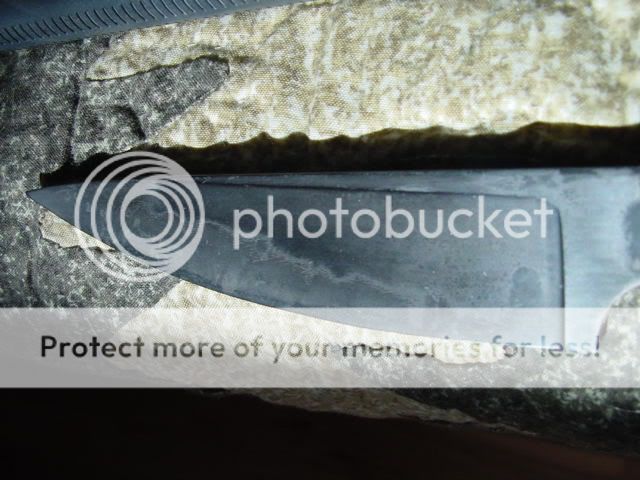
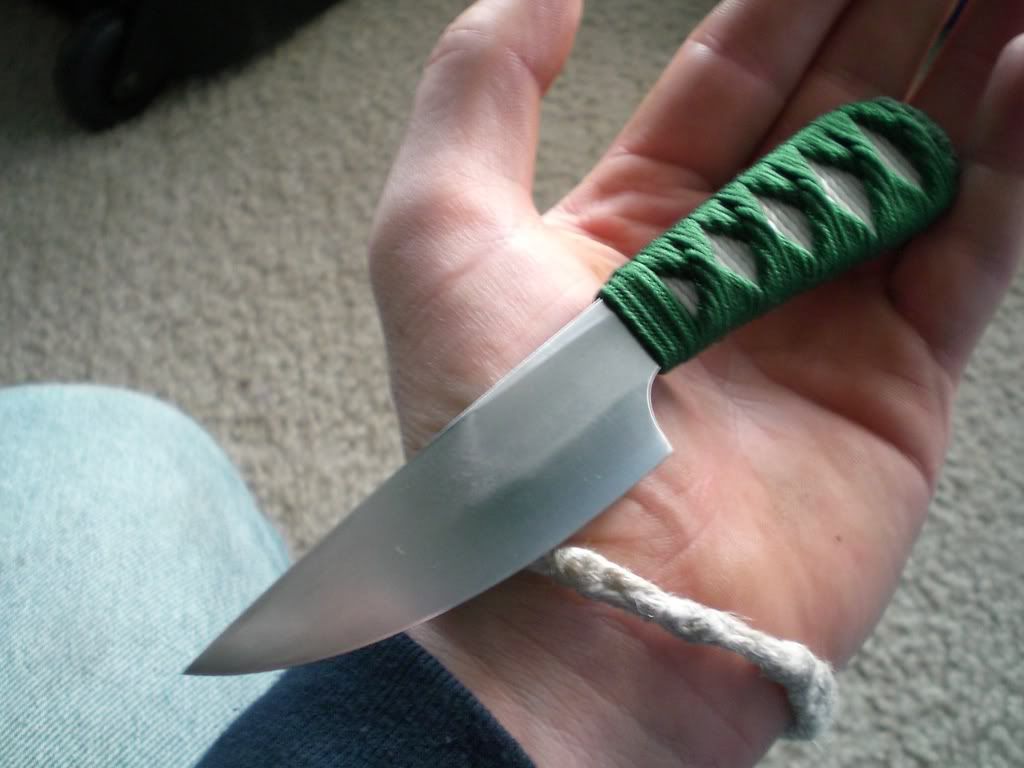
i have a propane forge with no temperature control but i have been able to get a hamon line like this:

IMG_0696.jpg


this was on 1095 using refractory cement, cooling in used motor oil that was preheated to about 140 degrees.

i put the refractory cement on only the spine of the blade in an even thickness. i have no idea whether or not i am doing ti right that way. does anybody have a detailed description of HOW to clay a blade?

and after that how to i get the pretty hamons? or should i be content with what i have? i have broken ALOT of blades. should i quench in something else?
what would your advice be?

i also got a hamon on another blade but it only showed up on one side. why is that?

i am new in this but i am also a visual learner. if you have pics... they would be much appreciated
thanks
~Chris
 
Hammon's cool...yes...but that's just about the cutest wittle knife I have ever seen. Awwwwe :)
 
Actually chiro, i caught the hammon bug from don fogg's websight about... three years ago. i just havent been able to do anything with it. quite a few knives i have made have been reminicent of Don's style. haha... but thanks for the advice ;)
~Chris
 
Two things that will greatly improve your hamon are soaking the blade at temp after its up to temp for 10-20 minutes before quenching and not putting the clay on too thick,it should be just around an eighth of an inch.Then you have to bring out the hamon through various abrasives, acids,pastes,rouges,etc,and thats a whole science in itself.

There is a instructional dvd on the subject availible on Dons forum.
 
McAhron said:
"soaking the blade at temp after its up to temp for 10-20 minutes before quenching"

maybe i am being dense, but i dont know what you mean by this.

so keep the clay thin...
i use refractory cement, and whe it is heated it bubbles and expands, is this normal? does this happen with clay too?

also, how do i get a hamon like THIS?!
composite.jpg


thanks for your help
~Chris
 
Chris,

I too have been bit by the Hamon bug. I just succesfully finished my first "true hamon".. The right steel is very important though Don Fogg uses 1095 with dramatic results. I have gone to W-2, available from Don Hansen III at sunfishforge. It makes a huge difference but it took me 2 weeks of experimentation and a phone call to Don to find out why I was not getting the results I wanted. Here is the link to the thread i posted http://www.bladeforums.com/forums/showthread.php?t=449735

What I found was soaking to be the most important part of the process. That along with all the other aspects, clay thickness, temperature, steel type, polishing .... Like I said in my post it is fun yet extremely aggrivating. Keep on trying and it will get there.

Chuck
 
Chris,

I too have been bit by the Hamon bug. I just succesfully finished my first "true hamon".. The right steel is very important though Don Fogg uses 1095 with dramatic results. I have gone to W-2, available from Don Hansen III at sunfishforge. It makes a huge difference but it took me 2 weeks of experimentation and a phone call to Don to find out why I was not getting the results I wanted. Here is the link to the thread i posted http://www.bladeforums.com/forums/showthread.php?t=449735

What I found was soaking to be the most important part of the process. That along with all the other aspects, clay thickness, temperature, steel type, polishing .... Like I said in my post it is fun yet extremely aggrivating. Keep on trying and it will get there.

Chuck

Your right about the polish also......thats probably the most difficult and time consuming part ( in my opinion)

before polishing
karma.jpg

after a non traditional polish:
karma5.jpg
 
wow... thanks yall
one thing i seem to be missing is you say "soaking" is the most important thing..
but i dont even know what it is that you mean by that... maybe that is why i am missing something.

also, shepherd: when you say a nontraditional polish do you mean with a buffing wheel?
thanks
~Chris
 
wow... thanks yall
one thing i seem to be missing is you say "soaking" is the most important thing..
but i dont even know what it is that you mean by that... maybe that is why i am missing something.

also, shepherd: when you say a nontraditional polish do you mean with a buffing wheel?
thanks
~Chris


no buffing wheel......lotsa sandpaper and flitz;)
 
gotcha...
well that is something that i will definatly have to try. never tried that...
is that what brings out the "clouds and whisps"? or what brings that amount of detail out?
thanks
 
Soaking is when you let the blade sit in the forge. I'm assuming that they're talking about letting the blade soak at about critical.
 
oh yeah...
"flitz"?
whats that
and has this blade been etched?

http://www.flitz-polish.com/?source=gg&camp=flitz&grp=name&term=flitz&&s_kwcid=flitz|725962699&gclid=COPOuo3__4kCFRlvSAodHSfKNw

and yes, it was etched in a 50-50 solution of vinegar and water, heated
(1st pic)

btw.... That knife is hollowground 1095, water quenched
 
Soaking is at the temperature you will be quenching at. right now i use 1475f for w-2. But then i am still experimenting.

The polish takes longer than I ever dreamed it would. It has taken me 3 days to get a 4 inch blade polished so the hamon shows at all. The next blades i will have a litte better undertanding about the process. There was another post few months ago talking about the cost of Damascus and the fact that a knife with a nice Hamon, will take just as long or longer to bring to final product. After the past couple of days i have to agree. The finish has to be flawless before the etch. since the etch is so light any little scratch below 1500 grit is going to jump out at you. It is easier to do a really nice hand rubbed finish.

Chuck
 
Chris, after our PMs and the info here, you should be well on the way. For those that didn't know, a good looking hamon is a LOT OF WORK as Chuck Richards just pointed out.

A few hints for cool hamon:

Low Manganesse steel with little or no Chromium.
Normalize after forging and or grinding.
Thin clay, 1/8'' to 3/16''
Soak 5 to 15 minutes and quench at the low side of critical temp.
Qench in a fast oil (or water if you don't mind cracking a few).
Hand sand to above 1000 grit and etch a little to bring it out.
 
hey yall
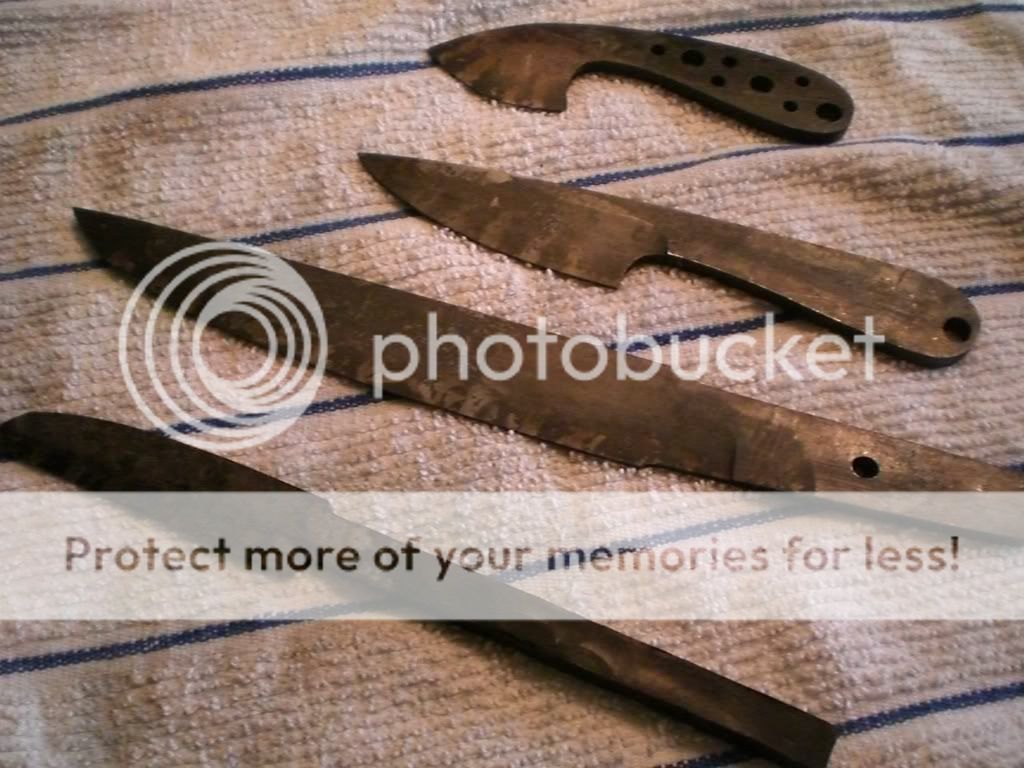
thanks so much for all your advice espcesially sunfishman... i hardened four blades. One was O-1 tool the other three were 1095 high carbon. The 1095 I quenched in water and the O-1 in oil. didnt crack any of them and while i havent finished polishing the O1 all the 1095s got great hammon lines. sure there is room for improvment... but thanks aLOT.
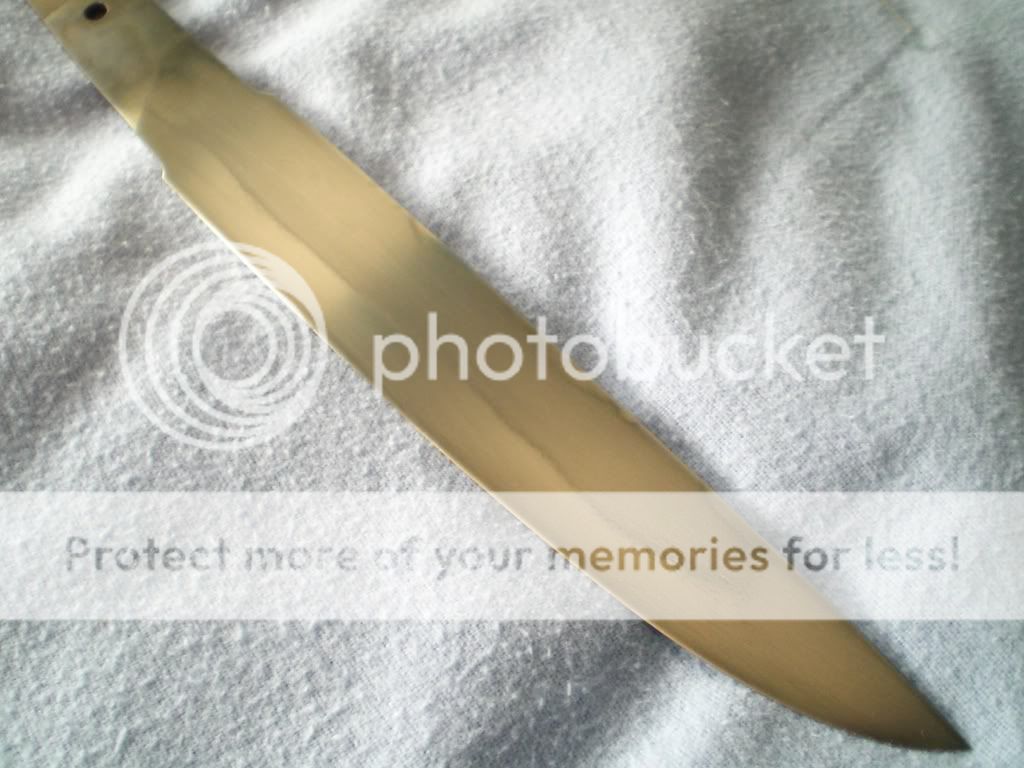
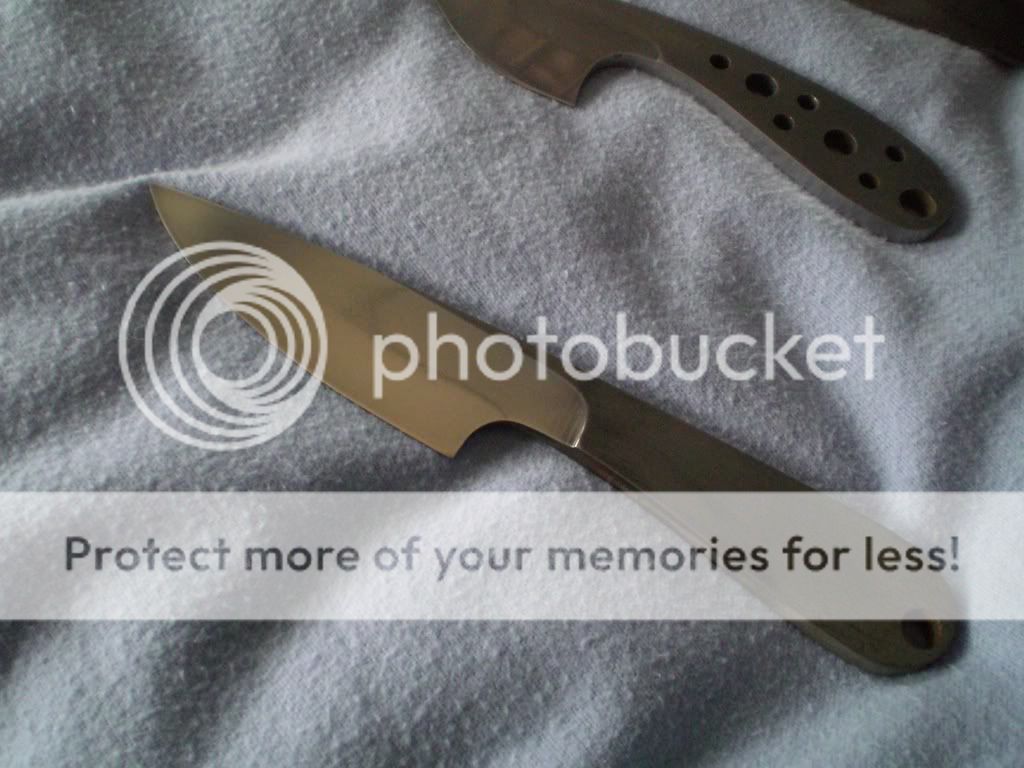
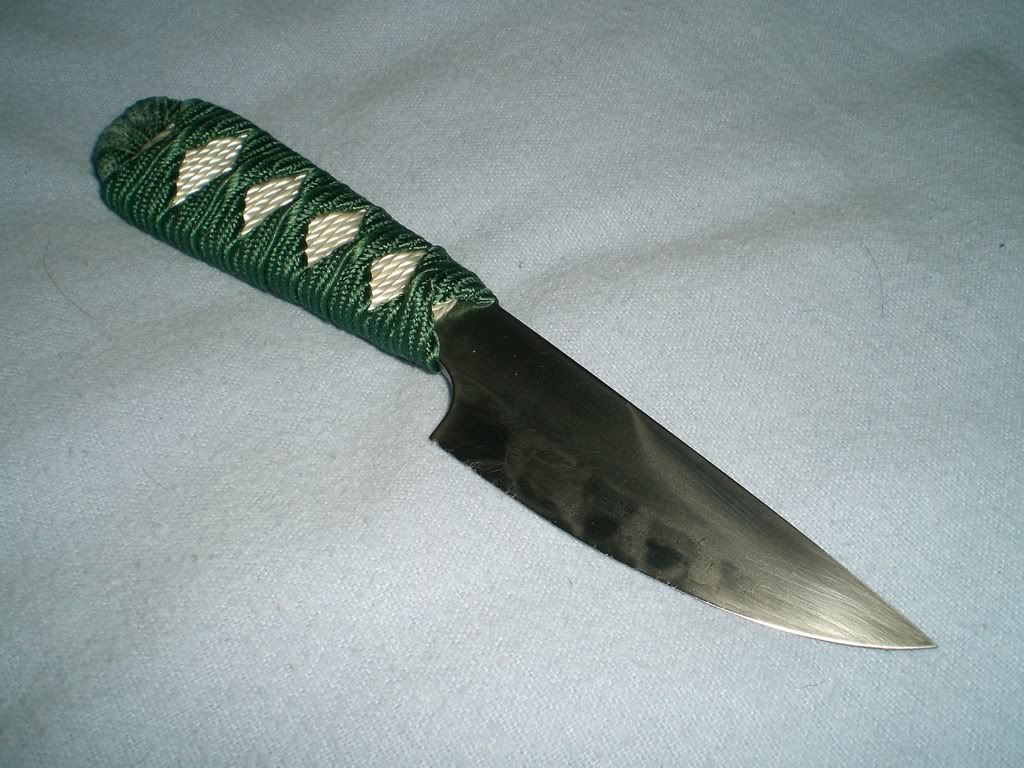
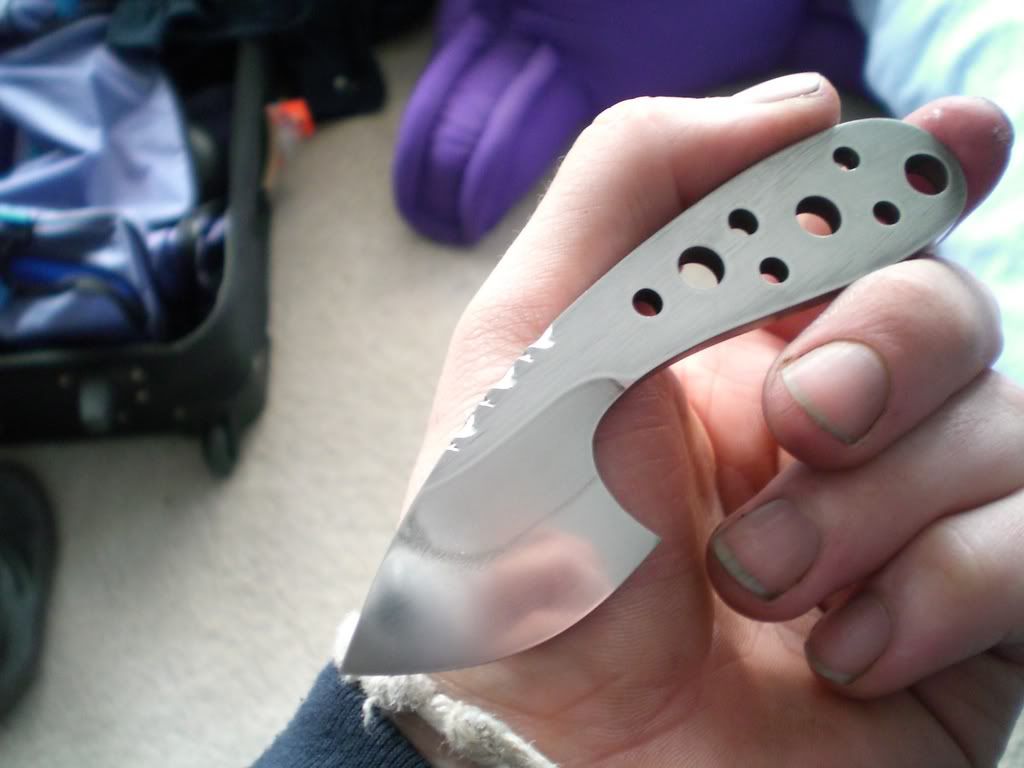
heres some pics

heres right after i finished gettting the clay off
CIMG0050.jpg

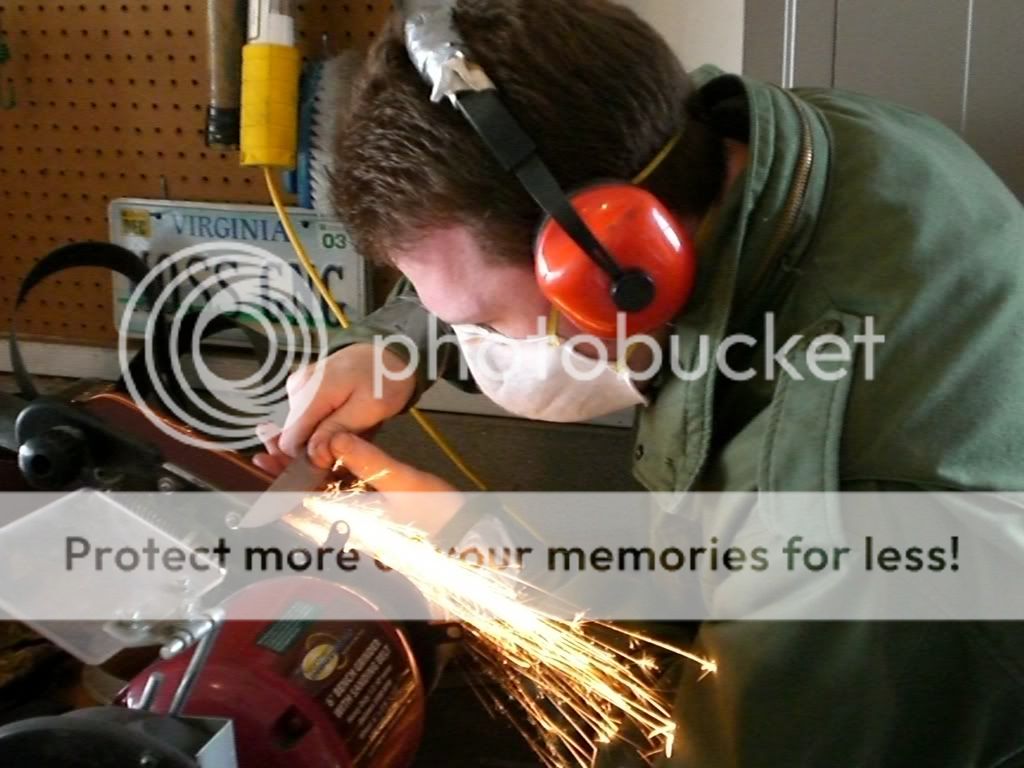
Grinding....
CIMG0075.jpg

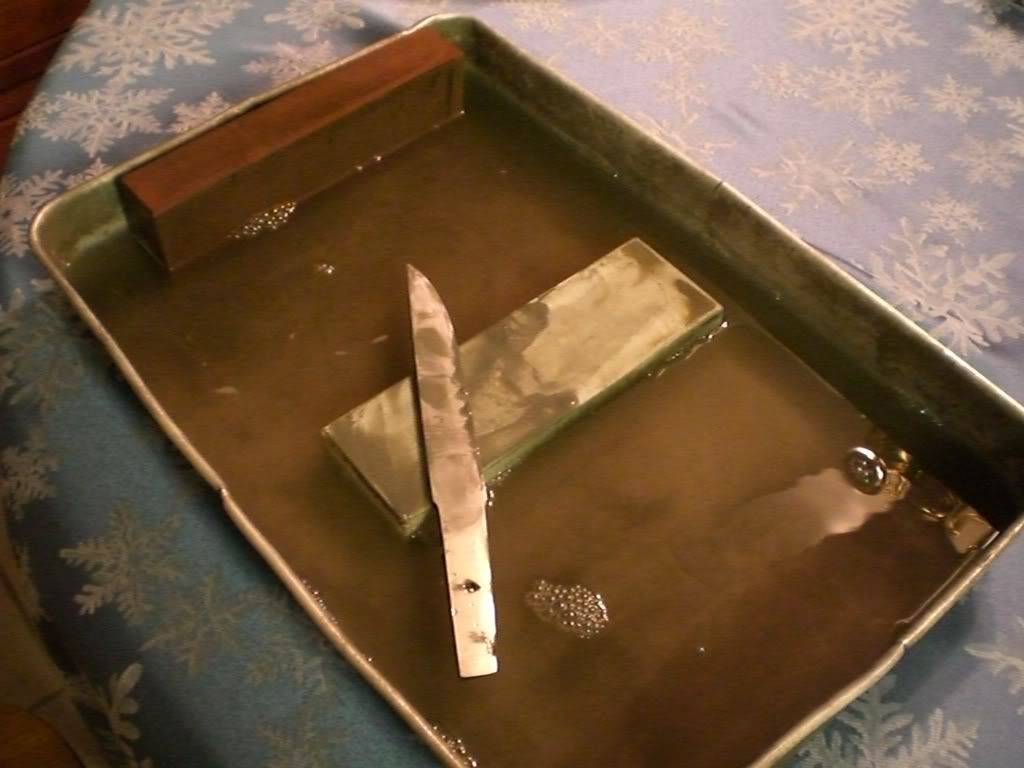
Polishing...
CIMG0093.jpg

fin
CIMG0109.jpg

another
CIMG0105.jpg

CIMG0116.jpg

CIMG0126.jpg

CIMG0125.jpg


thanks for your help... these will be up for sale soon....

thanks again
~Chris
 
Back
Top