Cleaning up a Schrade--Pics

shandrydan1

Gold Member
Joined
Feb 16, 2011
Messages
1,252
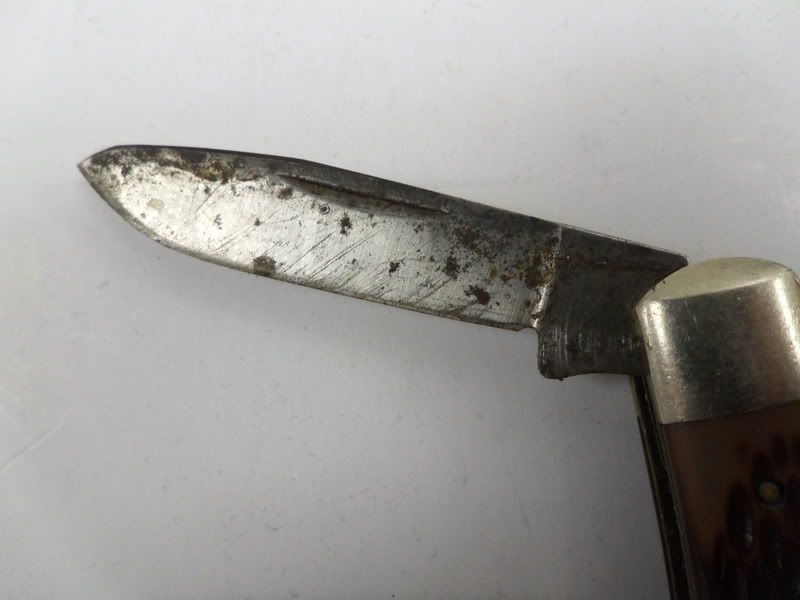
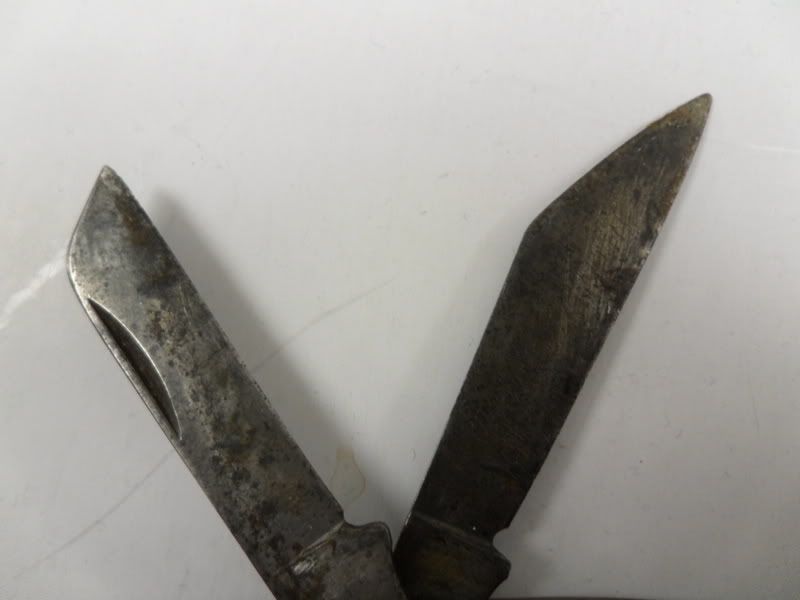
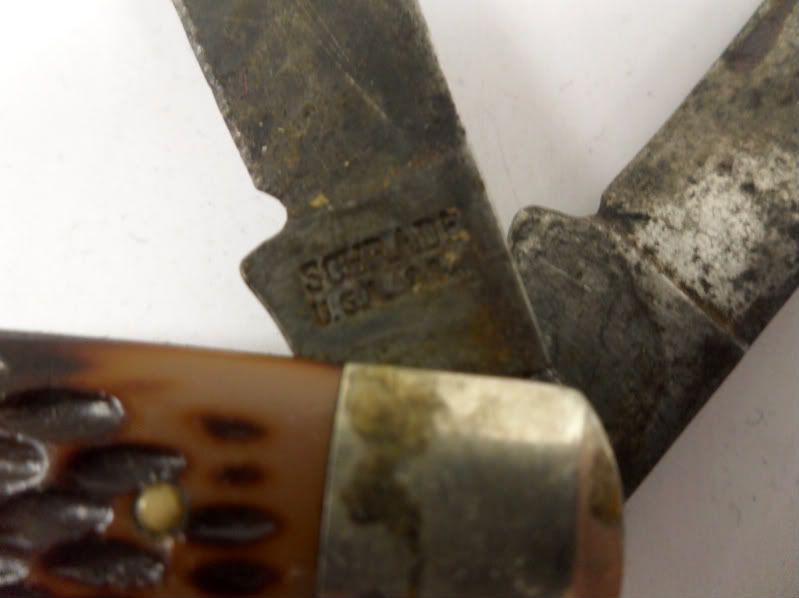
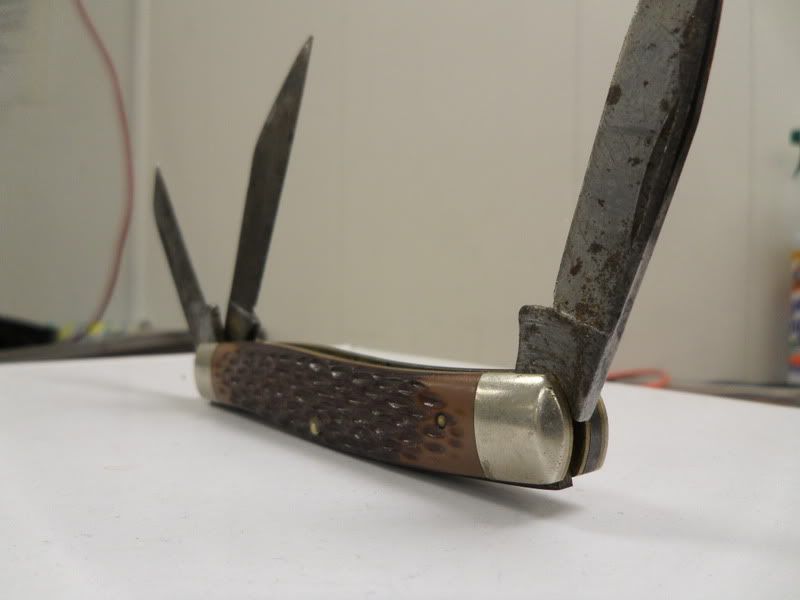
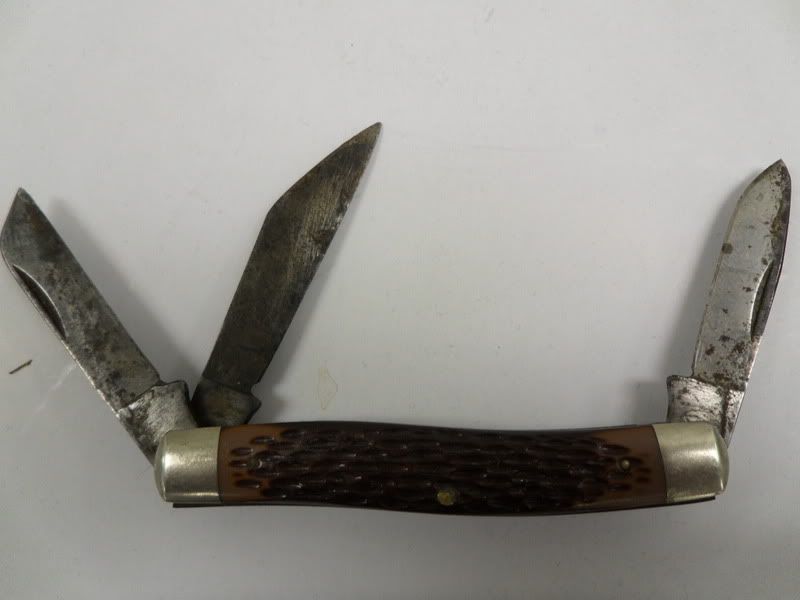
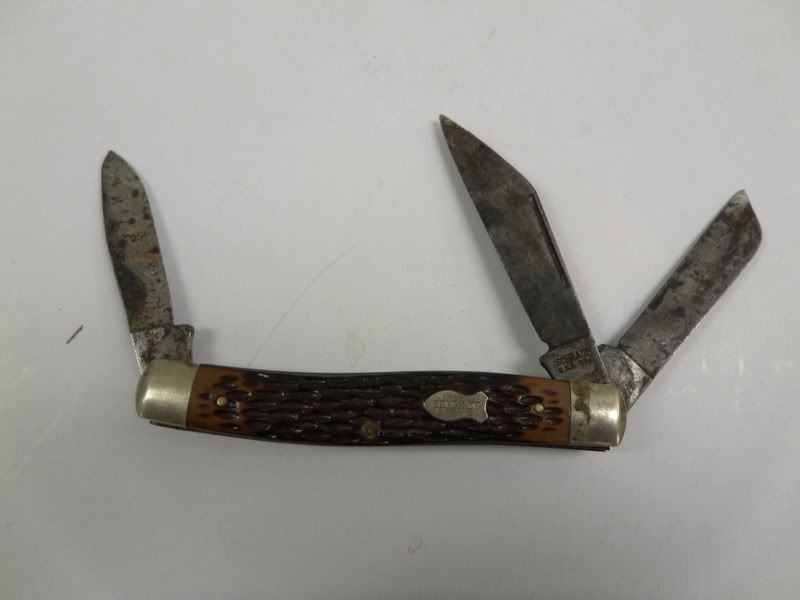
I picked up this Schrade this weekend at an auction and was wondering if anyone had any suggestions on how to clean it up some. I dont expect it to be anything spectacular but would like to find out if anything could be done to it. Looking it over there is almost a sort of film on the blades that seems to have hardened. Almost like the blades got something on them at some point and it was never wiped off. My camera died before I could get any more pics of it right now.

SAM_0255.jpg


SAM_0256.jpg


SAM_0257.jpg


SAM_0260.jpg


SAM_0254.jpg


SAM_0253.jpg
 
A frequently suggested method I see here, for cleaning up a knife like this, is to soak it for a while (a day or two) in mineral oil, then use some #0000 steel wool to scrub the red rust off. The pitting will remain, unless you do some heavy sanding/grinding, but that's not really necessary (purely a cosmetic issue; the RED rust is what needs to come off). Others use a green Scotch-Brite pad in the same manner. I've also cleaned knives like this using WD-40 (soaked in it, wrapped in a paper towel, and sealed in an airtight container for 2 or more days).

From what I see in your pics, I think perhaps the 'film' you have might just be the 'patina' that naturally forms on older, non-stainless knives. If anything is left on the blade for a time (like water, fruit juice, chemicals, anything acidic or salty), it'll leave odd-looking patterns of patina (oxide layer) on the steel. A lot of folks here actually put 'patterned' patina on their blades, using vinegar, fruit juice, mustard (has vinegar in it), etc. Sometimes results in a similar look to your knife.

I'm sure others here will offer more suggestions.

Edited to add:
If the bolsters are heavily scuffed/scratched, I like to use wet/dry sandpaper to clean those up. Start with something like 400/600 grit, then go through 600/800/1000/1500/2000 and polish (with Simichrome, Flitz or some similar polishing paste). That'll bring 'em up to a nice shine again. A small, flexible rubber eraser, such as is used for drafting/drawing, works well as a 'sanding block' for the sandpaper. It'll conform nicely to the contours of the bolsters, so you don't leave flat spots on 'em.

 
Last edited:
You might go over the whole knife, including bolsters and scales, with Mother's Mag Wheel polish. Apply with a rag or Q-tip, rub it for a minute, and then wipe it off. Its very gentle and would just clean it up a little. The rust and pitting would remain, as would most of the scratches. But you would see a difference. It would appear a little brighter and a little cleaner. I do this with old beater Schrades and Bucks.
 
Thanks for the info!! I've been needing to get some mineral oil anyway for a couple of my other knives. When you say soak do you mean coat the knife or literally pour some in a container and let the whole knife sit for a day or so?

The bolsters themselves arent really in bad shape but I will probably try the sandpaper after i get the blades taken care of.
 
Thanks for the info!! I've been needing to get some mineral oil anyway for a couple of my other knives. When you say soak do you mean coat the knife or literally pour some in a container and let the whole knife sit for a day or so?

The bolsters themselves arent really in bad shape but I will probably try the sandpaper after i get the blades taken care of.

Don't be shy about 'dunking' the whole knife in mineral oil (immerse it). That's what I mean by 'soaking' it. As for the WD-40, I've sprayed it down heavily (dripping), then wrapped it in the paper towels and sealed it in a zip-loc bag. The WD-40 has a mild solvent in it (which helps break up the rust), in addition to some light oil (basically mineral oil). The solvent will evaporate quickly; that's why I seal it up, so it has time to work on the heavy rust. (Edit: I've also saturated the paper towels with the WD-40, after wrapping the knife).

Taking a second look at your pics, your bolsters do look to be in pretty good shape (save for the staining). You might be able to use a finer grit to start (800 or higher). If you like a 'satin' finish, the 400/600 does that well.
 
Last edited:
I will be giving this a try. I'll post pics when I get finished with it. I think it will be a pretty good little knife when I get it cleaned up some and sharpened.

It does have patina on the blades but when I say dried film I can run my nail over the flat of the blade and in some places it flaked off, almost similar to dried wax but somewhat harder. The handle had some on it as well I knocked off.
 
I will be giving this a try. I'll post pics when I get finished with it. I think it will be a pretty good little knife when I get it cleaned up some and sharpened.

It does have patina on the blades but when I say dried film I can run my nail over the flat of the blade and in some places it flaked off, almost similar to dried wax but somewhat harder. The handle had some on it as well I knocked off.

I guess, that's the one 'downside' of buying/acquiring old knives. Could've been used for who-knows-what (:eek:), and 'coated' accordingly (glue, epoxy, wax, etc.). :)
 
Indeed. Scuffs, scars, and scratches on a knife like this give it character though, especially with its age (not sure what that age is at this particular moment in time).
 
When I get it looking a little better with some better pics I will post over there. Thanks again!
 
Back
Top