CNC Textured Handles; how's it done? CAD or CAM?

Joined
Dec 11, 2000
Messages
1,109
Can anyone describe how they produce CNC textured handles? How much of getting the pattern on the handle is done with CAD and how much with CAM?

I have always thought that they look really cool and have long wondered how the texture is created. I am assuming that all such handles must be modelled in CAD, but is the texture modelled in, or is it the result of how the CNC mills are programmed to cut the shape?

I am not unfamiliar with CAD since we use UG NX solid modelling at work, but we have never done texture work. I keep thinking that it would be an interesting project to model a handle and have one of our suppliers knock out a few in G10. Texturing would be cool :cool:, but I am stumped as to how you guys design it in. Can anyone share any tips?


Texture examples,
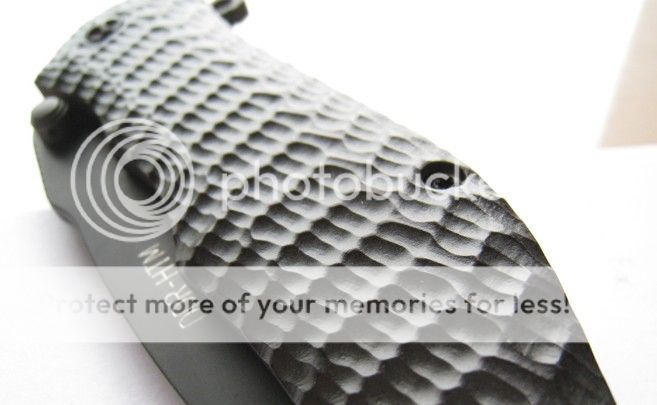
HTM Gun Hammer
IMG_7965.jpg


Randal King Lynx
IMG_7963.jpg

IMG_7962.jpg


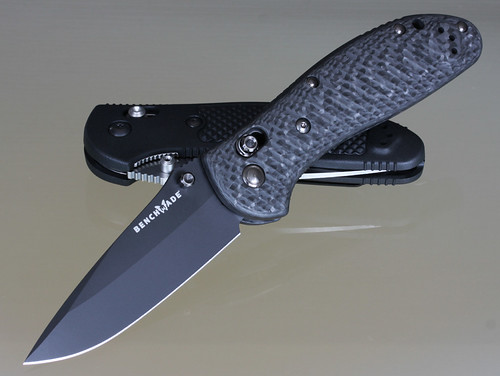
Benchmade Gold Griptilian (picture posted by Trafelller a couple of years ago in the General Forum)
4716000952_1840fc7cf1.jpg


The Combat Elite RRF
IMG_5874handle.jpg


Treeman Behring hunting knife
IMG_7964.jpg


Does anyone else have any shots of nice CNC work?

Thanks :)
 
Last edited:
I make CNC machined scales like those you show, however I can not show the work I do for other people that would illustrate the textures you're talking about, but I can explain how it is done.

The CAD model is usually relatively smooth and the texture is the effect of the step over and tool toolpath. I can tell you how each one of those scales were probably done.

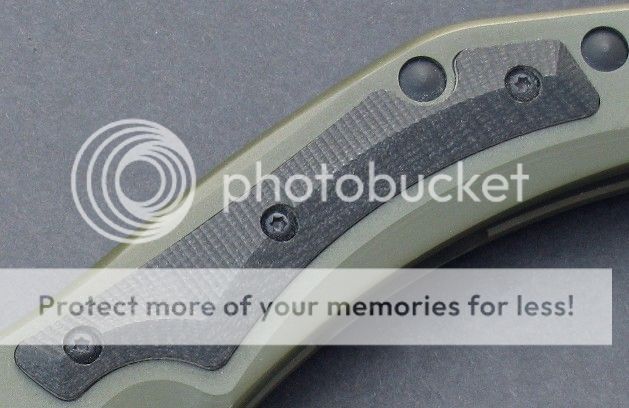
Models usualy have a main surface created with C2 surface continuity of the organic swells etc. And they have a profile surface or quilt of surfaces which is generally perpendicular to the tang and milled with the side of a cutter and there are transition surfaces, frequently a round of some sort between the main surface and the profile surfaces. The checkering you see is made by surface milling with a ball nose or V mill at an angle, and again at a different angle, the diamonds are formed at the intersections. The size of the scallops is determined by the stepover and the cutter type.

Often time I'll use a fine step over on the transition surfaces like you see in the Randal.

You also have a choice of milling surfaces along a path rather than just a straight line, which is how curvy patterns are done. None of these patterns are in the geometry, it is how you apply the cutter to the geometry and the resulting "extra" material left behind by the cutter.

Sometimes you'll want deep gouges evenly spaced across the surface. If you have really clean underlying geometry this can be done by milling along surface isolines with a large step over. First you copy the surface and extend the boundaries so the cutter isn't stopping and reversing on the scale and you can then offset it into the scale the depth you want your grooves.

The "gun hammer" in your above example is different than the others. I believe it was done using a combination of the above techniques on a model with rippled surfaces, though I'm not sure. I have also see some that were done using a drilling routine "Drill to Surface" and patterning the toolpath across the entire part, which looks a little like the Gun Hammer, but I don't think that is what Darrel did in this example.

Simple scales cost about $500 to model, fixture, program and setup, but more complex scales go up from there, so you don't see this much in a one-off. Then the actual cost of the scales is between $15 per set up to $25 per set for something like G10 and very fine step overs which can make some programs run half an hour or more.

There, everything anyone could possibly want to know. Pretty dry, huh?


Edit:

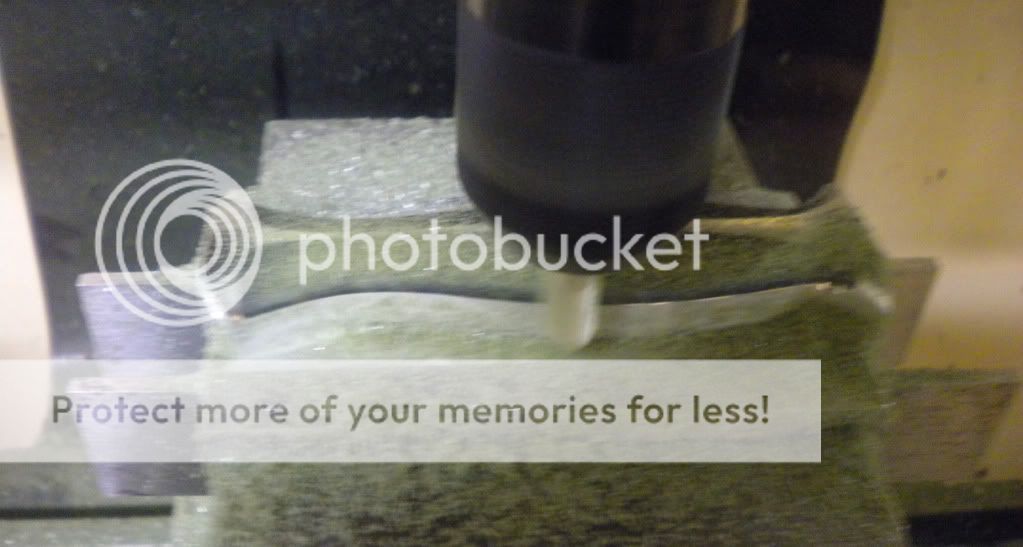
Here is an "action shot"

3.jpg


For machining the organic scales for this dagger:

carothers_dagger.jpg


I don't use the texturing on my work because I am more traditional. But almost all the scales I make for other people have some form of CNC applied texture
 
Last edited:
From Mooresville, eh? I'm a machinist too, also located in NC (more north central NC near Reidsville). Do you do machine work on knives professionally?
 
Hi Nathan,

Thank you so much for taking the time to write all that!:thumbup: No not too dry ;) I think you have answered all my questions too. Sounds like if I ever get a model figured out I am going to have to work very closely with the machinist if I want the texture. I expect though that costs will be higher over here in Britain. :rolleyes: Still something I want to try! Surface modelling is something I want to get my head around; I have the tools sitting in front of me day in, day out, and it would be nice to do something interesting with them :D

Does anyone have pictures of scales that Nathan has made for them?

Thanks again, that helped!

Chris
 
Nathan are you running a 3 axis or 5?

My mills are three axis, one has a 4th axis rotary table but the 4th doesn't get used much. A decent 5 axis machine is pretty expensive (200K+) and isn't really necessary for most things. In fact, most people who have them usually use them as 3 +2 machines, meaning they're used as a three axis machine, but they tilt the cutter rather than re fixture the part. This is helpful in applications like mold making where you might want a small cutter down pretty far along a wall - you can tilt things to gain access with small cutters you couldn't do with a 3 axis. However, on knife scales I don't think there would be a great deal of need for 5 axis.
 
Last edited:
I agree. I figured you might have a 4th axis rotary.

I wish I had a CNC at the house..or my own business with CNCs. I have a manual at home but CNC can be so much faster.
 
Nathan's thoughts on the matter were exactly what I was thinking, even down to the "gun hammer" that was done with a combonation of rippled surface and widely spaced tool paths. He said it much better than I ever could have. ;)
 
Back
Top