Convex reprofile failure

Joined
Mar 1, 2011
Messages
78
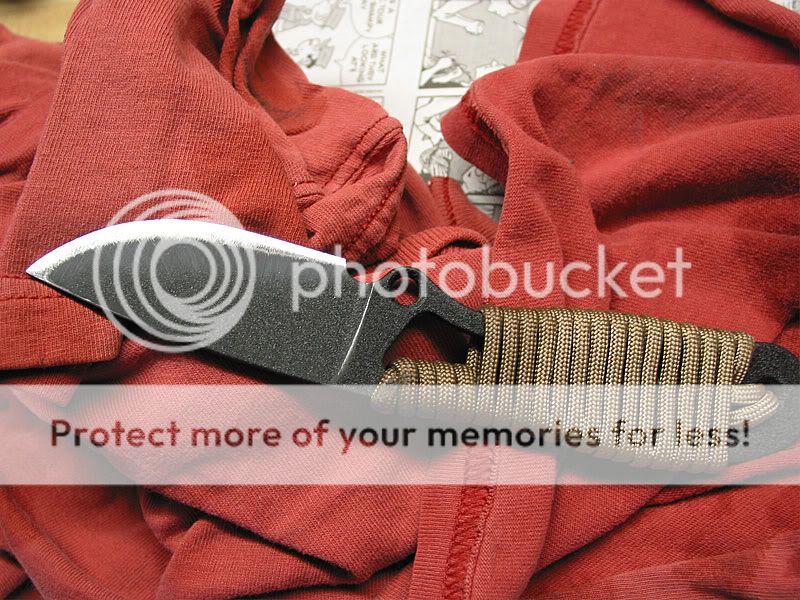
On a terrible whim I decided to reprofile my Izula because I've always been terrible at freehand sharpening and the lansky sharpener I use no longer holds a blade at all steady. I've been messing with it for going on two weeks now, and my knife is not sharp. I can press my thumb against the edge and put some pressure behind it with no damage, although it cuts paracord pretty well. Nowhere near shaving sharp.

Grits I have used: 320, 600, 800, 1500
Backings I have tried: 1/4" neoprene, 1/8" cork composite, 1/8" leather, now using a small leather strop with wood backing.

I have been staying at or under 15* on 320 and 600 grit the past few days. Just changed to 600 today, thinking I might be nearing the goal, but that's just wishful thinking.

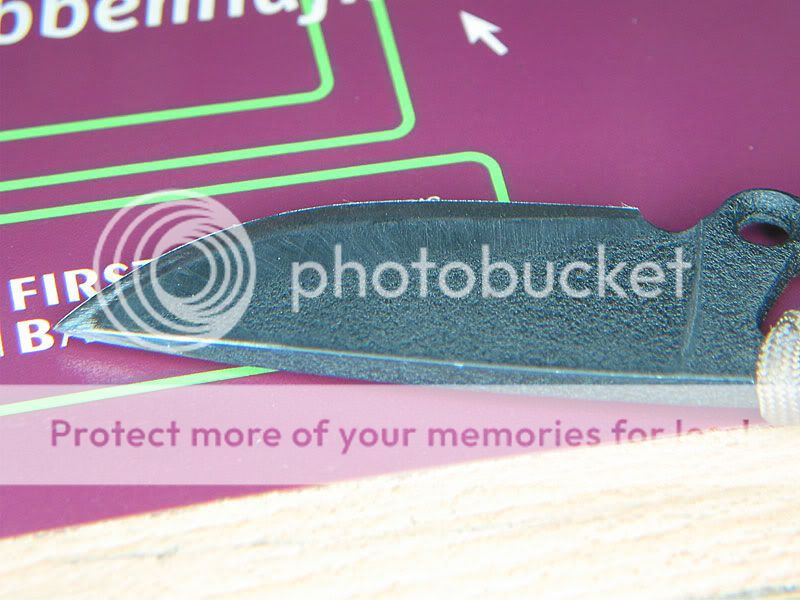
At first I was sure it was my backing, the old neoprene. Now I'm using a small leather strop I got off ebay with sandpaper on top of it, and almost laying the blade flat and it still won't get sharp. I've been using some binoculars flipped backwards to look at the edge but they're not a strong enough magnification to give me any real useful detail. The only thing I can really pick out is that when viewed edge-on, there's a line of reflected light, like the edge is blunted. But I'm using no pressure, and laying the blade almost flat! I'm getting pretty aggravated with this whole process, especially because I'm sure it's some basic, fundamental mistake I'm making. I've read every tutorial I can find, and watched every video I can find, even a little kid with sandpaper sharpening skills that put me to shame.

I tried to take some decent pictures of the edge with my camera but I had little luck. I might try getting a decent video of myself working the blade on the 600 grit tomorrow.

Can anybody give me some tips or come up with a theory about why I'm terrible at this?
Thanks!


IMG_1797 by twentyniner&single, on Flickr


IMG_1794 by twentyniner&single, on Flickr
 
it looks like you are holding the blade too low and not hitting the egde. mark the edge with a sharpie so can see where you are hitting. that will tell you if you are holding the blade too low.
 
You need to raise the blade!

You don’t lay the knife down on the strop/sandpaper like a straight razor. Raise the blade to 20° - 25°. The flexibility of the backing is what determines the amount of pressure you can use. When a knife is dull or needs re-profiling, you need to use a lot more pressure than compared to simply sharpening a dull edge. Do not use a grit finer than 600 until it shaves, then go finer and lighten the pressure while maintaining the angle.
 
This sounds familiar. I went through the same crazy thing when I was starting to convex on sandpaper (on leather about 1/16" thick, on wood backing).

I've gotten better at it now, but one thing that initially helped me, was to 'cheat' the process a little bit. I found out, sort of by accident, that if I used either a diamond or ceramic hone (edge-leading stroke) to get the VERY EDGE to good sharpness (after I'd convexed the bevel), I could then refine it using the sandpaper on leather. Being that the edge was already sharp, I took extra care not to mess it up on the sandpaper. This means I kept the angle as low as possible (making sure that I can SEE the edge making contact with the paper), and the pressure VERY LIGHT.

I've also found, since then, that using the sandpaper on hard backing (flipped my strop block over, to use the bare wood on the back) can take the edge up another notch. I don't try this until the edge is already pretty sharp, then I'll do it with the 1000+ grit. Same edge-trailing stroke for convexing/stropping, but with hard backing and EXTREMELY light, slow strokes. Pay very close attention to every pass (test the edge frequently), so you don't go too far and round/blunt the edge.

As you get more comfortable with the convexing process, it'll feel more 'natural' to transition to either a hard backing, or to drastically lighten pressure and lower the angle, once you see you're getting close to a finished edge.

One thing additionally, that I've sort of played around with, is to use an edge-leading stroke (as on a stone) on the hard-backed sandpaper (at or above 1000 grit). Being that it's very easy to cut the paper this way, I've found it forces me to keep the angle low and pressure feather-light (as if using the edge to gently 'brush' the filings off the paper). When you get to this point, it's a fantastic way to take the edge to a whole new level.
 
Last edited:
If I am...

at first 20 degree to take the edge
second 70% 15 degree and 30% 10 degree for a while
third 18 degree to take the edge
fourth 10 and 5 degree to smooth up
(angle and mixing is a personal preference)

continue that on;
600, 1500, 3000 water whetstone
1000, 2000 sandpaper with EMS sharpening block
and leather field strop with green compound
(pressure becomes lower and lower through the process)
 
do that, but take it down and get a burr with coarse abrasives before moving to another grit.

I did the same thing to my Busse Skeleton Warden. It turned out good. The coating is going to look like crap, but that is what coatings do.

wide-bevel-1.jpg


I started freehand with a D8XX stone to knock back the shoulders, then moved to the sandpaper.
 
Thanks for the advice! Did 100 strokes ( the strop i'm using as a backing is small, about 7") on either side with a steeper angle on 600 grit, definitely helped using a marker on the blade edge. I've taken all the marker off but it's not really sharp yet, so I'm stepping back down to 320 grit and i'll put another few hundred strokes down tonight.

I would try hitting it with my sharpmaker to clean the very edge up but it just won't clamp the blade well, even with a conglomeration of beer can shims all over the place. I'm not steady enough on the freehand diamond hone, so I'd rather not try that just yet.
 
I'm not steady enough on the freehand diamond hone, so I'd rather not try that just yet.

You don't have to hold a perfect angle, which is impossible to do freehand. It naturally becomes slightly convex. Also, for the initial reprofiling, you are wasting time using fine grits. You need something really coarse to reprofile, raise a burr, then move to successively finer grits.

pic of burr
burr-1.jpg
 
I start to Reprofile at 80 grit that's were the work gets done.
Than (after we have a burr) 120,240,400,600,1200 leather.
Works for me.
 
Thanks for the advice! Did 100 strokes ( the strop i'm using as a backing is small, about 7") on either side with a steeper angle on 600 grit, definitely helped using a marker on the blade edge. I've taken all the marker off but it's not really sharp yet, so I'm stepping back down to 320 grit and i'll put another few hundred strokes down tonight.

I would try hitting it with my sharpmaker to clean the very edge up but it just won't clamp the blade well, even with a conglomeration of beer can shims all over the place. I'm not steady enough on the freehand diamond hone, so I'd rather not try that just yet.

Try marking it w/ the sharpie and removing it repeatedly (at least 3-4 times). If you're going w/ light pressure it can take many many passes to fully remove the grind marks from the previous (coarser) grit. You will overlay it with finer scratch marks fairly quickly, but close scrutiny under a good light source will reveal the older grind pattern at the edge. Light pressure, many passes. I also find that due to the conformable backing, I have to lower my angle by from 5-10 degrees to get the same bevel as w/ a hard surface (depending on pressure, type of backing etc). I reprofile starting at 220 grit. It takes longer initially, but I feel it makes up for it on successive grits changes I don't have to spend as much time cleaning the edge up. Biggest advantage to using 80 or 120 is you WILL see exactly what you're doing and where its happening, and you WILL raise an easily visible burr.
HH
 
One more thing, keep that paper clean. Either use a large eraser/ belt sander rubber dressing block, small nail brush, whatever. Otherwise the paper will clog up w/ broken pieces of SiC and metal residue fairly quickly, and while this might be a help at higher grits, when reprofiling it makes a tough job a lot tougher. With nice clean paper, you'll be able to feel the resistance drop off as you get closer and closer to finishing the grind. When the scratch pattern on your edge totally matches the paper you're working with, it'll quiet down and the edge will feel like it's gliding across
 
I went down to 220, and have been getting the burr up before flipping to the other side. I've worked back up to 600 grit, i've flipped the burr 7 times at this grit level. Still not quite shaving sharp- it's scraping hair off better than before but nowhere near a razor. I can still press a finger square on the edge without injuring myself.

Thanks for all the help, I feel like a remedial student here.
 
Epiphany! I thought it might be the burr, so I hit it with ten strokes per side on the coarse strop...

Shaving!
 
Back
Top