
Copper and Nickel ingots

Joined
Oct 27, 2010
Messages
8,721
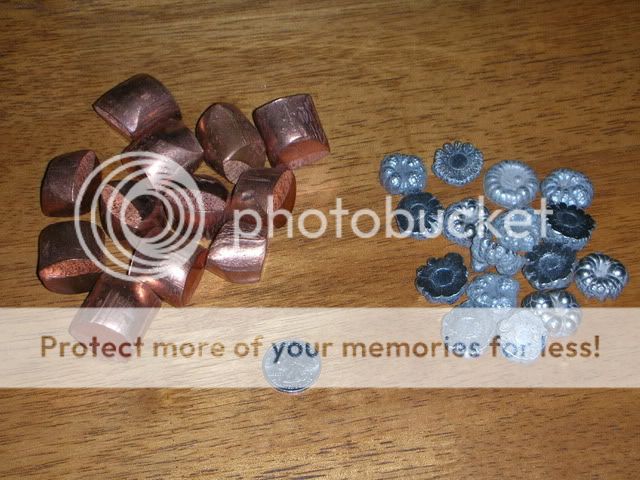
I was cleaning out a cabinet in my garage today and found a container of copper and nickel ingots used for plating that I had grabbed from an old job some years ago. I don't have a set up for plating anymore and don't think I will ever need this much again.

But now that I have found this new craft called knife making I am wondering what I could do with them? I don't have a heat source beyond a MAPP torch so I can't really forge them into some killer damascus steel, but do any of you guys have some fun or different ideas of what to do with this stuff?

Here is what I have left...
DSCN2083.jpg


-xander
 
If you can make a small crucible out of a refractory brick you can melt the copper with the torch... The nickel might be a little difficult but still possible. Cast some guards or pommels.
 
not to get OT, but i have a similar situation w/ brass ingots. what's the procedure to melt and cast them? have crucible, gas tanks empty (guess that's what welding supply is for), what to do for a mold?............thanks....................b
 
Hi
the Ni looks just like the little bits that come from the smelter... or at least that is what i was told when someone passed me some of those bits...

i forge welded them to some iron... in a stack... it worked out ok... at least thats what i can remember from 10 years ago... hah


i'd do what the other say... with the copper... make a bronze


cool stuff

G

ps... some people get a rash from the pure Ni... so if you make necklaces, just put a backing
 
The topic of casting brass,nickel, bronze, and such metals should be learned from a class or at the minimum a good book on the subject. Getting the info in brief on a forum can lead to death or serious damage to oneself and property. There are many things you need to know about before you even need to worry about filling the gas tanks. Using "found" raw materials can greatly compound the risks and problems.

I know I am the safety curmudgeon here, but this is a serious matter. I believe Page will back me up on this one.
 
The topic of casting brass,nickel, bronze, and such metals should be learned from a class or at the minimum a good book on the subject. Getting the info in brief on a forum can lead to death or serious damage to oneself and property. There are many things you need to know about before you even need to worry about filling the gas tanks. Using "found" raw materials can greatly compound the risks and problems.

I know I am the safety curmudgeon here, but this is a serious matter. I believe Page will back me up on this one.
Stacy I completely agree. I am usually over cautious when it come to things like this and am in no way going to attempt to smelt this down. Many years ago I had a mold full of molten lead explode only 2 feet away from me. I was wearing shorts too. The scars are finally starting to disappear from my legs.

I thought I have seen damascus made from nickel and whatever steel that looked pretty cool. I was kinda hoping someone would say hey I can make some damascus out of that, so send it to me!

Page, ok. eMail me and we can work out the details.

Now who is experienced in smelting the nickel and would want some?


-Xander
 
Hi Friend,

As a high school applied arts teacher, I too certainly believe in safety first. I don't believe that should cripple us into catatonic non-action though. We do lost wax casting and small smelting and of course forging. I firmly believe half the value of the classes for the students is to turn their anxieties and fears into well founded respect with knowledge, training, self discipline and experience. Get the info, demos and training necessary and then proceed. Geesh, none of us would cross a street or get in a car if we never did anything without risk. That being said, I'm interested in the nickle if you haven't found a home for it. :o

Thanks, Phil
 
phil, sorry the nickel has been spoken for. I will keep you in mind, if I run across anymore in my cleaning of the garage. I am a strong believer in the arts in school and think that anything I can do to help is the least I can do.

I do not consider myself scared of casting the metals, I am aware of the dangers and know that I don't know enough to attempt it on my own without some serious supervision.

I haven't heard from page yet, but assuming he is serious about wanting the copper I am considering it spoken for.


-Xander
 
I agree that casting and smelting can be enjoyable, but if you re-read my post you will see that I suggest taking a casting class or reading a casting book. Phil teaches casting and has the equipment and knowledge ( a good bit of the equipment came from me). Page is a silversmith,too. Both teach the science and art of casting...thus their students have taken a class on the subject. I doubt either one would suggest a person who doesn't know anything about it trying it solo in their garage.

Melting silver or gold is pretty simple. Smelting steel is messy, but the process is basic. Melting many copper and nickel alloys can release deadly gasses. Some are alloyed or plated with cadmium, which can kill you in a short but painful time. Beryllium is in some copper alloys and is one of the most toxic metals. "found" ingots of metal can be many things. Purchased casting grain/ingots are one thing, but melting down "stuff" can be deadly.
As fast14roit said, a crucible of molten metal can litteraly explode and send 2000+F rain down on you and any flamable thing in your shop.

There have been several well known knifemakers who have decided to smelt down some brass/nickel/copper/ etc. and killed themselves or severely damaged their lungs. It has only been a few years since Pappy died doing this....so it is more than a "be careful or you will poke your eye out" kind of thing.
 
Stacy, I should note that these ingots are of known source and were purchased from a reliable plating supplier some years ago, I simply found them hiding amongst my things in my garage. Interesting note, the copper is actually from high tension power transmission lines. 1" diameter copper wire that they slice into chunks.

I understand the dangers and precautions of casting metals, but I also know what I don't know. I don't want to get into melting metals or casting, etc. I think I may just keep one or two of the copper ingots for small plating jobs or maybe anneal one or two and hammer them flat for some bolsters. If I remember correctly to anneal copper you heat to ~1450*F and immediately quench in water. Sound about right?


-Xander
 
Last edited:
Xander, check your messages, CGWbear, for the sake of everyone who cares about you don't try melting unknown brass with a torch, that white smoke will be AT LEAST zinc fumes which are deadly, and who knows what other toxic crap might be in the brass. I don't mess with open melting of brass, and when I get my casting foundry built this summer so I can do 5 pound plus melts I may still stick to bronzes. Brass is just bad news cheap crap metal, unless you are getting a brass meant specifically for casting with it is not worth melting, most brasses these days are leaded to make them freemachining, which is great on the lathe, not so good in a furnace.

Xander, you are right about annealing copper. The thing to remember about working copper is anneal frequently and then some

-Page
 
thank you Page and all the posters. once again, informed folks help me avoid doing dumb things.........................b
 
Back
Top