

- Joined
- Oct 31, 2008
- Messages
- 249
Hello, i have recently been having some issues with what i believe are cracks in some of my blades!
The steel is 15mm round 1.3505 (52100), the treatment i give it is after forging i normalize 3 times before hardening at 830c into warm canola oil then temper twice at 230c for 45 minutes. It was finished by sanding to 800 grit, after that an etch in ferric chloride for 10 minutes and a quick polish with tormek paste.
I already have a thread on bladesmithsforum (Here is the full thread with several extra photos: http://www.bladesmithsforum.com/index.php?showtopic=30331), and the conclusion there was that the steel was flawed from the mill, however i am hesitant to contact my supplier since i don't quite think the cracks on the raw bar look anything like the cracks i see on my blades. The reason i am also posting a thread here is to see if anyone here can relate to the issue and/or have an explanation, maybe the conclusion here will be the same, but i would like to be 100% sure before going to my supplier, the last thing i want, is to have me being the problem, while i think it is the material! (i hope you can relate to that!)
So some pictures to explain what i mean:
The first blade i noticed cracks on:
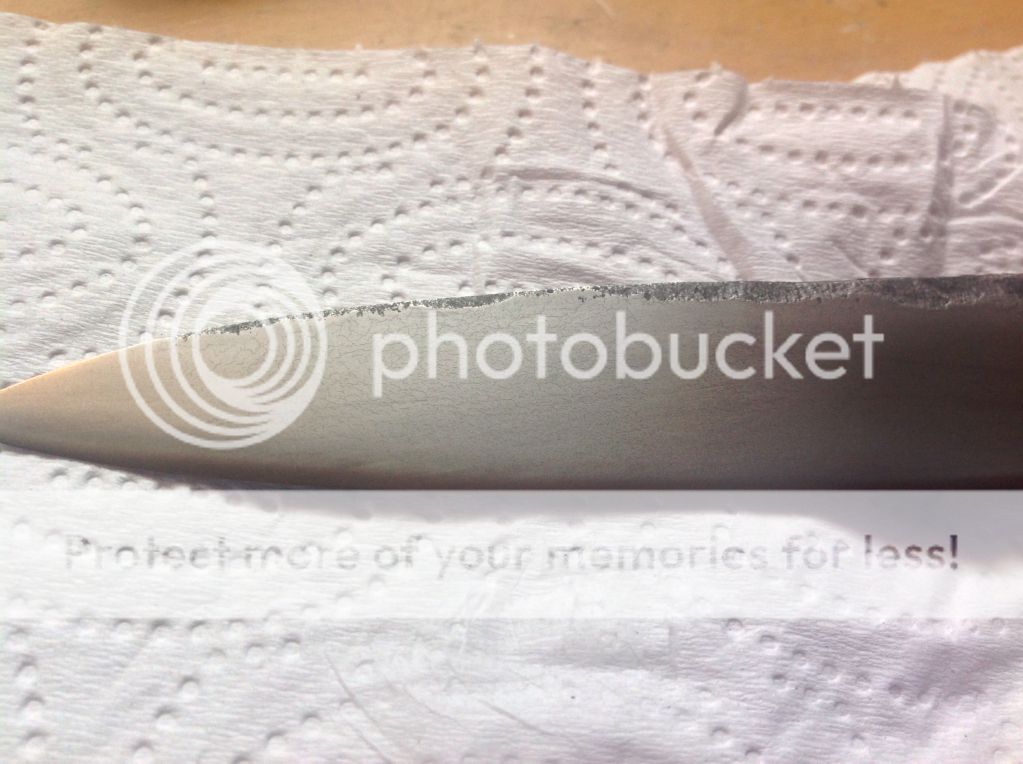
Then i did a second test-blade to see if it was a consistent thing: (it was!)

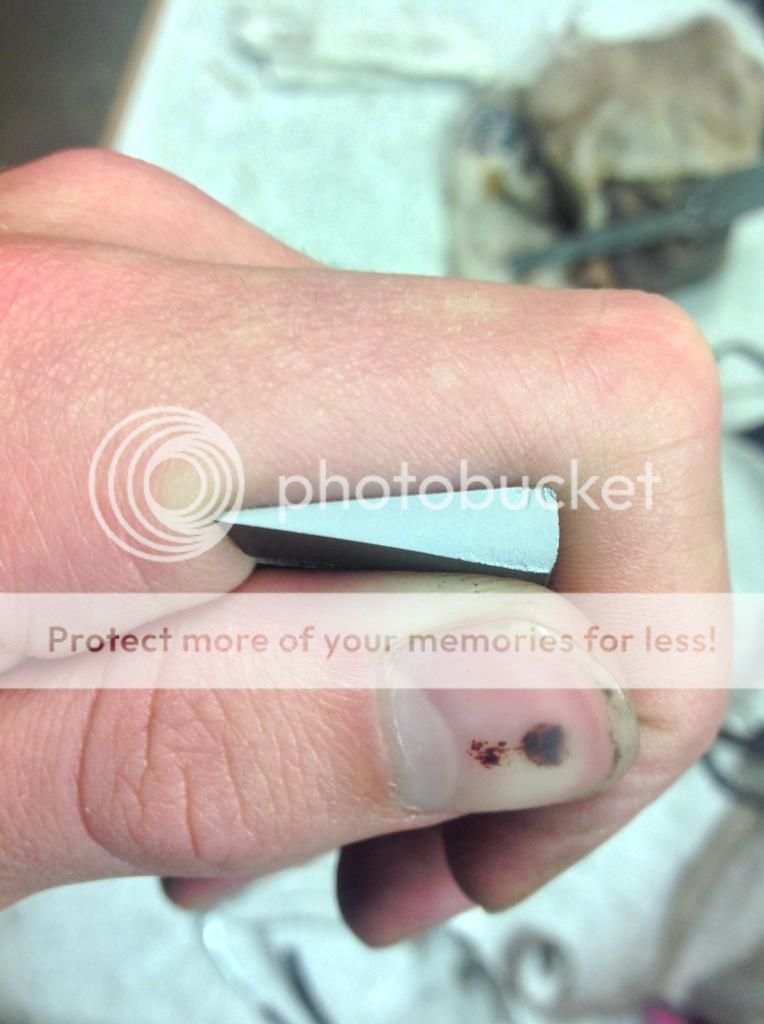
I then broke the blade to see how the grain looked like:

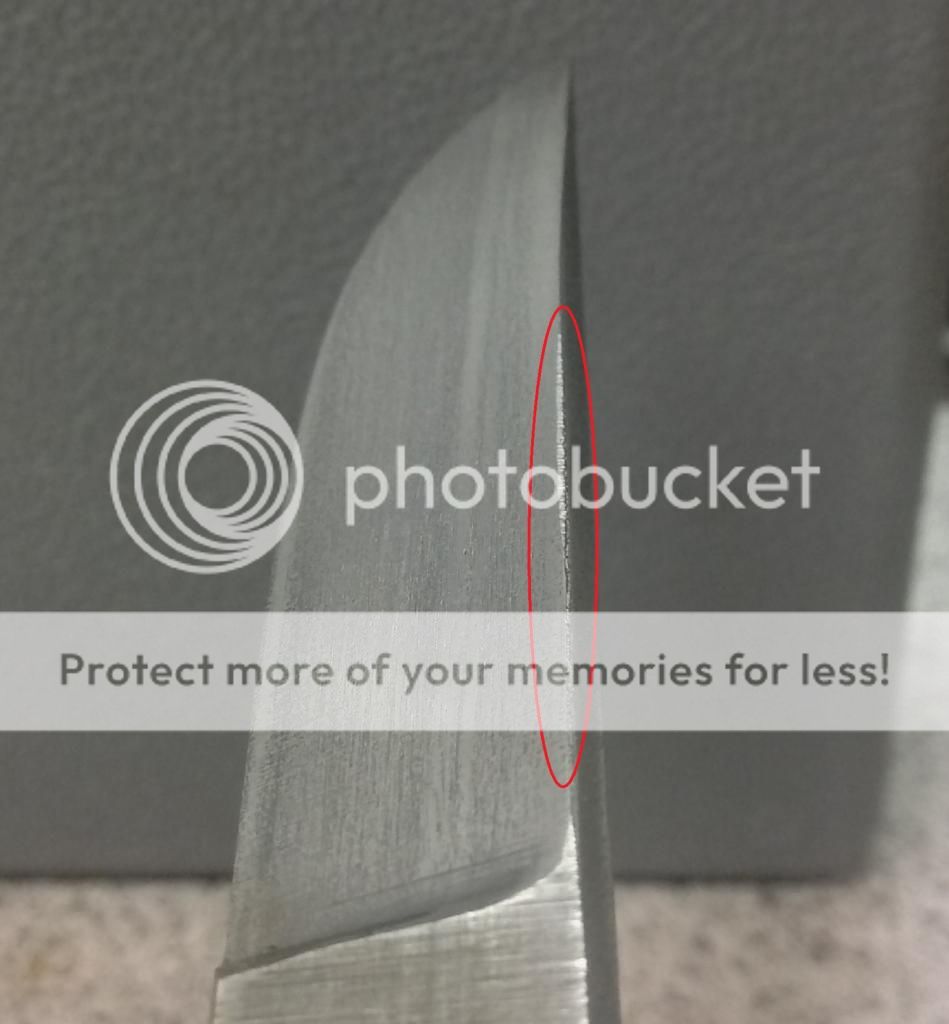
I then decided to grind a blade from the bar rather than forge it, just to see if it was my forging process that was the issue, this blade was cleaned up to 800 grit and etched in ferric, mind you this blade had not been heat treated yet!:

I found something that could look like cracks along the spine of the blade, which would then be the surface of the rough bar:

So do anyone have any idea what it is? i dont think the cracks on the raw bar look anything like the cracks on the initial blades
Another thing to note, i just hardened that ground blade, and it has not developed anymore cracks during ht.
Best regards
Peder Visti
The steel is 15mm round 1.3505 (52100), the treatment i give it is after forging i normalize 3 times before hardening at 830c into warm canola oil then temper twice at 230c for 45 minutes. It was finished by sanding to 800 grit, after that an etch in ferric chloride for 10 minutes and a quick polish with tormek paste.
I already have a thread on bladesmithsforum (Here is the full thread with several extra photos: http://www.bladesmithsforum.com/index.php?showtopic=30331), and the conclusion there was that the steel was flawed from the mill, however i am hesitant to contact my supplier since i don't quite think the cracks on the raw bar look anything like the cracks i see on my blades. The reason i am also posting a thread here is to see if anyone here can relate to the issue and/or have an explanation, maybe the conclusion here will be the same, but i would like to be 100% sure before going to my supplier, the last thing i want, is to have me being the problem, while i think it is the material! (i hope you can relate to that!)
So some pictures to explain what i mean:
The first blade i noticed cracks on:

Then i did a second test-blade to see if it was a consistent thing: (it was!)

I then broke the blade to see how the grain looked like:


I then decided to grind a blade from the bar rather than forge it, just to see if it was my forging process that was the issue, this blade was cleaned up to 800 grit and etched in ferric, mind you this blade had not been heat treated yet!:

I found something that could look like cracks along the spine of the blade, which would then be the surface of the rough bar:


So do anyone have any idea what it is? i dont think the cracks on the raw bar look anything like the cracks on the initial blades
Another thing to note, i just hardened that ground blade, and it has not developed anymore cracks during ht.
Best regards
Peder Visti
Last edited:


