
Cliff Stamp
BANNED
- Joined
- Oct 5, 1998
- Messages
- 17,562
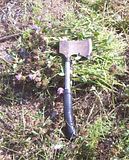
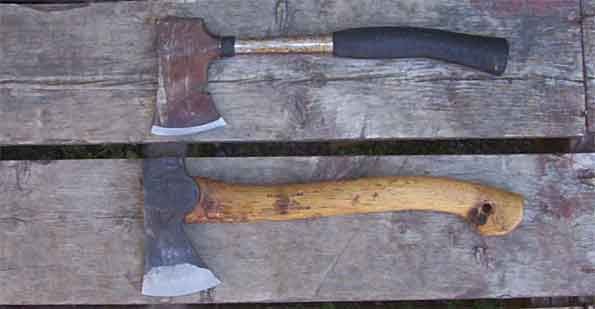
I just cleaned this up for a friend. Overall length 34 cm, weighs 680 grams, balances 13.5 cm infront of index finger in a rear grip. Slightly smaller than the Wildlife but actually heavier though more neutral in balance :
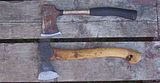
It filed really easily, similar to working a set of hammer claws. It formed a big floppy burr off the file but no problem getting a clean edge going through 200, 800 and 4000 waterstones and finishing on 0.5 micron chromium/aluminum oxide. The primary bevel was flat, 12.4 (5) degrees per side. Initially it was heavily rusted and chipped/dented so I have no idea on the factory bevel. Likely it wasn't this acute.
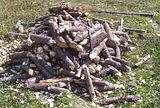
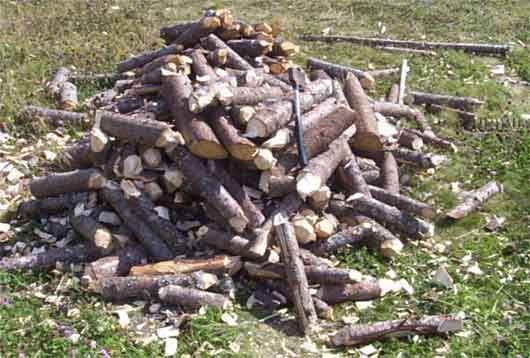
I ran some chopping against the Bruks, it was obvious the Bruks was ahead but they were in the same class. I went through 52 pieces of wood, I would like to do more, but this isn't mine and I only had it for a couple of hours. In any case this was enough to roughly benchmark the performance of the Craftsman needing about 17 (5)% more hits to cut through a given section. There were however larger issues than the raw penetration.
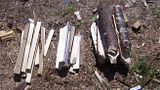
I did some splitting, some lumber and fresh woods. Both blades split the lumber easily, just chop at at most twist. Neither did anything on the fresh woods on a chop and needed to be pounded through. They worked equally well as either the wedge or hammer.
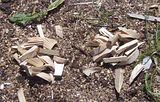
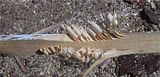
The Bruks readily had more cutting ability on some carving, through making a bunch of points on the pine splits it was 27 for the Craftsman vs 19 for the Bruks, just due to the more acute edge profile. The Bruks was also way more comfortable and secure with the contoured neck vs the round tube on the Craftsman.
After the above work the Craftsman still had enough cutting ability to make fine shavings and slice light vegetation and still readily slice newsprint.
The biggest problem I had with it was that the balance is off. It is heavier than the Bruks due to the metal handle which also drags the center of mass back and this isn't what you want on a hatchet because it reduces ease of snapping the axe into motion. It felt sluggish. The rubber grip was also abrasive and after a couple of hundred chops I could feel my skin starting to get irritated.
This is definately under the Fiskars as a wood working tool but still way above a lot of the larger knives I have used like the Machax. Again though I should point out it is likely that the initial edge on it was way more obtuse than the one I filed so if you ran this right from the store it would likely run much worse than the above. However this is only 5-10 minutes work with a large bastard file, and just a couple of minutes with a dremel with a coarse sanding disc, so no big deal to fix.
The largest problem I had was the primary grind was too flat and the blade would wedge more than the Bruks. The Wildlife has a much wider edge and a deeper hollow grind and thus tends to be more fluid in the wood. The Craftsman is ground more like a machete in that the primary is flat and tends to stick in the wood. Now it isn't as bad as a machete, but it does take more effort to work it out of the wood than the Bruks.
This isn't an expensive axe, you see a lot of them locally in second hand stores. Usually mauled, edges are mangled, the whole head is a sheet of rust, handle is torn, etc. . Nothing serious though and has a lot of ability with the proper edge profile applied. Don't leave the edge roughly finished either, take it right up to the finest polish you have.
-Cliff
It filed really easily, similar to working a set of hammer claws. It formed a big floppy burr off the file but no problem getting a clean edge going through 200, 800 and 4000 waterstones and finishing on 0.5 micron chromium/aluminum oxide. The primary bevel was flat, 12.4 (5) degrees per side. Initially it was heavily rusted and chipped/dented so I have no idea on the factory bevel. Likely it wasn't this acute.
I ran some chopping against the Bruks, it was obvious the Bruks was ahead but they were in the same class. I went through 52 pieces of wood, I would like to do more, but this isn't mine and I only had it for a couple of hours. In any case this was enough to roughly benchmark the performance of the Craftsman needing about 17 (5)% more hits to cut through a given section. There were however larger issues than the raw penetration.
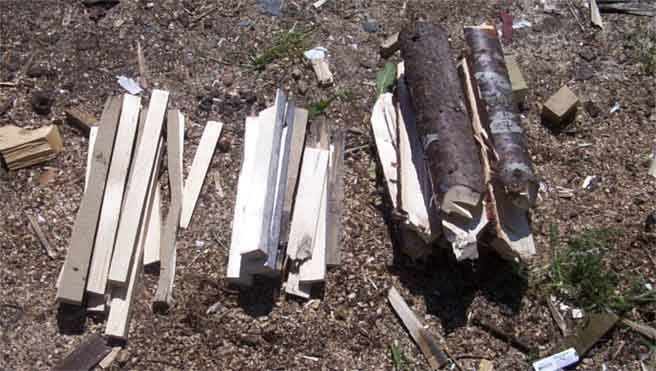
I did some splitting, some lumber and fresh woods. Both blades split the lumber easily, just chop at at most twist. Neither did anything on the fresh woods on a chop and needed to be pounded through. They worked equally well as either the wedge or hammer.
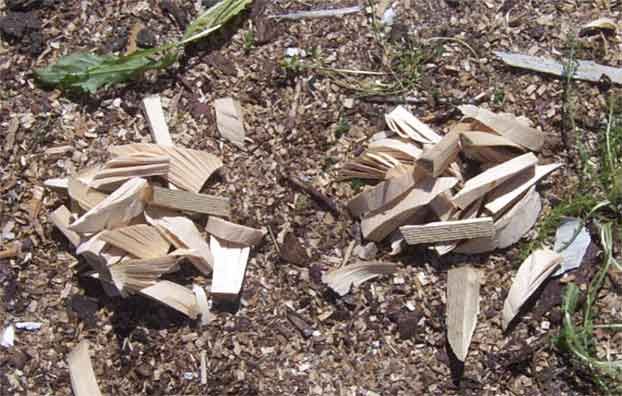
The Bruks readily had more cutting ability on some carving, through making a bunch of points on the pine splits it was 27 for the Craftsman vs 19 for the Bruks, just due to the more acute edge profile. The Bruks was also way more comfortable and secure with the contoured neck vs the round tube on the Craftsman.
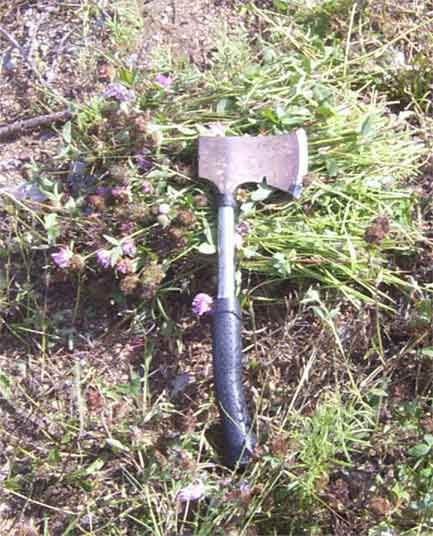
After the above work the Craftsman still had enough cutting ability to make fine shavings and slice light vegetation and still readily slice newsprint.
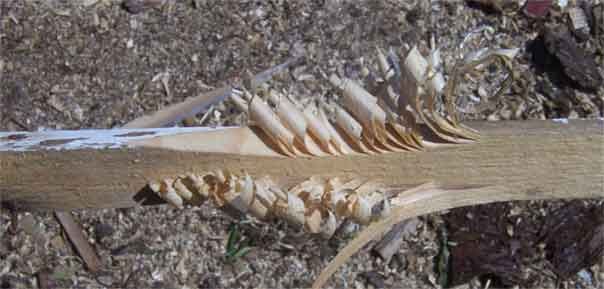
The biggest problem I had with it was that the balance is off. It is heavier than the Bruks due to the metal handle which also drags the center of mass back and this isn't what you want on a hatchet because it reduces ease of snapping the axe into motion. It felt sluggish. The rubber grip was also abrasive and after a couple of hundred chops I could feel my skin starting to get irritated.
This is definately under the Fiskars as a wood working tool but still way above a lot of the larger knives I have used like the Machax. Again though I should point out it is likely that the initial edge on it was way more obtuse than the one I filed so if you ran this right from the store it would likely run much worse than the above. However this is only 5-10 minutes work with a large bastard file, and just a couple of minutes with a dremel with a coarse sanding disc, so no big deal to fix.
The largest problem I had was the primary grind was too flat and the blade would wedge more than the Bruks. The Wildlife has a much wider edge and a deeper hollow grind and thus tends to be more fluid in the wood. The Craftsman is ground more like a machete in that the primary is flat and tends to stick in the wood. Now it isn't as bad as a machete, but it does take more effort to work it out of the wood than the Bruks.
This isn't an expensive axe, you see a lot of them locally in second hand stores. Usually mauled, edges are mangled, the whole head is a sheet of rust, handle is torn, etc. . Nothing serious though and has a lot of ability with the proper edge profile applied. Don't leave the edge roughly finished either, take it right up to the finest polish you have.
-Cliff


