Not entirely sure where to post this. I apologize if it's the the wrong section. Not trolling just really asking.
I don't know why but for the life of me I can never see a damascus knife now a days and say, wow what a beauty.
They all look so... fake and synthetic. Most seem to be the same as etching.
Maybe it's my Japanese collection background.
To me folding of metals is quite beautiful, however it's beauty comes in it's subtleness. From far away it looks like a sharp piece of steel, but then as you get close you begin to see the grain from the folding and if the blacksmith is good enough, even manipulate the patterns.
Here are some pictures to show what I mean and what does not appeal to me:
Pictures removed due to sensitive user.
Examples I will have to write out, as most pictures end up being users here on blade forums:
One such place to look at them is here on a subforum for "Show us your damascus" under the CRK forum. Many knives exist there that present these characteristics.
* CRK blades using damascus in loose grain patterns, typically 1mm+ in width from one lamination line or folding line to another. Pretty much loose, this is often viewed as a flaw in Japanese swords, the looser the grain the more stress the folding or lamination lines will suffer and the easier it will be to break them. This is specially true in swords due to the much much higher stresses placed on the steel.
* Some if not most damacus production knives use a heavy black coating or etching to "visibly" show the damascus pattern. This is over kill. Why can they not use subtly enhance the lines, not make the knife into an unnatural look.
* Some damascus knives, particularly productions seem to be pieces of shaped steel layed on top, then forge welded by hand or machine (likely machine, stamping or air hammer due to the cost).
Issues (reworded, sorry):
-Grain is loose on most of these knives, looks as if pieces of steel were shaped then just placed on top of one another then pressed by hammering or other machinery. Looks very synethetic.
- The further etching or coating to contrast the patterns me to is not needed and makes it very gaudy and not in a good sense at all like gold is gaudy.
- The lack of folding, which requires far greater talent compared to lamination.
This is the hada (grain) of some Japanese swords, the grain is contrasted using scanners+photo editing, in reality they look much much more subtle and beautiful. This contrasting/editing is done to make activities pop out asap.

This is one example of a non modified picture, although not 100% the best of pictures (From Nihonto.ca):

Here is another (From Moderntosho.com):

Here's an Indian piece, not particularly antique from the 18th century so meh~ (From Ashokaarts.com):

A few old antique blades
http://www.tms.org/pubs/journals/jom/9809/verhoeven-9809.html
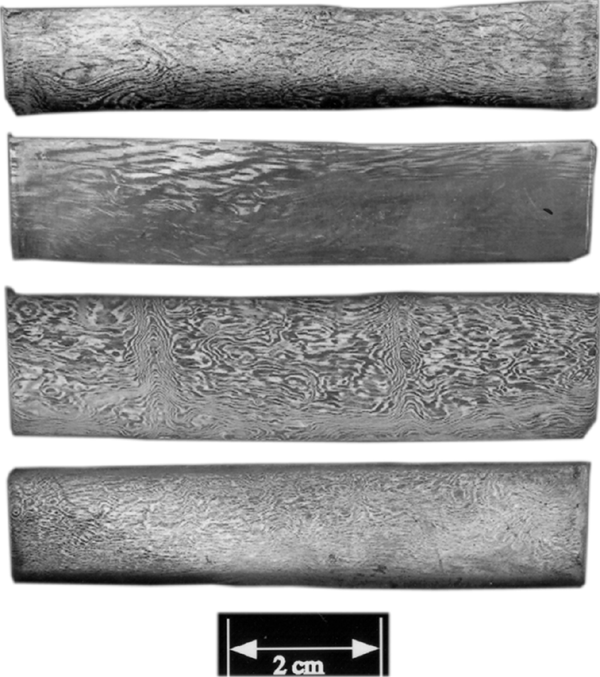
I do not hate this kind of steel, I just feel a lack of a human touch to many of them. Almost as if they were churned out by machine instead of hand worked on like customs do.
I don't know why but for the life of me I can never see a damascus knife now a days and say, wow what a beauty.
They all look so... fake and synthetic. Most seem to be the same as etching.
Maybe it's my Japanese collection background.
To me folding of metals is quite beautiful, however it's beauty comes in it's subtleness. From far away it looks like a sharp piece of steel, but then as you get close you begin to see the grain from the folding and if the blacksmith is good enough, even manipulate the patterns.
Here are some pictures to show what I mean and what does not appeal to me:
Pictures removed due to sensitive user.
Examples I will have to write out, as most pictures end up being users here on blade forums:
One such place to look at them is here on a subforum for "Show us your damascus" under the CRK forum. Many knives exist there that present these characteristics.
* CRK blades using damascus in loose grain patterns, typically 1mm+ in width from one lamination line or folding line to another. Pretty much loose, this is often viewed as a flaw in Japanese swords, the looser the grain the more stress the folding or lamination lines will suffer and the easier it will be to break them. This is specially true in swords due to the much much higher stresses placed on the steel.
* Some if not most damacus production knives use a heavy black coating or etching to "visibly" show the damascus pattern. This is over kill. Why can they not use subtly enhance the lines, not make the knife into an unnatural look.
* Some damascus knives, particularly productions seem to be pieces of shaped steel layed on top, then forge welded by hand or machine (likely machine, stamping or air hammer due to the cost).
Issues (reworded, sorry):
-Grain is loose on most of these knives, looks as if pieces of steel were shaped then just placed on top of one another then pressed by hammering or other machinery. Looks very synethetic.
- The further etching or coating to contrast the patterns me to is not needed and makes it very gaudy and not in a good sense at all like gold is gaudy.
- The lack of folding, which requires far greater talent compared to lamination.
This is the hada (grain) of some Japanese swords, the grain is contrasted using scanners+photo editing, in reality they look much much more subtle and beautiful. This contrasting/editing is done to make activities pop out asap.
This is one example of a non modified picture, although not 100% the best of pictures (From Nihonto.ca):
Here is another (From Moderntosho.com):
Here's an Indian piece, not particularly antique from the 18th century so meh~ (From Ashokaarts.com):
A few old antique blades
http://www.tms.org/pubs/journals/jom/9809/verhoeven-9809.html
I do not hate this kind of steel, I just feel a lack of a human touch to many of them. Almost as if they were churned out by machine instead of hand worked on like customs do.
Last edited:


 That is simply beautiful! I dare not ask how much that would cost though.