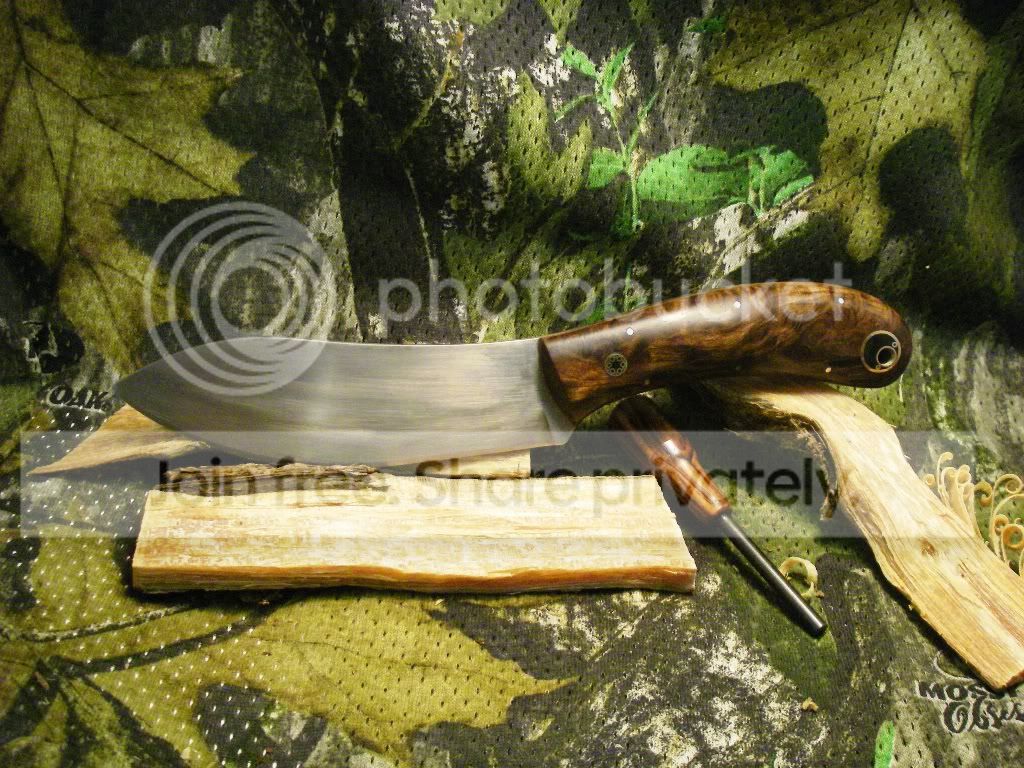
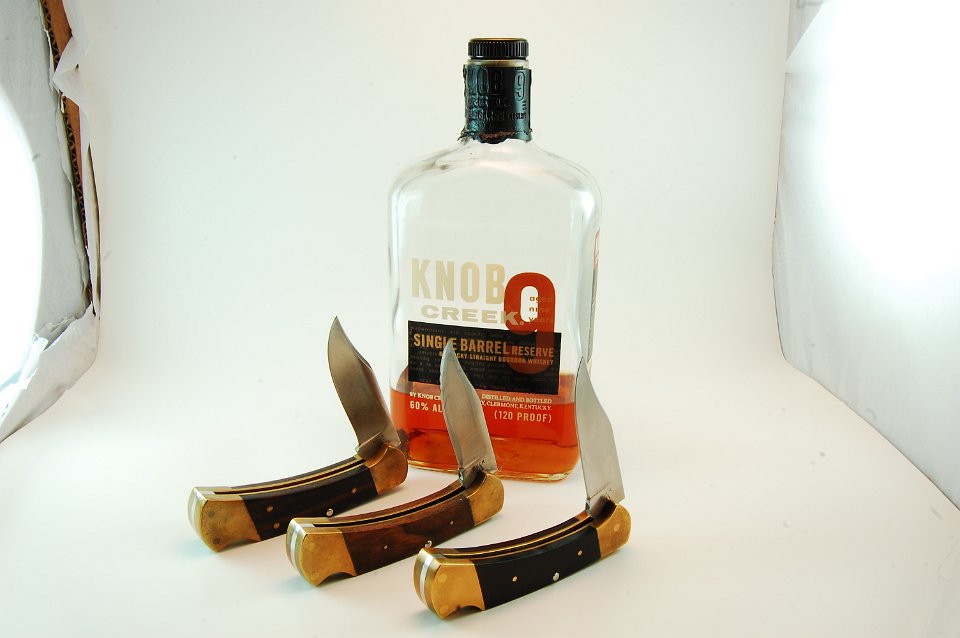
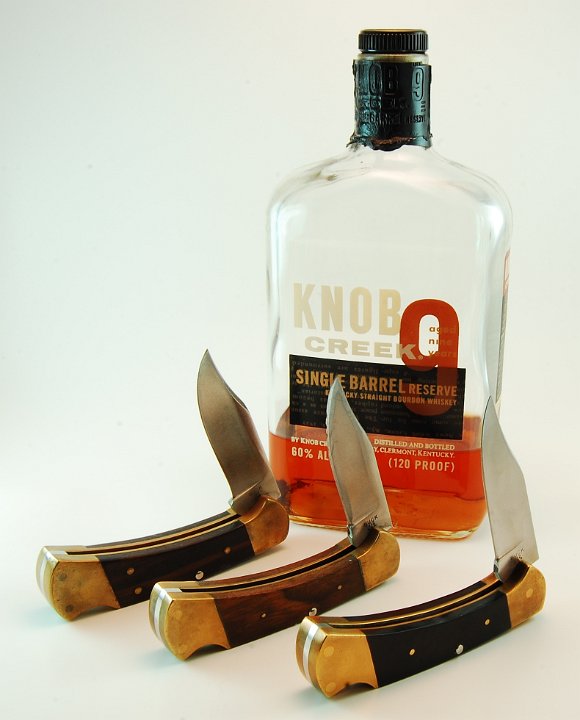
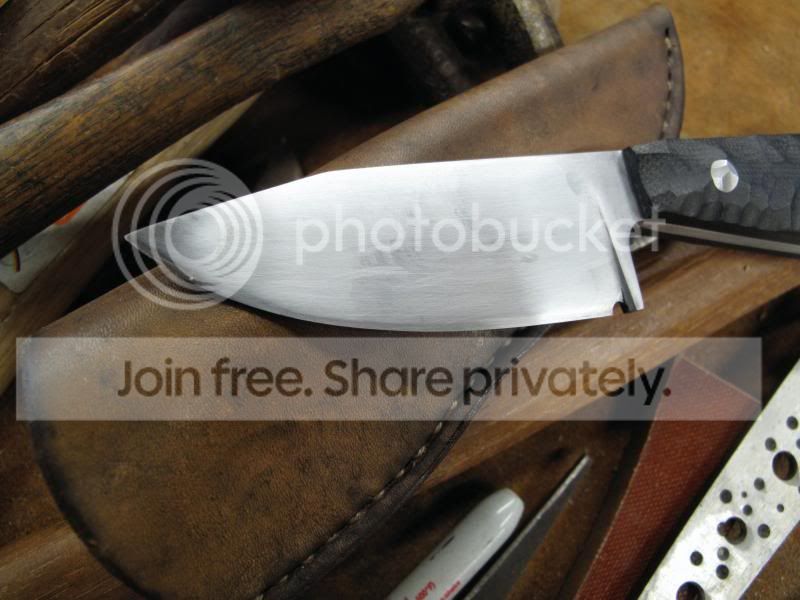
Decent enough camera for knife pics?

Joined
Sep 14, 2010
Messages
819
Any ideas on what kind of camera is "good enough" for taking pictures of knives to sell. I was planning on getting a light box setup. But my camera just crapped out not too long ago.

Any recommendations on what would work? Can I use a $50 point and shoot to get decent pics, or do I need to got $200 or big bucks for an SLR?
 
SLR with at least 8MP. More is even better. Interchangable lenses are a real plus, too. A quality macro can really make close-up shots shine.
 
I second a DSLR.... and what Stacy said. No need to go big though... A NIKON D3100 would be a nice entry level for around $500. I have a Canon myself. Love it!
 
I'll second that - spend the $$ on a DSLR. You should be able to pick up a good Canon or Nikon for about $300 - $500 second hand. It will give you a lot of maneuverability which you won't have with a P&S.
 
Much of what it takes to produce a usable knife picture is understanding how to approach knife photography. Because blades are usually long and lean and have many shiny or reflective surfaces, it takes a specific approach to produce acceptable photos of them.
The phone camera will not take a usable knife photo. But you might be surprised what can be accomplished with a point and shoot if you know how to set up the shot.

Now if you have lots of green and are looking to spend it, the skies the limit.

I use a second hand Sony DSL F717 thats ten years old and can take a usable pic with it.

agp.jpg
 
I agree with thegeek574. One of the better point/shoot cameras will have program settings where you can set the white balance, turn off the flash, etc. White balance is key to getting the colors right, since digital camera don't "see" like we do, according to a photog guy i work with anyway.
This pic was taken with a Pentax W20 and a lightbox made out of a cardboard box and white plastic trash bags sitting under the range hood light on my kitchen stove. (IE total cost of lightbox equals free)
rsuperjet1_1_resized.jpg


it's not perfect but it's a big improvement over just using the automatic setting on the same camera.
 
Photography is all about lighting. While loads of expensive, fancy equipment can make the job easier (or more difficult – if you’re not familiar with your equipment) the shot can be taken with just about any camera available; it all depends upon the right light and the right settings on your camera.

If shooting shots of knives to be posted for sale is to be your primary use of the camera, I’d pay zero attention to the oft-hyped mega pixel race – unless you are planning to print in large sizes. For Internet usage, you’ll probably have to down size the shots anyway; so a camera touting high mega pixel numbers isn’t necessary.

I think your plan to get a light box is a very good idea – one that will make a significant difference (in your shots) no matter which camera you end up buying.

Diffused light is the key for such photographs. Harsh light will leave you with highlights that are blown out, glare, and excessive shadows with no detail. Some of that can be overcome with editing software, but that’s another learning curve and can be a pain.

I’d also recommend that you not use on-camera flash. Auxiliary lighting might be necessary (probably is) but direct, on-camera, flash will cause you problems with your picture (glare, harsh shadows, etc...).

You can set up a light box (of sorts anyway) without spending any money at all, if you are diligent about the lighting. If you’ve got a room with a window that lets in natural light – set your shot up so the natural light hits the knife and shoot the picture from an angle that takes advantage of that light (say a 45 degree angle from the angle of the light that is hitting the knife). (Experiment to find out the best angle(s) and location.)

If you have access to a yard with trees in it, you could probably set up outside – under the light that filters through the trees.

You should give serious consideration to a good, quality tri-pod – as movement will blur the shots.

Now, back to the camera…

A point and shoot will do the job just fine (unless you are printing large sizes). I’d suggest a model that has options for making manual changes – as you’ll need to set the white balance and would probably benefit from manually setting your camera’s shutter speed and aperture.

Shoot in the camera’s native ISO – usually 100 or 200. This will result in better (cleaner) shots, but may require longer shutter times (hence the tri-pod).

Choose a camera with a close-focusing lens. This will allow you to get closer to the knife (which should usually take up the majority of the picture). I wouldn’t worry too much about macro ability, unless you’d like to feature specific portions of the knife being shot.

Lighting and composition are the keys – the camera brand, or type, really doesn’t matter if you get the important things right.

Should you choose to go the dslr route, be aware of the fact that it is the lens (or lenses) that is the primary difference maker (not the body). Those lenses can be very costly (one of my macro lenses was over $800). And it still boils down to lighting and composition.

If you shop carefully, and buy used, I suspect you could buy an advanced point & shoot camera (and a tri-pod) for $200 or less – and that, with a light box, would be all that you’d really need (for your stated goals).
 
Canon S95 is kind of the best of both worlds: point and shoot and dslr.
 
A few years ago Coop (one of the top knife photographers in the business) showed up at
an unofficial ABS hammer-in up in Vermont. He had a long table with two lighting set ups.
On the left is the cheap box he taught us to make out of foam core board, PVC pipe and
a sheet of artists velum he was kind enough to give each of us (use a white trash bag
if you can't find the velum). On the left is his professional setup. You'll notice it isn't
that much more elaborate -- the most expensive part of it is the set of old used studio
strobes he bought on eBay instead of the cheapie daylight fluorescent lights he had
us buy at the local big box.

After showing us how to build this he then took some picture using:

  • His pro level Canon SLR
  • His pocket point and shoot
  • A really cheap point and shoot someone in the audience handed him

We could tell the difference, but even the last picture was way better than any of us was
taking before!

I then went up with the camera I was carrying and took this picture (my camera was a Canon
Digital Rebel SLR -- i.e. the low end SLR).

Yes, a simple, cheap light box really makes more difference than the camera
you use.

Coop's other technique message was a plea for people to quit taking picture
on towel, table cloths etc. Two reasons: they don't look that good and the
rough texture interacts very poorly with digital image compression so you
pictures not only don't look as good as possible but they take much longer
for people on slow connections to upload.

He uses -- get this -- wallpaper samples -- as backgrounds. He made friends
with a salesman and gets free thick books of them after the designs turn over
at the end of the year. He brought several of these books with him and let
us cut out several samples each to take home with us.

Coop is a really good guy :D
 
Photography is all about lighting. While loads of expensive, fancy equipment can make the job easier (or more difficult – if you’re not familiar with your equipment) the shot can be taken with just about any camera available; it all depends upon the right light and the right settings on your camera.

If shooting shots of knives to be posted for sale is to be your primary use of the camera, I’d pay zero attention to the oft-hyped mega pixel race – unless you are planning to print in large sizes. For Internet usage, you’ll probably have to down size the shots anyway; so a camera touting high mega pixel numbers isn’t necessary.

I think your plan to get a light box is a very good idea – one that will make a significant difference (in your shots) no matter which camera you end up buying.

Diffused light is the key for such photographs. Harsh light will leave you with highlights that are blown out, glare, and excessive shadows with no detail. Some of that can be overcome with editing software, but that’s another learning curve and can be a pain.

I’d also recommend that you not use on-camera flash. Auxiliary lighting might be necessary (probably is) but direct, on-camera, flash will cause you problems with your picture (glare, harsh shadows, etc...).

You can set up a light box (of sorts anyway) without spending any money at all, if you are diligent about the lighting. If you’ve got a room with a window that lets in natural light – set your shot up so the natural light hits the knife and shoot the picture from an angle that takes advantage of that light (say a 45 degree angle from the angle of the light that is hitting the knife). (Experiment to find out the best angle(s) and location.)

If you have access to a yard with trees in it, you could probably set up outside – under the light that filters through the trees.

You should give serious consideration to a good, quality tri-pod – as movement will blur the shots.

Now, back to the camera…

A point and shoot will do the job just fine (unless you are printing large sizes). I’d suggest a model that has options for making manual changes – as you’ll need to set the white balance and would probably benefit from manually setting your camera’s shutter speed and aperture.

Shoot in the camera’s native ISO – usually 100 or 200. This will result in better (cleaner) shots, but may require longer shutter times (hence the tri-pod).

Choose a camera with a close-focusing lens. This will allow you to get closer to the knife (which should usually take up the majority of the picture). I wouldn’t worry too much about macro ability, unless you’d like to feature specific portions of the knife being shot.

Lighting and composition are the keys – the camera brand, or type, really doesn’t matter if you get the important things right.

Should you choose to go the dslr route, be aware of the fact that it is the lens (or lenses) that is the primary difference maker (not the body). Those lenses can be very costly (one of my macro lenses was over $800). And it still boils down to lighting and composition.

If you shop carefully, and buy used, I suspect you could buy an advanced point & shoot camera (and a tri-pod) for $200 or less – and that, with a light box, would be all that you’d really need (for your stated goals).

I second that^^

but I will add, when looking at point n shoot cameras for still life shots take into account the physical size of the lens. An ultra compact with a lens of only 3/8" diameter will not let in the same amount of light as a camera with a larger lens, so to compensate it will use longer exposure times. Even with a tripod, you can still get shaky shots from pressing the shutter release, I will use the timer function to get rid of this if I don't have a remote trigger capability.

Again, light is everything. No light, no picture. A light box, good solid tripod and quality glass will take care of the rest, provided you do your part. For some reading, I suggest any number of books by John Hedgecoe, very comprehensive.


-Xander
 
Hi jaymeister99 -

Good reading on the subject here :

http://www.kenrockwell.com/tech/recommended-cameras.htm

I bought a Nikon USA refurbished D40 (6mp) and it is more than just fine for pictures of knives for the web.

I also made my own light box by cutting the sides out of a cardboard box, reinforced the remaining corners with dowel, and then taped tissue paper (like you find in shirt boxes at Christmas) on the cutout parts of the box. I bought three pieces of white poster board at walmart for 88 cents to use for the "infinity" background. I use three clamp-on light fixtures with "sunlight" bulbs as a light source.


Works ok for me -

DSC_1838.JPG


after cropping -
Image2.jpg


My camera is really dirty - it has been to Alaska and many other places, mostly hanging on my neck while riding my motorcycle, so that is why you see so much dirt in the pictures.

best regards -

mqqn
 
Something to consider is the end use of the photo.

A photo posted on the web and viewed on a monitor uses much less resolution than a printed photograph.
A computer geek once told me it was about 3 MP
That was some time ago and must be more now with the larger screens available-
at that time it was about 1/3 to 1/2 of the resolution in the cameras available at that time.


Ensure your camera has a macro mode, can turn the flash off & can adjust white balance.
(white balance is the reason taking a photo on a white background, or snow will turn out grey.)

Invest in lighting, a light box, a tripod, reflectors and time to fiddle, practice and get critiqued.
Posting this question and your photos along with your setup info in the photography section of BF will help you quite a lot.


I say do your own pics with a camera and lighting setup you can afford,
but use the cash remaining to get professional pictures taken of the ones you want printed for your portfolio or magazine submissions.
 
Wow, thanks to everybody for so many responses. Any good books to recommend? I know next to nothing about photography.

A DSLR is pretty much out of the question now. I have a hard enough time getting the wife to let me buy all my other knife stuff! Any other good cameras to recommend? Must be under $200, but preferrably under $150.
 
Last edited:
Honestly, If you're aren't going to be doing much other than taking pictures of knives and snapshots at family gatherings, etc, you really don't want to burden yourself with an SLR and variety of lenses. You never have the right lens on for the type of pic you want to snap off quickly; all that stuff weighs a lot and takes up a lot of space.

A few years ago, after reading through the above link, I bought a Canon G10 to replace my Pentax SLR. It's not as small a Point-n-Shoot as some might like, but I needed something bigger to better fit with my big hands. All of the little cameras I tried out at the store were designed, it seems, for schoolgirls to tote around. My big paws couldn't get to the buttons without practically dropping the thing!

Anyhow, it has proven itself time and again. Great camera with great clarity and plenty of room for me to improve. I love that all the dials are there instead of having to sort through a dozen menus. And, it takes a great picture.

Here's one that I took free-hand, in my shop with just the shop lighting. The blade was waxed because it was going in the mail.

IMG_4330.jpg


Not bad for a camera that's small enough to fit in a pocket!
 
Wow, thanks to everybody for so many responses. Any good books to recommend?

As I mentioned in my earlier post, John Hedgecoe has written many books, check out amazon for a list of titles, your local book seller might have some of his. I took a class once that used his book as a text book. Many to choose from.


-Xander
 
i have a sony A330 and a 30mm macro for knife shots
tho i did ok with my old sony P&S and i bet if i ste my crappy phone cam in a kind of trypod

todays and even yesterdays P&Ss will take all the picture you want to for marketing till you make something over the top (read if the knife cost more then the cam set up them maybe you shoudl send it to a pro )

the fact that you can set you F stop and make for a wider DOF to show most of the blade show sharp is one reson thaty you need a trypod and man. settings. if your not taking the cam off auto then for 90% it dont matter what you take the shot with

proper lighting and a tripod will get you a long way
 
After all the fear of trying to get good pictures unless I had an expensive camera my friend suggested just to get a P&S. AND a light box. The light box came with everything lights, sockets, tripod, floor liners in six collers and the neatest put into service and easy of take down you can imagine. You end up with a "suitcase". Even in Canada it ony cost me $100. The camera is a Panasonic DMC-FH20 Lumix. It takes super pictures of details without shadows . I have to get some one to help me post to the forums so I can send some as I want. Frank
 
Back
Top