
Do I Clean between the file grooves? And what about spacers ?

Joined
Oct 15, 2010
Messages
926
Hey guys and gals,

I am working on my first knife EVER....
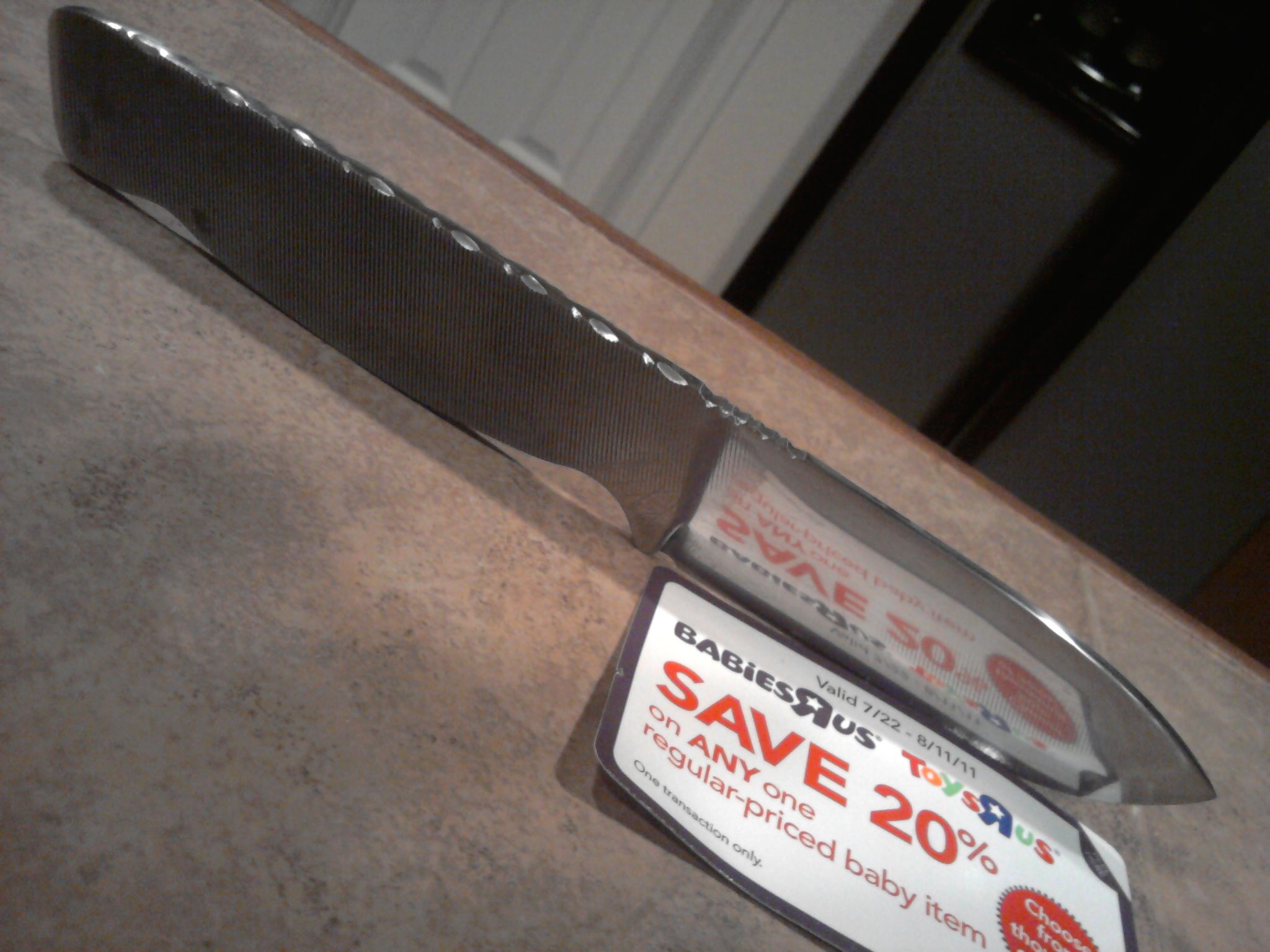
and I have put a lot of elbow grease into this thing. I have polished the blade but I have not done much where the handle scales will go.
The file grooves are still there, although I have filed them down so they are not quite as prevelent.

There is still some oil between the grooves and I would like to know if I need to clean all of the oil out before I epoxy the scales. Will the epoxy have a hard time adhering to the tang with the oil between the grooves.

Also, Are working with spacers difficult? I would to add spacers but I am not sure of the process and any added difficulties as far as adhesion.

Thanks so much for your time !!
z8m2R.jpg


____________________________
Beckerhead #32
 
Cleaner is always better.Use a brush and dawn or whatever you need to do and get all the oil out.Good looking 1st blade.:thumbup:Spacers arent difficult,but if you're not drilling pin holes youre asking a lot of your glue.I assume youre working with hardened steel.A carbide bit or rotary tool might get a couple holes in it.
 
Cleaner is always better.Use a brush and dawn or whatever you need to do and get all the oil out.Good looking 1st blade.:thumbup:Spacers arent difficult,but if you're not drilling pin holes youre asking a lot of your glue.I assume youre working with hardened steel.A carbide bit or rotary tool might get a couple holes in it.

I did anneal the steel before I started so it's very soft as of now. I do plan on drilling holes and putting 2 or 3 pins. Great suggestion with the brush and Dawn. Do I need to apply anything or let the steel be completely dry before spacers/scales? I don't want any rusting of the tang between the spacers.

___________________________
Beckerhead #32
 
Seals is 100% correct. Ok Your post appeared before I finished typing. Clean and dry before epoxy. The epoxy will hold a lot but with out pins you risk a shear off if ever droped. The pins lessen the risk of that happening.

If is annealed this is what I would do if it were me. I will drill a few extra holes through the tang to let the epoxy bond through the tang itself and then I usually put dimples in the backside of the handle material to allow for the epoxy to bond through the tang and into to the handle material itself. Can't have to much bonding surface, you know!!!!
 
Seals is 100% correct. Ok Your post appeared before I finished typing. Clean and dry before epoxy. The epoxy will hold a lot but with out pins you risk a shear off if ever droped. The pins lessen the risk of that happening.

If is annealed this is what I would do if it were me. I will drill a few extra holes through the tang to let the epoxy bond through the tang itself and then I usually put dimples in the backside of the handle material to allow for the epoxy to bond through the tang and into to the handle material itself. Can't have to much bonding surface, you know!!!!

Thanks for spending the time to respond. If I go with 2 pins, what size is reccommended? Same question with 3 pins. Thanks again.

_________________________
Beckerhead #32
 
You may want to consider hardening and tempering the blade before you put your scales on.

If your blade is already very soft, it will make a lousy knife without hardening and tempering.

And the temps needed to harden and temper will destroy most any handle material and epoxy you have already put on.
 
I clean with Dawn at just about every stage. I'd get it clean before heat treat but it is post heat treat where you will have some real work to do as far as cleaning those file teeth go.

I noticed you did a really great job with it, by hand too, nice!

Is the edge as thick as a dime or so? It needs that thickness before heat treat.
 
I clean with Dawn at just about every stage. I'd get it clean before heat treat but it is post heat treat where you will have some real work to do as far as cleaning those file teeth go.

I noticed you did a really great job with it, by hand too, nice!

Is the edge as thick as a dime or so? It needs that thickness before heat treat.

Thanks very much! I had the edge fairly sharp but poloshing it with 2000 grit sandpaper really honed a good edge on it. It's a thick scandi at 25 degrees. I did not want a really thin scandi because I wanted strength in the field. I planned to leave the file teeth between the scales. I have taken the sharpness off but wanted the texture to allow more surface area for the epoxy. Is that a bad idea ?? I will definitely clean it however.

As far as the edge... I understand once heat treated, I will have to sharpen the edge again before the good steel reveals itself. Is that true? Thanks !

__________________________
Beckerhead #32
 
Just to make sure we are all on the same page, is this roughly the sequence you are planning on using:

Anneal steel
Profile blade
Grind/file/sand the bevels to 400 grit ( it should not have an edge at all. The edge should be between .020" and .040" ,depending on the steel type)
Drill all holes.
Clean well.
Harden and temper the blade.
Re-sand the blade to the finish grit. Polish if desired.
Prepare handle scales, spacers, etc.
Clean blade and spacers with alcohol.
Tape up the blade area.
Glue up scales with pins/bolts. Let dry 24 hours.
Finish shaping and sanding the handle.
Untape blade.
Double check that all surfaces are done.
Make sheath.
Sharpen blade edge.


The specific answers to your questions are:
Leave the tang area under the scales at the rough sanding stage. 100 grit is about right.
3/16" pins look right on most knives. Rough up the sides by rolling them around on a sheet of coarse grit sandpaper. Use a block of wood to press down on the pin as you roll it back and forth.
Use a good grade slow cure epoxy. The 24 hour varieties are best. Don't use 5 minute or 30 minute epoxy.
 
Just to make sure we are all on the same page, is this roughly the sequence you are planning on using:

Anneal steel
Profile blade
Grind/file/sand the bevels to 400 grit ( it should not have an edge at all. The edge should be between .020" and .040" ,depending on the steel type)
Drill all holes.
Clean well.
Harden and temper the blade.
Re-sand the blade to the finish grit. Polish if desired.
Prepare handle scales, spacers, etc.
Clean blade and spacers with alcohol.
Tape up the blade area.
Glue up scales with pins/bolts. Let dry 24 hours.
Finish shaping and sanding the handle.
Untape blade.
Double check that all surfaces are done.
Make sheath.
Sharpen blade edge.

You are correct. I did not know about the alcohol part, which makes me think of another question. Do I need to prepare the wood before applying epoxy? Other than that you hit the nail on the head. As of now, I am before the "drill the holes" part obviously. AND, I have no clue how to make a sheath. I don't know if I want to buy one or try my hand a making one....
Thanks for your time with the response Sir !!!
___________________
Beckerhead #32
 
It was Bladsmith's tutorial listed in the stickies that helped get me in to knifemaking and guided through making my first knife. I would read it a few times, the information in it is invaluable.

BTW you have to harden the steel before you sharpen it... I started to explain why but there are many reasons... read those stickies. You show a lot of promise as a maker, keep up the good work!
 
It was Bladsmith's tutorial listed in the stickies that helped get me in to knifemaking and guided through making my first knife. I would read it a few times, the information in it is invaluable.

BTW you have to harden the steel before you sharpen it... I started to explain why but there are many reasons... read those stickies. You show a lot of promise as a maker, keep up the good work!

Thank you !! It has definitely gone from a hobby to passion !! I will learn more with each knife, but the teachings from other makers are invaluable !!
_________________________
Beckerhead #32
 
Does all steel need to be anneled if it bought from a knife parts supplier such as Aldo or USA knife maker.
 
It depends on the supplier and the steel. It's best if in doubt ask the supplier if the steel is in an annealed state!
 
Back
Top