
- Joined
- May 9, 2001
- Messages
- 316
I was talking to Ben Dale, inventor of the Edge Pro sharpening system on the phone a few days ago and he gave me some tips that I'd like to share. I suggested that he make another video (he already has some on his site) to detail them but this may help a few users until he gets around to that. Skimo has already covered (with photos too) using a vice grips to sharpen scissors. Here are some others.
One issue I had was sharpening a Strider that has a thick spine and a continuous grind all the way down to the edge. There wasn't enough of a flat on the blade to place that on the blade table so it had to rest on the bevel. I could not elevate the pivot high enough on the pivot shaft to get the right angle to go back to the factory angle. Ben suggested taping a flat (not a round) toothpick to the end of the blade table to elevate the edge of the blade a bit. I didn't have any flat toothpicks (the wife only buys the round ones and I was too lazy to run to the market) so I improvised with a piece of wire from a metal coat hanger (yes, I know "NO WIRE HANGERS!) cut to the width of the blade table. It works very well.
Here's a photo of the wire on the blade table.
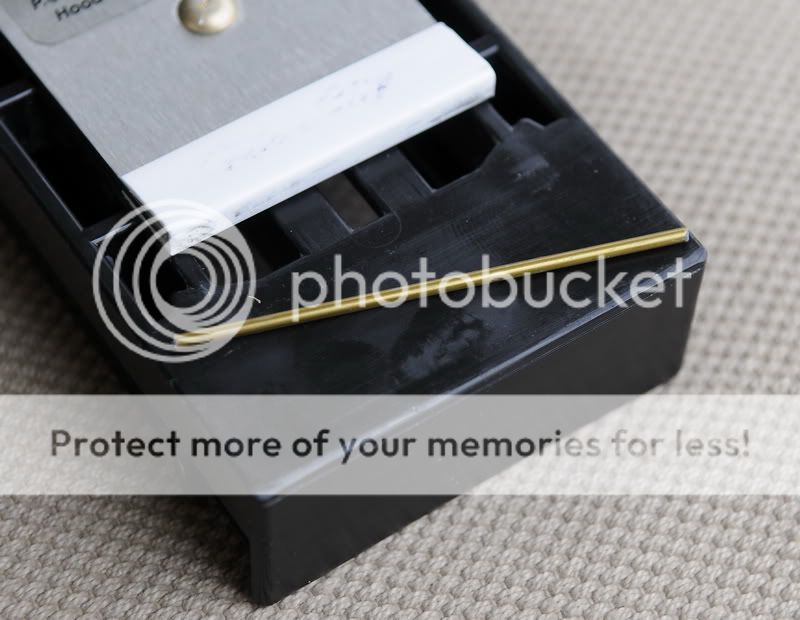
Here's a shot showing it taped to the blade table. It's best if it's at the very end of the table. That gives the widest base for the knife to balance on, its spine and the wire.
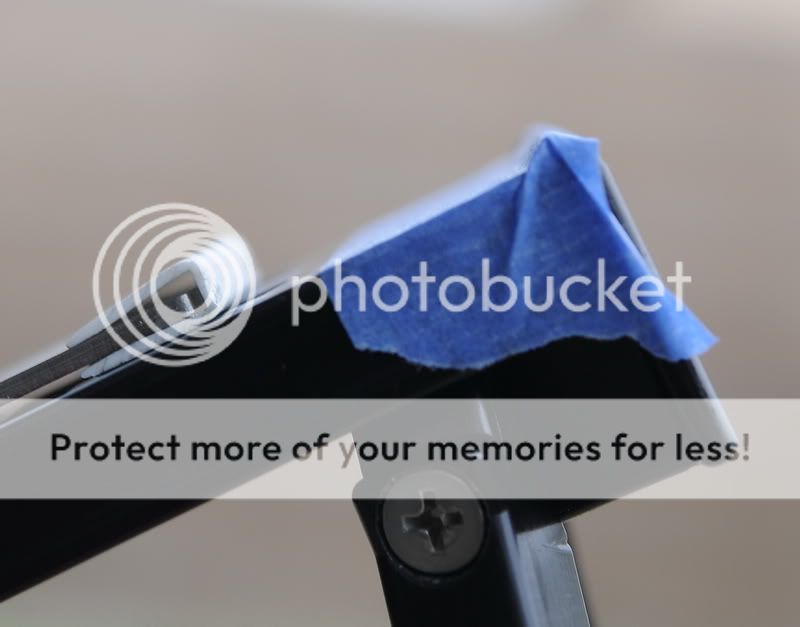
Here's the Strider on the blade table BEFORE the wire. The pivot shaft wasn't tall enough to elevate the pivot for the stone to hit the blade at the proper angle unless I removed the black plastic cap on the end of the shaft. But then the stone arm dragged badly going through the pivot!

Here's the Strider on the blade table AFTER the wire was taped in place. The blade edge is raised up about .079" (the thickness of the wire and the tape). The spine of this knife is about 0.19" bringing the center of the blade (and the center of the edge) almost parallel to the table.
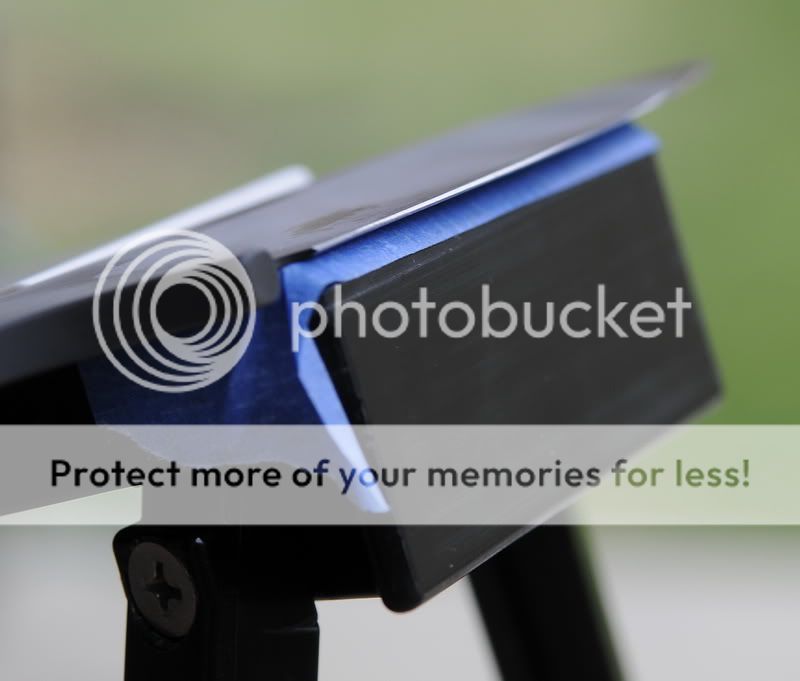
Ben mentioned that there are some times when it's advantageous to raise up the Guide Clip. With some very thick but relatively short knives (measured from the spine to the edge) it may only cover half of the spine. I cut a piece of coat hanger wire and made a small handle for it by bending it back. Here's it's shown under the Blade Guide. Tightening the guide lock holds it in place. With some knives it may interfere as the blade is moved back and forth across the guide clip. I haven't had that happen yet, if it does, I'll just cut off the handle.

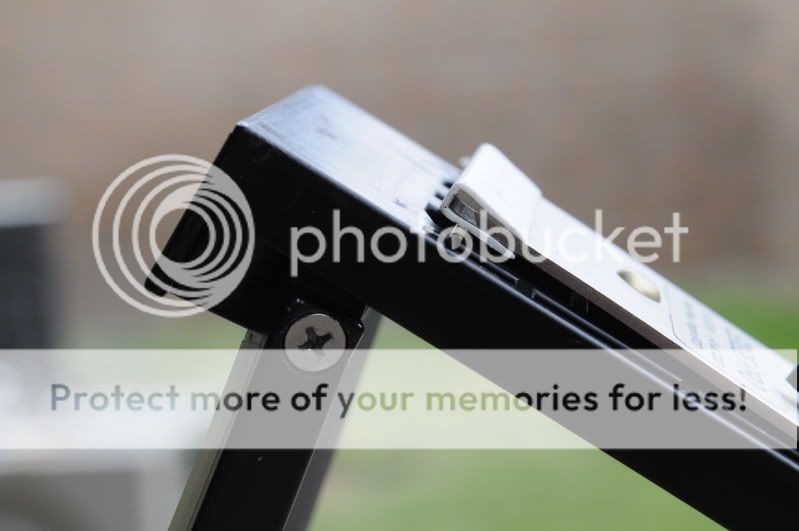
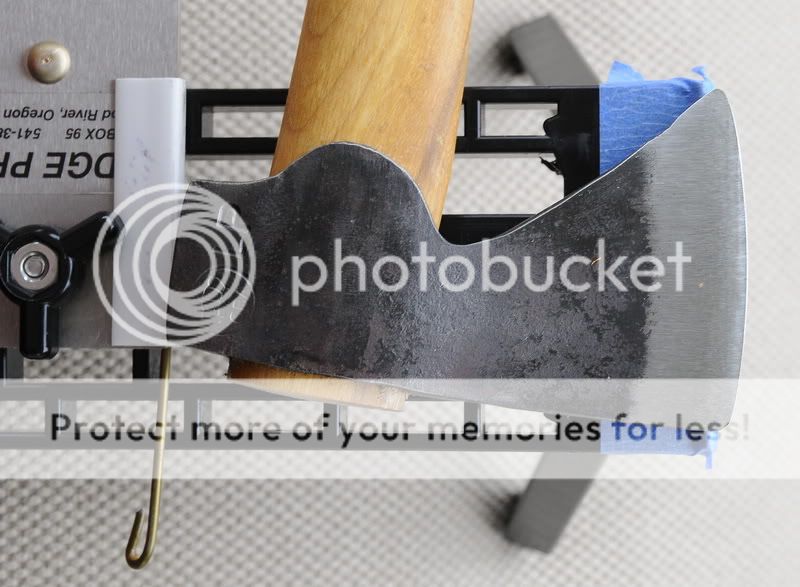
For sharpening axes or small hatchets the blade guide can be turned sideways and the clip can be moved from the short edge to the long edge. Here both the wire on the table and under the guide clip are in use. Actually with something this thick it's probably better to use a piece of wood 1/2 the thickness of the widest part of the axe under the front edge of the blade table. Ben says that he didn't make the sharpener with axes in mind but it will work for some of them. (Yes, I know that the axe shown has a convex bevel and so I wouldn't use the Edge Pro for it. I just couldnt find my axe that has the flat edge on it).
Regards, Lou
One issue I had was sharpening a Strider that has a thick spine and a continuous grind all the way down to the edge. There wasn't enough of a flat on the blade to place that on the blade table so it had to rest on the bevel. I could not elevate the pivot high enough on the pivot shaft to get the right angle to go back to the factory angle. Ben suggested taping a flat (not a round) toothpick to the end of the blade table to elevate the edge of the blade a bit. I didn't have any flat toothpicks (the wife only buys the round ones and I was too lazy to run to the market) so I improvised with a piece of wire from a metal coat hanger (yes, I know "NO WIRE HANGERS!) cut to the width of the blade table. It works very well.
Here's a photo of the wire on the blade table.
Here's a shot showing it taped to the blade table. It's best if it's at the very end of the table. That gives the widest base for the knife to balance on, its spine and the wire.
Here's the Strider on the blade table BEFORE the wire. The pivot shaft wasn't tall enough to elevate the pivot for the stone to hit the blade at the proper angle unless I removed the black plastic cap on the end of the shaft. But then the stone arm dragged badly going through the pivot!
Here's the Strider on the blade table AFTER the wire was taped in place. The blade edge is raised up about .079" (the thickness of the wire and the tape). The spine of this knife is about 0.19" bringing the center of the blade (and the center of the edge) almost parallel to the table.
Ben mentioned that there are some times when it's advantageous to raise up the Guide Clip. With some very thick but relatively short knives (measured from the spine to the edge) it may only cover half of the spine. I cut a piece of coat hanger wire and made a small handle for it by bending it back. Here's it's shown under the Blade Guide. Tightening the guide lock holds it in place. With some knives it may interfere as the blade is moved back and forth across the guide clip. I haven't had that happen yet, if it does, I'll just cut off the handle.
For sharpening axes or small hatchets the blade guide can be turned sideways and the clip can be moved from the short edge to the long edge. Here both the wire on the table and under the guide clip are in use. Actually with something this thick it's probably better to use a piece of wood 1/2 the thickness of the widest part of the axe under the front edge of the blade table. Ben says that he didn't make the sharpener with axes in mind but it will work for some of them. (Yes, I know that the axe shown has a convex bevel and so I wouldn't use the Edge Pro for it. I just couldnt find my axe that has the flat edge on it).
Regards, Lou


