
Effect of grinding on heat treatment

Joined
Nov 18, 2018
Messages
3
So after months of forging hardware for use around the homestead, I stumbled upon a couple of railroad spikes, which I took as a sign that I should at least give this knife making lark a try. Having gained 90% of my knife making chops from a ceratin TV show and the the other 10% from YouTube, there are enormous gaps in my knowledge. In my attempts to remedy this woeful inadequacy, I was reading through a few posts on here regarding heat treatment, primarily what to do and in which order.

In my case, after forging to shape and with a reasonable profile, I went for my first quench. At this time, I had done no grinding but from my reading it seems that opions are split here. However, what I'm having more trouble in discerning is should you temper before grinding or after? My other concern is how the heat generated in the grind potentially impacts the hardness?
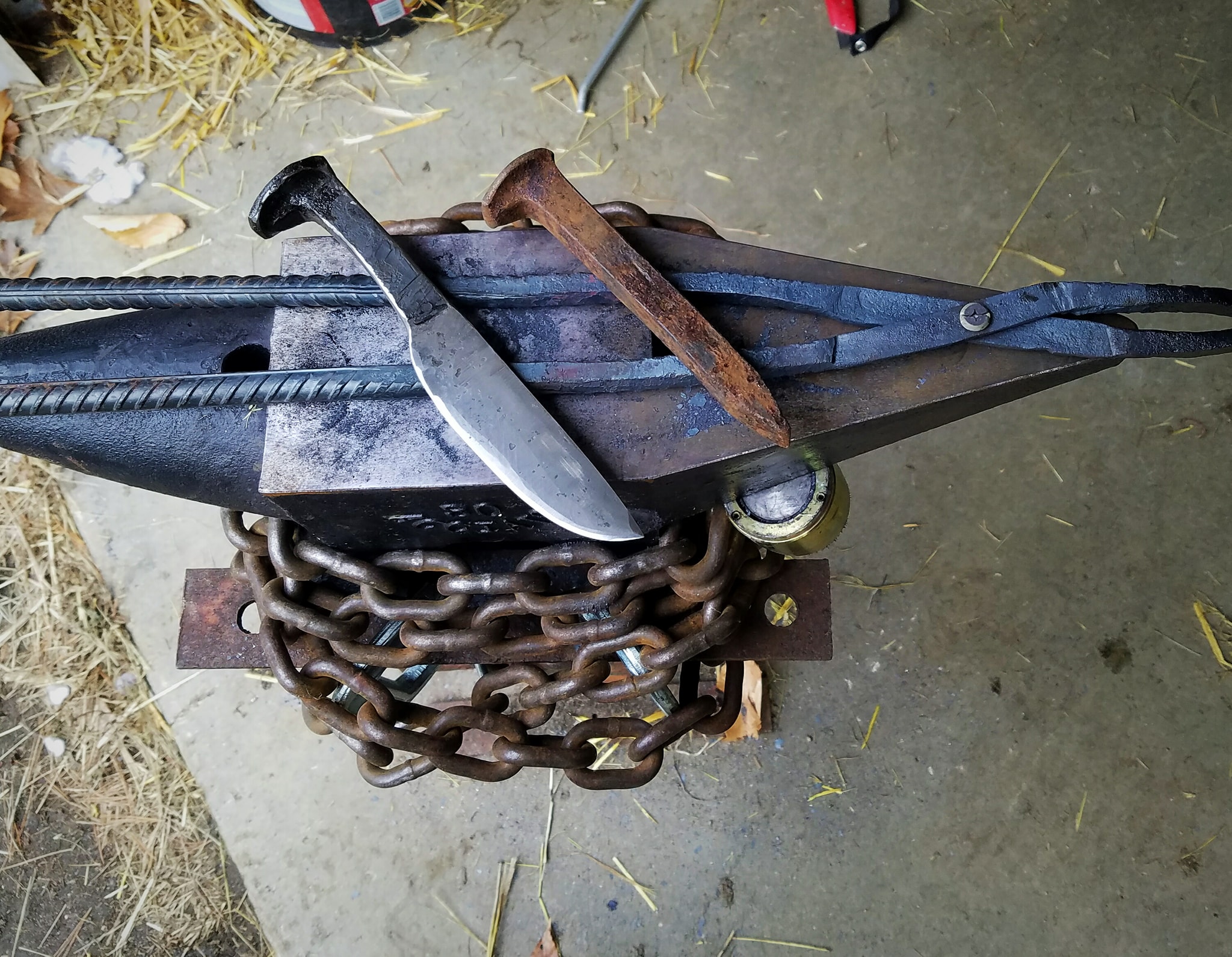
spikeknife.jpg
 
Don't worry; with the low carbon content in those spikes, I doubt you got even close to the kind of hardness you would want in a knife. So, no heat treatment to ruin. But yes, if you overheat a blade (i.e. the steel is changing color) while grinding, you can ruin the heat treatment.

ALWAYS temper after hardening and before any grinding operations.
Leave the railroad spikes for forging bottle openers or other novelty items and get yourself a couple bars of 1084 carbon steel from the New Jersey Steel Baron.

Edit: as you get more skilled, you could split the spikes and forge-weld a carbon steel bit in the middle for the cutting edge (if you're hell-bent on making a functional railroad spike knife) .
 
So after months of forging hardware for use around the homestead, I stumbled upon a couple of railroad spikes, which I took as a sign that I should at least give this knife making lark a try. Having gained 90% of my knife making chops from a ceratin TV show and the the other 10% from YouTube, there are enormous gaps in my knowledge. In my attempts to remedy this woeful inadequacy, I was reading through a few posts on here regarding heat treatment, primarily what to do and in which order.

In my case, after forging to shape and with a reasonable profile, I went for my first quench. At this time, I had done no grinding but from my reading it seems that opions are split here. However, what I'm having more trouble in discerning is should you temper before grinding or after? My other concern is how the heat generated in the grind potentially impacts the hardness?

spikeknife.jpg
If you are set on making a knife out of it, because of the low carbon content, no temper is needed. If the blade turns blue from heat while grinding, the heat treat is effected.
 
I disagree on not tempering. Tempering is a part of the conversion to martensite. Otherwise, you are making a blade of brittle martensite. If the blade is low carbon, it may not break easily, but it will be a better blade when tempered.I would temper those at 400 before grinding.
 
Thanks for the info. I did get blueing of the edge on my skinny belt grinder (an old 1"x42" JET that I picked up for $25) and I figured I'd ruined any non-existant hardness. Maybe that's why it was easily damaged with a delicate tap on the corner of the vice. All part of the learning curve, I guess. Maybe I'll take a massive leap and sanmai a chunk of coil spring in the other spike and discover that I know nothing about forge welding either!
 
OK, lets start with some basics.
Untempered steel will damage easily ... even break in half.
Grinding without cooling in water frequently can damage the edge hardness.
Taping a knife on an vise/anvil is like testing your gals willingness to fool round by grabbing her t!ts. It is a lot more severe than needed, and a bad idea if it doesn't turn out well. Never test an untempered edge.

You can still re-do the HT and clean up the edge again.
 
OK, lets start with some basics.
Untempered steel will damage easily ... even break in half.
Grinding without cooling in water frequently can damage the edge hardness.
Taping a knife on an vise/anvil is like testing your gals willingness to fool round by grabbing her t!ts. It is a lot more severe than needed, and a bad idea if it doesn't turn out well. Never test an untempered edge.

You can still re-do the HT and clean up the edge again.
Now that's funny right there Stacy.
 
Well, to be fair, tapping the edge on a vice was really an experimental step to confirm what I think I already knew. And it was post-temper. First steps on the long road in finding what works and what doesn't. I was never going to war with this thing, just trying to learn from it.

In addition, I thought that tit grabbing was a sure thing! Like I said, a lot to learn.
 
Back
Top