I have been reading a little bit about these and want to give one a try. It looks like Bens Backwoods is out of them right now. First question, is there anyone else who caries these in 01 scandi grind? Second question, if no one else has them in stock, how well will the flat grind D2 work? I will be using it for general backpacking and bush craft type work. Also do any of the Kydex sheath makers make a good Kydex sheath for this knife? I plan on making a real working knife with micarta scales, lanyard hole and a good kydex sheath.

-
The BladeForums.com 2024 Traditional Knife is available! Price is $250 ea (shipped within CONUS).
Order here: https://www.bladeforums.com/help/2024-traditional/
You are using an out of date browser. It may not display this or other websites correctly.
You should upgrade or use an alternative browser.
You should upgrade or use an alternative browser.
Enzo Trapper kits
- Thread starter rc51kid
- Start date
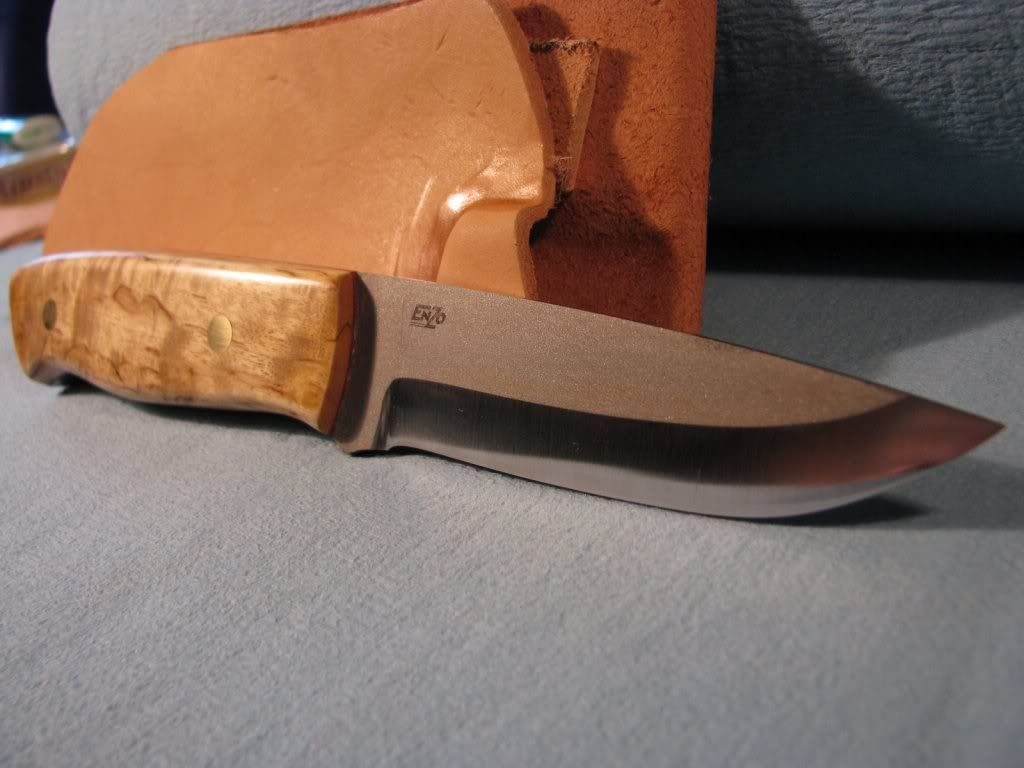
My first EnZo, a curly birch kit:
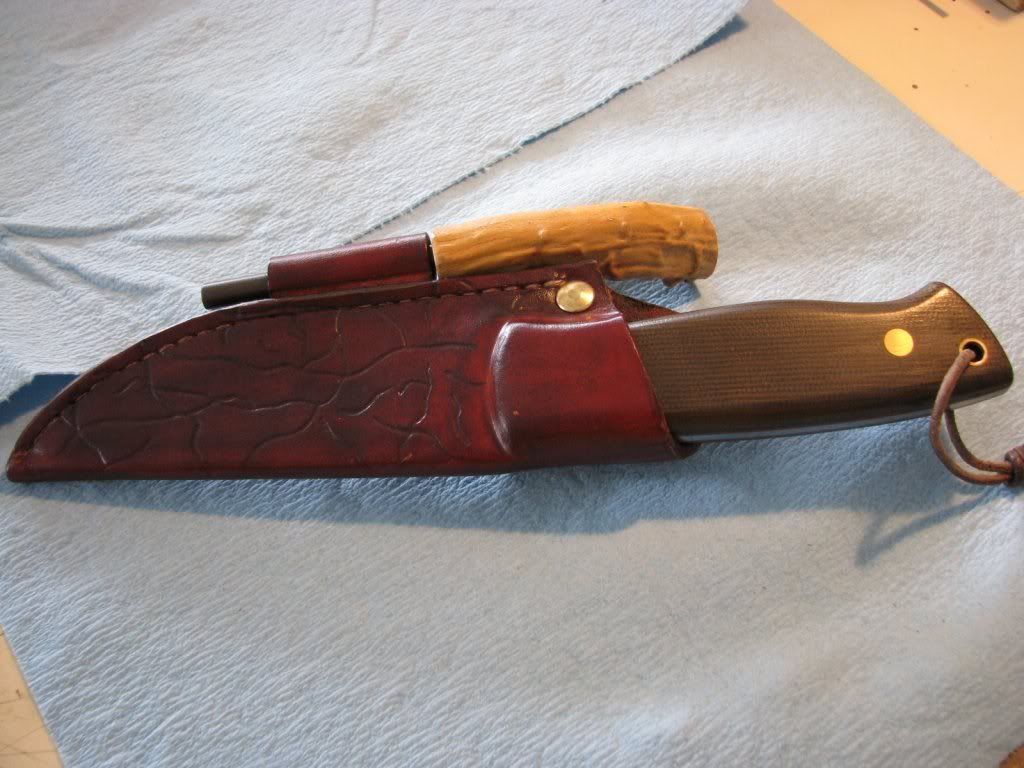
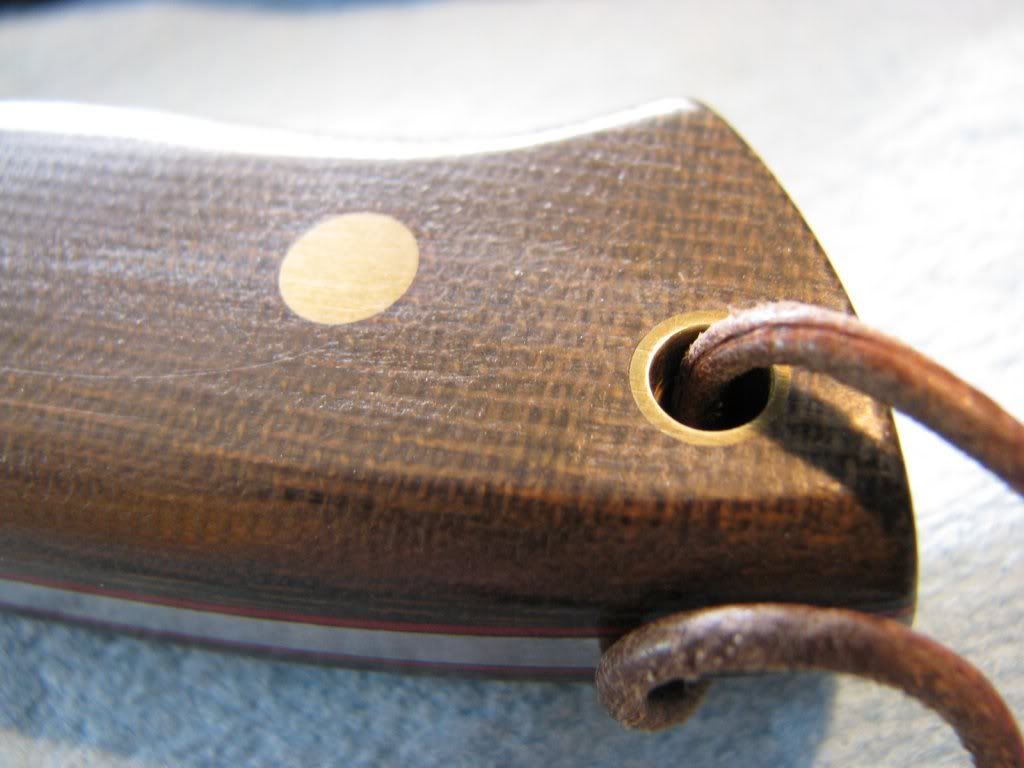
My second, green micarta and I added the lanyard tube:
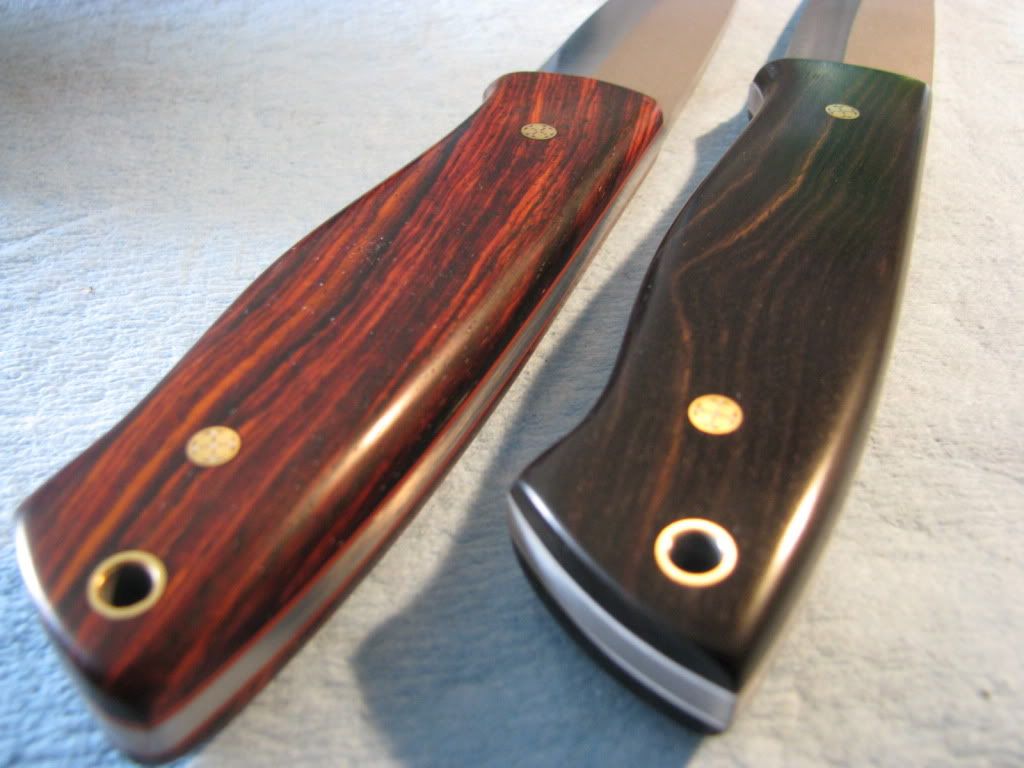
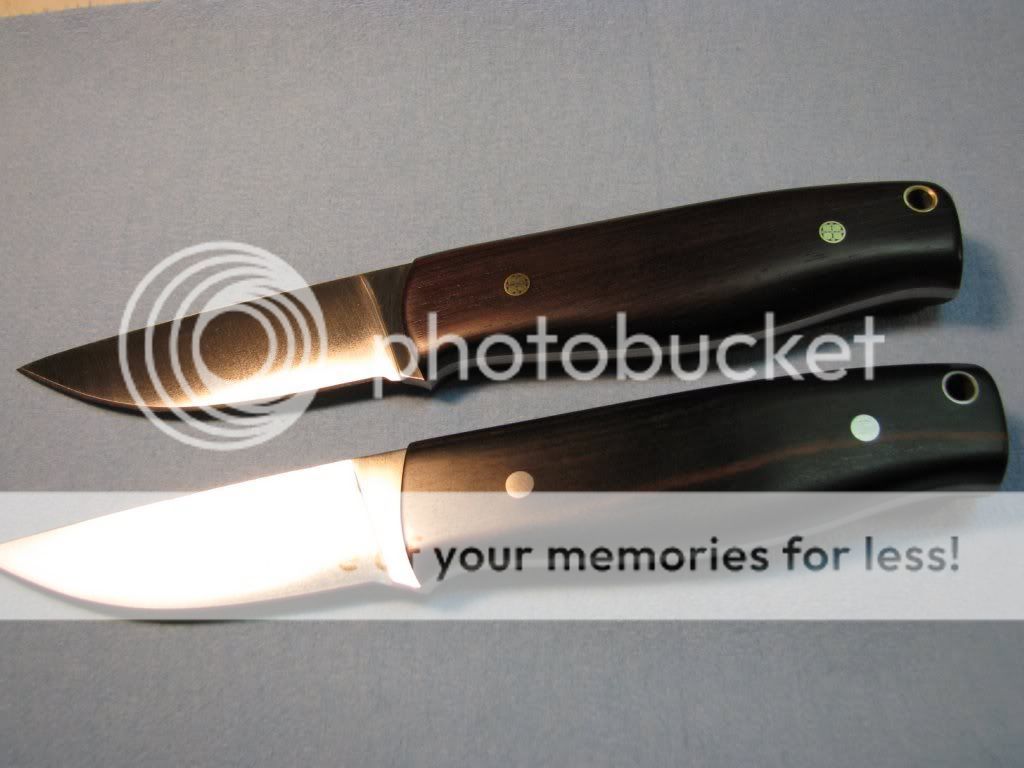
After those two, I started making my own scales, adding length toward the ricasso. Here's an ebony and cocobolo pair, with mosaic pins:

The elvers are nice too. Here is an ebony with stainless pins and a rosewood with mosaic pins:
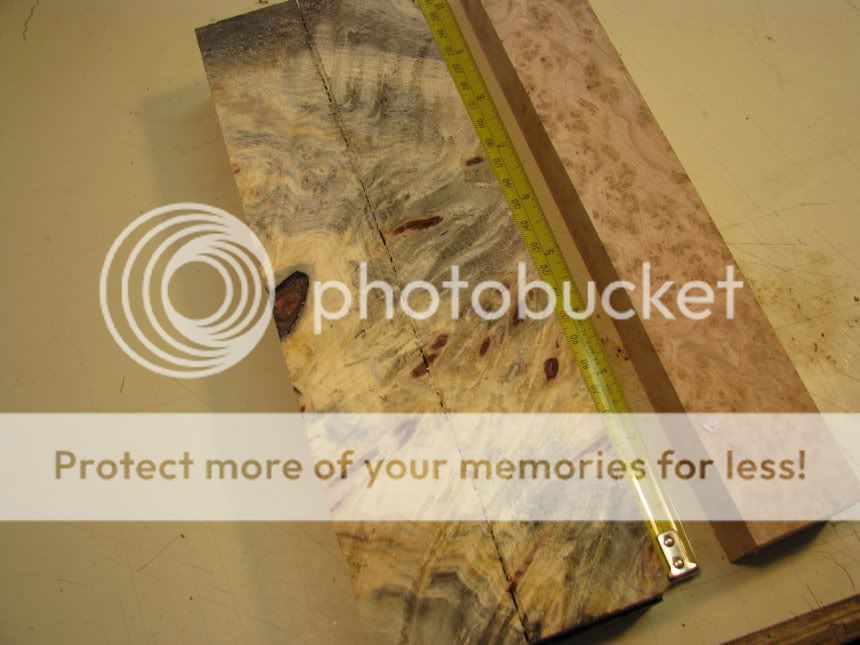
These scales are for an upcoming Trapper, Scz0. The wood is buckeye burl from an online source. I stabilized the wood with a specific MinWax hardener product.
You can get some more EnZos at Thompsonsknives.com
My second, green micarta and I added the lanyard tube:
After those two, I started making my own scales, adding length toward the ricasso. Here's an ebony and cocobolo pair, with mosaic pins:
The elvers are nice too. Here is an ebony with stainless pins and a rosewood with mosaic pins:
These scales are for an upcoming Trapper, Scz0. The wood is buckeye burl from an online source. I stabilized the wood with a specific MinWax hardener product.
You can get some more EnZos at Thompsonsknives.com
Here's the ebony Trapper - before and after:
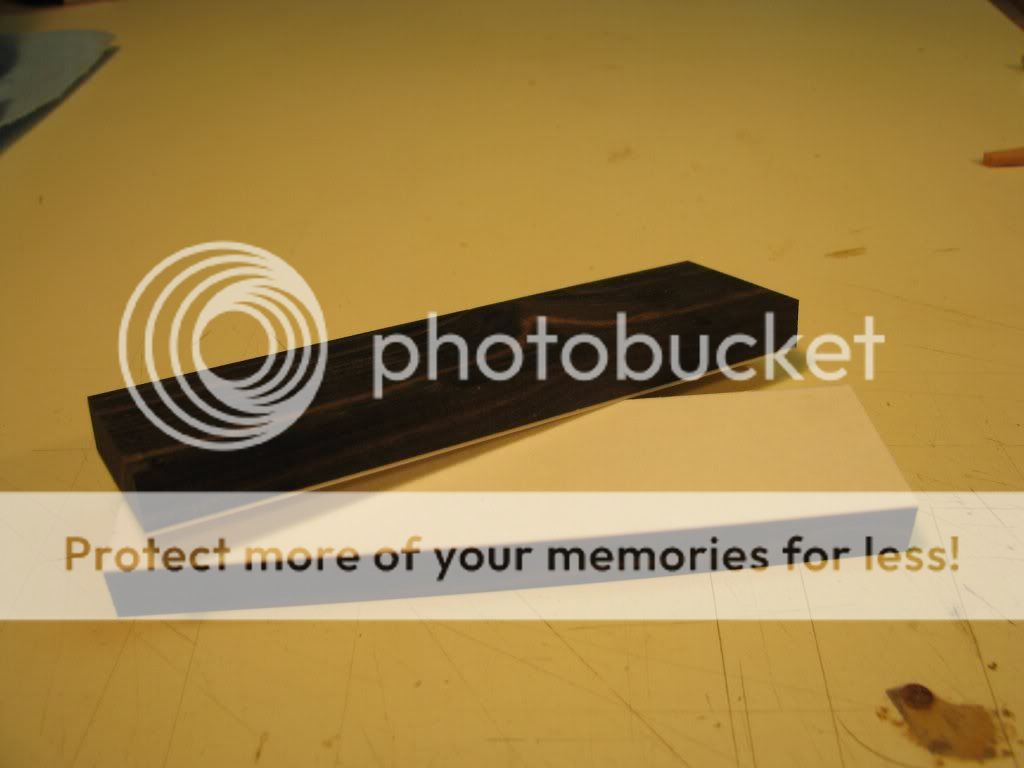
The scales are smooth and coplanar, and the liners are glued on:
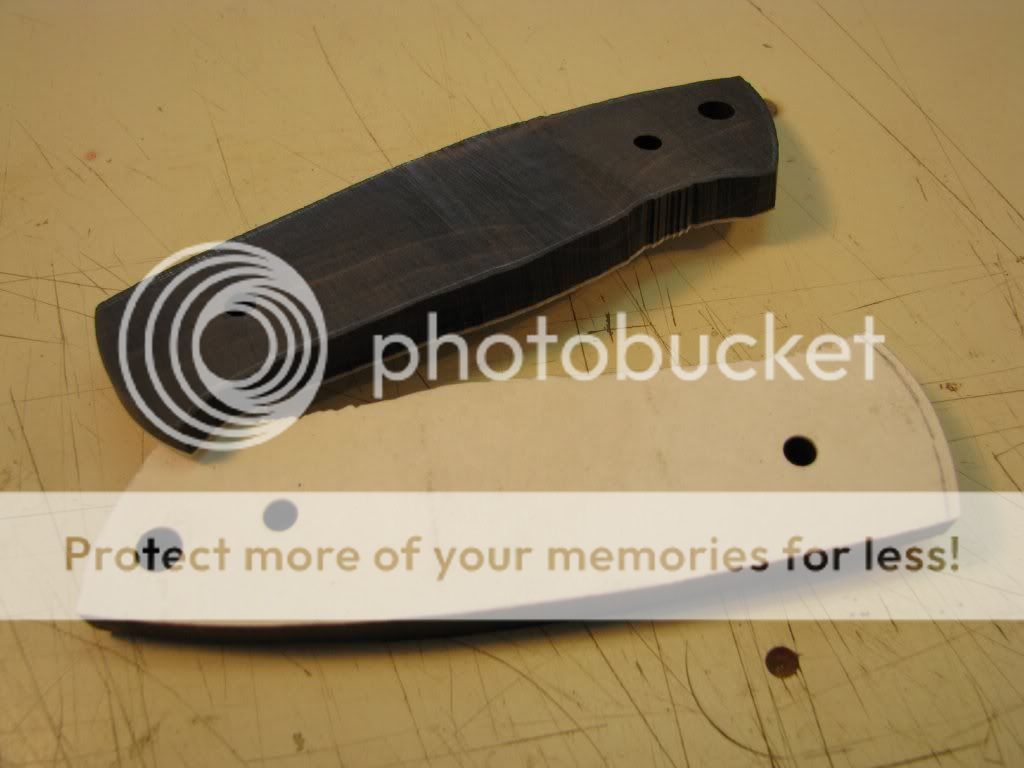
Holes are drilled and the scales have a basic shape:
Ready for glue-up:
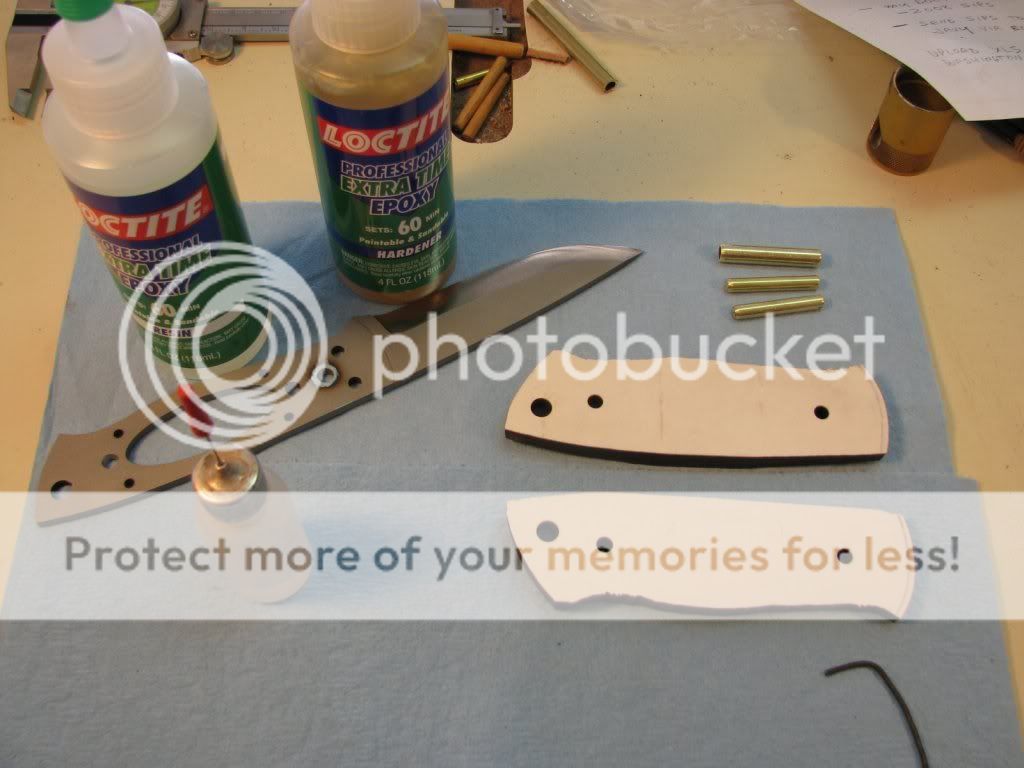
Pins and tube are in, scales are glued to the blade, and clamps are about to go on:
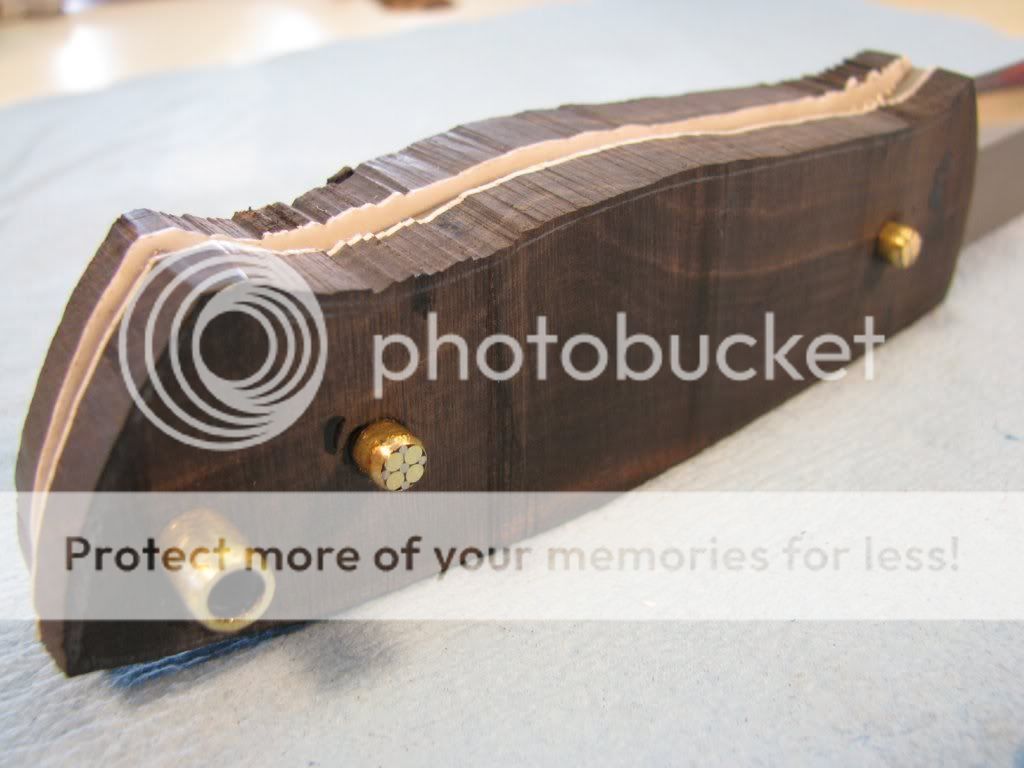
A finished blade:
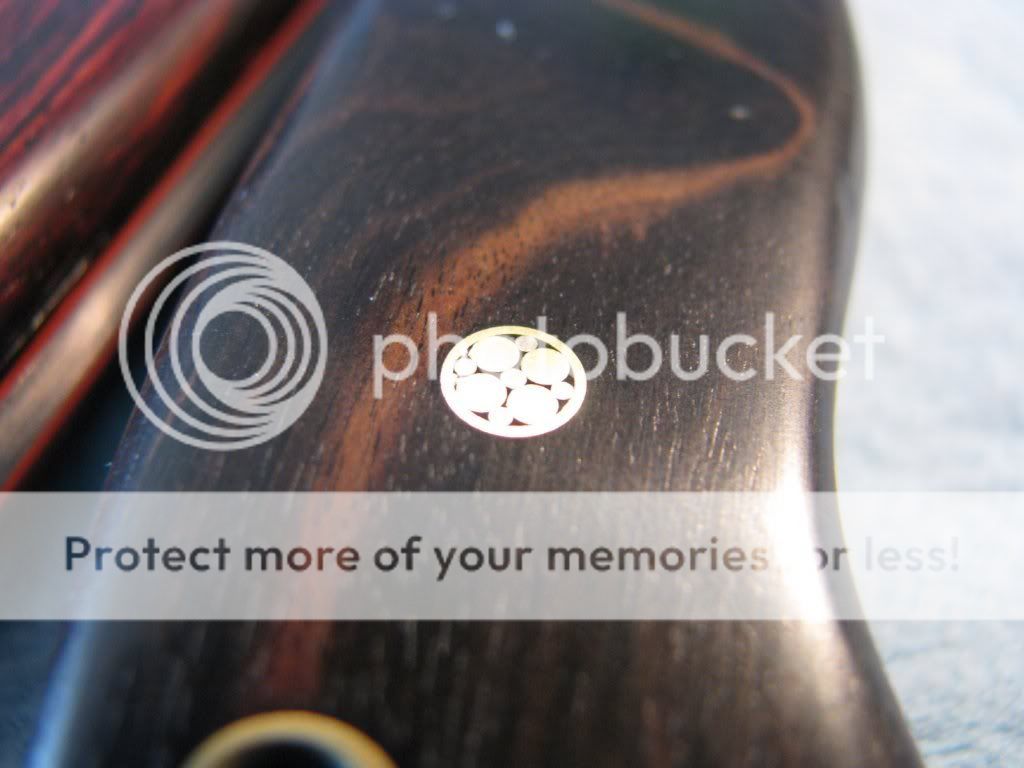
Making sure there are no gaps around the pins and tube:

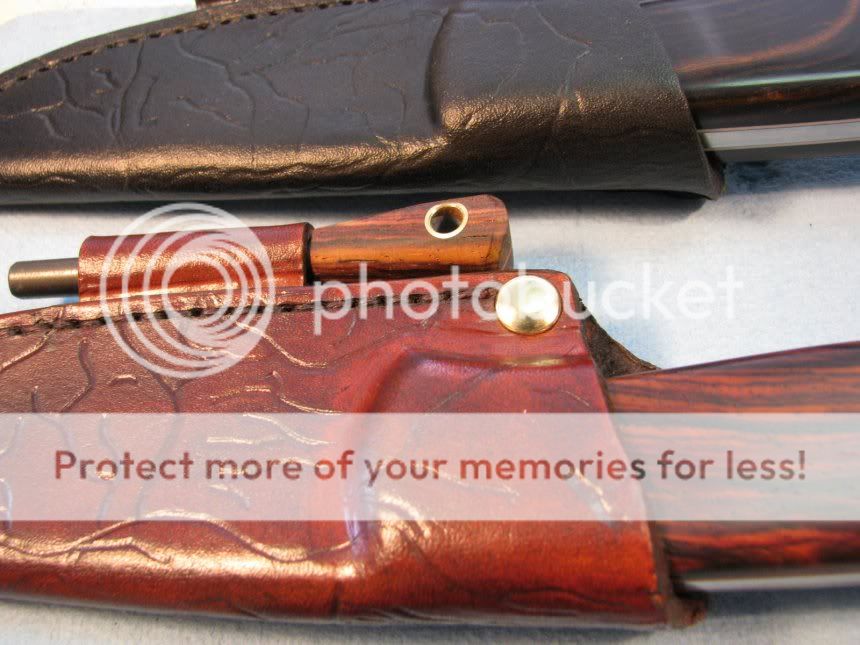
The ebony is in the black sheath at the top of the photo:
Good luck!
The scales are smooth and coplanar, and the liners are glued on:
Holes are drilled and the scales have a basic shape:
Ready for glue-up:
Pins and tube are in, scales are glued to the blade, and clamps are about to go on:
A finished blade:
Making sure there are no gaps around the pins and tube:
The ebony is in the black sheath at the top of the photo:
Good luck!

Thanks AL. The Kits are very nicely done and make things quicker and easier but, unfortunately, the scales only come in one length, so there's no way to extend them out to the ricasso and further. I like them that way too. I first saw scales done that way with EnZos on a British site, and I liked them right away.
Another fault with the Kits (not to find too much wrong with such quality kits as these) is that there is no lanyard tube on the Kit scales. And.....since the scales are already pre-shaped and no longer coplanar, drilling for the tube is quite a task. A special jig must be made and it's very time consuming. Otherwise, if we just punch a hole in there with a drill, even with a press!!, there will be slop around the tube and it will show when the knife is finished. So....I wish EnZo would offer some Kits with the lanyard tubes pre-drilled.
I got some wood from BurlSource I think it was. They have a website where they show each individual piece you'll be buying. I called the guy anyway and told him the lengths, widths, and thicknesses of the pieces I'd need. Not only did he send what I needed, he threw in quite a bit of free stuff too - some ash scales and some madrone burl. It was a very good experience dealing with the guy. The buckeye stuff is my favorite though. VERY figured, but not so loud as to be unruly on these scandi blades. The ebony, cocobolo, and rosewood stuff I've had for years - that didn;t come from BurlSource.
ANyway thanks, and I hope rc51kid gets his EnZo's going. Hopefully, those knives are a little inspiration for him.
Another fault with the Kits (not to find too much wrong with such quality kits as these) is that there is no lanyard tube on the Kit scales. And.....since the scales are already pre-shaped and no longer coplanar, drilling for the tube is quite a task. A special jig must be made and it's very time consuming. Otherwise, if we just punch a hole in there with a drill, even with a press!!, there will be slop around the tube and it will show when the knife is finished. So....I wish EnZo would offer some Kits with the lanyard tubes pre-drilled.
I got some wood from BurlSource I think it was. They have a website where they show each individual piece you'll be buying. I called the guy anyway and told him the lengths, widths, and thicknesses of the pieces I'd need. Not only did he send what I needed, he threw in quite a bit of free stuff too - some ash scales and some madrone burl. It was a very good experience dealing with the guy. The buckeye stuff is my favorite though. VERY figured, but not so loud as to be unruly on these scandi blades. The ebony, cocobolo, and rosewood stuff I've had for years - that didn;t come from BurlSource.
ANyway thanks, and I hope rc51kid gets his EnZo's going. Hopefully, those knives are a little inspiration for him.
Last edited:
I have been reading a little bit about these and want to give one a try. It looks like Bens Backwoods is out of them right now. First question, is there anyone else who caries these in 01 scandi grind? Second question, if no one else has them in stock, how well will the flat grind D2 work? I will be using it for general backpacking and bush craft type work. Also do any of the Kydex sheath makers make a good Kydex sheath for this knife? I plan on making a real working knife with micarta scales, lanyard hole and a good kydex sheath.
Again, rcKid, Thompsonsknives has them in 0-1 scandi-ground-to-zero. I have never tried a flat-ground Trapper, but I've built 2 Elvers with flat-ground D2 blades. The Elver blade profile is very nice and pointy. I normally don;t like D2, but I sure liked these Elvers! Both have been given away. Recently, Enzo has made the Elver in a scandi grind in D2. I might try one of those.
My preference in the Trapper is for O-1 scandi to zero. I can;t even imagine having to sharpen a flat-grind in D2 the length of the Trapper. It's not so much that D2 is hard to sharpen (it is), but rather, it's hard to sharpen as sharp as I like them. I want them razor sharp, and that's difficult in D2 (for me anyway).
Thompson also has the Trapper scandi in stainless steel, though I don;t know which stainless because they don;t say.
Could someone explain how the lanyard tube is inserted into the blank scales? I dont get why it would be harder to insert on into a scale that was in a kit than into a blank scale. Maybe I dont understand the proper way to drill and assemble the handles when you are making your own scales.
Well, when you drill scales for pins or a tube, the scales are drilled together. This ensures that the drilled hole is straight all the way through. If it's off, even a little (we're talking thousandths of an inch), you won;t be able to get the pin or tube through.
Remember too that you have a full tang on these particular blades. There is a lanyard hole already drilled in the tang of the blade. So now, when you drill, the scales AND the blade have to be together.
Now here's the biggest part of the problem: if the scales are already pre-shaped, how will you get them perfectly level on the press table, or at a perfect right angle to the drill bit? You pretty much can;t. A jig is in order here.
It's difficult to explain in words how to do this, but the jig will be a coplanar piece of wood about 3/4" thick, 1-1/4" wide, and longer than the knife scales. The blade blank is pinned to the jig (I use doube-sided carpet tape) and the holes are drilled on the drill press. Now, with the drill bit still in the lanyard hole, clamp the jig to the table without moving it. Raise the quill, set one of the scales on it (liner side down), insert the pins in the pin holes to align the scale with the blade, then drill the lanyard hole. Do the same for the other scale by flipping the jig and resetting the drill press. With patience, attention to detail, and some luck, the holes will all align.
Now, when you're making your own scales, things are much easier. I use the bandsaw to resaw a block of wood, making it about 5/16" x 1-1/4" x 10" long. These 10" long pieces can then be run through the planer to bring them down to about 1/4" and ensure they are coplanar. Now, you can cut them to length, glue on liners, pin the blade (carpet tape), drill the holes, and then shape the scales and glue them up. One word of caution: always check that your pins and lanyard tube will fit into the holes on the blade. In every single EnZo blade I've made, the holes had to be enlarged a little. I use a flexible shaft drill and a chainsaw sharpening stone to do this. Drilling the holes is out of the question unless you have the proper bits, skill, and knowledge. Even O1 steel is hard stuff! Take a look at the picture above where everything is setup and ready to be glued. You can see on the blade blank where I drilled out one of the pin holes. I used a special hardened bit, and it still burned the blade blank. The biggest danger is having your clamp let loose and having a razor sharp blade spiining around on the press table!
Remember too that you have a full tang on these particular blades. There is a lanyard hole already drilled in the tang of the blade. So now, when you drill, the scales AND the blade have to be together.
Now here's the biggest part of the problem: if the scales are already pre-shaped, how will you get them perfectly level on the press table, or at a perfect right angle to the drill bit? You pretty much can;t. A jig is in order here.
It's difficult to explain in words how to do this, but the jig will be a coplanar piece of wood about 3/4" thick, 1-1/4" wide, and longer than the knife scales. The blade blank is pinned to the jig (I use doube-sided carpet tape) and the holes are drilled on the drill press. Now, with the drill bit still in the lanyard hole, clamp the jig to the table without moving it. Raise the quill, set one of the scales on it (liner side down), insert the pins in the pin holes to align the scale with the blade, then drill the lanyard hole. Do the same for the other scale by flipping the jig and resetting the drill press. With patience, attention to detail, and some luck, the holes will all align.
Now, when you're making your own scales, things are much easier. I use the bandsaw to resaw a block of wood, making it about 5/16" x 1-1/4" x 10" long. These 10" long pieces can then be run through the planer to bring them down to about 1/4" and ensure they are coplanar. Now, you can cut them to length, glue on liners, pin the blade (carpet tape), drill the holes, and then shape the scales and glue them up. One word of caution: always check that your pins and lanyard tube will fit into the holes on the blade. In every single EnZo blade I've made, the holes had to be enlarged a little. I use a flexible shaft drill and a chainsaw sharpening stone to do this. Drilling the holes is out of the question unless you have the proper bits, skill, and knowledge. Even O1 steel is hard stuff! Take a look at the picture above where everything is setup and ready to be glued. You can see on the blade blank where I drilled out one of the pin holes. I used a special hardened bit, and it still burned the blade blank. The biggest danger is having your clamp let loose and having a razor sharp blade spiining around on the press table!
Last edited:
hey stretch, fine job on your knives!

when you put in the brass tube for your lanyard hole, what size tube did you use? does the tube go through the hole on the tang, or is it in 2 pieces(1 on each side of the tang)?
it looks like you 'counter sunk' the ends of the tube. great work! did you just drill the ends slightly to achieve this?
i just received my micarta O1 kit in the mail, and am at a loss where to start.
i really want to add a lanyard hole.
my shopping list so far is:
epoxy
sanding paper(80, 120, 200, 600, 1000)
fine file(for the brass screws)
linseed oil
brass tube
denatured alcohol(for bleed out epoxy removal)
masking tape
i already have wood clamps.
did i miss anything?
cheers!
https://www.brisa.fi/portal/index.php?option=com_oscommerce&osMod=index&cPath=119 - that is the place the Enzo coming from. So you can always check it out there.
As for the second question: I would recommend you knives with scandi grind - either from O1 or from D2. Both versions are usually available at brisa.fi . Knives with flat grind are fine, but I guess they would be not as suitable for your needs.
StretchNM, good knives! I like Enzo Trapper, have made a few knives too.
As for the second question: I would recommend you knives with scandi grind - either from O1 or from D2. Both versions are usually available at brisa.fi . Knives with flat grind are fine, but I guess they would be not as suitable for your needs.
StretchNM, good knives! I like Enzo Trapper, have made a few knives too.
wanted to share with you one of mine enzo trappers

 https://lh3.googleusercontent.com/-.../iwuZiIIiB3s/s640/2011-10-15%252016.33.15.jpg https://lh6.googleusercontent.com/-.../SFWhoJ--rdg/s640/2011-10-15%252016.36.34.jpg

and a video
[video=youtube;WKLp9nZYS7k]http://www.youtube.com/watch?v=WKLp9nZYS7k[/video]
and a video
[video=youtube;WKLp9nZYS7k]http://www.youtube.com/watch?v=WKLp9nZYS7k[/video]
Last edited:


I love my Trappers. I got my kit imported here (England) from Brisa who are the makers of the the kits in Finland, for me it's pretty cheap and fast postage as it's Europe to Europe.
I ended up buying a knife blank from knifebargins.co.uk (about £40, a kit from Finland is around £100). I got walnut scales and red liners off ebay from a UK knife parts seller, I used pins and lanyard tube I already had. I got another one because I needed a thicker handle as I found the kit's just too thin for a user, I found it fine for general cutting, but carving it made my hand ache. The back maple handled one is the thinner kit one:

After a bit of time on 800, 1200, 6000 Japanese water stones and a good stropping they get an amazing edge:


Infact I made a matching set of Trappers, a scandi in O1 and a flat ground version in D2:

Notice that I hadn't put on the edge I like yet. I use them both the scandi is my workhorse and the flat ground is only used for food prep.
I ended up buying a knife blank from knifebargins.co.uk (about £40, a kit from Finland is around £100). I got walnut scales and red liners off ebay from a UK knife parts seller, I used pins and lanyard tube I already had. I got another one because I needed a thicker handle as I found the kit's just too thin for a user, I found it fine for general cutting, but carving it made my hand ache. The back maple handled one is the thinner kit one:

After a bit of time on 800, 1200, 6000 Japanese water stones and a good stropping they get an amazing edge:


Infact I made a matching set of Trappers, a scandi in O1 and a flat ground version in D2:

Notice that I hadn't put on the edge I like yet. I use them both the scandi is my workhorse and the flat ground is only used for food prep.


I'd of done what I did and just put raw linseed oil on it. It protects the wood, brings out the grain and adds grip. I use it on all my wooden handles, knifes, axes, gradening tools.
I used paper towls to apply it, let it sink in for about 10 minutes, then use a clean cloth to wipe the excess off. If you add layers of linseed oil letting them dry you end up with a very hard varnish finish. It's what's used on cricket bats.
Plus it won't cause blisters or make hot-spots on your hands with the varnish or super glue finish will normally do.
I used paper towls to apply it, let it sink in for about 10 minutes, then use a clean cloth to wipe the excess off. If you add layers of linseed oil letting them dry you end up with a very hard varnish finish. It's what's used on cricket bats.
Plus it won't cause blisters or make hot-spots on your hands with the varnish or super glue finish will normally do.