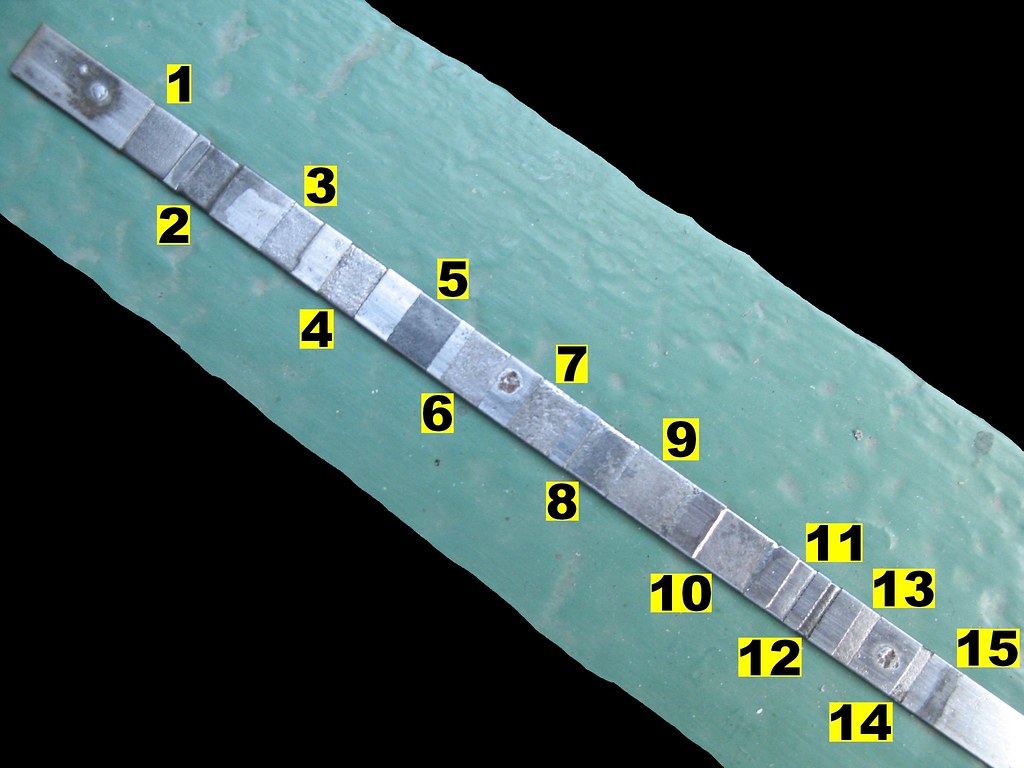
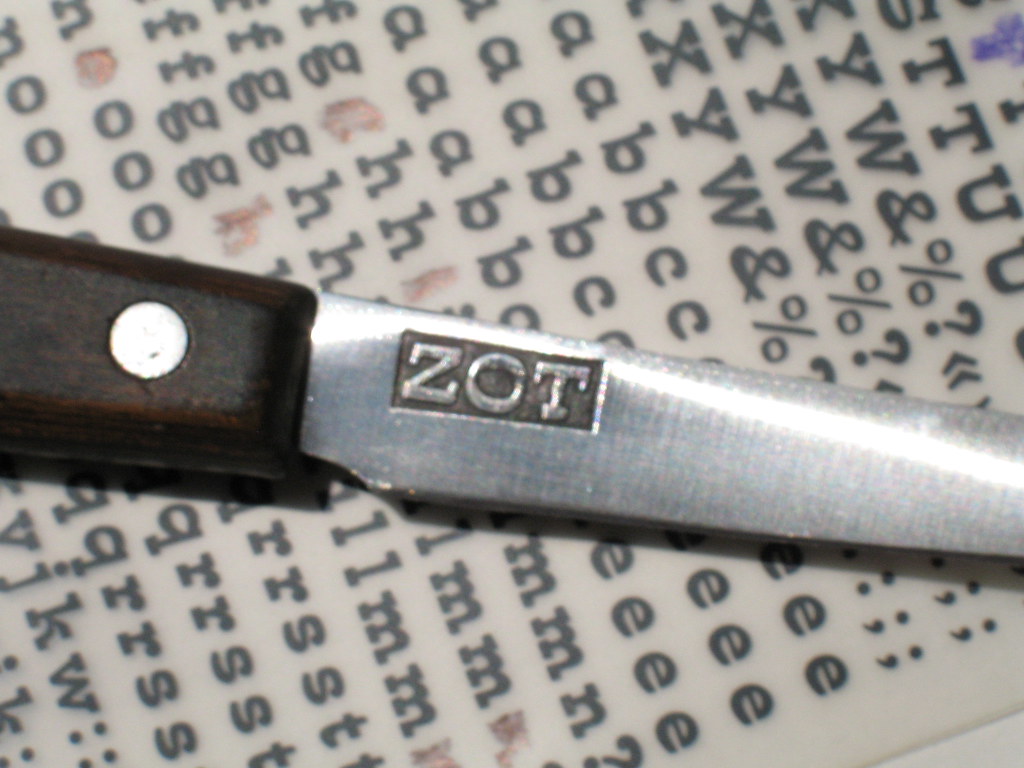
well, i spent some time to test my etching kit and these are the results.
first of all let me introduce you my kit:
a - the transformer (I tested 5 of them)
b - 3 office clip (1 medium and 2 small size)
c - a scrap wire
d - a small electrolyte container to wet the pad
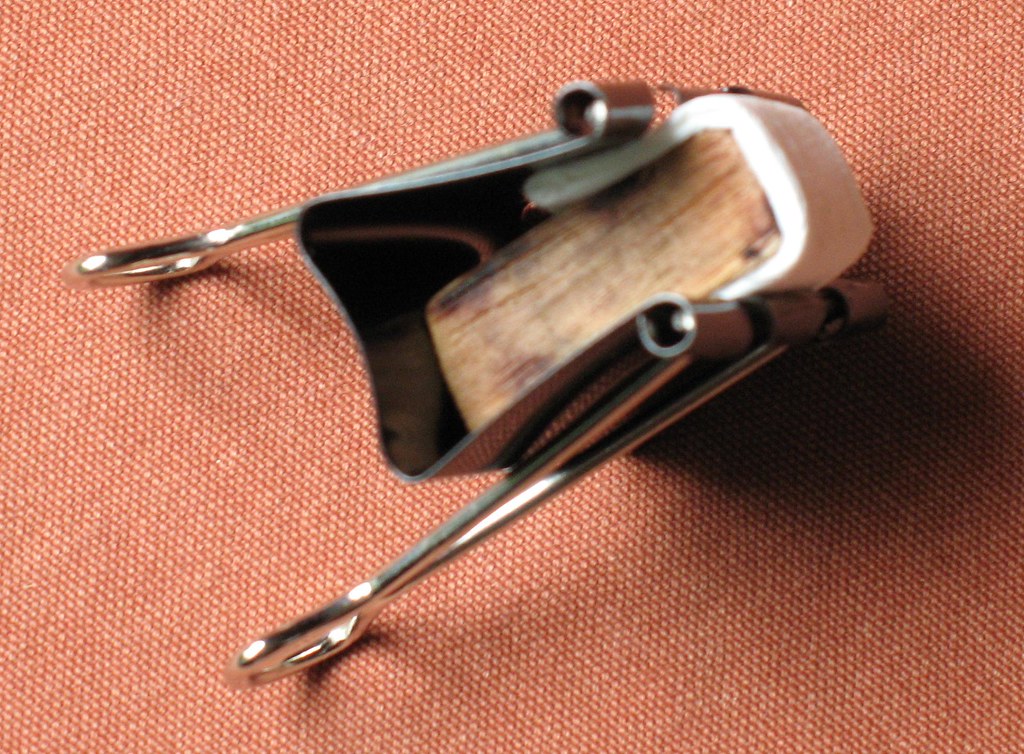
e - a piece of wood to support the pad
f - the pad (toilet paper)
g - the electrolyte (I tested some combinations)
h - stencils/scotch to mask the blade
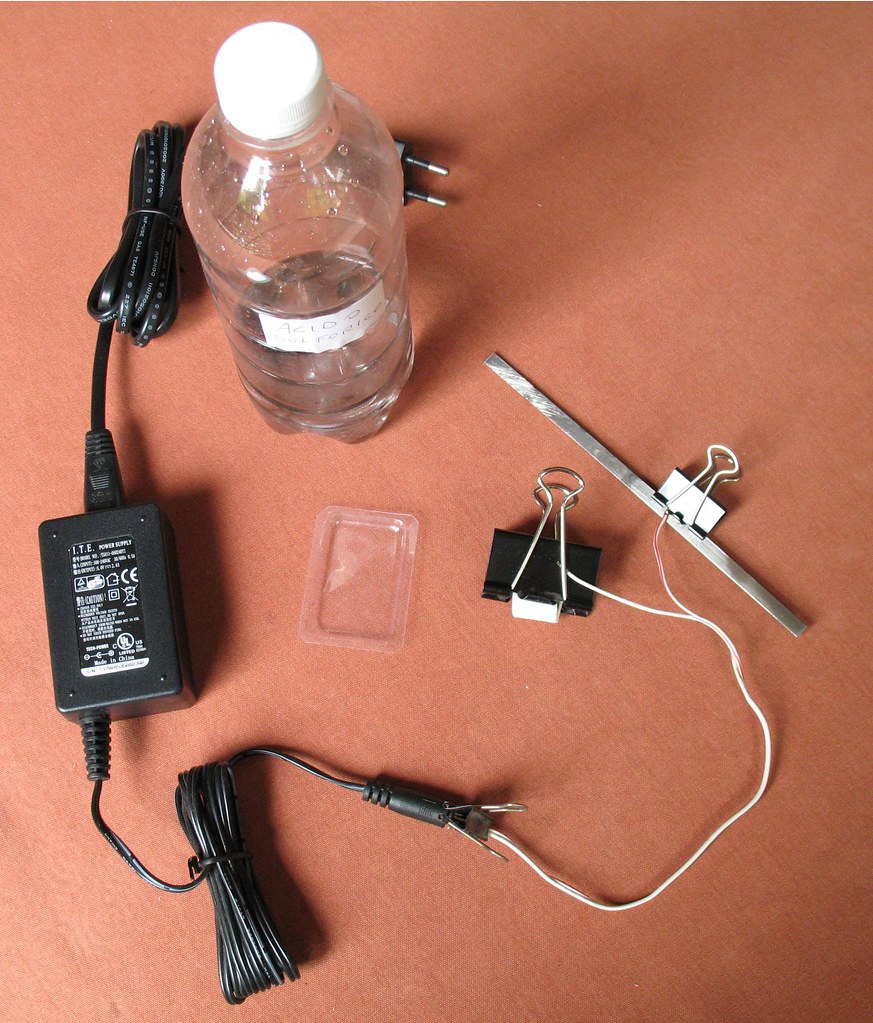
the pad assembled:
I used a piece of stainless stell I found in the scrap pile as blade, with some sand paper I make it even and I clean it with alcohol. and these are the results I obtained with the following combinations:

1 - output: DC, 5V, 2,40amp; electrolyte: warm water and salt; pole + to the blade, pole - to the pad; etching time: 25 min; no stencil/mask/pad damage
2 - output: DC, 5V, 2,40amp; electrolyte: distilled water and salt; pole + to the blade, pole - to the pad; etching time: 25 min; then I inverted the poles: pole + to the pad, pole to the blade; etching time: 12 min; no stencil/mask/pad damage
3 - output: DC, 5V, 2,40amp; electrolyte: vinegar, lemon juice and salt; pole + to the blade, pole - to the pad; etching time: 25 min; no stencil/mask/pad damage
4 - output: DC, 20V, 3,25amp; distilled water and salt; pole + to the blade, pole - to the pad; etching time: 12 min; some stencil/mask damage, pad a little carbonized
5 - output: AC, 12V, 1,00amp; distilled water and salt; pole + to the blade, pole - to the pad; etching time: 12 min; some stencil/mask damage, pad a little carbonized
6 - output: DC, 5,7V, 0,80amp; sulfuric acid (from an old car battery); pole + to the blade, pole - to the pad; etching time: 15 min; no stencil/mask/pad damage
7 - output: DC, 12V, 1,25amp; sulfuric acid (from an old car battery); pole + to the blade, pole - to the pad; etching time: 15 min; some stencil/mask damage, pad carbonized
8 - output: DC, 5V, 2,40amp; sulfuric acid (from an old car battery); pole + to the blade, pole - to the pad; etching time: 15 min; no stencil/mask/pad damage
9 - output: DC, 20V, 3,25amp; sulfuric acid (from an old car battery); pole + to the blade, pole - to the pad; etching time: 6,5 min; stencil/mask damage, pad carbonized
I would like to make other tests but my conclusion, not surprisingly, are:
use 5V, 2,5amp DC output (the higher the V the higher the temperature)
to get a deep etching use quite long etching-time
to get a black etching use an AC output
press your stencil/mask to let them paste well to your blade to avoid deburrings
water and salt is enough for a deep and sharp mark-etching
first of all let me introduce you my kit:
a - the transformer (I tested 5 of them)
b - 3 office clip (1 medium and 2 small size)
c - a scrap wire
d - a small electrolyte container to wet the pad
e - a piece of wood to support the pad
f - the pad (toilet paper)
g - the electrolyte (I tested some combinations)
h - stencils/scotch to mask the blade
the pad assembled:
I used a piece of stainless stell I found in the scrap pile as blade, with some sand paper I make it even and I clean it with alcohol. and these are the results I obtained with the following combinations:
1 - output: DC, 5V, 2,40amp; electrolyte: warm water and salt; pole + to the blade, pole - to the pad; etching time: 25 min; no stencil/mask/pad damage
2 - output: DC, 5V, 2,40amp; electrolyte: distilled water and salt; pole + to the blade, pole - to the pad; etching time: 25 min; then I inverted the poles: pole + to the pad, pole to the blade; etching time: 12 min; no stencil/mask/pad damage
3 - output: DC, 5V, 2,40amp; electrolyte: vinegar, lemon juice and salt; pole + to the blade, pole - to the pad; etching time: 25 min; no stencil/mask/pad damage
4 - output: DC, 20V, 3,25amp; distilled water and salt; pole + to the blade, pole - to the pad; etching time: 12 min; some stencil/mask damage, pad a little carbonized
5 - output: AC, 12V, 1,00amp; distilled water and salt; pole + to the blade, pole - to the pad; etching time: 12 min; some stencil/mask damage, pad a little carbonized
6 - output: DC, 5,7V, 0,80amp; sulfuric acid (from an old car battery); pole + to the blade, pole - to the pad; etching time: 15 min; no stencil/mask/pad damage
7 - output: DC, 12V, 1,25amp; sulfuric acid (from an old car battery); pole + to the blade, pole - to the pad; etching time: 15 min; some stencil/mask damage, pad carbonized
8 - output: DC, 5V, 2,40amp; sulfuric acid (from an old car battery); pole + to the blade, pole - to the pad; etching time: 15 min; no stencil/mask/pad damage
9 - output: DC, 20V, 3,25amp; sulfuric acid (from an old car battery); pole + to the blade, pole - to the pad; etching time: 6,5 min; stencil/mask damage, pad carbonized
I would like to make other tests but my conclusion, not surprisingly, are:
use 5V, 2,5amp DC output (the higher the V the higher the temperature)
to get a deep etching use quite long etching-time
to get a black etching use an AC output
press your stencil/mask to let them paste well to your blade to avoid deburrings
water and salt is enough for a deep and sharp mark-etching
Last edited:


 Either way thanks for this and Im subscribing to see further posts/results.