
I come by my interest in knives honestly, I guess.
Driving around Vermont today, it is almost impossible to imagine what it looked like 100 years ago. Today, about 80% of Vermont is covered by forest lands of some sort. In 1900, that number was around 20%. Much of the land had been cleared to fuel the industrial revolution of the 1800s that took place in New England. Wood was consumed and the cleared land was used to raise sheep for the mills of the eastern seaboard. Villages and towns grew around rivers with enough hydro-power to run mill works.
My kin settled up in northern Vermont and a distant uncle of mine with some number of grands in front it of it was named George Mann. He started knife and axe factory in his village in 1871. It ran for several decades. Knives bearing his "G. H. Mann" stamp have been in every kitchen drawer of my family since I can remember. Grandparents, grand aunts, my folks and my uncles have all had assorted mini-collections of the old Mann knives.
This past weekend, I opened up my uncle's summer camp for him and found these 3 in the drawer and thought I'd post some pictures of them for your interest. They're rather simple, straight-forward knives. Simple hidden tang construction in plain, turned wood handles. Flat, somewhat convexed blades of carbon steel. As you might expect, they sharpen up wonderfully and slice well. I imagine that at some point these will get pulled from service, but there's something really wonderful about using a knife made by your kin folk well over a 100 years ago. It's something that runs deep.
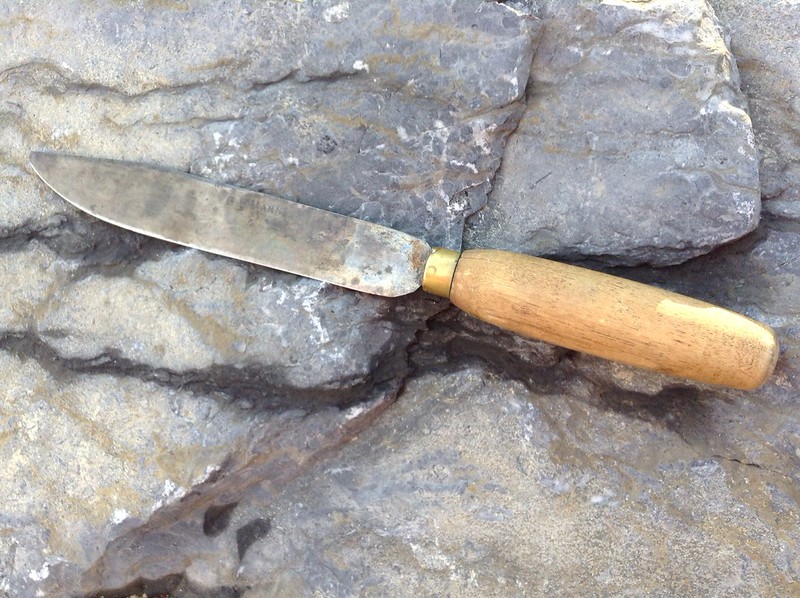
G H Mann knives by Pinnah, on Flickr
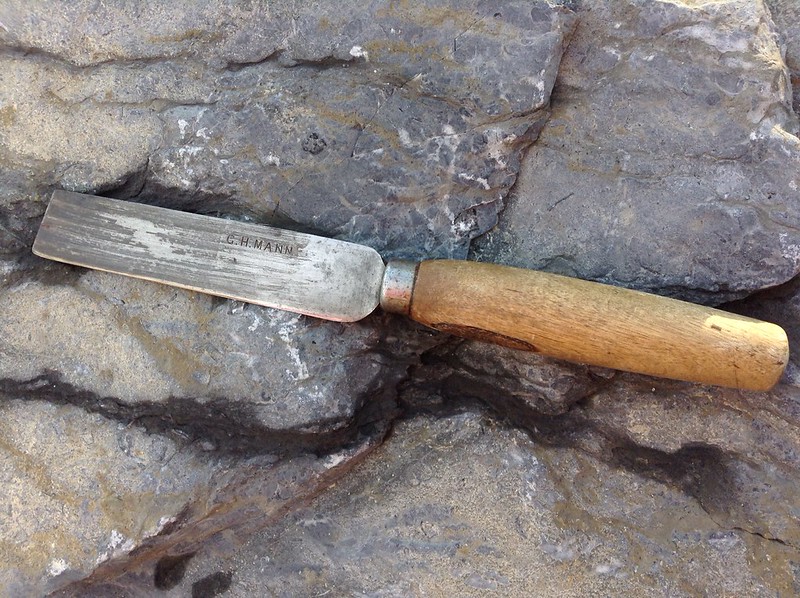
G H Mann knives by Pinnah, on Flickr
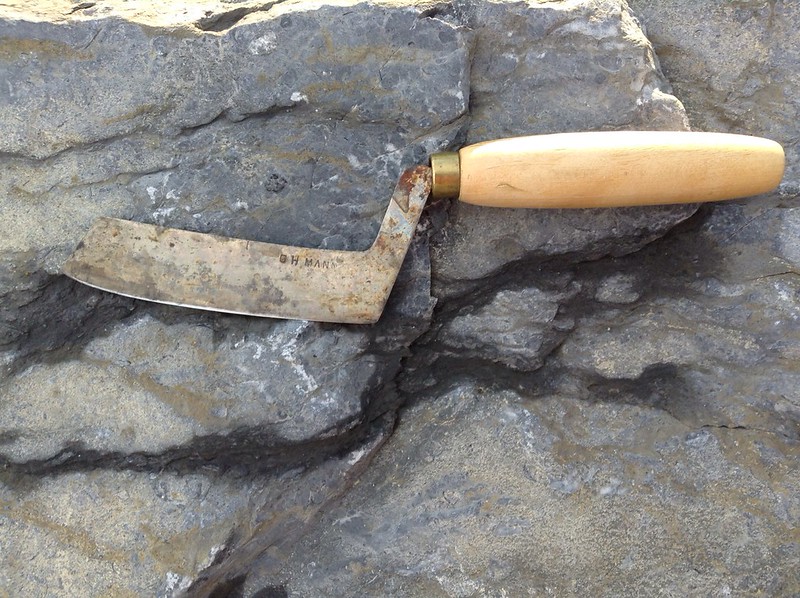
G H Mann knives by Pinnah, on Flickr
Thanks for looking.
Driving around Vermont today, it is almost impossible to imagine what it looked like 100 years ago. Today, about 80% of Vermont is covered by forest lands of some sort. In 1900, that number was around 20%. Much of the land had been cleared to fuel the industrial revolution of the 1800s that took place in New England. Wood was consumed and the cleared land was used to raise sheep for the mills of the eastern seaboard. Villages and towns grew around rivers with enough hydro-power to run mill works.
My kin settled up in northern Vermont and a distant uncle of mine with some number of grands in front it of it was named George Mann. He started knife and axe factory in his village in 1871. It ran for several decades. Knives bearing his "G. H. Mann" stamp have been in every kitchen drawer of my family since I can remember. Grandparents, grand aunts, my folks and my uncles have all had assorted mini-collections of the old Mann knives.
This past weekend, I opened up my uncle's summer camp for him and found these 3 in the drawer and thought I'd post some pictures of them for your interest. They're rather simple, straight-forward knives. Simple hidden tang construction in plain, turned wood handles. Flat, somewhat convexed blades of carbon steel. As you might expect, they sharpen up wonderfully and slice well. I imagine that at some point these will get pulled from service, but there's something really wonderful about using a knife made by your kin folk well over a 100 years ago. It's something that runs deep.
G H Mann knives by Pinnah, on Flickr
G H Mann knives by Pinnah, on Flickr
G H Mann knives by Pinnah, on Flickr
Thanks for looking.


 :thumbup: