Feats of Sharpness...

Joined
Oct 8, 1998
Messages
5,403
Howdy,

I have heard of a number of different ways to test sharpness, or to demonstrate the keenness of the edge.

But, when I hear about them, it seems as if something is always missing.

So, if you all would like to share...

1) Describe a method of edge testing.

2) Describe what has to be accomplished, and how it is to be accomplished.

3) Describe what qualities the edge has to have to do this feat.

Particularly, I am interested in this tree-topping of hairs....

Myself, I used go for the thumb test, the way the flesh catches on the edge, and the 'grabby' the edge, the sharper.

Marion
 
Neither <20 degrees per side nor high polish are required.
Some people can do it at extremely low angles with a low grit finish, I've seen people doing it from a 1000grit stone, but from what I've found the more polished it is, the better it will whittle. I haven't seen anyone whittle hair at an angle significantly over 20degrees per side.
 
Some people can do it at extremely low angles with a low grit finish, I've seen people doing it from a 1000grit stone, but from what I've found the more polished it is, the better it will whittle. I haven't seen anyone whittle hair at an angle significantly over 20degrees per side.

Higher polish helps for sure. I did it at 53 degrees included just to show that I could once, but for the most part I keep the final edge under 40. Maybe I'll try higher angles just to see what the limit is.

I actually have better success whittling with the higher angles, as lower angles tend to just cut the hair in half instead of whittling it.
 
I still use my thumb to feel the edge just because I like the way a polished edge bites into the skin :eek: but I have also found it to be a ineffective way to test sharpness. The reason it is ineffective is because when a knife gets to a certain level of sharpness its cutting off your finger prints as you feel the edge, you can't feel how sharp something is if its taking off your skin!
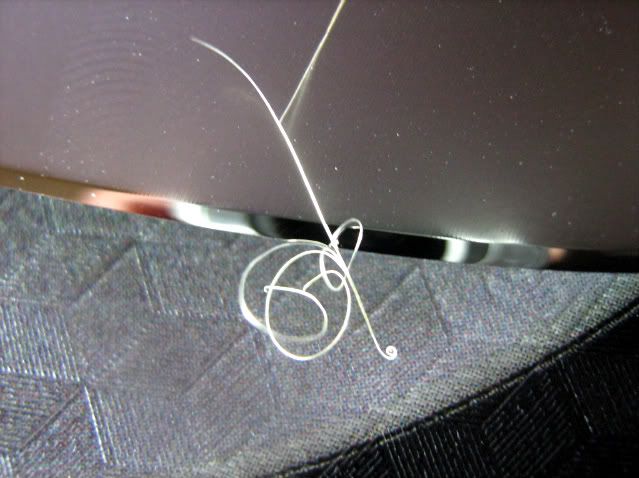
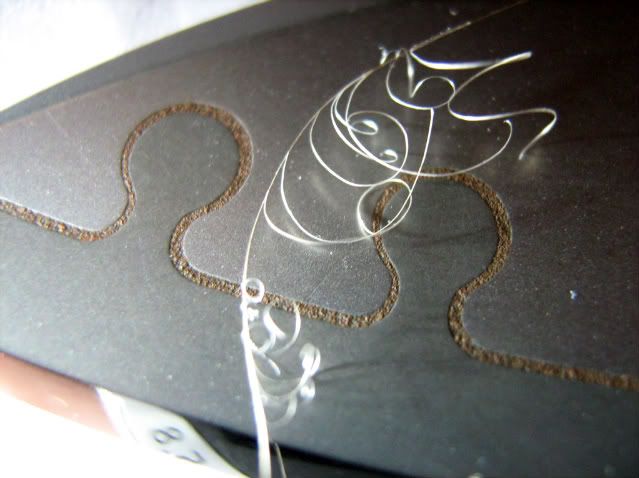
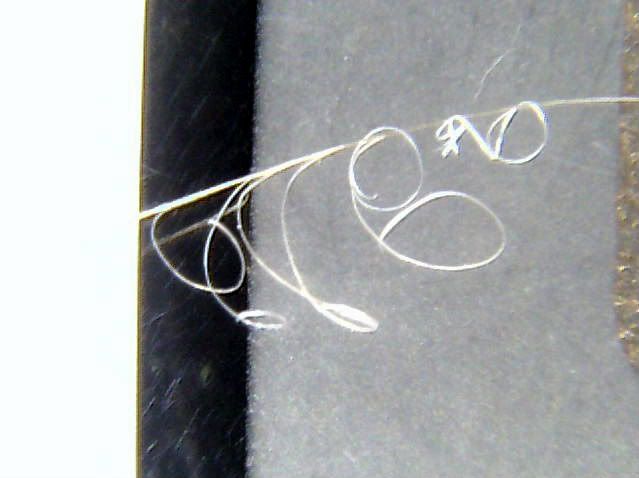
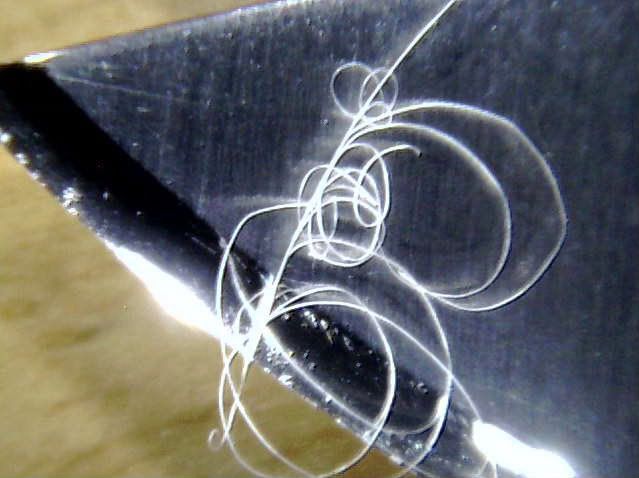
Whittling hair has been the true test for me, its consistent and its the only thing that I have seen that will show the difference between a really sharp knife and a really really sharp knife.

Well enough trying to explain what I really can't put into words, here's some pic's.

Sharp
Picture593.jpg


Really sharp
Picture507.jpg


Uber sharp
Picture445.jpg


Same knife but all the small curls at the edge
CPMD2curels.jpg


and finally so sharp you need to have your A game to produce (biomechanic's must be in perfect working order ;))
This pic had to be taken with a digital microscope because my normal camera only showed a fuzz ball.
WOW.jpg
 
There are lots of types of sharp edges and some types work better for cutting certain materials than others. Wonderfully mirror polished edges are great for push type cutting and work well for draw cutting some materials but polished edges are not all that is best with regard to sharpened edges. You can get an edge too fine for certain work. Many factors should be considered when selecting the type of edge geometry and final degree of polish for edges of cutting tools given the quality of the blade, type of blade, and materials being cut most often. User skill is another factor I take in to account when sharpening for customers. If 2 customers bring me the exact same knife and one is just dull and one is beat to hell I can't deliver the same edges to both customers. The thinner and more delicate edges are wasted on some users. Many factors must be considered when sharpening blades.
 
There are lots of types of sharp edges and some types work better for cutting certain materials than others. Wonderfully mirror polished edges are great for push type cutting and work well for draw cutting some materials but polished edges are not all that is best with regard to sharpened edges. You can get an edge too fine for certain work. Many factors should be considered when selecting the type of edge geometry and final degree of polish for edges of cutting tools given the quality of the blade, type of blade, and materials being cut most often. User skill is another factor I take in to account when sharpening for customers. If 2 customers bring me the exact same knife and one is just dull and one is beat to hell I can't deliver the same edges to both customers. The thinner and more delicate edges are wasted on some users. Many factors must be considered when sharpening blades.

I would agree totally, though that was not the purpose of my asking, I am just interested in the 'feats' as challenges that I can attempt, as I learn how better to sharpen.

Marion
 
Knifenut, I'm with you on the finger print disappearing act. I like doing the Murray Carter 3 finger test, but after sharpening my fingerprints are no longer all there. Hair whittling has been a good test of sharpness, but the hair and technique involved in whittling it make a difference. Like with measuring how far from the point of hold you can push cut newsprint consistency of the hair (or paper) and technique are essential with those tests to get the feedback if your edge sharpness is getting better or at least where you want it. Then again, if I had Knifenut's camera and skills I could definately get better feedback on my hair whittling sessions.

Mike
 
Back
Top