

- Joined
- Jan 10, 2010
- Messages
- 1,818
So I've been wanting to do this ever since I got into knife making and I've finally managed it. I just built a forced air forge that burns your eyes out, so that helped. My previous failed attempts were from not enough heat methinks.
Anyway... These are from a billet I welded up from from one layer of 1/4" slaggy old wrought I found out in the Wisconsin woods and a layer of 1/8" 15n20. I decided to just go with two layers on this for some single beveled edge knives. So what's up with the boundary here? The billet started to separate towards the bottom (the second knife was made from that area), but the rest seemed to take pretty well. Is this just what happens when you have real slaggy stuff? When I ground the wrought iron, I did leave some depressions that were not completely, shiny clean (very sloppy Scott )
)
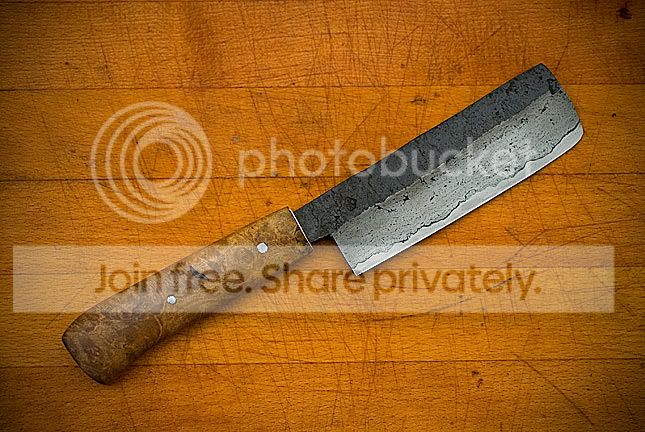
Here is the blade made from the portion of the billet that seemed to weld really well. It is a 6" blade cleaver hollow ground on the right hand side (mostly just to display the wrought etching) and flat ground on the 15n20 side.
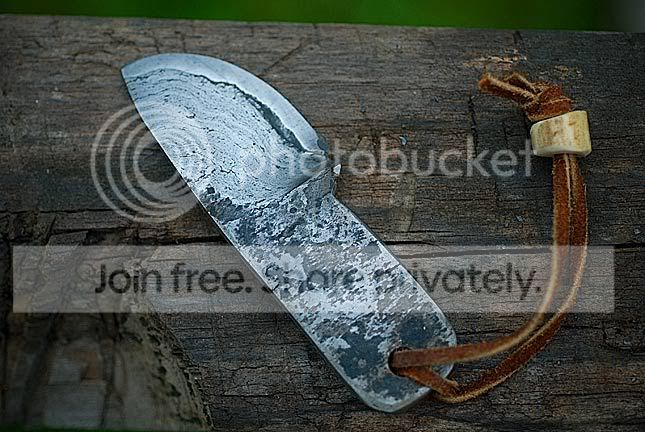
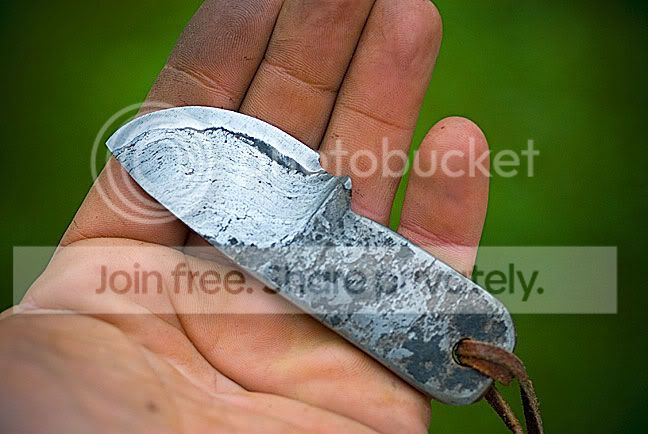
And here is my little 'mouse skinner' I made from the failed end of the billet... just for fun. But the blade shows the detail of the boundary better...although more extreme than on the cleaver. In this case, the blade is still together, but I had to put JB Weld in between the layers in the handle after hardening!
I actually like the look of the boundary on the first blade... as you can barely even feel it when dragging your finger across it. But I don't want it to lead to a failure in the blade in the long run..... So I'd like to hear what folks think!
Anyway... These are from a billet I welded up from from one layer of 1/4" slaggy old wrought I found out in the Wisconsin woods and a layer of 1/8" 15n20. I decided to just go with two layers on this for some single beveled edge knives. So what's up with the boundary here? The billet started to separate towards the bottom (the second knife was made from that area), but the rest seemed to take pretty well. Is this just what happens when you have real slaggy stuff? When I ground the wrought iron, I did leave some depressions that were not completely, shiny clean (very sloppy Scott
)Here is the blade made from the portion of the billet that seemed to weld really well. It is a 6" blade cleaver hollow ground on the right hand side (mostly just to display the wrought etching) and flat ground on the 15n20 side.
And here is my little 'mouse skinner' I made from the failed end of the billet... just for fun. But the blade shows the detail of the boundary better...although more extreme than on the cleaver. In this case, the blade is still together, but I had to put JB Weld in between the layers in the handle after hardening!
I actually like the look of the boundary on the first blade... as you can barely even feel it when dragging your finger across it. But I don't want it to lead to a failure in the blade in the long run..... So I'd like to hear what folks think!


