
I picked up a Queen Cuttlery Railsplitter about 3 weeks ago and it was perfect, except the main blade was very hard to open and close. I'd rate it about a 9, with the other two blades having an ideal pull but a bit rough. I held on to it for a bit trying to decide whether to send it back or live with it. Well I'm can't live with it, so I decided to take a chance and fix it.
 [/URL][/IMG]
Buck Cadet and Queen Stockman
I spent some time studying my knives and discovered a radius on the tang of some and not others. That radius and better polished tang seemed to make all the difference in a knifes walk. So those are the modifications I'm going to make on my Railsplitter's main blade. This knife was as hard to close as it was to open, so I am going to polish both corners of the tang.
 [/URL][/IMG]
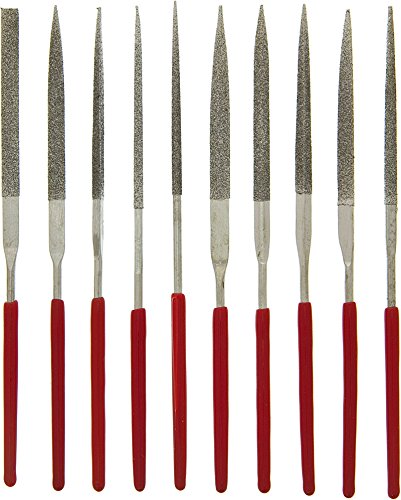
The first thing I did was prep the file so it would not scratch the liners. A piece of masking tape worked well. You can also tape off any other area of the knife you are worried about scratching. This is a single cut file measuring 1/16 x 7/16 x with about 3 ½ inch of cutting surface, they're available at any hardware store. The pictures show a vice but I only used that for the pictures, the work was done over hanging the edge of the bench.
 [/URL][/IMG]
 [/URL][/IMG]
I stopped just shy of a full radius on the closing corner. I had achieved my desired results without affecting lock up.
Work very slowly, carefully checking your progress often, you don't want to to remove to much metal. It's one thing to remove metal but take off to much and you will be paying the factory for repair services. Before opening and closing the knife to check your progress flush the knife with a spray can of WD40 to clean out the grit.
As close as I can tell by eye the radius compares to a 3/32nd . drill bit. The Railsplitter is a big knife, on smaller knives you will want to keep it to 1/16th or even 1/32nd.
I worked the radius on the opening and closing corners of the tang. Don't file the end of the tang we'll polish that up latter if needed.
 [/URL][/IMG]
The stone I used to polish up the tang is a 1/2" x 1/16" x 6"- 600 grit Gesswein RA Stone. These stones are fairly soft and wear to the surface you are polishing fairly easily. Keep the stone wet with some WD40 to keep the stones grit flushed and clean.
 [/URL][/IMG]
 [/URL][/IMG]

Now you can polish the end of the tang if needed just to further smooth up the action. It wasn't really needed on this knife.
 [/URL][/IMG]

That little bit of radius and polishing made all the difference in the world, The main blade is now about a 7 which is ideal for me on this knife.
I learned a few things doing this project, first being files don't last long against D2 steel. I went ahead and did the other two blades, only this time I just used stones. (Gesswein Stones, 320 and 600 grit EDM Polishing Stones) The pull on the other blades wasn't hard just a bit gritty to start.
 [/URL][/IMG]

I had to grind and thin the stones to fit. Next time this issue comes up I'll just start with the stone.
The pull scale is from confucius37.
10 - unable to open by hand
9 - able to open but breaking a nail likely
8 - able to open but very stiff, tough for edc use
7 - firm pull, edc range
6 - ideal edc range
5 - nice for secondary blades, tad light for a main blade
4 - starting to get too light for use
3 - maybe acceptable on very old knives
2 - barely closes
1 - does not stay closed
Buck Cadet and Queen Stockman
I spent some time studying my knives and discovered a radius on the tang of some and not others. That radius and better polished tang seemed to make all the difference in a knifes walk. So those are the modifications I'm going to make on my Railsplitter's main blade. This knife was as hard to close as it was to open, so I am going to polish both corners of the tang.
The first thing I did was prep the file so it would not scratch the liners. A piece of masking tape worked well. You can also tape off any other area of the knife you are worried about scratching. This is a single cut file measuring 1/16 x 7/16 x with about 3 ½ inch of cutting surface, they're available at any hardware store. The pictures show a vice but I only used that for the pictures, the work was done over hanging the edge of the bench.
I stopped just shy of a full radius on the closing corner. I had achieved my desired results without affecting lock up.
Work very slowly, carefully checking your progress often, you don't want to to remove to much metal. It's one thing to remove metal but take off to much and you will be paying the factory for repair services. Before opening and closing the knife to check your progress flush the knife with a spray can of WD40 to clean out the grit.
As close as I can tell by eye the radius compares to a 3/32nd . drill bit. The Railsplitter is a big knife, on smaller knives you will want to keep it to 1/16th or even 1/32nd.
I worked the radius on the opening and closing corners of the tang. Don't file the end of the tang we'll polish that up latter if needed.
The stone I used to polish up the tang is a 1/2" x 1/16" x 6"- 600 grit Gesswein RA Stone. These stones are fairly soft and wear to the surface you are polishing fairly easily. Keep the stone wet with some WD40 to keep the stones grit flushed and clean.

Now you can polish the end of the tang if needed just to further smooth up the action. It wasn't really needed on this knife.

That little bit of radius and polishing made all the difference in the world, The main blade is now about a 7 which is ideal for me on this knife.
I learned a few things doing this project, first being files don't last long against D2 steel. I went ahead and did the other two blades, only this time I just used stones. (Gesswein Stones, 320 and 600 grit EDM Polishing Stones) The pull on the other blades wasn't hard just a bit gritty to start.

I had to grind and thin the stones to fit. Next time this issue comes up I'll just start with the stone.
The pull scale is from confucius37.
10 - unable to open by hand
9 - able to open but breaking a nail likely
8 - able to open but very stiff, tough for edc use
7 - firm pull, edc range
6 - ideal edc range
5 - nice for secondary blades, tad light for a main blade
4 - starting to get too light for use
3 - maybe acceptable on very old knives
2 - barely closes
1 - does not stay closed




 Believe me Pat Vroman at Queens quality control got an ear full. With out being vulgar or ugly Queen got chewed up one side and down the other. With pictures to boot.