
- Joined
- Aug 28, 2009
- Messages
- 7,951
A while back I started a design for a liner lock folder. I had the design pretty much finalized, but I put it on the back burner because of my tooling and that i wanted to make a few more fixed blades first.
I just finished cutting out and profiling the chefs knife that I am going to do for my mother and I have enough left over in one of the cut offs to make the blade for the folder. Thing is I think I would like to do a frame lock instead of a liner lock. I have read and re read Bob Terzuola's The Tactical Folding Knife, and do so about once a month because I enjoy the information in it.
The question I have is there much of a difference between the geometry of a liner lock and a frame lock, if any? I can see there being some because the frame lock bar is much thicker than the liner lock bar. I can also see there being a bit of a difference on the locking area of the blade's tang.
So any pointers would help a lot, I will probably cut out and profile the blade tomorrow, but that is as far as I will go with it till I have a better idea of the lacking area. If I feel that the frame lock is out side my abilities I will just go back to the liner lock.
Thanks
George
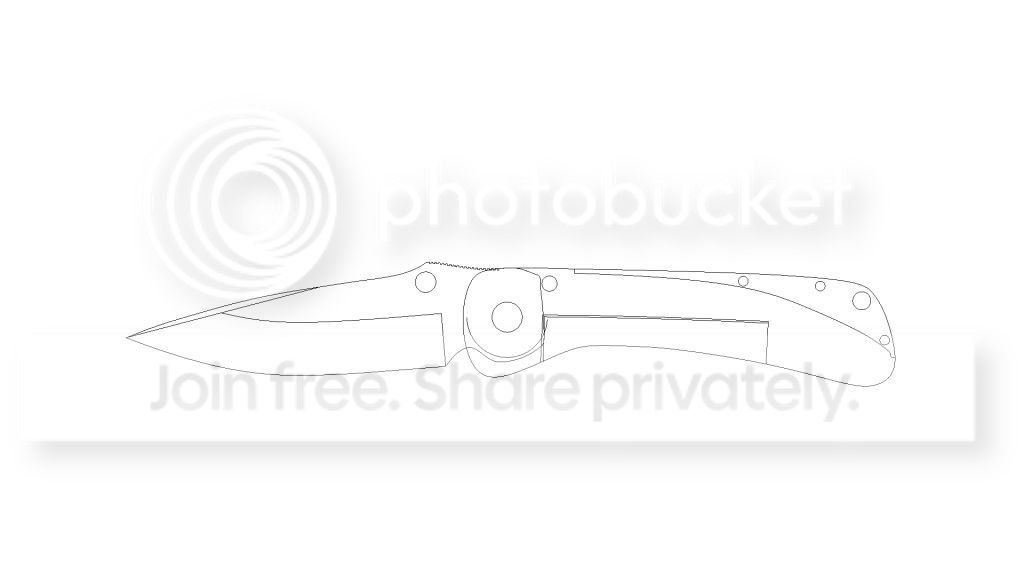
This is the original design, I have modified the blade a touch but that is it
I just finished cutting out and profiling the chefs knife that I am going to do for my mother and I have enough left over in one of the cut offs to make the blade for the folder. Thing is I think I would like to do a frame lock instead of a liner lock. I have read and re read Bob Terzuola's The Tactical Folding Knife, and do so about once a month because I enjoy the information in it.
The question I have is there much of a difference between the geometry of a liner lock and a frame lock, if any? I can see there being some because the frame lock bar is much thicker than the liner lock bar. I can also see there being a bit of a difference on the locking area of the blade's tang.
So any pointers would help a lot, I will probably cut out and profile the blade tomorrow, but that is as far as I will go with it till I have a better idea of the lacking area. If I feel that the frame lock is out side my abilities I will just go back to the liner lock.
Thanks
George
This is the original design, I have modified the blade a touch but that is it
Last edited:
