
-
The BladeForums.com 2024 Traditional Knife is available! Price is $250 ea (shipped within CONUS).
Order here: https://www.bladeforums.com/help/2024-traditional/
You are using an out of date browser. It may not display this or other websites correctly.
You should upgrade or use an alternative browser.
You should upgrade or use an alternative browser.
For all you mule skinners
- Thread starter Badhammer
- Start date

- Joined
- Jul 10, 2009
- Messages
- 315
I have used 1/4" and 1/8", depending on how much I want to shape. If they are to thick, you can always sand em down, it's a lot harder to add material 

- Joined
- May 3, 2006
- Messages
- 2,401
I used 1/4".

- Joined
- Oct 8, 1998
- Messages
- 5,403
The scales I am working on are 1/4, and I think that should be plenty....
But, it also has to do with your hand size, you might find that to be way too much.
I would take a knife that you like the handle of, and use it as a baseline.
Marion
But, it also has to do with your hand size, you might find that to be way too much.
I would take a knife that you like the handle of, and use it as a baseline.
Marion

- Joined
- Jun 8, 2009
- Messages
- 4,528
Thanks to all. I've got some walnut and was wondering how thin I needed to saw the pieces for scales.
Another question if I may?
I'm thinking about just using epoxy to glue the scales on. I see where folks do this even when using pins. Is there an added benefit to the pins or are they mostly just for looks?
Another question if I may?
I'm thinking about just using epoxy to glue the scales on. I see where folks do this even when using pins. Is there an added benefit to the pins or are they mostly just for looks?
- Joined
- May 3, 2006
- Messages
- 2,401
I believe pins add lateral stenght...although if you were to break the bond of the epoxy, the pins wouldn't help you much me think.
- Joined
- Oct 8, 1998
- Messages
- 5,403
I'm thinking about just using epoxy to glue the scales on. I see where folks do this even when using pins. Is there an added benefit to the pins or are they mostly just for looks?
In my opinion, it is possible to skip the pins, if you you use a really great epoxy (Brownells Acra-Glass), don't over clamp (or use a liner/membrane), and properly prepare the interior surfaces.
Epoxy Rivets would probably also help, but that is of some debate.
Oh yeah, and don't apply too much force to the handle scales in use.
Alternately, use pins, and the result will be better. But, I would still use a really great epoxy (Brownells Acra-Glass), don't over clamp (or use a liner/membrane), and properly prepare the interior surfaces.
Marion


- Joined
- Jun 17, 2006
- Messages
- 4,090
The pins block shearing forces that might cause the epoxy to loosen. They aren't positive mechanical fasteners like corby bolts or cutlery rivets, but they still add a measure of stabilization to the scales.
One of the things I like about the Mules is all of the holes in the tang. Those holes allow the epoxy to squish through and lock the two scales together. That way you're not just gluing the scales to the handle, you're gluing them to each other as well.
One of the things I like about the Mules is all of the holes in the tang. Those holes allow the epoxy to squish through and lock the two scales together. That way you're not just gluing the scales to the handle, you're gluing them to each other as well.
- Joined
- Jun 8, 2009
- Messages
- 4,528
The pins block shearing forces that might cause the epoxy to loosen. They aren't positive mechanical fasteners like corby bolts or cutlery rivets, but they still add a measure of stabilization to the scales.
One of the things I like about the Mules is all of the holes in the tang. Those holes allow the epoxy to squish through and lock the two scales together. That way you're not just gluing the scales to the handle, you're gluing them to each other as well.
That was my thought as well. I'm even considering drilling a small indent on the inside of the scales at each/some of the holes to allow the epoxy to actually enter into the scales instead of just on the surface. That should help with shear even without the pins.
- Joined
- Feb 3, 2009
- Messages
- 904
Why no pretty pics?
- Joined
- May 3, 2006
- Messages
- 2,401
OK...just for Supmonkeyface 
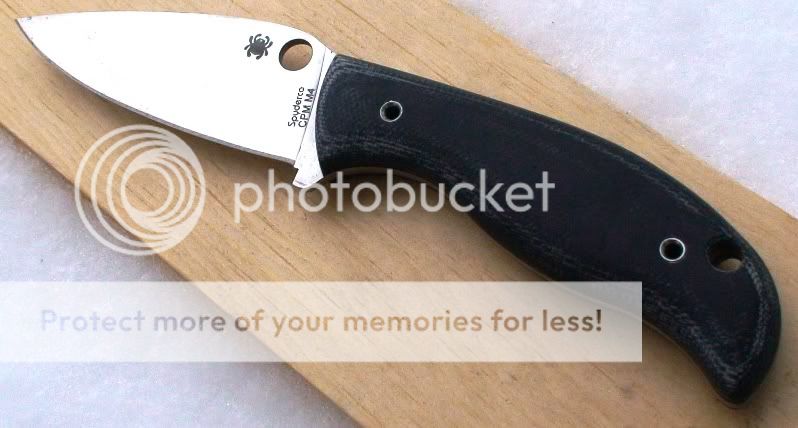
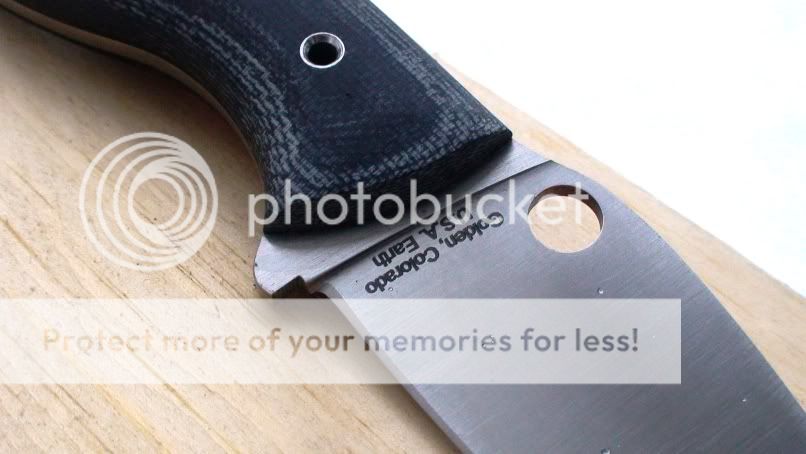
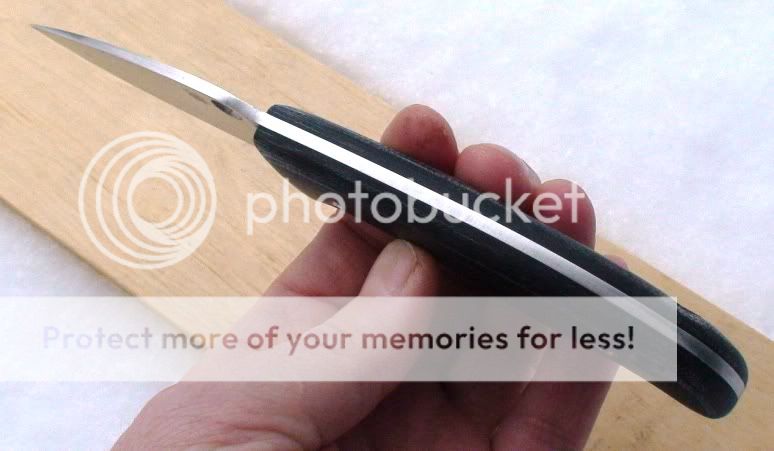
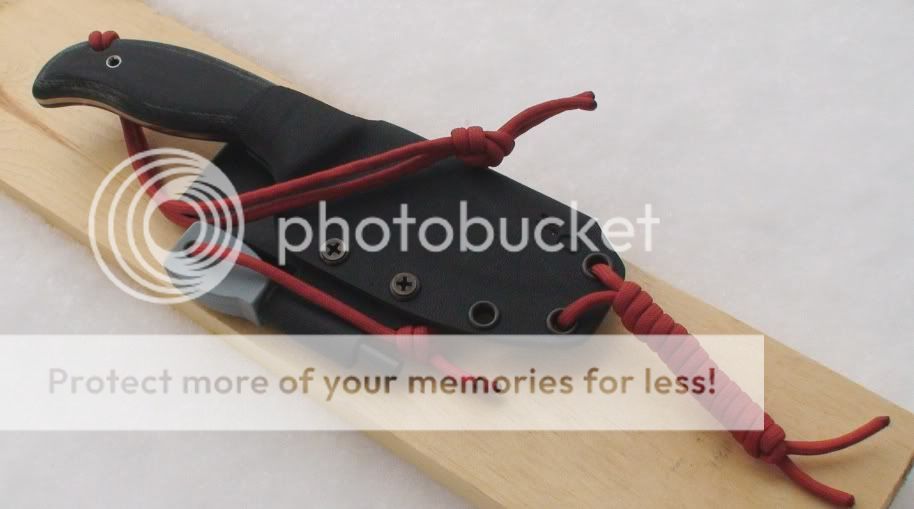
1/4" black G10, stainless steel tubes. Kydex with firesteel.
1/4" black G10, stainless steel tubes. Kydex with firesteel.

- Joined
- Mar 26, 2002
- Messages
- 2,845
You could make some dummy scales before you cut the wood. Modeling clay would let you do a better 3-D mock-up, but even cardboard could give you a sense of the thickness that would feel good in your hand.
- Joined
- Feb 3, 2009
- Messages
- 904
Thank you default!  *600 post*
*600 post*
- Joined
- Jun 17, 2006
- Messages
- 4,090
That was my thought as well. I'm even considering drilling a small indent on the inside of the scales at each/some of the holes to allow the epoxy to actually enter into the scales instead of just on the surface. That should help with shear even without the pins.
When I scaled my last 3-4 knives, I took a 1/4" bit and made several dimples on the inside surface of each scale for that very reason. I also roughed them up with 60 grit paper. The more surface area you provide for the adhesive to attach to, the stronger the bond.
Or, you could always do what this guy did:
http://www.youtube.com/watch?v=tJNSnsv3weM
- Joined
- Oct 7, 2006
- Messages
- 2,437
I started with 3/8" Green Canvas Micarta. It's the only thing I had on hand. I'm happy.