

sierra11b
Gold Member
- Joined
- Mar 22, 2005
- Messages
- 626
I know the idea of forcing a patina is shunned by many but I wanted to add that "base coat" of protection as I don't seem to naturally induce patina fast enough before pitting starts, even with regular maintenance. Maybe it's an indication that I need to eat more fruit with my knife or I simply sweat too much? 
At any rate I decided to use some ferric chloride I had laying around back when I used to make the occasional knife for etching my maker's mark. You can get it at any electronics store such as Radio Shack, Frys, etc. The results are instant as opposed to many of the other forced patina remedies.
Here is the process:
1) Clean the blades and back springs you intend to color with a damp cloth and dry throughly.
2) Using a q-tip evenly apply the ferric chloride at full strength one blade at a time.
3) Wipe off with a dry cloth until the blade is bone dry.
4) Make a mild soap and warm water solution and rub the newly etched blade to neutralize any remaining acid.
5) Wipe again with dry cloth until bone dry and repeat steps 4 & 5 if necessary.
6) Very lightly rub the blade in one continuous direction with 8000 Grit 1Micron 3M Jeweler's Polishing Cloth. (The light green paper which is so fine an abrasive it's hard to tell which side of the paper is the abrasive side. By the way, this stuff is great for polishing bolsters to a mirror shine in seconds.)
7) Oil the blades and repeat.
Note: The acid will leave a non-staining milky residue on the polished bolsters and will turn the brass liners on the back spring area pink. Simply neutralize the same areas using the soap solution and then use the jeweler's paper to bring it back to the original state.
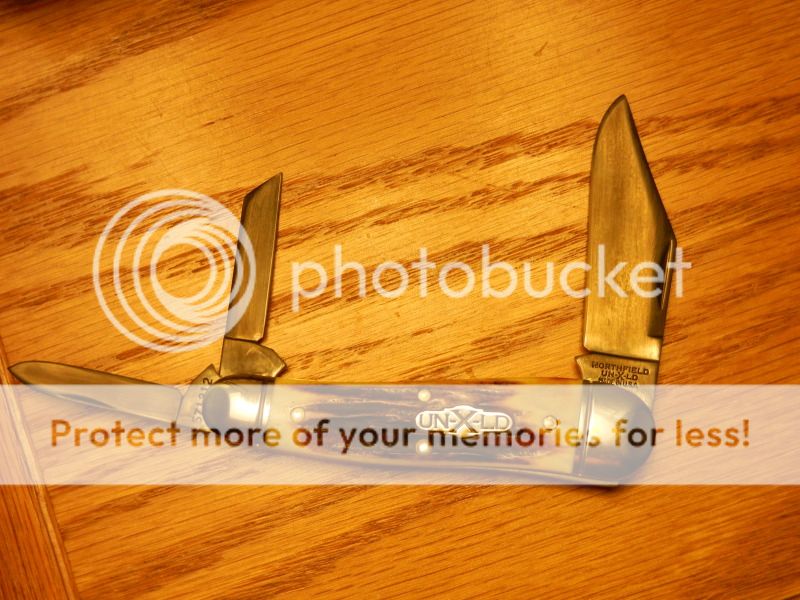
Here's the result after step 5:
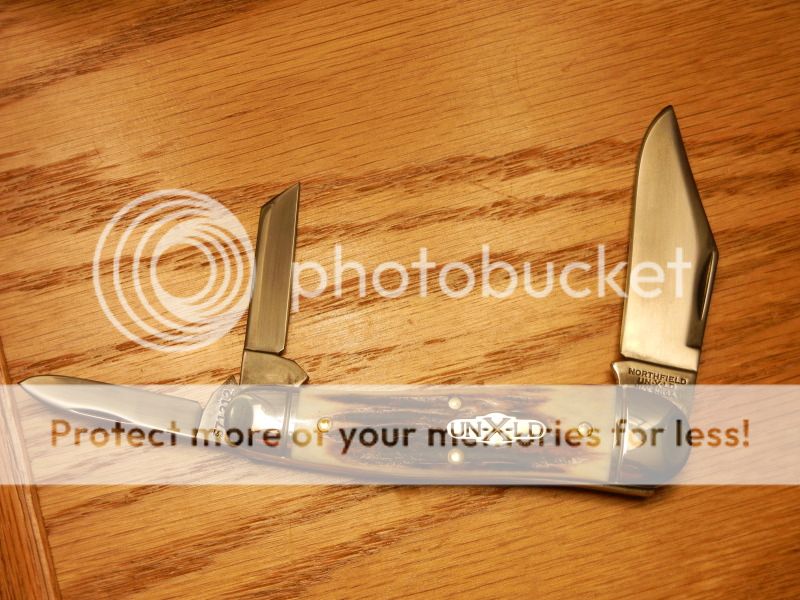
And after step 7:
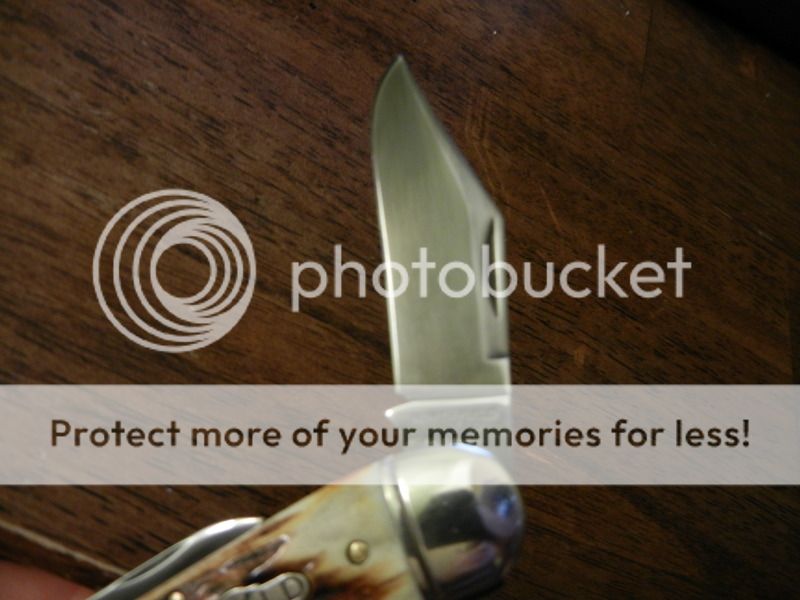
As you can see it's a lightly polished satin finish similar to a light gun bluing that offers that base protection without being too dark and still allowing for the blades to take-on additional character with normal use.
At any rate I decided to use some ferric chloride I had laying around back when I used to make the occasional knife for etching my maker's mark. You can get it at any electronics store such as Radio Shack, Frys, etc. The results are instant as opposed to many of the other forced patina remedies.
Here is the process:
1) Clean the blades and back springs you intend to color with a damp cloth and dry throughly.
2) Using a q-tip evenly apply the ferric chloride at full strength one blade at a time.
3) Wipe off with a dry cloth until the blade is bone dry.
4) Make a mild soap and warm water solution and rub the newly etched blade to neutralize any remaining acid.
5) Wipe again with dry cloth until bone dry and repeat steps 4 & 5 if necessary.
6) Very lightly rub the blade in one continuous direction with 8000 Grit 1Micron 3M Jeweler's Polishing Cloth. (The light green paper which is so fine an abrasive it's hard to tell which side of the paper is the abrasive side. By the way, this stuff is great for polishing bolsters to a mirror shine in seconds.)
7) Oil the blades and repeat.
Note: The acid will leave a non-staining milky residue on the polished bolsters and will turn the brass liners on the back spring area pink. Simply neutralize the same areas using the soap solution and then use the jeweler's paper to bring it back to the original state.
Here's the result after step 5:
And after step 7:
As you can see it's a lightly polished satin finish similar to a light gun bluing that offers that base protection without being too dark and still allowing for the blades to take-on additional character with normal use.


