Hey, I have had my kershaw tyrade blade in a vinegar and lemon juice mix for almost 2 hours trying to get the d2 part of the blade to darken. So far it hasn't changed color at all. When I got the knife there was no difference in color between the d2 and 154cm. Is the d2 in my blade just resistant to patinas or something?

-
The BladeForums.com 2024 Traditional Knife is available! Price is $250 ea (shipped within CONUS).
Order here: https://www.bladeforums.com/help/2024-traditional/
You are using an out of date browser. It may not display this or other websites correctly.
You should upgrade or use an alternative browser.
You should upgrade or use an alternative browser.
Forced Patina
- Thread starter vonhizzle
- Start date


- Joined
- Sep 25, 2002
- Messages
- 3,179
D2 is almost stainless. 12% chromium, right? It might not ever patina like 1095 or 5160. 
Frank
Frank
On the old Kershaw forum someone posted about doing this and it did work. The G10 tyrades used blades that weren't good enough for the real tyrade. I am thinking that the reason my tyrade came without any color is the same reason this patina is not working so well, whatever that reason is lol.


- Joined
- Nov 12, 2005
- Messages
- 1,494
Hey, I have had my kershaw tyrade blade in a vinegar and lemon juice mix for almost 2 hours trying to get the d2 part of the blade to darken. So far it hasn't changed color at all. When I got the knife there was no difference in color between the d2 and 154cm. Is the d2 in my blade just resistant to patinas or something?
I used vinegar on mine. Worked fine nice dark color. I warped it in a cotton rag, making sure that the rag is touching blade flat. Then I soaked the rag with strait vinegar and left it for a hour or so. It wasn't very dark so I left 30 min. more. Then I removed the rag and let it air dry for a about 10 min. Then rise well and dry and then oil.

A new JYD2CB
Vinagared Tyrade
Very well used Composite Leek most of the color is gone.
Well, I left it in over 24 hours and nothing happened. For now I am just going to leave it alone, perhaps I will try that Ferric Chloride sometime though.
I just re oiled the blade but I was wondering what kind of oil I am supposed to use for this? I used this light silicone oil I had from my old airsoft guns is this ok or should I use something else?
I just re oiled the blade but I was wondering what kind of oil I am supposed to use for this? I used this light silicone oil I had from my old airsoft guns is this ok or should I use something else?

- Joined
- Feb 7, 2000
- Messages
- 6,685
Is the d2 in my blade just resistant to patinas or something?
Answer: Yes.
Yea, actually after 4 hours with the vinegar lemon juice I switched it to just red wine vinegar because someone said that was the best to use. I'm not worried about it right now, I guess I should be happy I have a highly corrosion resistant d2 in my blade right? lol
Is there anything else you would find around the house that is more acidic then vinegar?
Is there anything else you would find around the house that is more acidic then vinegar?

- Joined
- Jul 26, 2006
- Messages
- 6,038
D2 will patina just fine. Something isnt being done right here. Here are my instructions from the Kershaw Sub. Don't kill yourself.
YOU CAN SKIP THE BLEACH STEP! I put the important parts in bold, which is how I did the Tyrade pictured.
DISCLAIMER - If you want to try what I did, follow the directions!
First off, I wanted to clean the corrosion from the blade. I was thinking to myself, hrm, copper, carbon steel, and stainless...what a cool combination for some acid etching...
I disassembled the knife to separate the blade for refinishing, and used a plastic hook to move the blade through the steps. I cleaned all of the oils off of the blade with acetone.
OUTSIDE and UPWIND, I took a disposal plastic container (with a lid) and coated the track of the lid with grease to make a gas tight seal. I poured in enough vinegar to cover the blade, about 6oz. I submerged the blade, then I poured in 2oz of bleach, and immediately closed the lid, giving the mixture a slight circular stir.
This creates a strong acid (I dont remember the technical name), but also releases CHLORINE GAS, so you have to make sure to cover it, and not inhale any of the fumes, as the gas can be fatal in high concentrations. If you have any experience handling serious chemicals, or you remember your high school chemistry classes safety precautions, this one is rather safe. If you do not, don't try any of this!!!
Once the blade was submerged for about 15 seconds, i gave it a slight stir, and could see a dark line of sediment in the mixture come off of the blade. The top layer of the copper had been removed to reveal a vibrant orange line, and the D2 had most all of the corrosion pulled from the blade. Unknowingly, this also removed some of the makers marks and model name from the blade. It still can be seen, but is very faint.
I removed the blade with the plastic hook, and dipped it in a 5:1 solution of water and baking soda to stop the chemical reaction and neutralize the acid.
I poured the bleach/vinegar mixture on my concrete driveway and diluted them to a safe level with 20oz of the 5:1 baking soda mix, then about 20 gallons of water.
Next, I took a small zip lock bag, and placed the blade in with JUST vinegar. The trick here is to put the bottom edge of the bag in the middle of the blade so that the blade holds the bag upright. As the acid in the vinegar puts the patina on the blade, small bubbles of gas are released and need to drift to the top of the bag so you dont get a spotty finish. I let this react for about 3 hours. Then i removed the blade, and washed it thoroughly under water, dried it with a hot air gun, then coated the blade in some light oil to seal the pores on the D2.
I ended up with a shade on the D2 that is about 5-8 times darker than that of the original. Im sure you could turn one almost perfect black (will test soon).

YOU CAN SKIP THE BLEACH STEP! I put the important parts in bold, which is how I did the Tyrade pictured.
DISCLAIMER - If you want to try what I did, follow the directions!
First off, I wanted to clean the corrosion from the blade. I was thinking to myself, hrm, copper, carbon steel, and stainless...what a cool combination for some acid etching...
I disassembled the knife to separate the blade for refinishing, and used a plastic hook to move the blade through the steps. I cleaned all of the oils off of the blade with acetone.
OUTSIDE and UPWIND, I took a disposal plastic container (with a lid) and coated the track of the lid with grease to make a gas tight seal. I poured in enough vinegar to cover the blade, about 6oz. I submerged the blade, then I poured in 2oz of bleach, and immediately closed the lid, giving the mixture a slight circular stir.
This creates a strong acid (I dont remember the technical name), but also releases CHLORINE GAS, so you have to make sure to cover it, and not inhale any of the fumes, as the gas can be fatal in high concentrations. If you have any experience handling serious chemicals, or you remember your high school chemistry classes safety precautions, this one is rather safe. If you do not, don't try any of this!!!
Once the blade was submerged for about 15 seconds, i gave it a slight stir, and could see a dark line of sediment in the mixture come off of the blade. The top layer of the copper had been removed to reveal a vibrant orange line, and the D2 had most all of the corrosion pulled from the blade. Unknowingly, this also removed some of the makers marks and model name from the blade. It still can be seen, but is very faint.
I removed the blade with the plastic hook, and dipped it in a 5:1 solution of water and baking soda to stop the chemical reaction and neutralize the acid.
I poured the bleach/vinegar mixture on my concrete driveway and diluted them to a safe level with 20oz of the 5:1 baking soda mix, then about 20 gallons of water.
Next, I took a small zip lock bag, and placed the blade in with JUST vinegar. The trick here is to put the bottom edge of the bag in the middle of the blade so that the blade holds the bag upright. As the acid in the vinegar puts the patina on the blade, small bubbles of gas are released and need to drift to the top of the bag so you dont get a spotty finish. I let this react for about 3 hours. Then i removed the blade, and washed it thoroughly under water, dried it with a hot air gun, then coated the blade in some light oil to seal the pores on the D2.
I ended up with a shade on the D2 that is about 5-8 times darker than that of the original. Im sure you could turn one almost perfect black (will test soon).
The way I did it was clean the oil off the blade with acetone and then put it in a cup of vinegar (I didn't disassemble the blade). I don't see any difference in how we did it aside from your bleach step which I didn't do. I guess yours was sealed in the ziplock bag compared to mine being open in a cup, would that make a difference?
Did yours have any color at all before you did this? Mine was the exact same color as the 154cm not darker by even a hair.
Did yours have any color at all before you did this? Mine was the exact same color as the 154cm not darker by even a hair.
Use the knife and let life make the patina. I myself do not understand forcing a patina.
That wasn't very helpful
 lol. It is purely cosmetic, the blade simply looks better with some contrast between the two metals. Kershaw must have thought so as well since these blades didn't make the cut for the Ti Tyrade.
- Joined
- Nov 12, 2005
- Messages
- 1,494
vonhizzle did you ever get any patina to form?
I just darkened the patina on my Leek. I was cleaning the coffee pot with vinegar and just set the clean blade in the filter and ran 6 cups of vinegar though. All done in 5 mins, the hot acidic steam really sped the process up. I did turn the blade over about 1/2 way though the brew cycle.
This the same knife from my post above and the D-2 part of the blade was very light colored. The pictures were take before the blade was oiled. The color is more even after the oil.
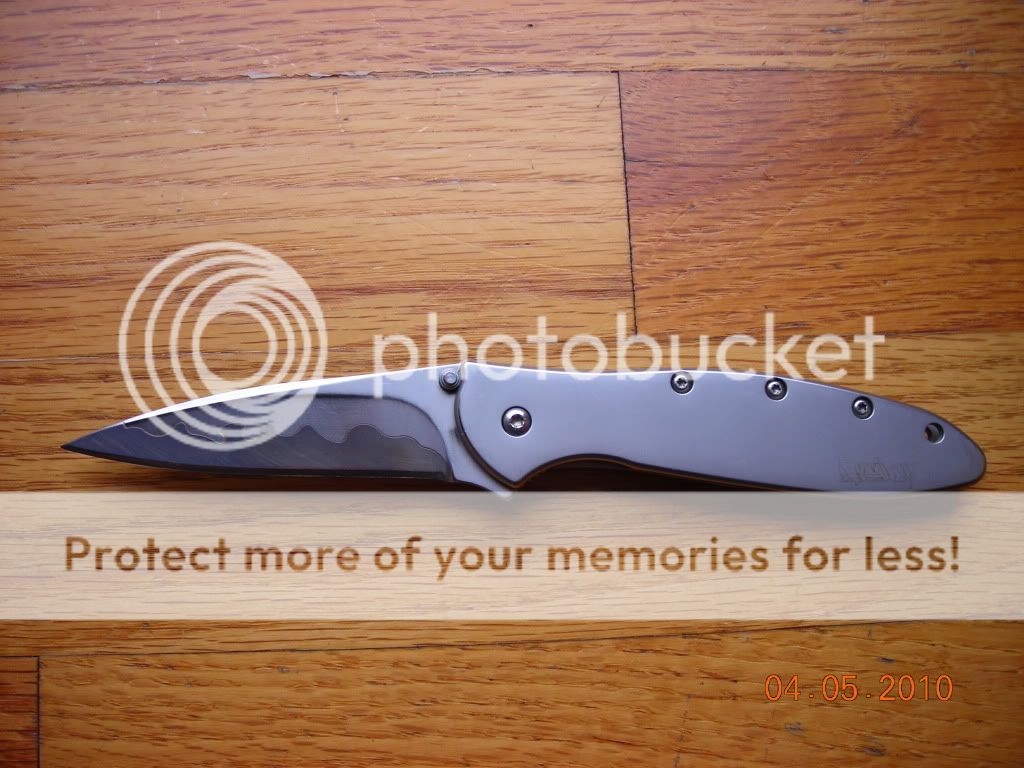
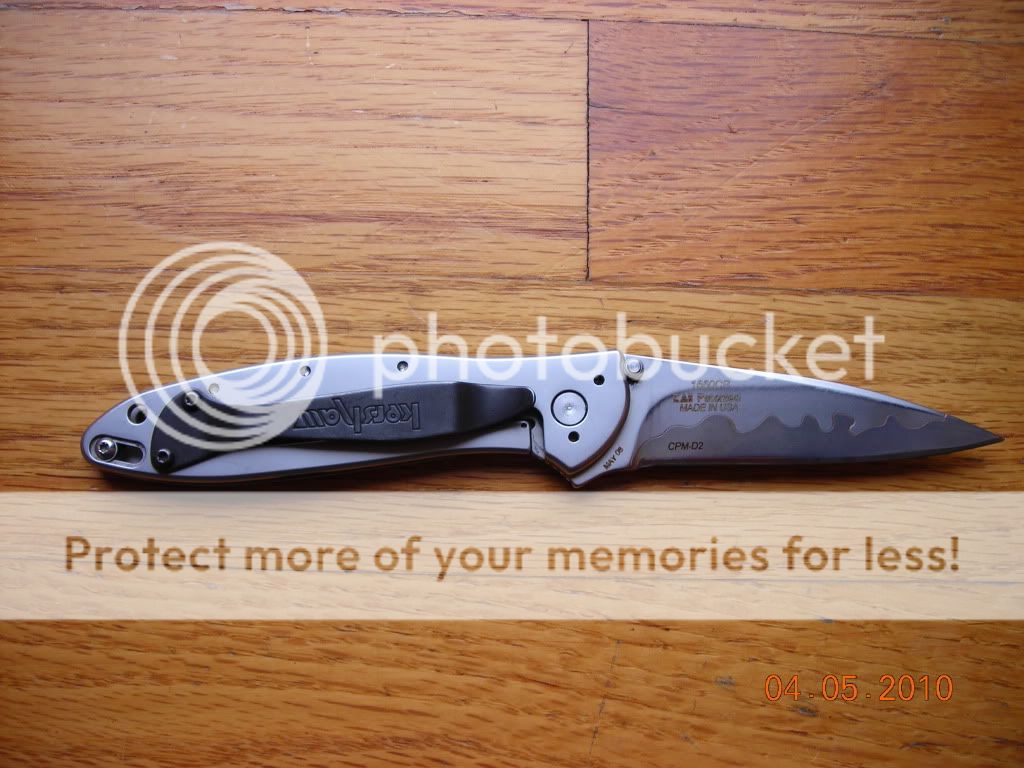
I just darkened the patina on my Leek. I was cleaning the coffee pot with vinegar and just set the clean blade in the filter and ran 6 cups of vinegar though. All done in 5 mins, the hot acidic steam really sped the process up. I did turn the blade over about 1/2 way though the brew cycle.
This the same knife from my post above and the D-2 part of the blade was very light colored. The pictures were take before the blade was oiled. The color is more even after the oil.

- Joined
- Oct 20, 2004
- Messages
- 4,704
I wonder if Kershaw could have switched from D2 to CPM D2. The CPM process effects how the chromium is bonded in the steel and I guess leaves a lot more free chromium to act as a rust inhibitor. CPM D2 is supposed to be much more rust resistant than regular D2, which doesn't rust all that easily to begin with. CPM D2 is more along the lines of stainless steel when it comes to rust.
Since a patina relies on a layer of oxidation if it doesn't want to stain then there is not going to be much of an effect on the color. Also, if the steel was finished to a higher polish there would be less imperfections on the surface where oxidation has a place to 'attach' and start the oxidation process.
I would think if Kershaw couldn't get it to get darker then it will be hard for an individual to get it to work.
Just some thoughts.
Since a patina relies on a layer of oxidation if it doesn't want to stain then there is not going to be much of an effect on the color. Also, if the steel was finished to a higher polish there would be less imperfections on the surface where oxidation has a place to 'attach' and start the oxidation process.
I would think if Kershaw couldn't get it to get darker then it will be hard for an individual to get it to work.
Just some thoughts.