
-
The BladeForums.com 2024 Traditional Knife is available! Price is $250 ea (shipped within CONUS).
Order here: https://www.bladeforums.com/help/2024-traditional/
You are using an out of date browser. It may not display this or other websites correctly.
You should upgrade or use an alternative browser.
You should upgrade or use an alternative browser.
Forge break in question
- Thread starter Beile
- Start date


J.McDonald Knives
Basic Member
- Joined
- Jan 28, 2007
- Messages
- 2,021
turn it on and adjust the mix so the flame stays just inside the forge so you get a neutral atmosphere. thats if your using a blown burner. otherwise just turn it on. also where are the pics of your forge? we all want to see it.

- Joined
- Jul 17, 2006
- Messages
- 772
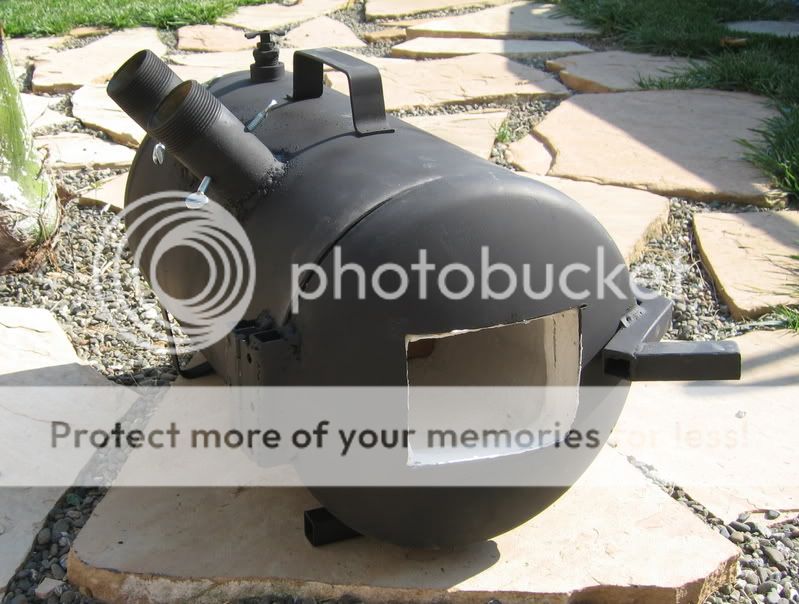
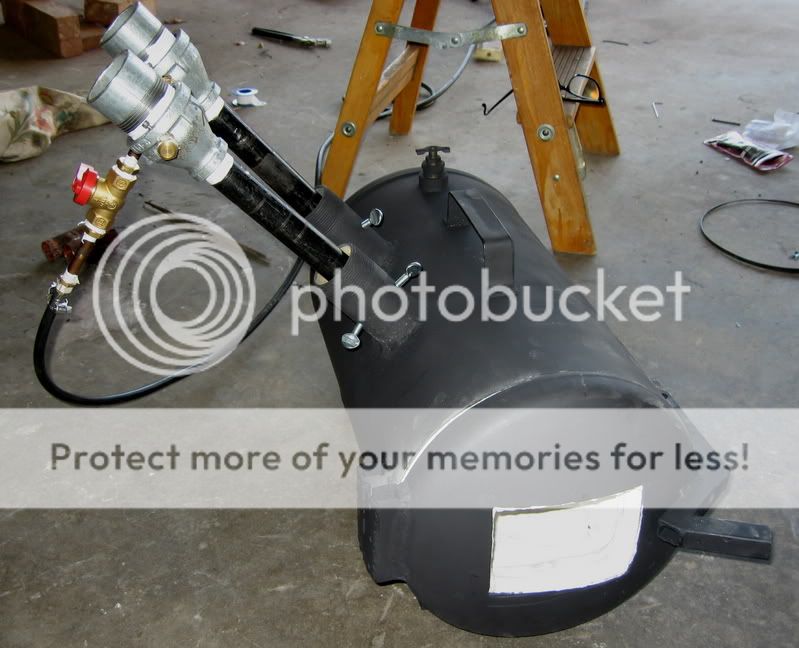
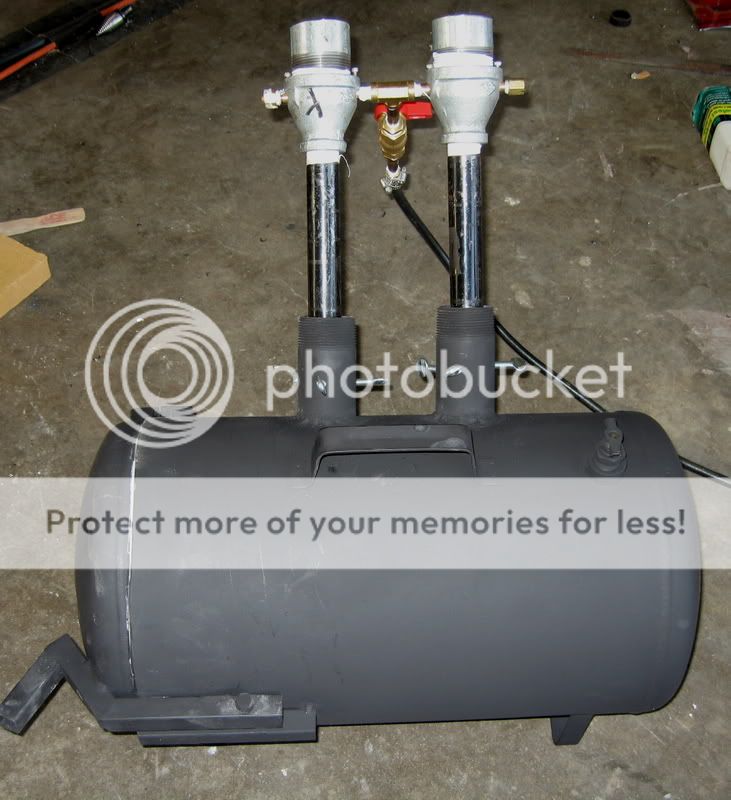
Here it is, I still have to redo the burners with pipe dope instead of teflon tape and yes, the inlets into the tank are galvanized pipe, (too lazy to go back and get other pipe) I did melt and grind it all off inside and out before welding, with my breathing apparatus on. The reason I used this tank is I quit racing motorcycles 20 years ago and didn't need the air tank for the track anymore, just sitting on the shelf in the garage. Burners are thanks to Ron Reils ideas, awesome! Thank you for everyones input and help on this project! I used 1/4" kaowool (got a deal on it, 25' X 24" for $31 rather than 5 sq. feet of 1" for $40.00) wrapped around 8 times so it's 2" thick then coated it with plistix 900, which is supposed to be a cheaper alternative to the ITC 100. The inside is 16" long with a diameter of 6". Thanks for looking.
J.McDonald Knives
Basic Member
- Joined
- Jan 28, 2007
- Messages
- 2,021
just fire it up and hope the zinc fumes dont kill you cause they will take forever to burn off. you seriously need to replace them with blackpipe before you kill yourself.

- Joined
- Oct 21, 2006
- Messages
- 1,652
The burner tubes for the venturi burner dont need to be taped at all, just where you're carrying propane under pressure. The rear of the burner is just an inlet for air for the venturi effect of the high pressure gas being shot down the tube in the oposite direction (into the forge), and the pipe you're shooting the propane into does not hold any presurized gas, and thus also doesnt need to be taped. That can save you a bit of time. The location of the galvanized nipples and reducers is just fine, as that area should never be getting to high temperatures anywhere near the point that zinc melts, let alone boils. (that is unless the pipes you've already welded to the tank and have your bolt holes thorugh are zinc, those can certainly get hot enough. It's not good to weld galvanized pipe either for the same reasons)
- Joined
- Jul 17, 2006
- Messages
- 772
just fire it up and hope the zinc fumes dont kill you cause they will take forever to burn off. you seriously need to replace them with blackpipe before you kill yourself.
I already did that, burned it off then sanded inside and out, nothing left on the pipe but steel, anyway, it's only zinc, I use it outdoors and with my respirator anyway. Old wives tale, it's like breathing vitamins and that's what lifegaurds use on their noses to turn them white.

- Joined
- Dec 4, 2005
- Messages
- 1,025
soooo...I suppose PawPaw old wived himself to death??? :jerkit: :jerkit:
oh yeah, you should try breathing into some fiberglass boards, it's just glass right? people use for windows and eyeglasses right?
oh yeah, you should try breathing into some fiberglass boards, it's just glass right? people use for windows and eyeglasses right?
J.McDonald Knives
Basic Member
- Joined
- Jan 28, 2007
- Messages
- 2,021
you may have burned them off of the surface but they are still imbeded into the pipe. before you fire it up you should cut them off and weld on black pipe before you kill yourself. trust us on this. im not the only one saying this. we dont say it to give you more work to do, we say it so you dont get serioiusly ill and shorten your lifespan to only a few years.

J.McDonald Knives
Basic Member
- Joined
- Jan 28, 2007
- Messages
- 2,021
that stuff still is in the metal. im not the expert here but i know other guys who are experts here will say the same thing. they have said it many times before. read this. http://www.bladeforums.com/forums/showpost.php?p=4459588&postcount=4 like i said im not the only one who is saying not to use galvanized pipe when welding or near high heat. im also a plumber and they make black pipe for a reason. we never use galvanized when we do a fireplace or anything like that.
- Joined
- Jul 17, 2006
- Messages
- 772
I'm careful how I use it, I used common sense, it is gone, melted and ground off while wearing a respirator and it is bare pipe now. I copied this from a poster somewhere else.
You conflate together a lot of information and imply equivalencies that are not correct. Zinc metal is not particularly toxic and zinx oxide which is what forms when zinc burns is also not particularly toxic.
Zinc chloride on the other hand is a totally different chemical compound and yes it is very toxic. Extrapolating from the toxicity of zinc chloride to conclude that zinc oxide has similar toxicity is not valid. This is equivalent to saying that the hydride of oxygen is as toxic as the hydride of chlorine or that the chloride of sodium is as toxic as sodium metal or elemental chlorine.
You are correct when you say cadmium is highly dangerous; it is. Cadmium is a totally different element to zinc but it has a chemical reactivity that has some similarity to that of zinc. This is one of the reasons that cadmium is so dangerous; zinc is actually a trace element that is needed for a healthy diet and zinc in different states of oxidation is present in enzymes that are active in different metabolic pathways in the body. Cadmium can substitute for zinc in some of these enzymes but because its chemical reactivity is similar but not identical it interferes with the proper metabolic operation. A person with a diet that is deficient in zinc can suffer far more serious effects than one who has a well balanced diet with adequate zinc. This is often interpreted to mean that zinc has a protective effect toward cadmium poisoning which is a bass-ackward way of looking at it.
The, not particularly toxic nature of zinc, as I phrase is manifest in Metal Fume Fever; flu like symptoms that probably are a result of the immune system being knocked a bit out of kilter by excess zinc oxide absorbed through the mucous membranes of the upper respiratory tract. This is not really surprising because one of the reasons zinc is needed in a balanced diet is that it is implicated in the balanced operation of the immune system.
This is most emphatically not the same as heavy metal poisoning and it is totally inaccurate to use the phrasing "other heavy metal poisoning" because zinc is not a heavy metal in the class of the truly dangerous metals such as lead or mercury.
A short moment of reflection on the part of anyone who thinks things through should lead to the conclusion that the lack of toxicity of zinc is attested to by the fact that millions of people drink water that has been distributed through zinc coated, i.e. galvanized pipes. Similarly anyone who has used sunscreen that contains zinc oxide could come to the conclusion that zinc oxide is not particularly toxic,Also if welding is to be used black pipe rather than galvanized is preferable because it is easier to weld. Galvanizing can be ground off and it will burn off during electric welding creating a large amount of smoke. This is unpleasant but not particularly toxic.
The thing about zinc fever, foundry flu or whatever you want to call it is that it is not really all that dangerous. If you are exposed many hours a day most days of the week that is not a good idea. But it is very likely that some of the affects of prolonged exposure are due to contaminants in the zinc; mostly cadmium. Zinc itself, or more correctly zinc oxide because this is what is in the welding fumes, is not particularly toxic and is used in lots of ointments and creams for skin application. In sunny climates Surfers rub zinc oxide cream on their nose and lips to prevent sunburn.
Who knows? I am wearing a respirator and not using the forge indoors.
You conflate together a lot of information and imply equivalencies that are not correct. Zinc metal is not particularly toxic and zinx oxide which is what forms when zinc burns is also not particularly toxic.
Zinc chloride on the other hand is a totally different chemical compound and yes it is very toxic. Extrapolating from the toxicity of zinc chloride to conclude that zinc oxide has similar toxicity is not valid. This is equivalent to saying that the hydride of oxygen is as toxic as the hydride of chlorine or that the chloride of sodium is as toxic as sodium metal or elemental chlorine.
You are correct when you say cadmium is highly dangerous; it is. Cadmium is a totally different element to zinc but it has a chemical reactivity that has some similarity to that of zinc. This is one of the reasons that cadmium is so dangerous; zinc is actually a trace element that is needed for a healthy diet and zinc in different states of oxidation is present in enzymes that are active in different metabolic pathways in the body. Cadmium can substitute for zinc in some of these enzymes but because its chemical reactivity is similar but not identical it interferes with the proper metabolic operation. A person with a diet that is deficient in zinc can suffer far more serious effects than one who has a well balanced diet with adequate zinc. This is often interpreted to mean that zinc has a protective effect toward cadmium poisoning which is a bass-ackward way of looking at it.
The, not particularly toxic nature of zinc, as I phrase is manifest in Metal Fume Fever; flu like symptoms that probably are a result of the immune system being knocked a bit out of kilter by excess zinc oxide absorbed through the mucous membranes of the upper respiratory tract. This is not really surprising because one of the reasons zinc is needed in a balanced diet is that it is implicated in the balanced operation of the immune system.
This is most emphatically not the same as heavy metal poisoning and it is totally inaccurate to use the phrasing "other heavy metal poisoning" because zinc is not a heavy metal in the class of the truly dangerous metals such as lead or mercury.
A short moment of reflection on the part of anyone who thinks things through should lead to the conclusion that the lack of toxicity of zinc is attested to by the fact that millions of people drink water that has been distributed through zinc coated, i.e. galvanized pipes. Similarly anyone who has used sunscreen that contains zinc oxide could come to the conclusion that zinc oxide is not particularly toxic,Also if welding is to be used black pipe rather than galvanized is preferable because it is easier to weld. Galvanizing can be ground off and it will burn off during electric welding creating a large amount of smoke. This is unpleasant but not particularly toxic.
The thing about zinc fever, foundry flu or whatever you want to call it is that it is not really all that dangerous. If you are exposed many hours a day most days of the week that is not a good idea. But it is very likely that some of the affects of prolonged exposure are due to contaminants in the zinc; mostly cadmium. Zinc itself, or more correctly zinc oxide because this is what is in the welding fumes, is not particularly toxic and is used in lots of ointments and creams for skin application. In sunny climates Surfers rub zinc oxide cream on their nose and lips to prevent sunburn.
Who knows? I am wearing a respirator and not using the forge indoors.

fitzo
Gold Member
- Joined
- Aug 14, 2001
- Messages
- 6,648
The concern with the zinc fumes is because of the death of a well known blacksmith a few years back called PawPaw Wilson (I think that's the last name).
He was exposed to zinc oxide fumes, which, in his case, resulted in mucosal irritation to the lungs which led to some edema, subsequent pneumonia, and eventual death. He left he blacksmithing world with an instruction to watch out for the zinc that killed him.
You are correct that in most cases Metal Fume Fever is a temporary irritation.
Wearing a properly fitted metal-fume scavenging respirator will eliminate the concern. A P95 would probably work and a P100 is as good as you will get.
Regardless, I am happy to see the newer folks raise these concerns and would rather see them debated over and over than miss once.
He was exposed to zinc oxide fumes, which, in his case, resulted in mucosal irritation to the lungs which led to some edema, subsequent pneumonia, and eventual death. He left he blacksmithing world with an instruction to watch out for the zinc that killed him.
You are correct that in most cases Metal Fume Fever is a temporary irritation.
Wearing a properly fitted metal-fume scavenging respirator will eliminate the concern. A P95 would probably work and a P100 is as good as you will get.
Regardless, I am happy to see the newer folks raise these concerns and would rather see them debated over and over than miss once.
- Joined
- Jul 17, 2006
- Messages
- 772
I am sorry, being new to this blacksmithing hobby I had no idea about Paw Paw, I googled it and am sorry to hear about that unfortunate accident and to all that knew him.:foot: I do wear a p100 at all times and do this outdoors but now find I am holding my breath even with the respirator on! I fired that thing up and nearly melted a leaf spring in less than 5 minutes! Holy smoke!!!!! Then I did a really dumb thing when the flame started surging down low, it started burning back up the burner tube, back to the drawing board! I reached over and grabbed one of the shiny new thumb screws with no glove (DUH!) to adjust the burner Yowie!
J.McDonald Knives
Basic Member
- Joined
- Jan 28, 2007
- Messages
- 2,021
if you feel that it is safe and dont wish to change it then by all means go for it. i do see one flaw in your design of your burners tho. you have them pointed directly into the forge and not at an angle to make the heat swirl around and you will get hot spots and uneven heat. you might want to still cut them off and weld them in at an angle to make your forge more efficient. will also lesson the chance of the flame shooting back up into the burner tube.

Stacy E. Apelt - Bladesmith
ilmarinen - MODERATOR
Moderator
Knifemaker / Craftsman / Service Provider
- Joined
- Aug 20, 2004
- Messages
- 38,235
With venturi burners, you have to maintain enough pressure to prevent the flame from burning back in the tube.

J.McDonald Knives
Basic Member
- Joined
- Jan 28, 2007
- Messages
- 2,021
$5 a can, cheap enough to buy and repaint it. HEHEHE!!!
Hi Bulb, You might be able to turn your burners down a bit by putting a 'choke' on the air intakes. It's just a plate on a pivot to close down the opening, then you probably can run a lower pressure and turn the temp down without the backing up (maybe?). Nice forge, try it with just the front burner and see what happens.
Take care, Craig
Take care, Craig