Framelock question

Joined
Nov 11, 2007
Messages
1,169
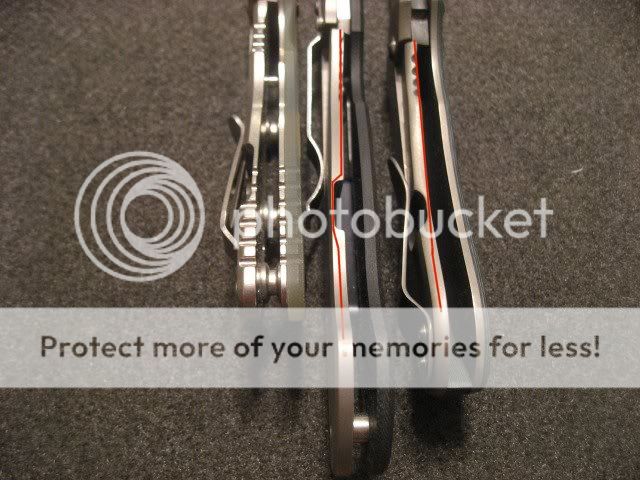
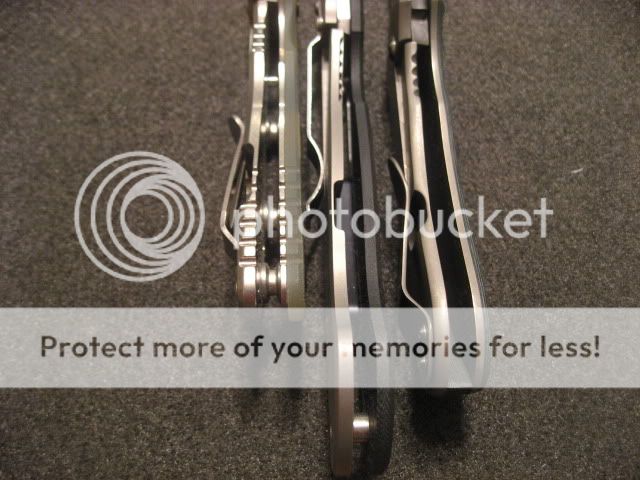
Out of curiosity, are there any pros/cons to the relief cutout being made on the inside or the outside of the lockbar? I just picked up a Spyderco Military and it is the first framelock (RIL, I guess), I have had that has the cutout on the inside.

XM-18 - Military - Burchtree Platypus:
IMG_0186.jpg
 
I've heard it said that the cutout on the outside should cause the lock to bend to the inside with extreme pressure to the lock and reverse with the cutout on the inside. I think the chance of a well made frame lock bending is not a concern with normal use. I have some folders with the cutout on the outside and the pocket clip directly over it and that causes the clip to get caught on the "lip" of my back pocket. This make it harder to take the folder out (Strider).
I prefer the cutout on the inside if the pocket clip is on tip up side. I think sometimes it also looks a little better.
The much bigger problem with the intregal lock is slipping not bending. I've seen many locks that only have around 10% lockup on the tang. So many people are concerned about the wear on the lock that makers have much less that 50% on the tang. This is one of the reasons CRK makes some of the best intregal locks. His are mostly over 50% and I have'nt seen any problems with lock "travel".
 
I've heard it said that the cutout on the outside should cause the lock to bend to the inside with extreme pressure to the lock and reverse with the cutout on the inside. I think the chance of a well made frame lock bending is not a concern with normal use. I have some folders with the cutout on the outside and the pocket clip directly over it and that causes the clip to get caught on the "lip" of my back pocket. This make it harder to take the folder out (Strider).
I prefer the cutout on the inside if the pocket clip is on tip up side. I think sometimes it also looks a little better.
The much bigger problem with the intregal lock is slipping not bending. I've seen many locks that only have around 10% lockup on the tang. So many people are concerned about the wear on the lock that makers have much less that 50% on the tang. This is one of the reasons CRK makes some of the best intregal locks. His are mostly over 50% and I have'nt seen any problems with lock "travel".

Thanks ROBB. Good points on the wear issue. While I have never had any problems with wear on my ti framelocks (maybe haven't used them enough? :D), Spyderco addressed that with a steel insert that you can kind of see in the pic. I have heard other makers are or will use this. It does seem to provide a very nice and solid lockup at about 50%.
 
My Sebenza has the cutout on the inside while my RJ Martin is on the outside. Both are extremely well made so...........
 
I don't think it's as much cutout placement or location as thickness of the cutout and the quality of the lock. One thing (among many) that drove me away from the XM-18 was the thin cutout.
 
I don't think it's as much cutout placement or location as thickness of the cutout and the quality of the lock. One thing (among many) that drove me away from the XM-18 was the thin cutout.

That bothered me a bit as well...but I think it was the $600 price tag that really did it.
 
The cutout on the inside is not going to be as strong but both should be plenty strong unless you plan to outright abuse them. When the cutout is on the inside closing forces on the blade are transfered to the lockbar and run down the inside of the lock and then have to go around the cutout. This change in direction can cause excessive force to bend the lock at the corner of the cutout. This is not something to worry about unless you plan to beat on the blade while locked open. The lock not slipping on the tang is a much bigger concern on a frame lock and is the main factor in reliability and can also be the hardest thing to determine by just looking at the knife. Some locks just like to move under pressure in my experience (even really expensive ones).
 
some people argue for both ways, I don't think there's an advantage to either way. Some makers seem to switch between the two, I know for his flat handled knives, Tom Mayo puts the relief cut on the inside, while on his contoured knives, it's usually on the outside. Chris Reeve puts his on the inside as well.
 
The cutout on the inside is not going to be as strong

STR refutes this notion and, from my use of knives with both types of cut-out, I'm inclined to agree.
The thickness (and width and height) of the cut-out area is the thing to look for.

The only thing knives do better with the cut-out on the outside is eat pocket seams; they do an amazing job at that.:cool:
 
I would really be interested in the rationalization that the cutout on the inside is not weaker than the cutout on the outside.

Obviously the more beefy the cutout, the stronger the lock. But for cutouts of equal size and thickness, the cutout on the outside should be stronger. I have never had a frame lock fail in that manner and have only seen one picture of one that failed by the lock bending at the cutout, and it had an inside cutout.

I added some lines to the above picture that depict the flow of forces from where the blade tang contacts the lock bar, down to the bottom of the knife. As I said I would be interested in the rationale of why one would not be stronger than the other.


Framelock.jpg
 
I would really be interested in the rationalization that the cutout on the inside is not weaker than the cutout on the outside.

Obviously the more beefy the cutout, the stronger the lock. But for cutouts of equal size and thickness, the cutout on the outside should be stronger. I have never had a frame lock fail in that manner and have only seen one picture of one that failed by the lock bending at the cutout, and it had an inside cutout.

I added some lines to the above picture that depict the flow of forces from where the blade tang contacts the lock bar, down to the bottom of the knife. As I said I would be interested in the rationale of why one would not be stronger than the other.


Framelock.jpg

I don't think the forces flow quite like that.
 
strength difference or not, I prefer inside, because it provides a smooth surface on the outside which si better suited to carry.
 
Regardless of which side they put it on I wish more makers would use a thicker cutout. I don't need a paper thin cutout to disengage the lock, my 95lb little sister can open most RIL's with ease. Even the thickest RIL's I've handled seemed far too easy to disengage for my taste. I'd rather a thicker stronger cutout that takes maybe 3x more force to disengage than the average RIL on the market.
 
I don't think the forces flow quite like that.


Why not? Any reason or just what you think? A cutout on the outside lets the force flow in a straight line from where the lock hits the tang down the inside of the lock bar. A cutout on the inside has the lock bar material offset to the side from where the force is applied. This creates a moment arm and the forces going around the cutout are going to cause a torque or bending motion at the cutout.
 
I would think the forces are applied just as FlaMtnBkr illustrated. Pressure starts where the blade contacts the lock bar and will stay towards that side. Granted, I rarely put reverse pressure on any of my knives so for myself I wouldn't care to much either way.
 
Why not? Any reason or just what you think? A cutout on the outside lets the force flow in a straight line from where the lock hits the tang down the inside of the lock bar. A cutout on the inside has the lock bar material offset to the side from where the force is applied. This creates a moment arm and the forces going around the cutout are going to cause a torque or bending motion at the cutout.

Because the forces are not distributed as a singular line, but rather on the whole lock bar. Either way the most stress will be placed on the start of the cutout.
 
Back
Top