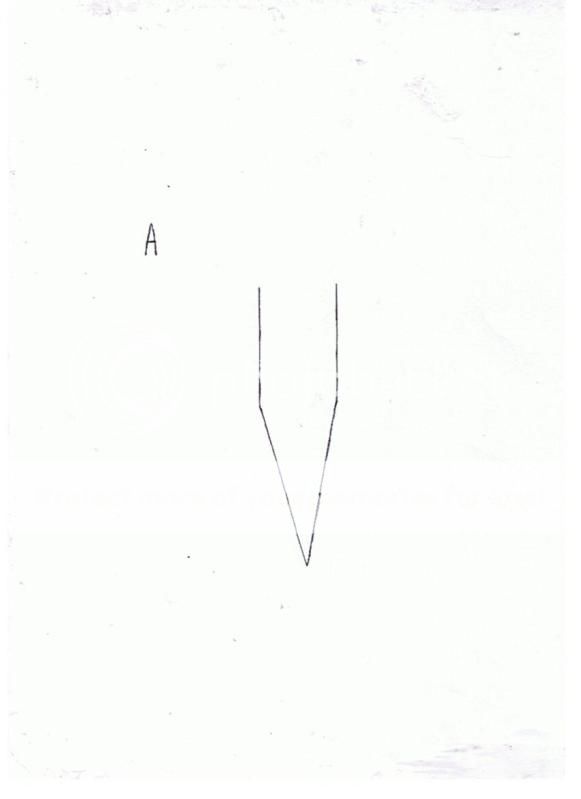
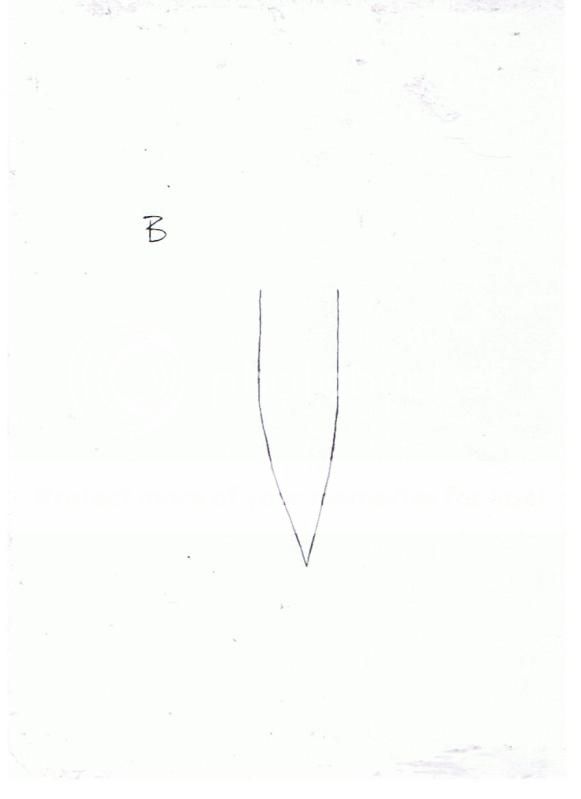
My favorite edges are those that started out as fairly acute V-bevels, after which I convexed the shoulders of those bevels. The guided system is helpful to make the actual cutting edge as pure as it can be, relatively free of inconsistency brought by freehand sharpening. Just rounding & smoothing the shoulders, after the edge is finished, makes a noticeable improvement in cutting, every time I've done it.
I compared two knives, in cutting up a cardboard box recently. One was a pocketknife (Queen stockman w/D2 blades), and the other was an old 1965-vintage Case 6265 SAB Folding Hunter, with carbon steel. I'd used my Lansky system to re-bevel the clip blade on the stockman, to ~15 degree per side V-bevel. The Case had gotten the treatment I described above, by re-bevelling using a guided system (DMT aligner & Magna-Guide, with Dia-Folds), then convexing the shoulders on the V-bevel, using sandpaper on my strop block. What really struck me was, the Case's thicker blade (the secondary skinner blade, at ~1/8" thick), with the convexed shoulders on it's bevel, was a much, much slicker cutter in the cardboard, and even stayed armhair-shaving-sharp after I was done. The Queen's thinner blade (~1/16" or so), with the V-bevel and it's associated 'hard' shoulders, tended to grab & bind a bit in the cardboard. That was a real eye-opener for me. I would've expected the thinner blade to give more advantage, over anything else. But just convexing the thicker blade's shoulders seemed to make the vast majority of the difference. BTW, I've also noticed similar cardboard-cutting performance in an old '2-dot' Buck 112 in 440C (blade's at least as thick as the Case, maybe more so), which was convexed on sandpaper only. I didn't even use a guided system to form the new edge on that one; it's a fully-freehanded convex. It's also an amazing cardboard cutter, in spite of the thick blade.
So long as the cutting edge itself is fully apexed and pure, I'm absolutely certain the convexed shoulders improve upon an already good V-edge. I've yet to see an exception to that, in the 20+ knives I've done this way, so far. For this reason, I see no real inherent advantage in the 'perfect' flat bevels from a guided sharpener. Perfectly flat bevels still don't guarantee a fully apexed cutting edge. And being that the flat bevels come with hard, angular shoulders by default, I'm beginning to see some disadvantage there, as compared to a well-executed, fully-apexed and burr-free cutting edge with rounded, smooth shoulders.