- Joined
- Feb 7, 2007
- Messages
- 2,787
I've noticed that on most traditionals, from what i have and what i see around here, the blade curve in general sits lower than the handle, forming an arc with the handle, instead of a straight line.
And when the spine is straight with the handle, the shape of the blade changes to lower the tip and curve below the handle. Not always though, as the buck 110 has the spine and handle straight, and the edge parallel to the spine.
I've seen spear points that are narrow at the base and get wider towards the tip, again lowering the edge below the handle.
Opinels also have the blade at a slight angle from the handle, making the curved edge to sit lower.
The curve found in a clip point is almost always much lower than the handle spine line, and sometimes the edge is not parallel to the spine, achieving the same thing.
Either the whole blade is shaped that way, both edge curve and handle angle, or just the edge forms an arc with the handle, while the spine is straight.
Now, this curve sitting bellow the handle, acts somewhat like a recurve in cutting, increasing the force in that area, in other words, it will cut better in most cases.
Be it spey, sheepsfoot, clip point, pen/spear, they sit lower than the handle, forming that arc in most traditional knives.
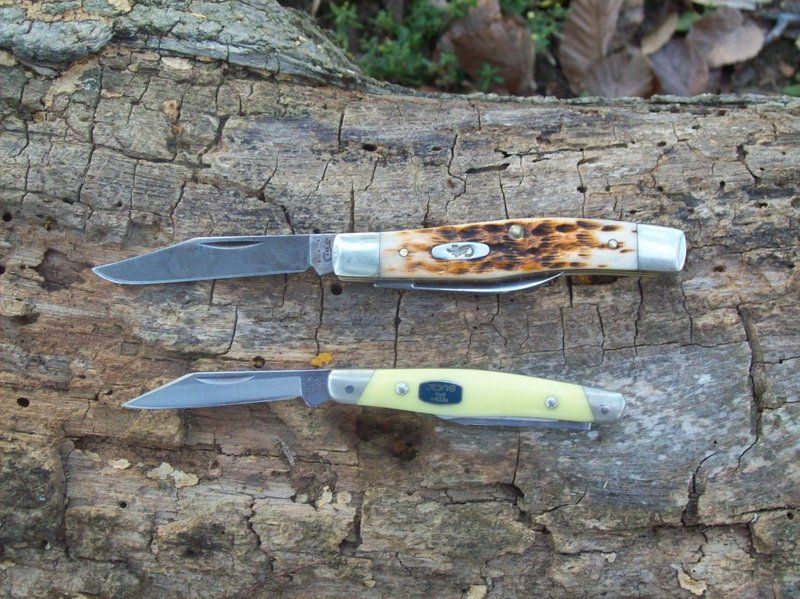
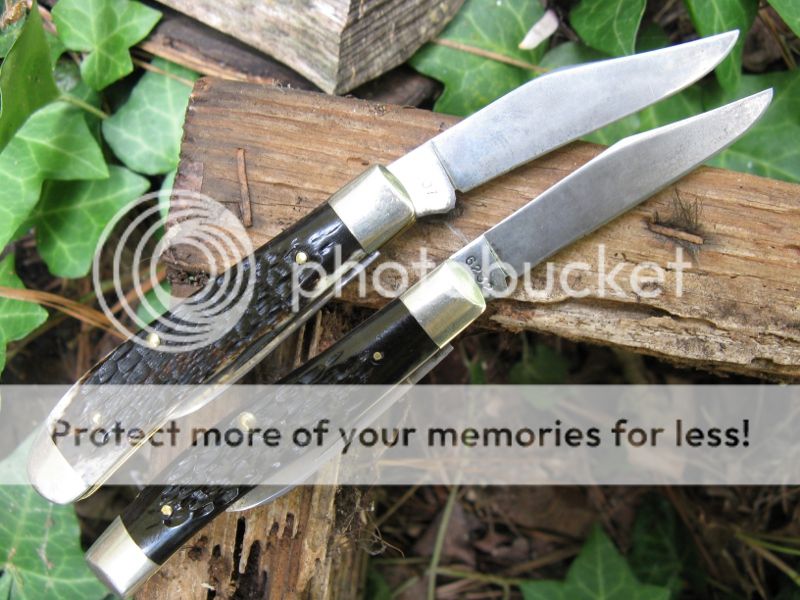
Some examples :
The peanut shows this better, as the arc is formed not only by the edge and handle, but also the handle and blade spine together.

But in the queen canoe, the small pen is straight, while the big spear widens towards the tip. This is seen much better in the 2011 forum knife,
A pic from around here :

On the buck 303/301, the clip point edge forms an arc with the handle, but the spine and handle are in a relatively straight line.
So, is the better performance what dictates this design, or there are other factors, like looks and frame shape involved ?
I'm hoping maybe someone can explain this thing better, or at least that my ramblings make some sense...
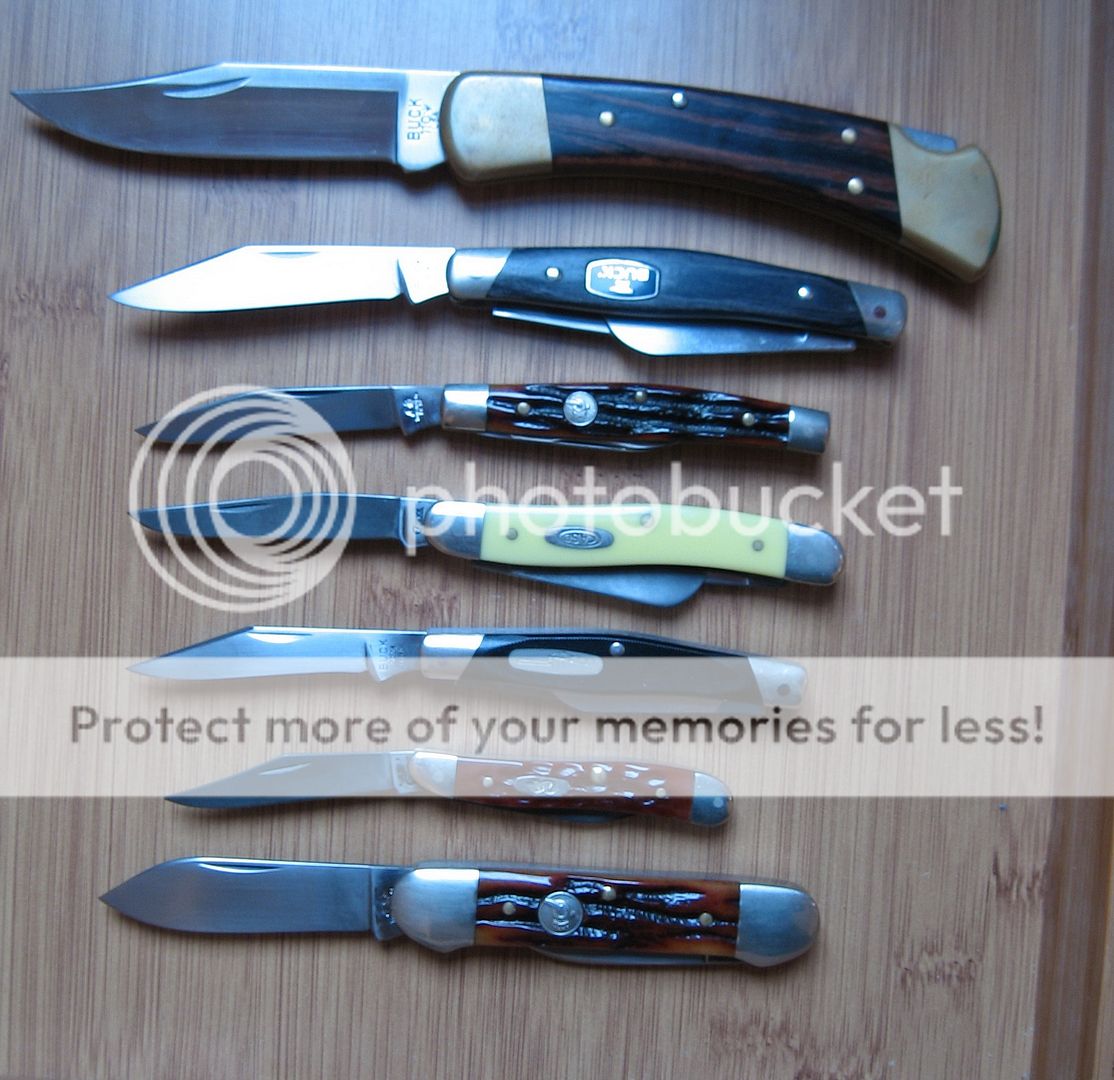
And when the spine is straight with the handle, the shape of the blade changes to lower the tip and curve below the handle. Not always though, as the buck 110 has the spine and handle straight, and the edge parallel to the spine.
I've seen spear points that are narrow at the base and get wider towards the tip, again lowering the edge below the handle.
Opinels also have the blade at a slight angle from the handle, making the curved edge to sit lower.
The curve found in a clip point is almost always much lower than the handle spine line, and sometimes the edge is not parallel to the spine, achieving the same thing.
Either the whole blade is shaped that way, both edge curve and handle angle, or just the edge forms an arc with the handle, while the spine is straight.
Now, this curve sitting bellow the handle, acts somewhat like a recurve in cutting, increasing the force in that area, in other words, it will cut better in most cases.
Be it spey, sheepsfoot, clip point, pen/spear, they sit lower than the handle, forming that arc in most traditional knives.
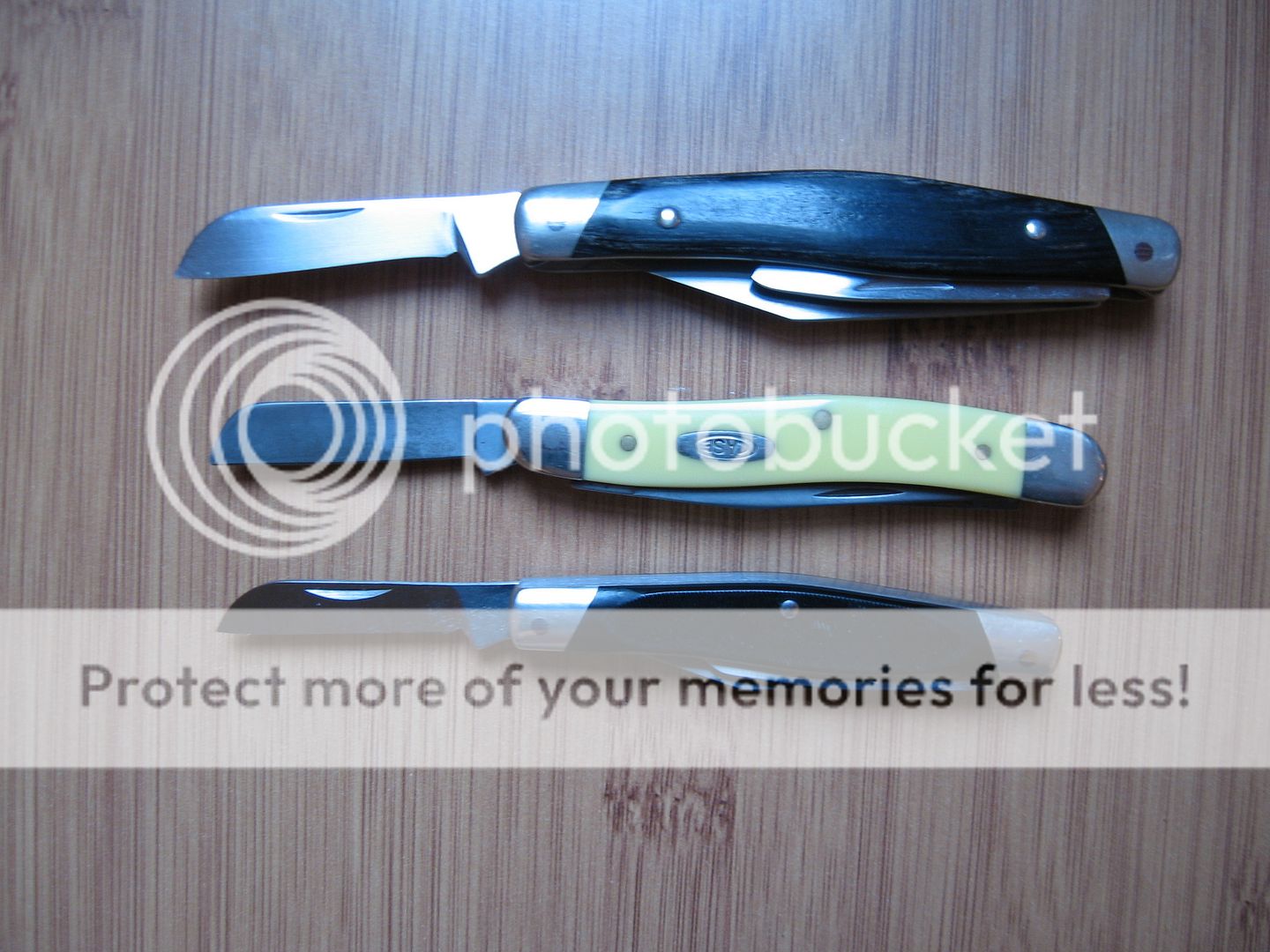
Some examples :
The peanut shows this better, as the arc is formed not only by the edge and handle, but also the handle and blade spine together.
But in the queen canoe, the small pen is straight, while the big spear widens towards the tip. This is seen much better in the 2011 forum knife,
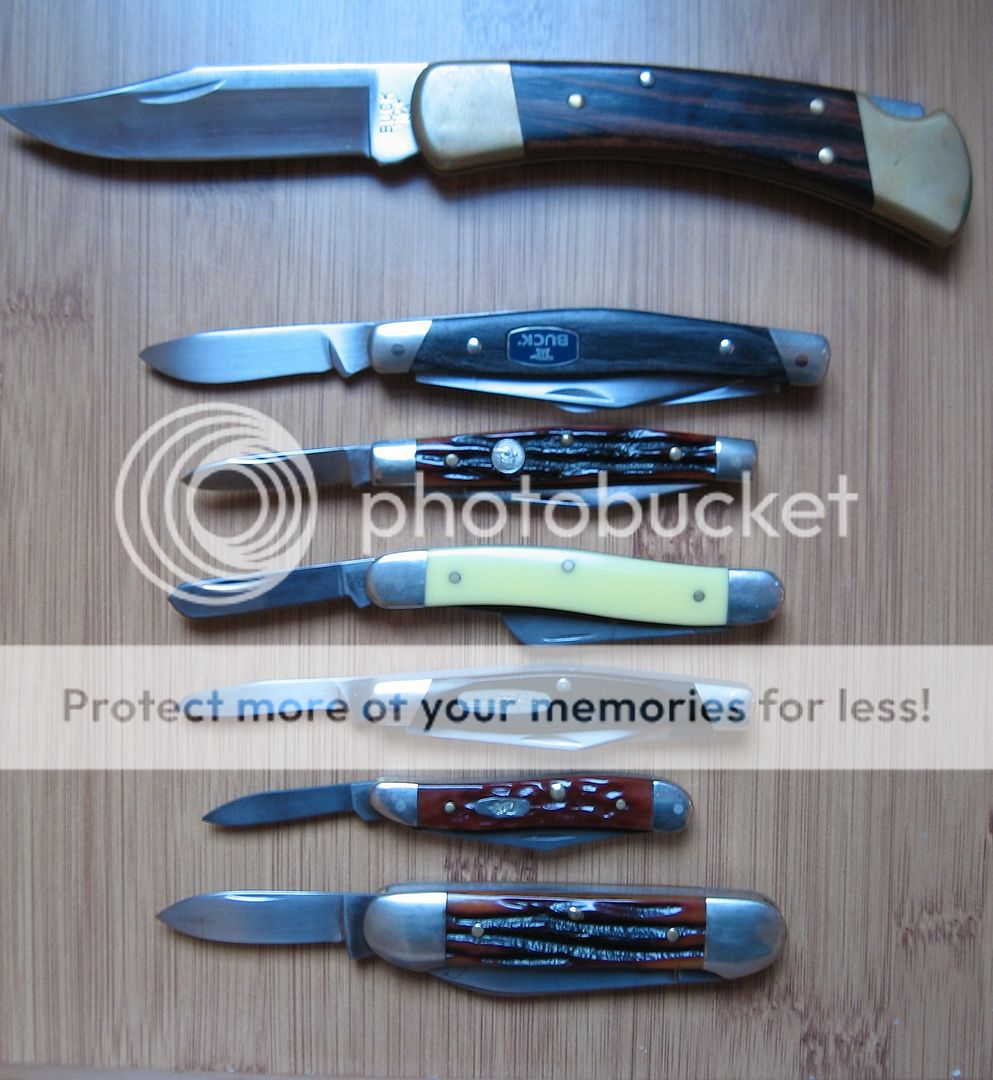
A pic from around here :
On the buck 303/301, the clip point edge forms an arc with the handle, but the spine and handle are in a relatively straight line.
So, is the better performance what dictates this design, or there are other factors, like looks and frame shape involved ?
I'm hoping maybe someone can explain this thing better, or at least that my ramblings make some sense...